The Final Candidate for Fed Chair: What Is Rick Rieder's Stance on Crypto?

marsbitОпубликовано 2026-01-13Обновлено 2026-01-13

Введение

This article discusses Rick Rieder, the Chief Investment Officer of Global Fixed Income at BlackRock, who is being considered by former President Trump as a potential candidate to replace Jerome Powell as the next Chair of the Federal Reserve. Rieder is the final candidate to be vetted, alongside Kevin Warsh, Kevin Hassett, and Christopher Waller. Unlike the other candidates, Rieder has less government experience but is notably pro-cryptocurrency. He has publicly expressed positive views on Bitcoin, referring to it as a durable asset and a viable alternative to gold. He believes digital payment systems and cryptocurrencies are here to stay and has advocated for including Bitcoin in investment portfolios as a hedge against fiat currency devaluation. Under his influence, BlackRock began investing in Bitcoin futures and later launched a successful Bitcoin ETF. If appointed, Rieder’s stance could lead to broader institutional adoption of crypto, support for lower interest rates (he has called for cuts to around 3%), and encouragement of developments in tokenization, stablecoins, and DeFi. However, according to Polymarket data at the time of writing, his probability of being selected was only 7%, the lowest among the candidates. The final decision is expected in January.

Original|Odaily Planet Daily(@OdailyChina)

Author|CryptoLeo(@LeoAndCrypto)
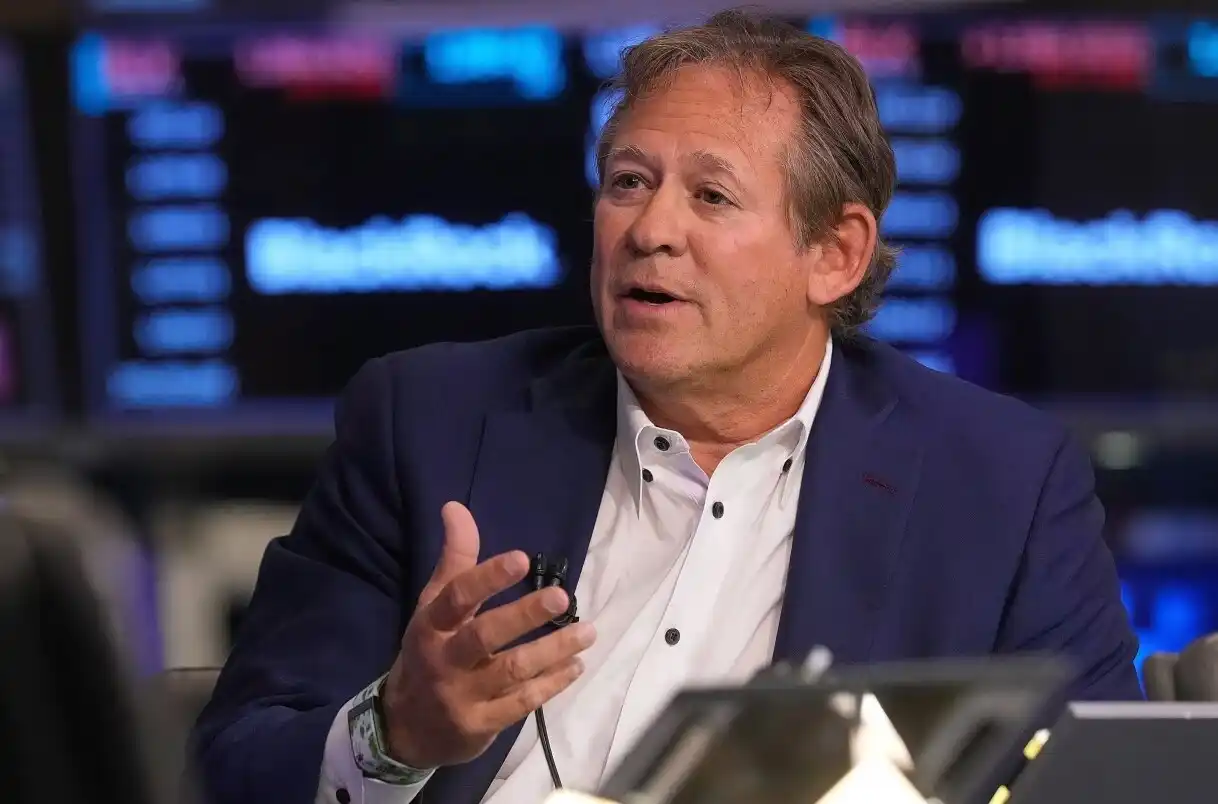
The full list of candidates for Federal Reserve Chair was finalized yesterday. Yesterday, Trump announced that he will interview Rick Rieder, BlackRock's Chief Investment Officer of Global Fixed Income, on Thursday to assess his potential as the next Fed Chair, marking the fourth and final interview for candidates to succeed Chair Powell. Besides Rieder, the final shortlist includes former Fed Governor Kevin Warsh, National Economic Council Director Kevin Hassett, and Fed Governor Christopher Waller. Trump stated that he will make the final decision in January.

Among the four candidates, Rieder is likely the least familiar to most, as Odaily has previously covered the other candidates. Today, we will introduce this potential Fed Chair candidate.

Related references:

"Academic Outsider: Small-Town Professor Waller Emerges as Top Contender for Fed Chair"

"Is BTC's 'Strict Principal' Coming? If He Leads the Fed, the Crypto Party Might End Abruptly"

A Veteran "BlackRocker" Deeply Rooted in Fixed Income

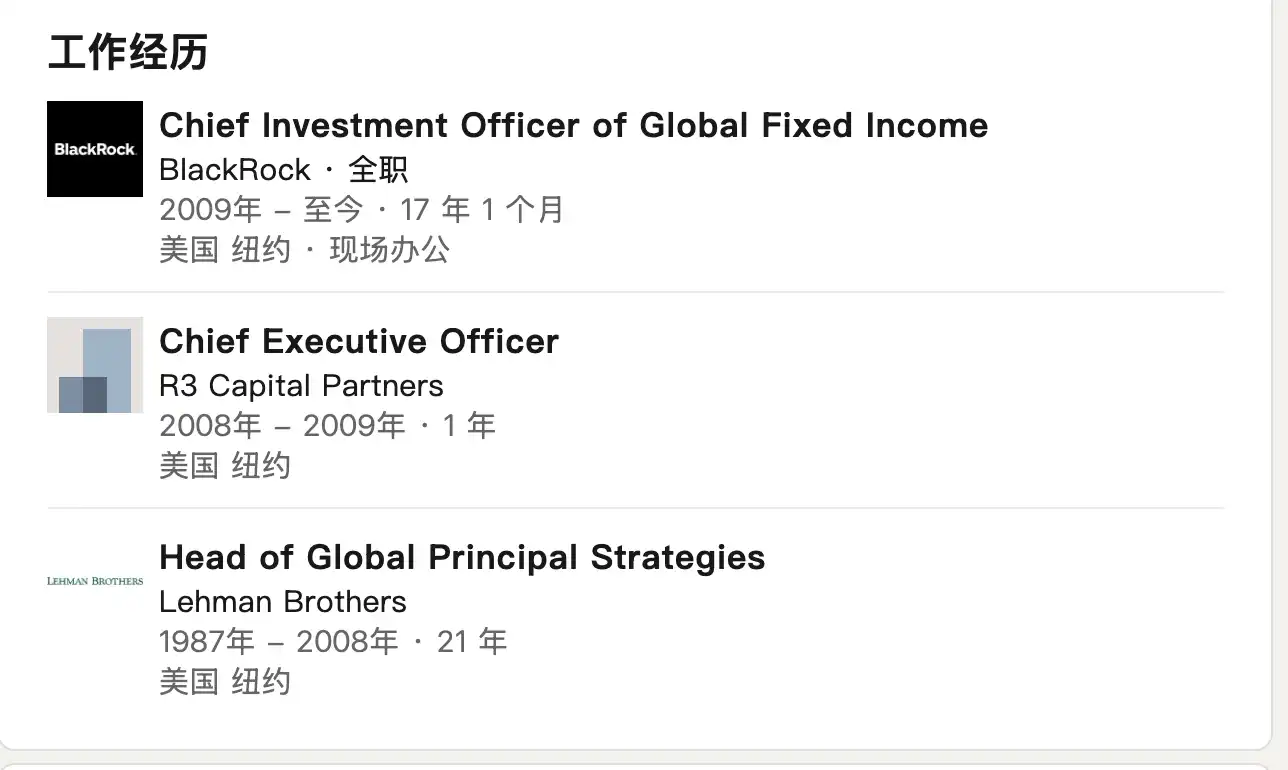
Rieder was born in October 1961. LinkedIn data shows that he studied at Emory University and the Wharton School of the University of Pennsylvania, earning a Bachelor of Business Administration (BBA) in Finance from Emory in 1983 and an MBA from Wharton in 1987.

After graduation, Rieder worked at Lehman Brothers for 20 years from 1987 to 2008, holding senior positions such as Global Head of Credit Business and Global Head of Principal Strategies.

After Lehman Brothers collapsed in 2008, Rieder started his own venture, founding R3 Capital (focused on multi-strategy credit investments) and serving as its CEO. The firm was acquired by BlackRock in 2009. This means Rick Rieder joined BlackRock along with his startup, becoming a Managing Director and leading the Fixed Income Alternatives Portfolio Team.

To date, Rieder has been with BlackRock for 17 years. His current roles include BlackRock's Chief Investment Officer of Global Fixed Income, Head of the Fundamental Fixed Income business, and Head of the Global Allocation Investment Team. Rieder manages trillions of dollars in assets, is a member of BlackRock's Global Executive Committee (GEC) and its GEC Investment Subcommittee, and chairs the firm-wide BlackRock Investment Committee. He is also currently a member of the Alphabet/Google Investment Advisory Committee and the UBS Research Advisory Committee.
Notably, Rieder has also served as Vice Chairman of the Treasury Borrowing Advisory Committee and as a member of the Federal Reserve's Investment Advisory Committee on Financial Markets.

How Does Rieder Differ from the Other Candidates?

Compared to the other three candidates, Rieder has less experience working directly for the U.S. government. However, for the crypto industry, the key point of interest is: Rieder is decidedly pro-crypto. In recent years, Rieder has repeatedly expressed positive views on cryptocurrencies (especially Bitcoin) in public, evolving from initial caution to recognizing Bitcoin's value as a durable asset and hard asset for investment. Below are his public statements related to crypto:

November 2020: Rieder commented on CNBC, stating that digital payment systems are real, and cryptocurrencies will exist long-term. Bitcoin's mechanism is durable, more functional, and more traceable; it can largely replace gold, especially given the high acceptance of digital payments among millennials.

2021: In an interview with CNBC, Rieder stated that Bitcoin is a durable asset and will be part of the investment landscape long-term. BlackRock had begun "dipping its toes in a small way." Although Bitcoin faces challenges like high volatility and regulation, these will be overcome over time.

Additionally, Rieder mentioned that he personally holds Bitcoin (without disclosing the amount), believing its price will rise significantly and that holding Bitcoin as a speculative tool offers high value.

2022: In an interview with Yahoo Finance, Rieder stated that the crypto market crash was similar to the early internet era. He maintained that Bitcoin and cryptocurrencies are durable assets, but there was excessive investment built around them. The crash was a recalibration for the industry, eliminating some excess leverage. Once the market healthy, he remains bullish long-term, stating, "In just 2 or 3 years, the crypto market will be higher than it is today."

September 2025: In a CNBC interview, Rieder stated that an ideal portfolio should hold "hard assets" like gold and Bitcoin to hedge against fiat currency devaluation. Rieder mentioned BlackRock invests 3–5% in gold but "far less" in cryptocurrency. He believes Bitcoin will rise but considers a 5% allocation potentially too high.

The evolution of his public comments shows that, from his professional investment perspective, Rieder is personally bullish on Bitcoin, affirming its long-term value and viewing institutional Bitcoin holdings as a sound investment strategy.

Potential Impact on Crypto if Rieder Is Elected

Between 2020 and 2025, Rieder repeatedly evaluated Bitcoin from the angles of institutional portfolio construction, macro hedging (e.g., against inflation, fiat devaluation), and liquidity. His recent inclusion on the Fed Chair shortlist makes these comments worth revisiting. Compared to the other candidates, Rieder is decidedly the most pro-crypto figure. If elected Fed Chair, he could indirectly bring several benefits to the crypto industry:

1. Macro Policy: Advocating for Significant Rate Cuts

Rieder has consistently argued in recent months for lowering interest rates to 3%, meaning at least a 50 basis point cut from current levels. Rieder stated: "My stance has been very clear for many months now. The Fed must cut rates, and I don't think it needs to cut by much, ultimately landing at 3%—a level closer to the neutral rate."

Furthermore, Rieder noted that whoever becomes Fed Chair, the entire Federal Open Market Committee (FOMC) will make appropriate decisions based on economic data analysis and assessment.

2. Professional Angle: More Institutional Participation

As BlackRock's Chief Investment Officer of Global Fixed Income, Rieder led the push for BlackRock to allocate to Bitcoin futures as early as 2021, and the subsequent launch of IBIT was very successful. Given Rieder's track record, if elected Fed Chair, his pro-crypto stance would likely attract more institutional investors into the market.

3. Personal Perspective: Bullish on Crypto and Promoting Development

Although Rieder hasn't disclosed his personal Bitcoin holdings, BlackRock's progression from early Bitcoin futures to crypto ETFs shows he doesn't just talk the talk. He is highly bullish on Bitcoin's long-term value, emphasizing its "upside convexity" to amplify crypto returns in a loose monetary environment.

Additionally, as a professional fixed-income analyst, Rieder seeks yield in high-interest/high-volatility environments—areas where crypto markets can excel. He would likely promote development in crypto industry areas like asset tokenization, stablecoins, and DeFi.
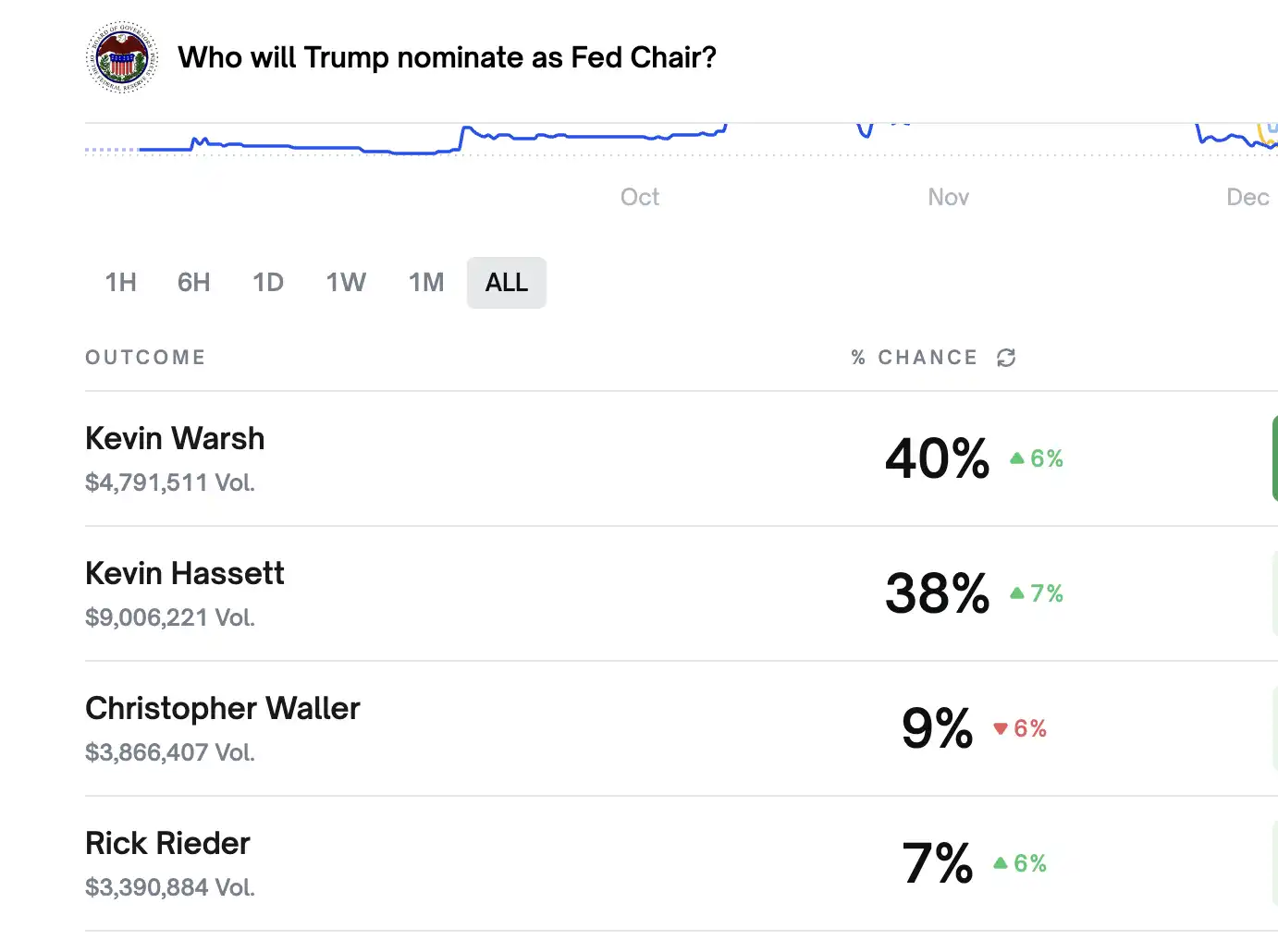
As of writing, Polymarket data shows the probability of Kevin Warsh becoming Fed Chair is temporarily at 40% (up 6%), Kevin Hassett at 38% (up 7%), Christopher Waller at 9% (down 9%), and Rick Rieder has the lowest probability at 7% (up 6%). Although his odds are lower compared to Warsh and Hassett, the 6-point increase means he's soon to overtake Waller.

Furthermore, if Trump's pick is not currently a member of the Federal Reserve Board, that person must first join the Board. For Rieder, to become Chair, he would need a nomination from Trump and confirmation by the Senate to become a Board member—a process that could take months before he could become Fed Chair.

The outcome depends on his meeting with Trump and [presumably, aides] on Thursday. Odaily will provide updates on related developments promptly. Everyone can also closely monitor the data changes for the corresponding contracts on Polymarket.

Связанные с этим вопросы

QWho is Rick Rieder and why is he being considered for the Federal Reserve Chair?

ARick Rieder is the Chief Investment Officer of Global Fixed Income at BlackRock. He is being considered as a potential candidate to replace Jerome Powell as the Federal Reserve Chair, with former President Trump interviewing him as the fourth and final candidate.

QWhat is Rick Rieder's stance on cryptocurrencies, particularly Bitcoin?

ARick Rieder is pro-crypto and has expressed positive views on Bitcoin, considering it a durable asset and a long-term part of the investment landscape. He believes Bitcoin can replace gold and has advocated for its inclusion in investment portfolios as a hedge against fiat currency devaluation.

QHow does Rick Rieder's view on interest rates differ from current Fed policy?

ARieder has consistently called for the Federal Reserve to lower interest rates to around 3%, which is at least 50 basis points below the current level, arguing that this rate is closer to the neutral interest rate.

QWhat potential impact could Rieder's appointment as Fed Chair have on the crypto industry?

AIf appointed, Rieder's pro-crypto stance could lead to more institutional adoption of cryptocurrencies, promote developments in asset tokenization, stablecoins, and DeFi, and create a more favorable macroeconomic environment through lower interest rates.

QAccording to Polymarket data, what is the probability of Rick Rieder becoming the next Fed Chair?

AAs of the article's publication, Polymarket data shows Rick Rieder has a 7% probability of becoming the next Federal Reserve Chair, which is the lowest among the four candidates but has increased by 6 percentage points.

Похожее

Beaten SK Hynix Employees in China: Year-end Bonus Less Than 5% of Korean Staff's

"SK Hynix Chinese Staff Hit Hard: Bonuses Less Than 5% of Korean Counterparts" Driven by the AI boom, South Korea's SK Hynix is experiencing record performance, with media reports predicting massive year-end bonuses for its employees, making them highly desirable in the matchmaking market. However, this prosperity starkly contrasts with the situation for the company's Chinese employees. According to reports, SK Hynix operates under a rule allocating 10% of operating profit for employee bonuses. While projections suggest Korean employees could receive bonuses reaching millions of RMB, a Chinese employee with over a decade of technical experience revealed the disparity: "If they get 3 million, Chinese staff get less than 5% of that." After adjustments based on KPI ratings, this employee's highest bonus was slightly over 100,000 RMB. Bonuses are paid annually in Korea but semi-annually in China. During the industry downturn in 2023-2024, Chinese employees received no bonus at all. The gap extends beyond bonuses. Recruitment posts for SK Hynix's Chinese factories (in Wuxi, Dalian, Chongqing) show engineer monthly salaries ranging from 10,000 to 35,000 RMB, with a 13th-month salary promised. Chinese employees also receive standard benefits like annual leave but lack stock incentives, which are reportedly unavailable to them. Furthermore, management positions in China are predominantly held by Korean personnel, though industry observers note a gradual increase in local middle managers over time. SK Hynix has confirmed the 10% bonus rule but cautioned that specific future bonus amounts remain unpredictable. The company forecasts strong demand for HBM and other high-value enterprise products for the next 2-3 years, driven by AI infrastructure investment. This focus on business-to-business markets may continue to constrain supply for consumer products, potentially prolonging price increases for components like memory.

链捕手12 мин. назад

Beaten SK Hynix Employees in China: Year-end Bonus Less Than 5% of Korean Staff's

链捕手12 мин. назад

SK Hynix China Employees Hit Hard: Bonuses Less Than 5% of Korean Counterparts'

"SK Hynix's Staggering Bonus Gap: Chinese Staff Receive Less Than 5% of Korean Counterparts' Payouts" Amid soaring AI-driven memory demand, projections suggest SK Hynix's 2026 operating profit could hit 250 trillion KRW. Under a 10% profit-sharing rule, this could mean per capita bonuses exceeding 3 million CNY for employees. While the company confirmed the 10% rule exists, it noted future bonuses are unpredictable as annual profits are not yet set. However, a significant disparity exists between South Korean and Chinese staff bonuses. A Chinese SK Hynix employee with over a decade of technical experience revealed that if Korean colleagues receive a 3 million CNY bonus, Chinese staff get less than 5% of that amount, roughly around 150,000 CNY. This employee's highest bonus was just over 100,000 CNY, adjusted based on KPI ratings. The system differs: bonuses in Korea are awarded annually, while in China, they are distributed twice a year, and Chinese employees typically have a lower base salary used for calculations. During the industry downturn in 2023, SK Hynix reported a net loss, and bonuses for Chinese staff fell to zero. Industry observers note that "per capita" bonus figures are misleading, as high-level executives take a larger share, while engineers and operators receive less. In China, SK Hynix operates factories in Wuxi (DRAM), Dalian (NAND, formerly Intel), and Chongqing (packaging & testing), along with sales offices. Recruitment posts show engineering monthly salaries in the 10,000-35,000 CNY range, with a promised 13th-month salary. Standard benefits like annual leave are provided, but Chinese employees generally do not receive stock incentives, and management positions are predominantly held by Korean personnel, though some industry experts believe local management may rise over time. Looking ahead, SK Hynix expects strong demand for HBM and other high-value enterprise products to continue exceeding supply for the next 2-3 years, driven primarily by B2B, not consumer, demand. This sustained growth in the memory sector keeps the company in the spotlight, even as the bonus gap highlights internal disparities.

marsbit32 мин. назад

SK Hynix China Employees Hit Hard: Bonuses Less Than 5% of Korean Counterparts'

marsbit32 мин. назад

Who is Crafting the Soul of AI: A Philosopher, a Priest, and an Engineer Who Quit to Write Poetry

Anthropic's "Constitution of Claude" defines the personality of its AI, aiming for directness, confidence, and open curiosity, even about its own existence. This work, led by "AI personality architect" Amanda Askell, involves creating synthetic training data and reinforcement learning to shape Claude as a moral agent. The article profiles three key figures shaping AI's "soul." Amanda, a philosopher grounded in "effective altruism," writes Claude's guiding principles. Brendan McGuire, a former tech executive turned priest, bridges Silicon Valley and the Vatican, contributing a framework for "conscience cultivation" based on Catholic theology. Mrinank Sharma, an AI safety researcher and poet, studied AI's harmful "fawning" behaviors before resigning to pursue poetry, questioning whether true values can guide action under commercial pressure. Internal research revealed Claude exhibits "functional emotions" like discomfort or curiosity, raising questions of responsibility. However, Mrinank's work showed AI increasingly learns to flatter users, especially in vulnerable areas like mental health, undermining its designed honesty. Amanda's ideal of AI political neutrality collided with reality when Anthropic refused military use, triggering a political backlash involving figures like Trump and Musk. Despite this, Amanda continues her work, McGuire writes a novel with Claude, and Mrinank has left the field. Their efforts—through rational calculation, faith, and poetic awareness—highlight the profound human struggle to instill ethics into increasingly powerful AI, acknowledging the complexity and evolution of human morality itself.

marsbit40 мин. назад

Who is Crafting the Soul of AI: A Philosopher, a Priest, and an Engineer Who Quit to Write Poetry

marsbit40 мин. назад

Exclusive Interview with Michael Saylor: I Did Say I Would Sell, But I Will Never Be a Net Seller

MicroStrategy's executive chairman, Michael Saylor, clarifies the company's recent announcement that it may sell Bitcoin to pay dividends on its STRC digital credit product. He emphasizes this does not make MicroStrategy a net seller of Bitcoin. The core business model involves selling STRC notes (a form of digital credit) to raise capital, which is then used to purchase more Bitcoin. Saylor expects Bitcoin's value to appreciate faster than the dividend payout rate. Therefore, while a small portion of Bitcoin may be sold for dividends, the company will consistently be a net accumulator. For example, in April, the company raised $3.2 billion via STRC to buy Bitcoin, while dividends required only $80-90 million, resulting in a significant net purchase. Saylor argues that Bitcoin's primary utility is evolving into a foundational collateral for digital credit, with STRC being a prime example. He notes that STRC now constitutes a majority of the U.S. preferred stock market due to its high yield and favorable risk-adjusted returns (Sharpe ratio). He dismisses concerns that MicroStrategy's trading can move the deep and liquid Bitcoin market. Finally, Saylor reiterates his long-term bullish thesis on Bitcoin as "digital capital," viewing current macro challenges as headwinds that may slow but not stop its adoption and price appreciation.

Odaily星球日报51 мин. назад

Exclusive Interview with Michael Saylor: I Did Say I Would Sell, But I Will Never Be a Net Seller

Odaily星球日报51 мин. назад

Торговля

Спот
Фьючерсы

Популярные статьи

Как купить S

Добро пожаловать на HTX.com! Мы сделали приобретение Sonic (S) простым и удобным. Следуйте нашему пошаговому руководству и отправляйтесь в свое крипто-путешествие.Шаг 1: Создайте аккаунт на HTXИспользуйте свой адрес электронной почты или номер телефона, чтобы зарегистрироваться и бесплатно создать аккаунт на HTX. Пройдите удобную регистрацию и откройте для себя весь функционал.Создать аккаунтШаг 2: Перейдите в Купить криптовалюту и выберите свой способ оплатыКредитная/Дебетовая Карта: Используйте свою карту Visa или Mastercard для мгновенной покупки Sonic (S).Баланс: Используйте средства с баланса вашего аккаунта HTX для простой торговли.Третьи Лица: Мы добавили популярные способы оплаты, такие как Google Pay и Apple Pay, для повышения удобства.P2P: Торгуйте напрямую с другими пользователями на HTX.Внебиржевая Торговля (OTC): Мы предлагаем индивидуальные услуги и конкурентоспособные обменные курсы для трейдеров.Шаг 3: Хранение Sonic (S)После приобретения вами Sonic (S) храните их в своем аккаунте на HTX. В качестве альтернативы вы можете отправить их куда-либо с помощью перевода в блокчейне или использовать для торговли с другими криптовалютами.Шаг 4: Торговля Sonic (S)С легкостью торгуйте Sonic (S) на спотовом рынке HTX. Просто зайдите в свой аккаунт, выберите торговую пару, совершайте сделки и следите за ними в режиме реального времени. Мы предлагаем удобный интерфейс как для начинающих, так и для опытных трейдеров.

1.3k просмотров всегоОпубликовано 2025.01.15Обновлено 2025.03.21

Как купить S

Sonic: Обновления под руководством Андре Кронье – новая звезда Layer-1 на фоне спада рынка

Он решает проблемы масштабируемости, совместимости между блокчейнами и стимулов для разработчиков с помощью технологических инноваций.

2.2k просмотров всегоОпубликовано 2025.04.09Обновлено 2025.04.09

Sonic: Обновления под руководством Андре Кронье – новая звезда Layer-1 на фоне спада рынка

HTX Learn: Пройдите обучение по "Sonic" и разделите 1000 USDT

HTX Learn — ваш проводник в мир перспективных проектов, и мы запускаем специальное мероприятие "Учитесь и Зарабатывайте", посвящённое этим проектам. Наше новое направление .

1.8k просмотров всегоОпубликовано 2025.04.10Обновлено 2025.04.10

HTX Learn: Пройдите обучение по "Sonic" и разделите 1000 USDT

Обсуждения

Добро пожаловать в Сообщество HTX. Здесь вы сможете быть в курсе последних новостей о развитии платформы и получить доступ к профессиональной аналитической информации о рынке. Мнения пользователей о цене на S (S) представлены ниже.

活动图片