Taiwan To Introduce Strict Crypto Penalties To Crackdown On Unlicensed And Fraudulent Activity

bitcoinistОпубликовано 2026-04-04Обновлено 2026-04-04

Введение

Taiwan's Executive Yuan has approved a draft of the Virtual Asset Service Act (VASA), introducing strict regulations and severe consequences for unlicensed or fraudulent crypto activities. The legislation imposes prison sentences of up to 10 years and fines as high as $6.25 million for offenses like market manipulation. Unlicensed stablecoin issuance could result in 7-year prison terms and fines up to $3.13 million. The new rules also prohibit stablecoin issuers from paying interest to holders and require robust internal controls. The regulatory framework, developed by the Financial Supervisory Commission, includes a phased implementation approach and aims to enhance transaction security while supporting financial innovation.

Taiwanese authorities have approved a new draft of their crucial crypto legislation, introducing severe penalties for unlicensed or fraudulent activities related to stablecoins and other digital assets.

Taiwan Approves $6M Fines To Combat Crypto Fraud

On Friday, local news outlets reported that the Executive Yuan passed the draft of the Virtual Asset Service Act (VASA) on April 2, marking a major step to regulate crypto assets in Taiwan.

The VASA, introduced by the Financial Supervisory Commission (FSC) last year, supports the efforts by Taiwanese authorities to establish a comprehensive crypto framework for Virtual Asset Service Providers (VASPs) and stablecoin issuers.

In 2024, the FSC overhauled its Anti-Money Laundering (AML) framework to include crypto businesses, adding stricter AML guidelines for VASPs and requiring all digital asset firms to complete the AML registration by September 2025.

Premier Cho Jung-tai explained that the new framework, which will be implemented in four gradual phases, includes industry self-regulation and an AML compliance registration system. The measures aim to enhance the security of virtual asset transactions, pilot custody services, and support the growth of domestic financial innovation, he added.

According to the reports, the draft requires VASPs to operate exclusively in this field and meet specific standards for their company name, organizational structure, and capital. Financial institutions can also operate VASP services in addition to their other businesses, if approved.

In addition, special regulations would be customized to suit the nature of each service provider. For instance, trading platforms would be required to establish clear guidelines for listing and delisting virtual assets.

The draft also includes heavy penalties for unlicensed and fraudulent activities, with offences involving crypto falsification, concealment, or price manipulation risking 3-10 years in prison and fines of up to NTD 200 million, worth $6.25 million.

Meanwhile, firms that issue stablecoins without a license could face up to seven years in prison and fines of up to NTD 100 million, or about $3.13 million, according to the draft.

New Stablecoin Regulations To Prohibit Interest Payments

Officials outlined the main differences between the recently passed VASA draft and the FSC’s original text regarding stablecoin guidelines, which include issuance and redemption regulations, restrictions on interest or returns, and internal control and cybersecurity management.

Under the new draft, the issuance and redemption of stablecoins must be conducted at face value, and issuers may not refuse redemption requests from holders. Issuers are also prohibited from paying interest or returns to holders on the stablecoins they issue, aligning with international trends.

Lastly, issuers must establish and maintain robust internal control and audit systems, along with information security management mechanisms, to ensure the proper issuance and redemption of stablecoins.

FSC Deputy Chairman Chen Yen-liang asserted that stablecoin issuance is not currently limited to banks, but noted that the financial institutions are “generally better positioned to meet the relevant requirements” due to their capital strength and risk management capabilities.

For other operators, different capital thresholds and operating guarantee requirements would be set based on the nature of their business, with further details to be announced after the legislation officially passes.

In December, FSC Chairman Peng Jin-long revealed that the island’s first regulated stablecoin could debut this year. As reported by Bitcoinist, stablecoin-centered regulations would be developed within six months after the VASA’s approval, setting the launch of locally issued tokens pegged to the NTD or the USD to the second half of 2026.

Deputy Chairman Chen added that the regulator would adopt a “gradual opening” model, and relevant regulations would be developed by authorities alongside the Central Bank.

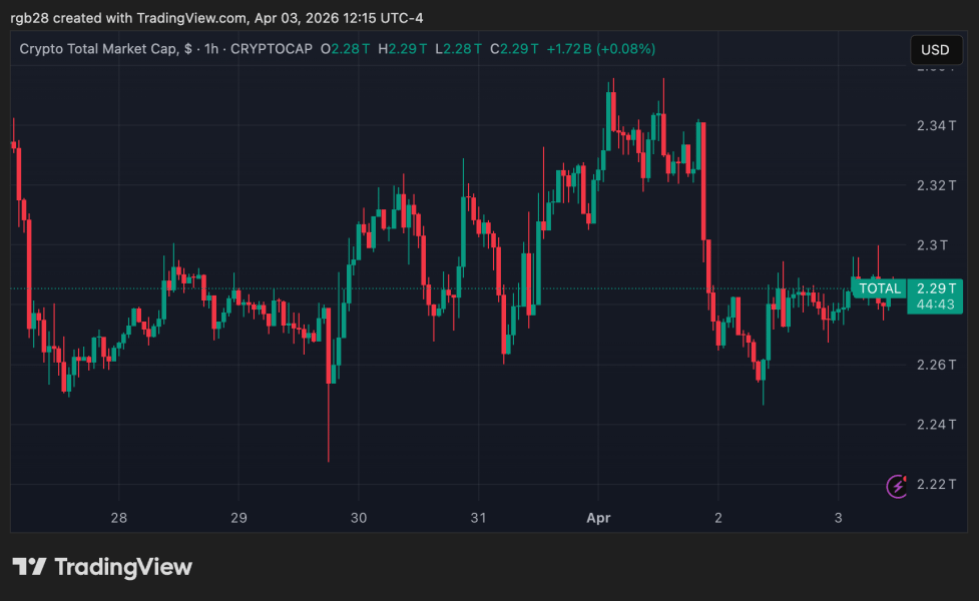
The total crypto market capitalization is at $2.29 trillion on the one-week chart. Source: TOTAL on TradingView

Связанные с этим вопросы

QWhat is the name of the new crypto legislation draft approved by Taiwanese authorities and what is its main purpose?

AThe new crypto legislation draft is called the Virtual Asset Service Act (VASA). Its main purpose is to regulate crypto assets by introducing severe penalties for unlicensed or fraudulent activities related to stablecoins and other digital assets, and to establish a comprehensive framework for Virtual Asset Service Providers (VASPs) and stablecoin issuers.

QWhat are the potential penalties for offences involving crypto falsification, concealment, or price manipulation under the new draft?

AOffences involving crypto falsification, concealment, or price manipulation risk 3-10 years in prison and fines of up to NTD 200 million, which is worth approximately $6.25 million.

QWhat specific restrictions does the new draft place on stablecoin issuers regarding interest payments and redemptions?

AThe new draft prohibits stablecoin issuers from paying interest or returns to holders on the stablecoins they issue. It also requires that the issuance and redemption of stablecoins must be conducted at face value, and issuers may not refuse redemption requests from holders.

QBy what date are all digital asset firms required to complete their Anti-Money Laundering (AML) registration in Taiwan?

AAll digital asset firms are required to complete their Anti-Money Laundering (AML) registration by September 2025.

QAccording to the FSC Deputy Chairman, why are financial institutions better positioned to meet the requirements for stablecoin issuance?

AFSC Deputy Chairman Chen Yen-liang stated that financial institutions are 'generally better positioned to meet the relevant requirements' due to their capital strength and risk management capabilities.

Похожее

Gensyn AI: Don't Let AI Repeat the Mistakes of the Internet

In recent months, the rapid growth of the AI industry has attracted significant talent from the crypto sector. A persistent question among researchers intersecting both fields is whether blockchain can become a foundational part of AI infrastructure. While many previous AI and Crypto projects focused on application layers (like AI Agents, on-chain reasoning, data markets, and compute rentals), few achieved viable commercial models. Gensyn differentiates itself by targeting the most critical and expensive layer of AI: model training. Gensyn aims to organize globally distributed GPU resources into an open AI training network. Developers can submit training tasks, nodes provide computational power, and the network verifies results while distributing incentives. The core issue addressed is not decentralization for its own sake, but the increasing centralization of compute power among tech giants. In the era of large models, access to GPUs (like the H100) has become a decisive bottleneck, dictating the pace of AI development. Major AI companies are heavily dependent on large cloud providers for compute resources. Gensyn's approach is significant for several reasons: 1) It operates at the core infrastructure layer (model training), the most resource-intensive and technically demanding part of the AI value chain. 2) It proposes a more open, collaborative model for compute, potentially increasing resource utilization by dynamically pooling idle GPUs, similar to early cloud computing logic. 3) Its technical moat lies in solving complex challenges like verifying training results, ensuring node honesty, and maintaining reliability in a distributed environment—making it more of a deep-tech infrastructure company. 4) It targets a validated, high-growth market with genuine demand, rather than pursuing blockchain integration without purpose. Ultimately, the boundaries between Crypto and AI are blurring. AI requires global resource coordination, incentive mechanisms, and collaborative systems—areas where crypto-native solutions excel. Gensyn represents a step toward making advanced training capabilities more accessible and collaborative, moving beyond a niche controlled by a few giants. If successful, it could evolve into a fundamental piece of AI infrastructure, where the most enduring value in the AI era is often created.

marsbit9 ч. назад

Gensyn AI: Don't Let AI Repeat the Mistakes of the Internet

marsbit9 ч. назад

Why is China's AI Developing So Fast? The Answer Lies Inside the Labs

A US researcher's visit to China's top AI labs reveals distinct cultural and organizational factors driving China's rapid AI development. While talent, data, and compute are similar to the West, Chinese labs excel through a pragmatic, execution-focused culture: less emphasis on individual stardom and conceptual debate, and more on teamwork, engineering optimization, and mastering the full tech stack. A key advantage is the integration of young students and researchers who approach model-building with fresh perspectives and low ego, prioritizing collective progress over personal credit. This contrasts with the US culture of self-promotion and "star scientist" narratives. Chinese labs also exhibit a strong "build, don't buy" mentality, preferring to develop core capabilities—like data pipelines and environments—in-house rather than relying on external services. The ecosystem feels more collaborative than tribal, with mutual respect among labs. While government support exists, its scale is unclear, and technical decisions appear driven by labs, not state mandates. Chinese companies across sectors, from platforms to consumer tech, are building their own foundational models to control their tech destiny, reflecting a broader cultural drive for technological sovereignty. Demand for AI is emerging, with spending patterns potentially mirroring cloud infrastructure more than traditional SaaS. Despite challenges like a less mature data industry and GPU shortages, Chinese labs are propelled by vast talent, rapid iteration, and deep integration with the open-source community. The competition is evolving beyond a pure model race into a contest of organizational execution, developer ecosystems, and industrial pragmatism.

marsbit10 ч. назад

Why is China's AI Developing So Fast? The Answer Lies Inside the Labs

marsbit10 ч. назад

3 Years, 5 Times: The Rebirth of a Century-Old Glass Factory

Corning, a 175-year-old glass company, is experiencing a dramatic revival as a key player in AI infrastructure, driven by surging demand for high-performance optical fiber in data centers. AI data centers require vastly more fiber than traditional ones—5 to 10 times as much per rack—to handle high-speed data transmission between GPUs. This structural demand shift, coupled with supply constraints from the lengthy expansion cycle for fiber preforms, has created a significant supply-demand gap. Nvidia has invested in Corning, along with Lumentum and Coherent, in a $4.5 billion total commitment to secure the optical supply chain for AI. Corning's competitive edge lies in its expertise in producing ultra-low-loss, high-density, and bend-resistant specialty fiber, which is critical for 800G+ and future 1.6T data rates. Its deep involvement in co-packaged optics (CPO) with partners like Nvidia further solidifies its position. While not the largest fiber manufacturer globally, Corning's revenue from enterprise/data center clients now exceeds 40% of its optical communications sales, and it has secured multi-year supply agreements with major hyperscalers including Meta and Nvidia. Financially, Corning's optical communications revenue has surged, doubling from $1.3 billion in 2023 to over $3 billion in 2025. Its stock price has risen nearly 6-fold since late 2023. Key future catalysts include the rollout of Nvidia's CPO products and the scale of undisclosed customer agreements. However, risks include high current valuations and potential disruption from next-generation technologies like hollow-core fiber. The company's long-term bet on light over electricity, maintained even through the telecom bubble crash, is now being validated by the AI boom.

marsbit11 ч. назад

3 Years, 5 Times: The Rebirth of a Century-Old Glass Factory

marsbit11 ч. назад

Торговля

Спот
Фьючерсы
活动图片