# Сопутствующие статьи по теме Tokenization

Новостной центр HTX предлагает последние статьи и углубленный анализ по "Tokenization", охватывающие рыночные тренды, новости проектов, развитие технологий и политику регулирования в криптоиндустрии.

7 Must-Know Crypto Trends and Lessons for 2026

"2026 Crypto Trends & Lessons: A Summary The crypto market of 2025 was a year of 'carnage' with most altcoins crashing 80-99%, Bitcoin dominance rising, and stocks outperforming crypto despite positive industry developments. Key trends to understand for 2026 include: 1. **Prediction Markets:** Emerged as a fast-growing vertical, with platforms like Polymarket seeing $3.8B in weekly volume. They function as versatile trading tools for directional bets, hedging, and yield generation. 2. **Options Strategies:** Cash-secured puts and covered calls became popular conservative strategies for generating yield on stablecoins and altcoins by selling option premiums. 3. **Shift to Fundamentals & Ownership Tokens:** Narrative fatigue set in, shifting focus to real metrics like user count and revenue. The problematic misalignment between equity and token holders (e.g., in acquisitions by Pumpfun and Circle) highlighted the need for better structures. The MetaDAO model, offering fair launches and true ownership/control for token holders, gained traction with 'ownership tokens'. 4. **Tokenization of Securities:** A major regulatory breakthrough occurred with an SEC no-action letter for DTCC's tokenization pilot. This paves the way for increased tokenization of stocks and bonds, accelerating TradFi-DeFi integration starting in 2026. 5. **Consumer Crypto & Perps as Core:** Consumer-facing products (Pumpfun, prediction markets, collectibles) and perpetual futures (reaching $1.3T monthly volume) proved to be the industry's product-market fit, offering entertainment and speculation. 6. **The Rise of the Storyteller:** The value of skilled 'narrators' or storytellers was recognized beyond crypto, creating opportunities for those who can build a brand and explain complex topics effectively. In summary, 2026 will be less about easy games and more about fundamentals, value accumulation, and finding a real competitive edge through clear thinking, storytelling, product building, or rational trading."

marsbit12/20 08:21

7 Must-Know Crypto Trends and Lessons for 2026

marsbit12/20 08:21

7 Crypto Trends and Lessons You Must Know in 2026

The crypto market in 2025 was marked by extreme volatility and a significant downturn, with most altcoins dropping 80–99% in value. Bitcoin outperformed, reclaiming over 60% market dominance, while Ethereum stagnated. Despite positive developments like clearer regulations and institutional adoption, equities significantly outperformed crypto. Key trends and lessons for 2026 include: - Prediction markets** grew rapidly, with platforms like Polymarket reaching $3.8B in weekly volume, serving as versatile trading tools. - Cash-secured puts and covered calls** emerged as conservative strategies for generating yield. - Narrative fatigue accelerated, shifting focus to fundamentals and real metrics, amid growing tension between equity and token holders in M&A deals. - Market-governed organizations like MetaDAO introduced “ownership tokens,” aligning incentives and giving token holders real control and value. - Tokenization of securities gained regulatory approval, paving the way for TradFi and DeFi convergence. - Consumer crypto products and perpetuals (reaching $1.3T monthly volume) demonstrated strong product-market fit. - Storytelling became a critical skill, with increased demand for authentic narrators and community builders. The market is maturing, emphasizing fundamentals, value accumulation, and competitive edges like clear thinking, storytelling, product-building, or disciplined trading.

深潮12/20 04:01

7 Crypto Trends and Lessons You Must Know in 2026

深潮12/20 04:01

Columbia Professor Exposes the 'Conspiracy of Giants Going On-Chain': Beware the 'Suit Simps' Selling Out Crypto's Future

In his article, Columbia Business School professor Omid Malekan expresses skepticism toward the recent embrace of tokenization by major traditional finance (TradFi) firms—including DTCC, SWIFT, Visa, Stripe, and PayPal. While these companies publicly promote blockchain's benefits—such as real-time payments, 24/7 settlement, and programmability—they largely ignore the existential threat that permissionless, decentralized networks pose to their core business models. Malekan argues that truly decentralized systems like Ethereum fundamentally challenge the centralized control these institutions rely on. For example, DTCC’s tokenization efforts avoid addressing how direct on-chain issuance could eliminate the need for centralized clearinghouses. Similarly, stablecoins threaten SWIFT’s cross-border messaging monopoly and Visa’s card-based payment model. Although these firms see growth opportunities in blockchain—such as new fee structures or expanded services—they face an innovator’s dilemma: their legacy businesses must be disrupted for crypto’s full potential to materialize. Malekan warns that these companies, driven by risk aversion and entrenched interests, may push for regulatory capture and compromise core crypto values like permissionless access and censorship resistance. He highlights concerning trends: JPMorgan limiting tokenized assets to accredited investors, DTCC favoring permissioned “enterprise chains,” and Stripe supporting a initially permissioned blockchain. Malekan cautions against “suit simps” in crypto—those who compromise decentralization to appease traditional finance—and urges the industry to avoid diluting its foundational innovations as TradFi adopts blockchain technology.

比推12/19 21:39

Columbia Professor Exposes the 'Conspiracy of Giants Going On-Chain': Beware the 'Suit Simps' Selling Out Crypto's Future

比推12/19 21:39

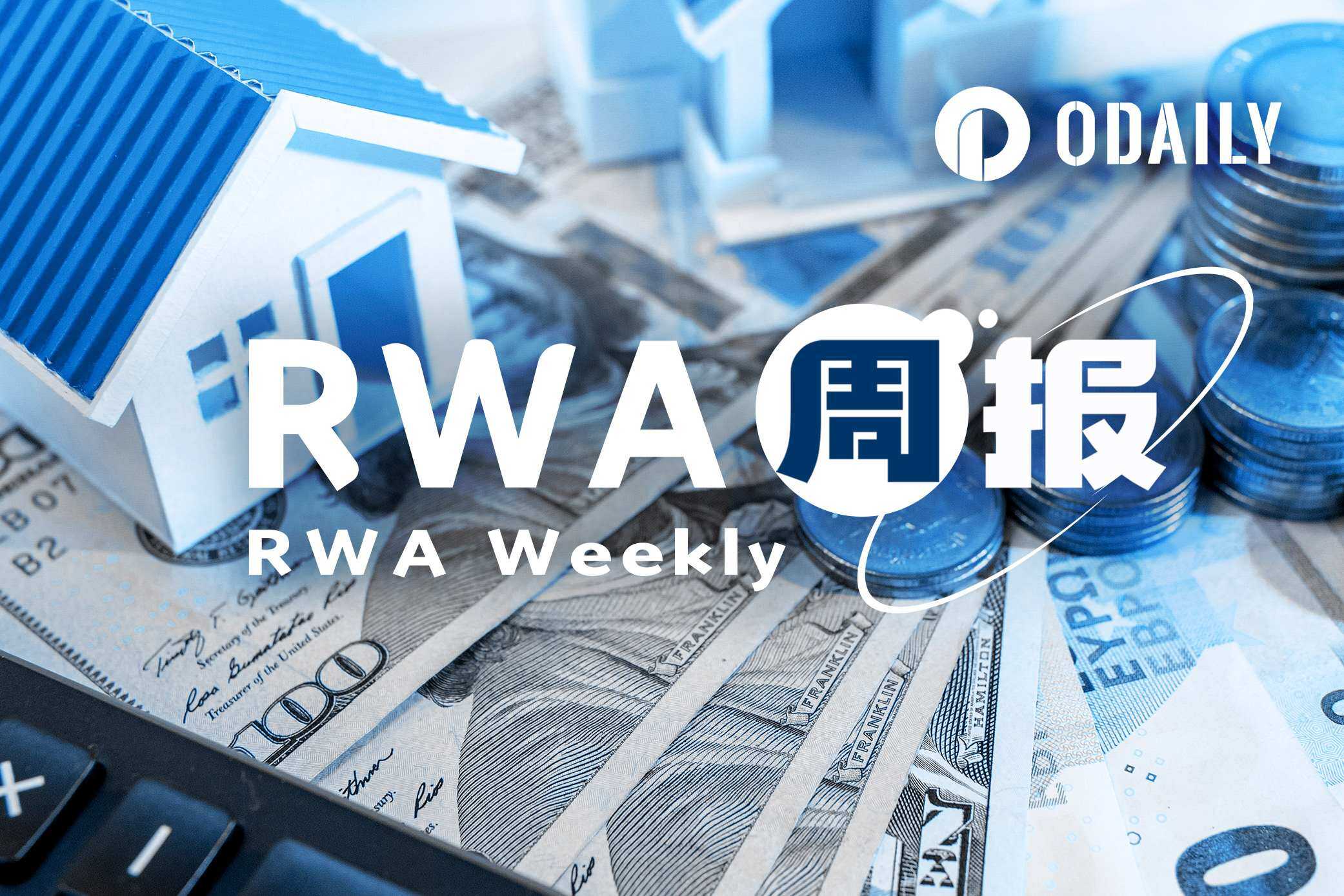
RWA Weekly: Coinbase Announces Launch of Prediction Markets and Tokenized Stocks; Stablecoin U Goes Live on BNB Chain and Ethereum

RWA Weekly Roundup: Coinbase Launches Prediction Markets and Tokenized Stocks; Stablecoin $U Debuts on BNB Chain and Ethereum The on-chain RWA market cap rose slightly to $18.9 billion, while stablecoin market capitalization exceeded $300 billion, though transaction activity declined, indicating a "stagnant liquidity" phase. Regulatory developments accelerated globally, with China promoting the digital yuan, and the U.S., Canada, and Hong Kong advancing stablecoin and asset tokenization frameworks. Traditional financial institutions expanded their involvement: JPMorgan launched a tokenized money market fund on Ethereum and integrated JPM Coin with Base, while Visa and Mastercard extended stablecoin payment services. DTCC partnered with Canton Network for U.S. Treasury tokenization. Coinbase introduced prediction markets and tokenized stocks, PayPal launched a PYUSD savings vault, and SoFi issued its own stablecoin, SoFiUSD. Emerging markets like Brazil and Pakistan also explored sovereign asset tokenization. Stablecoin $U went live on BNB Chain and Ethereum, integrating with DeFi protocols like PancakeSwap and ListaDAO. Despite growth, JPMorgan analysts caution that stablecoin market size may not reach $1 trillion by 2028, projecting a more moderate expansion to $500-600 billion. The sector continues to evolve, driven by regulatory clarity and institutional adoption, embedding RWA deeper into global payment and asset management systems.

marsbit12/19 13:06

RWA Weekly: Coinbase Announces Launch of Prediction Markets and Tokenized Stocks; Stablecoin U Goes Live on BNB Chain and Ethereum

marsbit12/19 13:06

活动图片