# Сопутствующие статьи по теме Liquidity

Новостной центр HTX предлагает последние статьи и углубленный анализ по "Liquidity", охватывающие рыночные тренды, новости проектов, развитие технологий и политику регулирования в криптоиндустрии.


After Nvidia's Earnings, Why Is the Market Still "Yawning"?

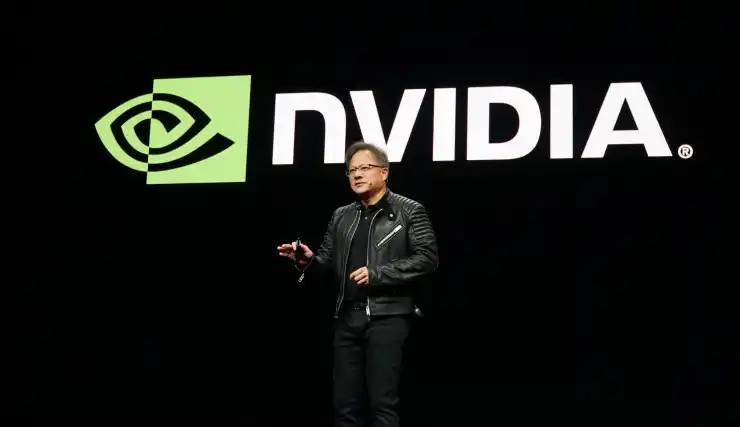
Nvidia's earnings report, often dubbed the "Super Bowl" of earnings season, met expectations, yet its stock became stuck around the key $200 level in after-hours trading. Surprisingly, the market's reaction was muted, with the VIX 1-day volatility measure rising less than anticipated before falling sharply. This calm suggests a potential major shift in market structure—from extreme individual stock movements toward a broader, more macro theme: "Dispersion Unwind." Prior to earnings, heavy options activity, particularly out-of-the-money calls at strikes like $200 and $195, had set up aggressive bets. However, as the stock failed to break above these levels, the options market shifted from being a potential catalyst to a drag, with gamma squeeze dynamics likely working in reverse and accelerating the stock's stagnation. This overall market "boredom" post-Nvidia indicates that the previous high-dispersion regime—where a few AI winners like Nvidia and AMD saw extreme volatility while many other stocks lagged—may be ending. Key indicators like the 3-month dispersion vs. correlation spread (DSPX-COR3M) suggest a reversion to the mean is likely, meaning individual stock volatility will converge toward index volatility, and correlations between stocks will rise. This would make alpha-generating long/short strategies more difficult and could prompt a broader sector rotation. Adding to the technical backdrop is the settlement of approximately $1370 billion in US Treasury securities over several trading days, which could inject liquidity strains and increase short-term market noise. Looking ahead, the market awaits new catalysts: clearer macro policy (especially from the Fed), broader validation of AI earnings beyond Nvidia, and the potential self-fulfilling momentum of dispersion convergence. For investors, this may be a time to reduce exposure to crowded, option-heavy single names and consider sectors that could gain from a convergence trade or macro rebound, while potentially using low VIX levels to add portfolio protection.

marsbit02/26 13:22

After Nvidia's Earnings, Why Is the Market Still "Yawning"?

marsbit02/26 13:22

Huobi Growth Academy | Crypto Market Macro Report: Repricing of Crypto Assets Amid Receding Liquidity

In Q1 2026, the cryptocurrency market experienced a historic deleveraging crash, with Bitcoin falling over 40% from its peak and Ethereum and altcoins declining even more sharply. The collapse was driven by a confluence of three major liquidity-tightening factors: the unwinding of yen carry trades, the U.S. Treasury's TGA account rebuild draining market liquidity, and systemic increases in derivatives margin requirements. These factors, combined with the crypto market’s inherent high leverage and overvaluation, triggered a cascading sell-off. The report highlights that U.S. stock market’s extreme valuations acted as a ceiling for risk assets, including crypto. The reversal of yen carry trades—where investors borrowed cheap yen to invest in higher-yielding assets like crypto—accelerated as the Bank of Japan signaled a potential end to ultra-loose policies. Simultaneously, the U.S. Treasury’s replenishment of its TGA account and increased bond issuance withdrew nearly $200 billion in liquidity from financial markets. Additionally, rising margin requirements on derivatives exchanges forced further deleveraging, exacerbating the downturn. Crypto’s structural vulnerabilities—such as high leverage, stagnant stablecoin inflows, and declining on-chain activity—amplified the sell-off. Looking ahead, crypto markets are entering a macro-driven phase where liquidity indicators—such as Fed policy, TGA balances, yen-USD exchange rates, and stablecoin flows—will be critical. The market is expected to remain under pressure until macro liquidity conditions improve, likely in the second half of 2026. The era of excess-liquidity-driven growth is over; crypto assets will now be repriced under a new macro-normal regime.

marsbit02/26 08:11

Huobi Growth Academy | Crypto Market Macro Report: Repricing of Crypto Assets Amid Receding Liquidity

marsbit02/26 08:11

When Depth Becomes an Illusion: Polymarket Faces 'Order Attack' Stress Test

A sophisticated "order attack" is exploiting a critical vulnerability in Polymarket's hybrid off-chain matching/on-chain settlement system. For less than $0.10 in gas fees on Polygon, an attacker can initiate a trade and then, in the brief window before on-chain execution, drain their wallet via a high-gas transfer. This causes the initial trade to fail on-chain due to insufficient funds. However, Polymarket's off-chain system responds by forcibly removing all the legitimate market maker orders that were matched with the failed transaction. This attack has two primary profit methods. First, attackers clear the order book of competitors, create a liquidity vacuum, and then place their own orders with artificially wide spreads to monopolize trading. Second, they "hunt" automated trading bots: after a trade is matched off-chain, a bot hedges its new position, but the attacker then forces the original trade to fail on-chain. This leaves the bot with an unhedged, risky position, which the attacker exploits for profit. One identified attacker address, created in February 2026, reportedly profited over $16,000 in a single day by targeting just 7 markets. The attack severely undermines market maker confidence, threatens the platform's liquidity, and exposes a fundamental design flaw. While the community has developed monitoring tools, Polymarket team has not yet issued an official fix.

比推02/26 04:52

When Depth Becomes an Illusion: Polymarket Faces 'Order Attack' Stress Test

比推02/26 04:52

活动图片