# Сопутствующие статьи по теме Liquidity Crisis

Новостной центр HTX предлагает последние статьи и углубленный анализ по "Liquidity Crisis", охватывающие рыночные тренды, новости проектов, развитие технологий и политику регулирования в криптоиндустрии.

Derive and Strands Introduce Off-Exchange Custody for On-Chain Derivatives

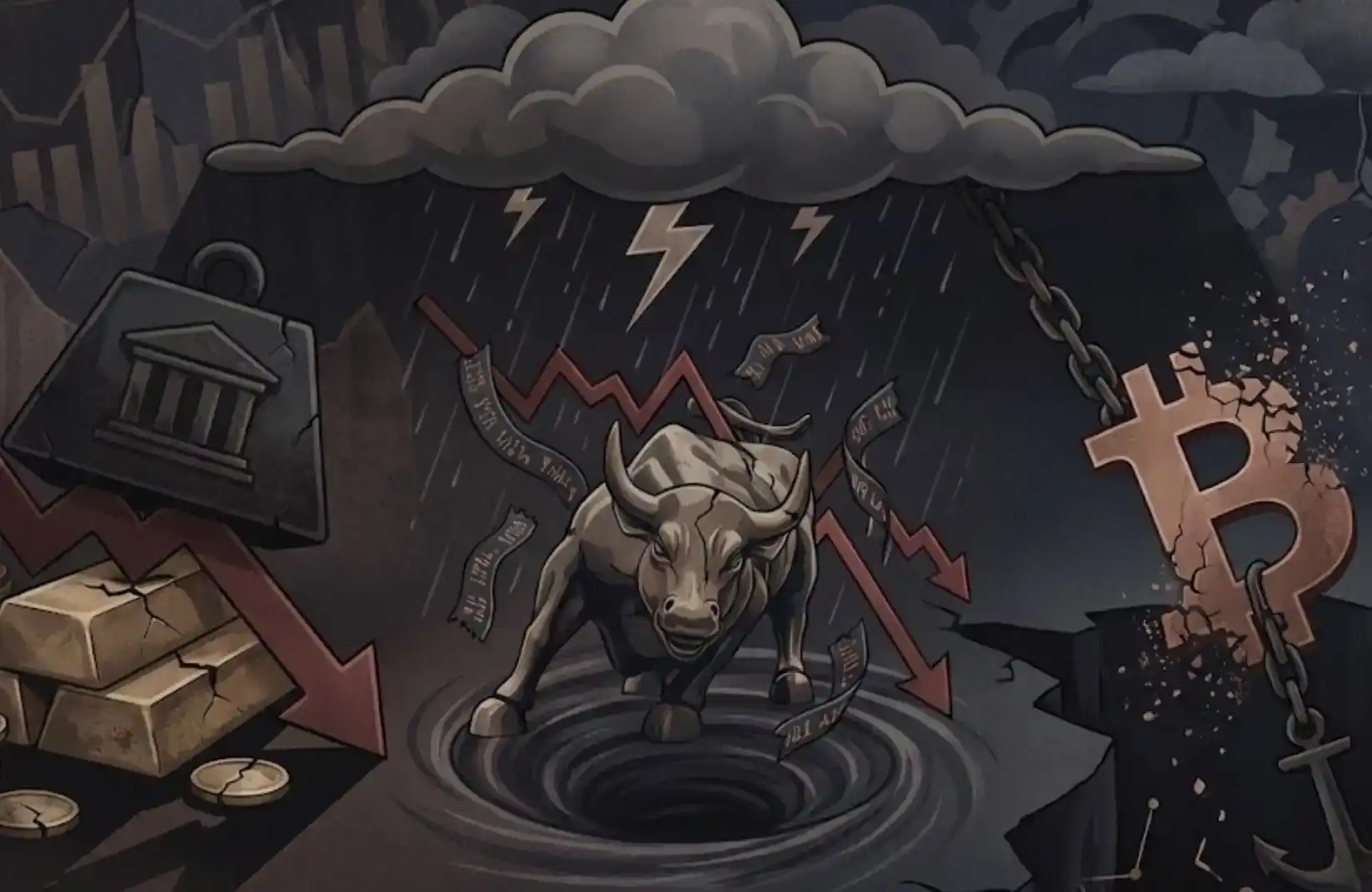
On February 6th, a sudden and severe market crash occurred across multiple asset classes without a clear catalyst. Bitcoin plunged 16% to $60,000, silver dropped 17%, and the tech-heavy Nasdaq fell 1.5%, resulting in $2.6 billion in crypto liquidations. The simultaneous decline in these diverse assets—often seen as a hedge (silver), a growth bet (tech stocks), and a high-risk casino (crypto)—suggests a severe liquidity crisis. In equities, AMD and Alphabet reported strong earnings but provided future guidance that disappointed overly optimistic markets, triggering a sector-wide selloff in chips and tech. The massive capital expenditure plans from Big Tech (over $500 billion collectively) raised concerns that AI is a capital-intensive endeavor rather than a guaranteed profit engine, threatening high valuations. Silver, after a massive 68% rally in January, crashed 50% in three days. Its dual nature as both an industrial metal and a safe-haven asset became a curse. The selloff was exacerbated by increased margin requirements, reduced market maker activity, and the surprise nomination of a hawkish Fed chair by Trump, which reduced fears of inflationary monetary policy. The crypto market, which had been artificially propped up by massive institutional buying throughout 2025, was hit hardest as it is often the first asset sold in a liquidity crunch to cover losses elsewhere. The true epicenter of the crisis may be Japan, where the 40-year government bond yield surged past 4% for the first time. This shattered the foundation of the massive Yen carry trade, forcing global funds to unwind positions in various assets to cover their soaring costs, creating a systemic liquidity black hole.

marsbit02/10 13:14

Derive and Strands Introduce Off-Exchange Custody for On-Chain Derivatives

marsbit02/10 13:14

The First Snowfall in the Crypto Industry of 2026

In February 2026, the crypto industry faces a severe downturn, marked by capital flight, collapsing narratives, and a loss of faith. A meeting with a VC friend in Beijing sets the tone: investment has stalled for half a year, and even committed believers are questioning the future. The announcement of Kyle Samani, a key figure at Multicoin Capital, leaving the industry signals a deeper crisis. The collapse is attributed to the end of an era of cheap money, as global liquidity recedes and risk assets—including cryptocurrencies—plunge simultaneously. Bitcoin’s narrative as "digital gold" crumbles as it correlates closely with tech stocks, amplifying rather than hedging risk. The Web3 application narrative also falters, overshadowed by the rise of AI, which has captured capital and talent, leaving crypto’s promises looking increasingly hollow. Projects like Entropy and Bit[.]com shut down, while Gemini downsizes drastically. Developers shift focus to AI, and social media fills with nostalgia for the 2021 bull market. The upcoming Consensus conference in Hong Kong highlights the industry’s search for direction amid the wreckage. Yet, amid the despair, there is hope for a quieter, more grounded future. Blockchain technology may find practical, niche applications—in supply chain finance or digital identity—without the hype of get-rich-quick schemes. The path forward requires patience, introspection, and a commitment to solving real problems, not chasing fantasies.

marsbit02/06 02:15

The First Snowfall in the Crypto Industry of 2026

marsbit02/06 02:15

Where Did the Money Go? A Survival Guide to the Future 'Dollar Shortage'

"Where Did the Money Go? A Survival Guide for the Coming 'Dollar Shortage'" by Tiezhu Ge discusses the evolving nature of U.S. dollar liquidity, arguing it is no longer solely determined by the Federal Reserve's balance sheet but increasingly by the willingness and ability of Global Systemically Important Banks (G-SIBs) to act as financial intermediaries. The article explains that post-2025, dollar liquidity has shifted from a quantity constraint to an "intermediation constraint." Key regulatory frameworks like Basel III, particularly the Supplementary Leverage Ratio (SLR) and Liquidity Coverage Ratio (LCR), limit banks' capacity to expand their balance sheets. This makes them reluctant to engage in low-return activities like Treasury market-making and repo lending, especially during quarter-ends when regulatory compliance is scrutinized. This can lead to repo rate spikes (SOFR), forced Treasury sell-offs by funds, and heightened market volatility. The analysis framework for dollar tightness includes monitoring offshore dollar funding costs (e.g., cross-currency basis swaps like USD/JPY), onshore repo market pressures (SOFR vs. IORB), and bank behavior (e.g., use of the Fed's Standing Repo Facility). The author warns that without SLR relief, a scenario of easy monetary policy but tight credit could prevail. This creates asymmetric risks where liquidity can vanish quickly, potentially causing simultaneous stock and bond market declines (breaking the 60/40 portfolio). The guide advises holding cash for defense and considering gold/commodities as hedges, while cautioning that low-liquidity assets are highly vulnerable to sudden crashes.

marsbit01/05 09:34

Where Did the Money Go? A Survival Guide to the Future 'Dollar Shortage'

marsbit01/05 09:34

The 'Final Battle' of Crypto Treasuries: The Myth of Buying the Dip Is Collapsing

Amid a recent crypto market downturn, crypto treasury companies—previously major buyers that fueled market rallies—have significantly slowed or halted their purchases, despite prices reaching potential bottom. This inaction is not due to depleted funds or panic but stems from a structural paralysis in their funding mechanisms, which rely heavily on stock premiums. These companies, exemplified by industry leader Strategy, primarily fund crypto acquisitions through convertible notes and At-The-Market (ATM) equity offerings. The ATM mechanism allows issuing new shares at a premium to net asset value (NAV) to raise capital for buying more crypto. However, when their stock price falls below the NAV per share (mNAV < 1), selling shares becomes dilutive and economically unfeasible, effectively locking their "ammunition." Strategy, for instance, still has over $30 billion in ATM capacity but cannot utilize it while trading at a discount. Other crypto treasury firms face similar constraints. Many have mNAV ratios below 1, rendering their ATM plans unusable. While some, like BitMine (a major Ethereum holder), continue buying using cash reserves, overall effective purchasing power is limited. The sector is shifting focus from leveraged accumulation to earning yield through staking (e.g., Ethereum staking yields ~8%) to cover interest costs and ensure survival. This reflects a broader move away from "infinite bullet" theories dependent on perpetual premiums, underscoring that these companies amplify trends rather than counteract downturns. Market recovery is essential to restart the funding flywheel.

比推12/08 09:27

The 'Final Battle' of Crypto Treasuries: The Myth of Buying the Dip Is Collapsing

比推12/08 09:27

活动图片