# Сопутствующие статьи по теме Exchange

Новостной центр HTX предлагает последние статьи и углубленный анализ по "Exchange", охватывающие рыночные тренды, новости проектов, развитие технологий и политику регулирования в криптоиндустрии.

In-Depth Analysis of Coinbase's Transformation into an 'Everything Exchange'

The article "Coinbase's Walled Garden" analyzes the company's strategic pivot from being a simple crypto on-ramp to an "Everything Exchange." Historically, Coinbase derived over 90% of its revenue from transaction fees, but as that business faced pressure from fee compression and volatile trading volumes, it has diversified. Now, less than 55% of revenue comes from trading. Coinbase's new strategy bets on aggregation over specialization, integrating stock trading, prediction markets, and perpetual contracts into its platform. The thesis is that once users complete KYC and link a bank account, they prefer the efficiency of a single platform rather than managing multiple specialized apps. This approach aims to capture more user engagement and revenue streams through various fees, spreads, interest, and subscriptions. A key engagement tool is prediction markets (like those from Kalshi), which provide social, event-driven reasons for users to stay active on the app even during stagnant crypto markets. The long-term differentiator could be Base, Coinbase's Layer 2 blockchain, which might enable true on-chain stock trading and programmable money. Ultimately, Coinbase is prioritizing scale over purity, targeting mainstream users who value convenience over decentralization. The goal is to create a "walled garden" held together by convenience—where the friction of leaving outweighs the benefits of using best-in-class specialists—similar to Amazon’s strategy of being "good enough" at many things to retain users across a closed loop of earn, trade, hedge, borrow, and pay activities.

比推12/19 22:38

In-Depth Analysis of Coinbase's Transformation into an 'Everything Exchange'

比推12/19 22:38

The Rise and Fall of Binance's Hegemony: The Stablecoin War from BUSD's 'Unification' to $U's 'Dominance'

"Binance's Stablecoin Wars: From BUSD's 'Unification' to $U's 'Domination'" This article chronicles Binance's evolving strategy in the stablecoin arena, tracing its journey from aggressive dominance to a more sophisticated, aggregator model. The story begins with the ambitious launch of BUSD, a Paxos-issued stablecoin born from a partnership between Binance's CZ and Paxos's Richmond Teo. Binance's most aggressive move came in 2022 with a "liquidity unification" blitz, automatically converting user balances of USDC, USDP, and TUSD into BUSD and removing their trading pairs. This tactic briefly propelled BUSD to a $23 billion market cap. However, its downfall was swift. A critical structural flaw was its "Binance-Peg BUSD," an unregulated, shadow version on the BNB Chain that sometimes lacked sufficient collateral. This led to a regulatory "Valentine's Day massacre" in February 2023, when the NYDFS ordered Paxos to stop minting BUSD, effectively killing the project. In the subsequent vacuum, Binance first promoted the Hong Kong-based FDUSD as a transitional solution and created BFUSD, an internal, yield-bearing "reward asset" for use as futures collateral. The narrative then shifts to Binance's latest and most surprising play: United Stables ($U). This new "meta-stablecoin" represents a strategic evolution. Instead of trying to eliminate rivals like USDT and USDC, $U aggregates them, backing itself with a basket of these major stablecoins. Notably, it also includes USD1, a stablecoin from the Trump-linked World Liberty Financial project, led by none other than Richmond Teo. A key innovation of $U is its design for the "AI economy," featuring gasless transactions (EIP-3009) to facilitate machine-to-machine micropayments. The article concludes that Binance's strategy has evolved from the "霸道" (hegemonic) force of BUSD to the "大同" (greater unification) approach of $U, which seeks to absorb existing liquidity rather than destroy it, while positioning itself for the future frontier of AI-driven finance.

marsbit12/19 12:13

The Rise and Fall of Binance's Hegemony: The Stablecoin War from BUSD's 'Unification' to $U's 'Dominance'

marsbit12/19 12:13

Dialogue with Gate Founder Han Lin: Optimistic About 2026, and Why He Believes 'We Won't Return to a Deep Bear Market'

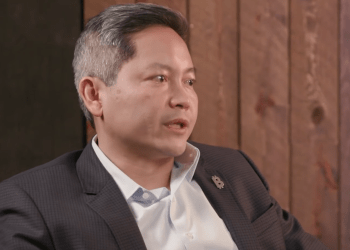
In a recent interview, Gate.io founder Lin Han shared his optimistic outlook on the crypto market, macroeconomic trends, and the evolving regulatory and technological landscape. He argued that the market is unlikely to return to a severe bear phase, citing strong macroeconomic conditions, expected monetary easing, and sustained institutional interest. While acknowledging potential risks like an AI sector correction, he emphasized that AI's tangible applications differentiate it from past tech bubbles. Han discussed the minimal impact of the recent October 11 market crash, attributing market resilience to ample stablecoin liquidity. He highlighted the industry-wide adoption of Proof of Reserves (PoR) post-FTX, advocating for enhanced methods incorporating zero-knowledge proofs and third-party audits. On emerging trends, he noted the resurgence of privacy-focused protocols like Zcash and the rapid growth of Perpetual DEXs (e.g., Hyperliquid), driven by improved blockchain infrastructure, lower costs, and better wallet experiences. He anticipates increased regulatory scrutiny on DeFi platforms in the future. Regarding Gate.io's strategy, Han emphasized a dual focus: expanding its Web3 ecosystem, as user activity migrates on-chain, and strengthening its global compliant exchanges, including its recently launched U.S. platform. He ruled out aggressive layoffs, reflecting Gate's consistent operational approach, and expressed long-term ambitions for a public listing following continued compliance efforts. He dismissed DATs (Digital Asset Trusts) as unsustainable and commented on the challenges of new stablecoin issuance due to strong network effects favoring incumbents like USDT. Finally, he addressed market manipulation concerns, noting improved exchange risk controls, and defended Gate's remote-work culture as aligned with the fast-paced, global nature of the crypto industry.

marsbit12/19 05:14

Dialogue with Gate Founder Han Lin: Optimistic About 2026, and Why He Believes 'We Won't Return to a Deep Bear Market'

marsbit12/19 05:14

活动图片