Я протестировал на $10,000: Нулевой износ, годовая доходность 8% и бонусные очки (Полное руководство + скриншоты)
**Заголовок:** Я протестировал на $10 000: нулевой износ, 8% годовых и получение бонусных очков (полное руководство + скриншоты)
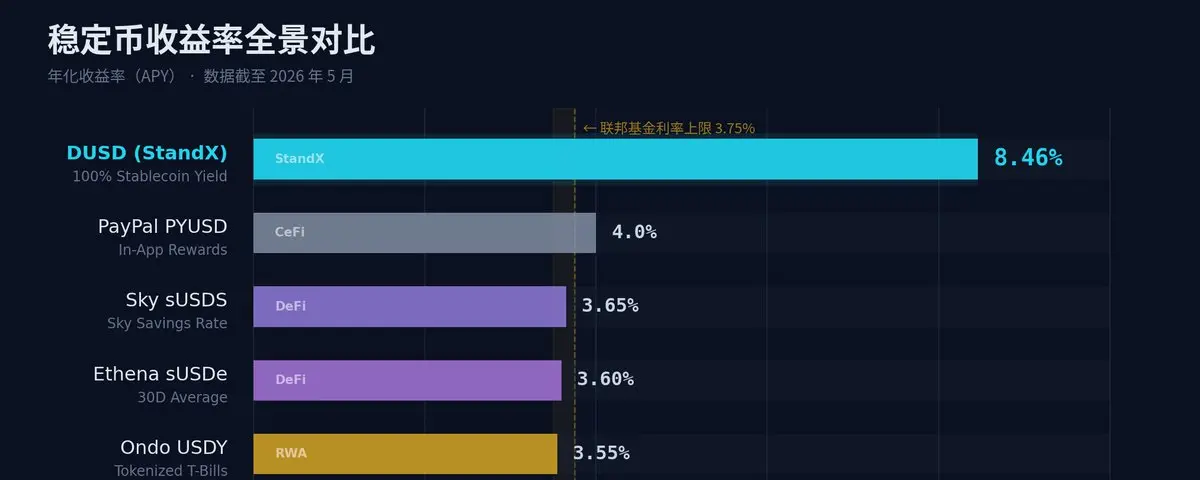
**Резюме:** В условиях, когда доходность стейблкоинов на рынке составляет около 3-4%, стейблкоин DUSD на платформе StandX демонстрирует APY около 8.46%. Автор, сотрудник StandX, провел практический тест на $10 000, чтобы проверить эту доходность.
**Стратегия и результат:** Используя две учетные записи и $5000 DUSD в каждой, автор создал взаимно хеджированные позиции по BTC (лонг и шорт) через функцию Block Trade, исключив рыночный риск. За 8 дней чистый финансовый результат (PnL) от изменения цены BTC был почти нулевым, однако стратегия принесла **$16.91 дохода** (примерно 7.8% годовых) и свыше 380 Trading Points. Ключевые особенности: **нулевой износ** капитала (нет потерь на спреде, комиссиях при частых операциях) и **нулевой направленный риск**.
**Источники дохода DUSD (8.46% APY):**
1. **Базовый доход (Base, 1.27%):** От funding rate (аналогично USDe от Ethena).
2. **Доход от позиции (SIP-2, 2.27%):** Дополнительный доход за предоставление ликвидности через открытые позиции. Чем выше кредитное плечо, тем больше доход (риск = вознаграждение). Основан на распределении доходов протокола.
3. **Распределение торговых комиссий (SIP-3, 4.92%):** Основная часть. Доля торговых комиссий платформы распределяется среди всех держателей DUSD, независимо от их активности.
**Преимущества:** Доход в DUSD (реальные доллары), а не в токенах управления. Модель, зависящая от торговых комиссий (SIP-2/3), считается более устойчивой в разных рыночных условиях, чем модели, полагающиеся только на funding rate.
**Риски:** Стандартные риски DeFi (смарт-контракты). Доходность не фиксированна и может колебаться в зависимости от объема торгов на платформе и ставок funding rate.
**Руководство:** В статье приведено пошаговое руководство из 3 шагов по воспроизведению этой хеджированной стратегии с нулевым износом для получения дохода и очков.
链捕手05/22 09:45