# Сопутствующие статьи по теме CEX

Новостной центр HTX предлагает последние статьи и углубленный анализ по "CEX", охватывающие рыночные тренды, новости проектов, развитие технологий и политику регулирования в криптоиндустрии.

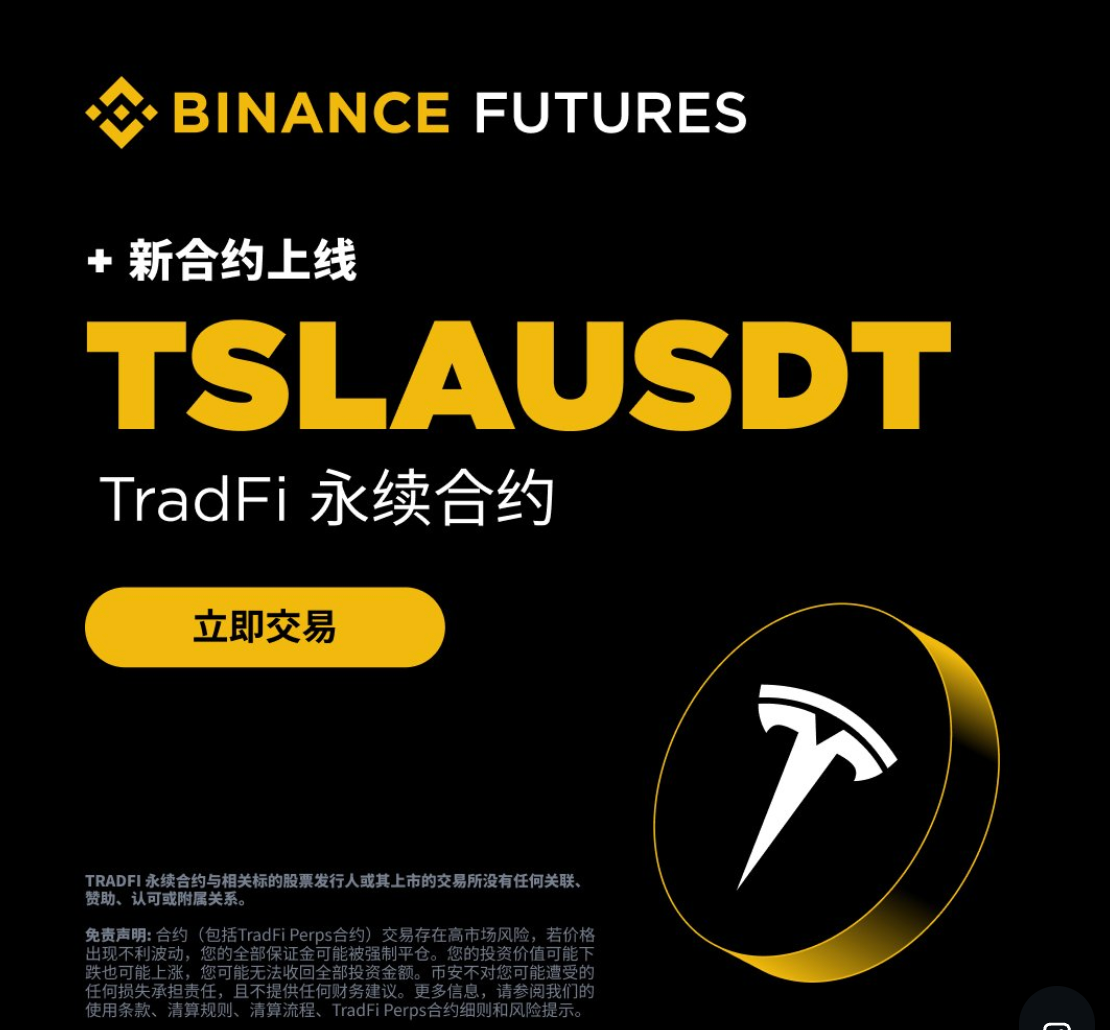
Launching Tesla Contracts, Binance Seizes 'Pricing Power' from Traditional Stock Markets

Binance, the world's largest cryptocurrency exchange, has reignited its foray into traditional finance by launching a Tesla (TSLA) stock perpetual contract, marking a significant escalation in the competition between centralized exchanges (CEX) and traditional stock markets like NASDAQ and NYSE. This move, announced on January 28th, comes five years after Binance discontinued its stock token offerings in 2021 due to regulatory pressures. The relaunch is underpinned by a transformed landscape: a more crypto-friendly US regulatory environment under the Trump administration, the rapid growth of the tokenized stock market (now valued at ~$1.1 billion), and matured infrastructure like stablecoins and oracles following the 2025 GENIUS Act. Binance's strategy appears twofold: first, to tap into the vast pool of global equity investors to overcome its user growth bottleneck, and second, to capture a share of the massive revenue potential from the multi-trillion dollar stock market via its high-volume derivatives products. The article frames this as a "liquidity war," where agile CEXs like Binance, despite their smaller size, challenge traditional exchanges with superior flexibility and product iteration. While the outcome is uncertain and hinges on long-term regulatory fairness, Binance's move signals a bold attempt to seize pricing power and redefine the future of financial trading.

比推01/27 14:41

Launching Tesla Contracts, Binance Seizes 'Pricing Power' from Traditional Stock Markets

比推01/27 14:41

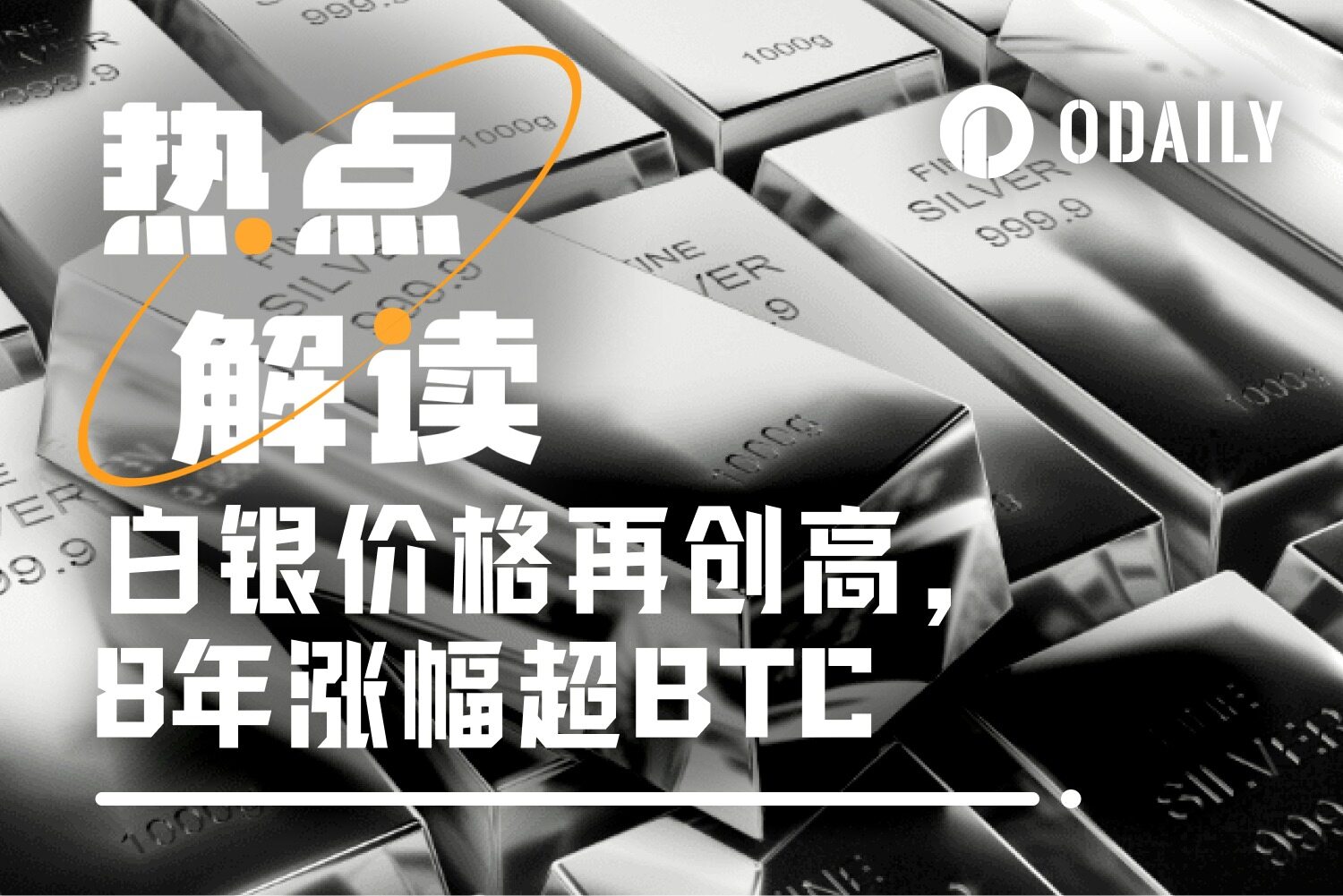
Silver Is Soaring, Can Tokenized Silver Amplify Leverage Further?

Silver prices have surged dramatically, breaking historical records by surpassing $117 per ounce and achieving a cumulative gain of approximately 517% since 2017—outperforming both Bitcoin and gold. With a market cap of around $6.18 trillion, silver is now the second most valuable asset globally after gold. This explosive growth has increased interest in tokenized silver as an alternative investment, particularly through leveraged contracts on exchanges and perpetual decentralized platforms (Perp DEX). Currently, the tokenized silver market has a total capitalization of about $446 million. Two tokens dominate in terms of liquidity: - **Kinesis Silver (KAG)**, with a market cap of $406 million, is backed by physically allocated and audited silver, each token representing one ounce. - **iShares Silver Trust (SLV)**, with a $39.5 million market cap, is tied to BlackRock’s SLV ETF and allows instant creation/redemption for non-U.S. users. Both tokens are traded on multiple centralized exchanges, and SLV also supports futures with up to 10x leverage. For higher leverage, platforms like Hyperliquid, Binance, and Bitget offer silver perpetual contracts with up to 20x leverage. Hyperliquid’s SILVER/USDC pair alone has seen over $1 billion in 24-hour trading volume. The rally is driven by expectations of U.S. interest rate cuts, silver’s new classification as a critical mineral (raising potential tariffs), geopolitical tensions, and its role as a more accessible safe-haven asset compared to gold. Analysts suggest the bullish trend may continue amid ongoing macroeconomic and political uncertainty.

Odaily星球日报01/27 07:56

Silver Is Soaring, Can Tokenized Silver Amplify Leverage Further?

Odaily星球日报01/27 07:56

2025 Trading Platform Rankings: CEX Spot Trading Volume Sees Slight Increase, Binance Maintains Absolute Dominance

In 2025, the cryptocurrency market saw a reshuffle in its competitive landscape. Spot trading volume on centralized exchanges (CEXs) increased slightly by 3.6% year-over-year, while derivatives trading volume rose more significantly by 27%, with HTX and Kucoin each growing over 60%. Binance maintained its dominant position as the industry leader, with a spot trading volume of approximately $7.3 trillion and a derivatives trading volume exceeding $27 trillion—nearly equivalent to the combined total of the second to fourth-ranked exchanges. Derivatives trading continued to outpace spot trading as the core business of CEXs. However, user engagement metrics such as app downloads and web traffic did not fully align with trading volumes. Overall, app downloads for major CEXs declined by 35.47% year-over-year. Despite this, Binance led in both app downloads (around 50.52 million) and web traffic (over 600 million visits), reflecting its broad global user base. Coinbase, though lower in trading volume, ranked second in both app downloads and web visits, indicating strong influence in regulated markets and among new users. In the Perp DEX sector, trading activity and user traffic showed asymmetry. Hyperliquid led in perpetual contract trading volume (close to $3 trillion) but had relatively low web traffic, suggesting a user base dominated by high-frequency and professional traders. While Perp DEX user numbers remain smaller than those of CEXs, they saw significant growth compared to the previous year.

marsbit01/19 07:40

2025 Trading Platform Rankings: CEX Spot Trading Volume Sees Slight Increase, Binance Maintains Absolute Dominance

marsbit01/19 07:40

When Big Money Seriously Enters the Market, How Does the Liquidity Bottleneck of RWA Manifest?

When large capital enters the market, the liquidity bottlenecks of Real-World Asset (RWA) tokenization become evident. Tokenized assets, such as gold (e.g., PAXG, XAUT) and stocks (e.g., TSLAx, NVDAx), suffer from significant slippage and shallow market depth compared to traditional markets like CME. For instance, a $4 million trade in tokenized gold can incur up to 150 basis points of slippage, while traditional markets show negligible impact even at $20 million. Decentralized exchanges (DEXs) exacerbate the issue, with trades sometimes facing premiums as high as 68% or persistent slippage of 25–50 basis points. Liquidity shortages also destabilize market structure, causing price volatility and cascading effects like cross-platform liquidations, as seen with PAXG on Binance triggering $9 million in liquidations on Hyperliquid. These problems stem from structural constraints: high minting/redemption fees, slow redemption cycles (T+1 to T+5), and capital inefficiencies for market makers. Without deep, reliable liquidity, tokenized assets struggle to scale, hindering their use as collateral or in DeFi. The solution requires a new market structure that integrates off-chain liquidity, eliminates redemption delays, and avoids fragmenting liquidity across platforms. Tokenization itself isn’t flawed, but the current market infrastructure fails to support it at scale.

比推01/16 15:07

When Big Money Seriously Enters the Market, How Does the Liquidity Bottleneck of RWA Manifest?

比推01/16 15:07

活动图片