# Сопутствующие статьи по теме Airdrop

Новостной центр HTX предлагает последние статьи и углубленный анализ по "Airdrop", охватывающие рыночные тренды, новости проектов, развитие технологий и политику регулирования в криптоиндустрии.

DeFi Trend Shifts: Stablecoin Public Chains Recede, RWA Faces Critical Regulatory Window

Crypto market sentiment is currently bearish, with many traders predicting Bitcoin could fall below $50,000. Attention and capital are shifting toward AI, away from crypto. The author’s strategy has shifted toward holding mostly BTC and ETH, along with a few cash-flow-generating alts like AAVE and LINK, avoiding speculative public chains and L2s. Key topics discussed: - Aave faces governance tension between Aave DAO and Aave Labs, reflecting broader DeFi governance challenges. - Aave V4 introduces improved liquidation mechanisms. - Stablecoin-focused Layer 1 blockchains are struggling to gain market share against established chains like Ethereum and Tron. Their real potential lies in onboarding off-chain users, not competing internally. - RWA and stock tokenization gain momentum after the SEC approved DTCC’s tokenization plan. Ethereum and L2s are seen as compliant options. This development is viewed as a net positive for the sector, including projects like Ondo Finance. - Ondo uses a clever system with its own stablecoin, USDₒ, to enable large on-chain tokenized stock trades without relying on external liquidity. - Ethena’s Season 4 airdrop requires users to deposit and trade on HyENA to qualify, aiming to boost its perps trading platform. - Tempo, developed by Stripe and Paradigm, has launched its testnet, targeting efficient stablecoin payments with major enterprise partners.

比推12/17 07:09

DeFi Trend Shifts: Stablecoin Public Chains Recede, RWA Faces Critical Regulatory Window

比推12/17 07:09

DeFi Recent Updates: Stablecoin Public Chains Face Internal Competition and Cooling Off, RWA Welcomes Its 'SEC Moment'

The DeFi market is currently bearish, with sentiment leaning towards further downside for Bitcoin and a shift of attention and capital towards AI. The author's strategy involves moving away from most altcoins to focus on major assets like BTC and ETH, retaining only a few with strong cash flows like AAVE and LINK. Key developments include a governance dispute between Aave DAO and Aave Labs, highlighting industry-wide governance challenges, and an update to Aave V4's liquidation mechanism to reduce over-liquidations. The article discusses the underwhelming performance of new stablecoin-focused Layer 1 blockchains, which have failed to significantly capture market share from established players like Ethereum and Tron. Their true potential lies in onboarding new, off-chain stablecoin users, a challenging task. A major focus is on the tokenization of real-world assets (RWA) following the SEC's approval of DTCC's tokenization plan. This is seen as a significant, positive regulatory step. The approval outlines strict requirements for compliant blockchains, with Ethereum/L2s being a likely fit. This development is analyzed as a potential indirect benefit for existing projects like Ondo Finance, which recently had an SEC investigation closed with no charges. Ondo's mechanism for facilitating large on-chain stock token trades using its own stablecoin, USDon, is explained. Other updates include Ethena's new airdrop season requirements, which users must interact with its HyENA perps platform, and the testnet launch of Tempo, a new payments-focused blockchain backed by Stripe and Paradigm.

marsbit12/17 04:20

DeFi Recent Updates: Stablecoin Public Chains Face Internal Competition and Cooling Off, RWA Welcomes Its 'SEC Moment'

marsbit12/17 04:20

Compliance Guide for Utility Token Issuance

"Functional Token Issuance Compliance Guide" This guide outlines the legal framework for issuing utility tokens, emphasizing that regulatory risk depends not on the token's description, but on its economic reality. A token's classification as a security is determined by market behavior and investor expectations, not technical promises, as seen in cases like Telegram's TON. Projects fall into two main categories with different compliance paths: Infrastructure projects (e.g., Bitcoin, Celestia) often use fair launches for lower risk, while Application-layer projects (e.g., DeFi, GameFi) require careful legal structuring due to higher regulatory scrutiny. Key stages and actions are detailed: * **Testnet Phase:** Separate development (DevCo) and token/ecosystem (Foundation) entities. Use equity + token warrants for fundraising, not direct token sales, to avoid triggering securities laws prematurely. * **Mainnet Launch (TGE):** This is a high-risk phase. Ensure clear disclosure of token utility, allocation, lock-ups, and conduct KYC/AML. Avoid marketing that promises profit. Public airdrops and sales are closely watched. * **DAO Stage:** Achieve true decentralization by relinquishing team control to community governance (e.g., Uniswap DAO). This "verifiable exit" is crucial for reducing securities risk. The core compliance challenge is proactively demonstrating the token is *not* a security by emphasizing its functional use, avoiding profit promises, and progressively decentralizing. Compliance is a continuous process, not a one-time approval. A robust legal structure is the essential foundation for a sustainable project.

marsbit12/17 02:11

Compliance Guide for Utility Token Issuance

marsbit12/17 02:11

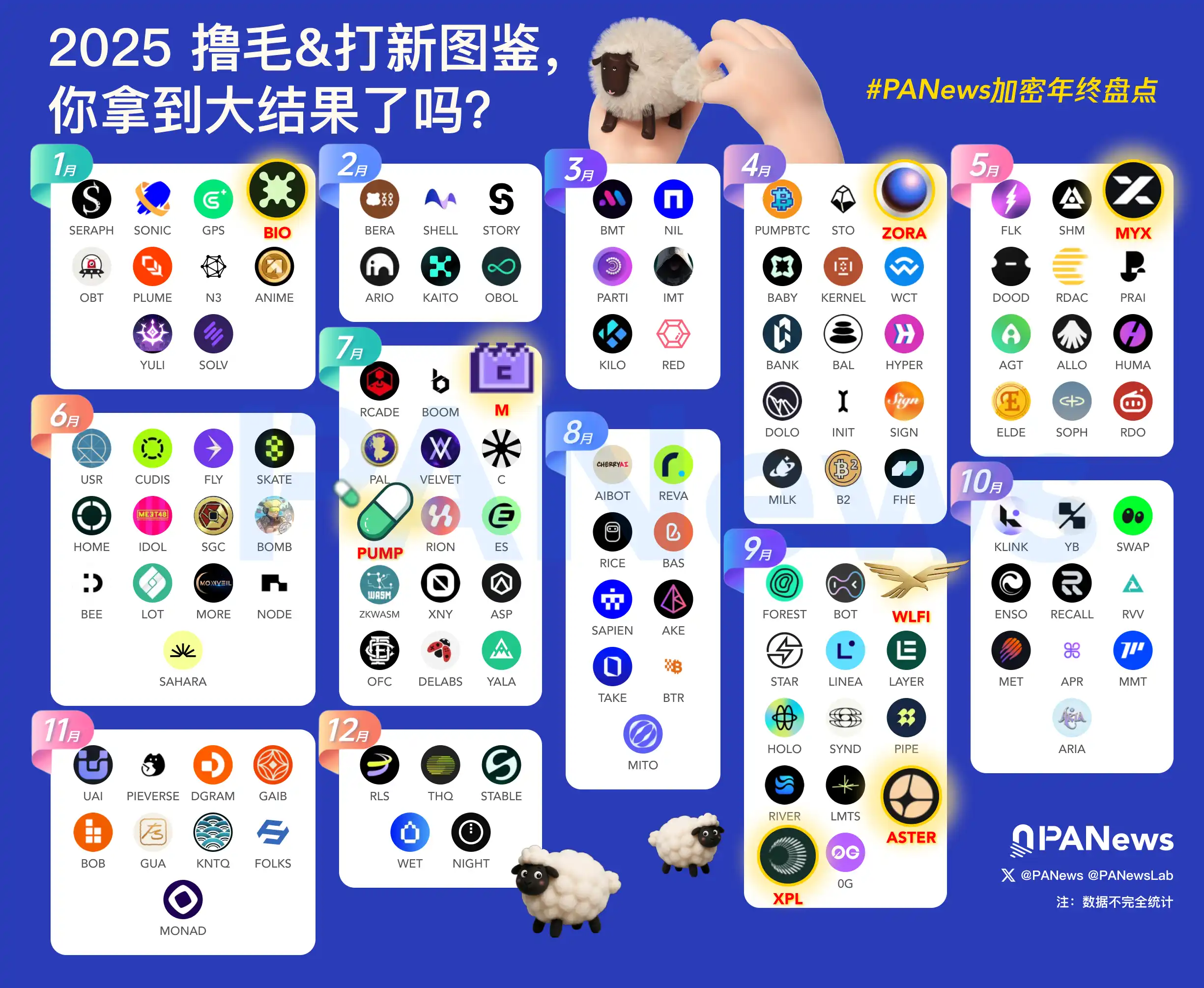
2025 Airdrop Survival Rules: From Gold Rush to Holding These Two Aces

In 2025, the airdrop farming landscape shifted dramatically, moving from a "gold rush" to a challenging environment with significantly reduced returns. The absence of an "altcoin season" and Bitcoin's market dominance led to lower valuations for airdropped tokens, with many projects launching at lower fully diluted valuations (FDVs) and experiencing immediate sell-offs. This resulted in smaller airdrops, often not even covering gas fees, causing many farming studios to shut down or pivot to other ventures. Despite the downturn, new farming methods emerged. "InfoFi" or "talk-to-earn" platforms like Kaito, Cookie Snaps, and Galxe’s Starboard allowed users to earn tokens by creating quality content and analysis on social media, lowering entry barriers and offering faster returns compared to traditional on-chain interactions. Binance Alpha also became a key income source for many, though its rewards diminished over time due to increased competition and lower token values. The two most reliable strategies for sustaining profits were: 1) Participating in high-profile token launches (e.g., on BuidlPad, Kaito, or Legion), focusing on projects with strong community hype and oversubscribed sales, which often provided quick, substantial gains at TGE. 2) Stablecoin farming through platforms like Binance’s Web3 Wallet, which offered low-risk, high-yield opportunities (e.g., Plasma’s collaboration with Binance offered over 70% APY for USDT depositors). These methods provided steady returns with minimal capital erosion. The author concludes that while airdrop farming is no longer a path to instant wealth, it remains a viable way to accumulate assets steadily. Success depends on adaptability, research, and discipline—focusing on quality over quantity, leveraging stablecoin yields, and capitalizing on high-potential launches. The key is to survive market downturns and capitalize when conditions improve.

marsbit12/12 15:57

2025 Airdrop Survival Rules: From Gold Rush to Holding These Two Aces

marsbit12/12 15:57

From Airdrop Myth to King of Derivatives: A Look Back at Hyperliquid's 2025 Conquest

Reviewing crypto's growth in 2025, Hyperliquid stands out. It began the year with an epic airdrop and strong price performance, capturing attention. By year's end, it transformed into a top-four revenue-generating platform in crypto, earning over $650M and at one point capturing 70% of all perp trading volume. Its success was no accident. In Q1, it solidified its reputation by being first to list new assets like the TRUMP perp and launched HyperEVM, a smart contract layer. Q2 saw explosive growth: HYPE token surged 4x from April lows, and HyperEVM's TVL grew from $350M to $1.8B. The platform gained mainstream media coverage. In Q3, major wallets like Phantom and MetaMask integrated via Hyperliquid's builder codes, routing $158B in volume and earning partners nearly $50M. A high-profile stablecoin bid war was won by Native Markets, aligning with Hyperliquid's bootstrapped ethos. However, new competitors like Aster and Lighter emerged with aggressive airdrops. Q4 brought permissionless listings via HIP-3, enabling new markets like stock perps and yield-bearing collateral. Yet, HYPE fell nearly 50% from its September peak due to market conditions, a rare ADL event during a crash, and the start of team token unlocks. As perps go mainstream in 2026, Hyperliquid's true test begins. Its success came from building a superior product and ecosystem without shortcuts. Maintaining leadership will require doing it all over again in a crowded field.

marsbit12/12 11:35

From Airdrop Myth to King of Derivatives: A Look Back at Hyperliquid's 2025 Conquest

marsbit12/12 11:35

活动图片