# Сопутствующие статьи по теме AI

Новостной центр HTX предлагает последние статьи и углубленный анализ по "AI", охватывающие рыночные тренды, новости проектов, развитие технологий и политику регулирования в криптоиндустрии.

Two Acquisitions in One Day: OpenAI Buys 'Narrative', Anthropic Buys 'Barriers'

On April 2, OpenAI and Anthropic each announced an acquisition, reflecting their divergent strategies as both target an IPO by late 2026. OpenAI acquired tech talk show TBPN to shape public AI discourse and support its revenue base, which is 60% consumer-driven from ChatGPT subscriptions. In contrast, Anthropic purchased AI biotech startup Coefficient Bio for approximately $400 million in stock, continuing its focused strategy of deepening enterprise capabilities, particularly in high-switching-cost sectors like life sciences. Over the past three years, OpenAI completed 15 acquisitions across diverse fields including hardware, media, and healthcare, spending over $7.7 billion on disclosed deals, such as the $6.5 billion purchase of Jony Ive’s AI hardware firm. Anthropic made only three acquisitions, each precisely strengthening its product stack: Bun for coding infrastructure, Vercept for autonomous agents, and now Coefficient Bio for biotech R&D pipelines. Anthropic’s enterprise-focused revenue (80% of total) drives its strategy to lock in clients with vertical integration, as seen in its sequenced moves into life sciences and healthcare. Meanwhile, with a higher reliance on consumer subscriptions, OpenAI is investing in narrative influence—TBPN aims to boost ad revenue and steer public AI conversation. Both companies are on accelerated IPO paths: Anthropic eyeing a $60+ billion offering led by Goldman Sachs and JPMorgan, and OpenAI targeting a ~$1 trillion valuation. Their acquisitions underscore distinct priorities—Anthropic builds industry-specific moats, while OpenAI amplifies its public story.

marsbit04/03 10:07

Two Acquisitions in One Day: OpenAI Buys 'Narrative', Anthropic Buys 'Barriers'

marsbit04/03 10:07

The Year of Physical AI: A Trillion-Dollar Gamble on 'How the World Works'

The year 2026 is being positioned as the dawn of the "Physical AI" era, marked by major funding rounds and technological breakthroughs. This shift signifies AI's evolution from understanding the digital world to perceiving and acting within the physical world. Key events include Yann LeCun's AMI Labs raising $1.03 billion to develop "world models," Fei-Fei Li's World Labs securing funding, and companies like Tesla deploying humanoid robots (Optimus) in factories. This transition expands the AI model competition into a broader infrastructure battle encompassing hardware, data, simulation, and real-world integration. The core debate is between two AI paths: the established LLM (Large Language Model) approach focused on text prediction and the emerging "world model" approach, which aims to understand physical states for action-oriented tasks. Hardware, particularly dexterous robotic hands, is a critical and expensive challenge. Companies are racing to build capable robotic bodies, with Tesla, Boston Dynamics, and Figure AI making significant progress. NVIDIA is positioning itself as the essential infrastructure provider for this new era, offering a full suite of development tools and platforms. A major bottleneck is the scarcity of high-quality physical world interaction data, with companies exploring solutions through real-world data collection, synthetic data generation, and human teleoperation. Substantial investments in Q1 2026, exceeding $6.4 billion, signal strong belief in Physical AI's potential, moving beyond concept validation into infrastructure building. While challenges like the sim-to-real gap, unproven business models, and safety regulations remain, the tangible engineering progress suggests this is a genuine technological inflection point, not merely a bubble. For the global Chinese community, this shift represents a significant structural opportunity to leverage their strengths in technology, engineering, hardware manufacturing, and cross-border collaboration to become key players in building the foundational layers of the Physical AI ecosystem.

marsbit04/03 09:39

The Year of Physical AI: A Trillion-Dollar Gamble on 'How the World Works'

marsbit04/03 09:39

Bitcoin Mining Companies Flee for the Nth Time

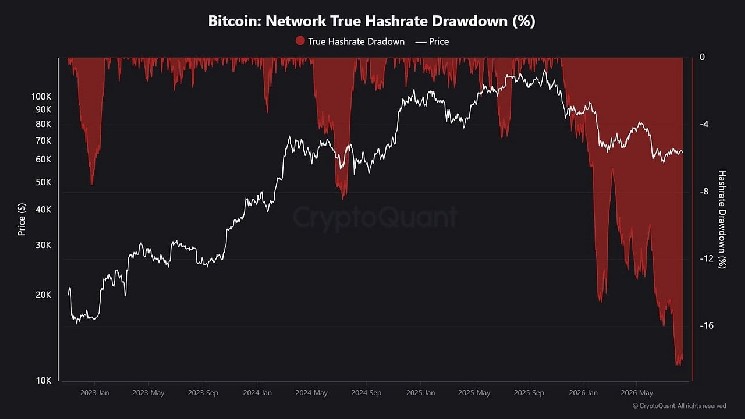
Since late last year, major publicly traded Bitcoin mining companies have initiated a significant wave of Bitcoin (BTC) sell-offs. Cango sold about 60% of its holdings (4,451 BTC) in February, Bitdeer liquidated its entire Bitcoin inventory in January, Riot Platforms sold 3,778 BTC in the first quarter, and Core Scientific planned to sell approximately 2,500 BTC. Notably, Marathon Digital (MARA) sold 15,133 BTC in just three weeks in March, cashing out over $1 billion, while also cutting 15% of its workforce as part of a strategic shift toward becoming an energy and digital infrastructure company. This collective divestment is driven by three primary motives. First, mining has become unprofitable for many; the average cash cost to mine one BTC is approximately $79,995, while BTC trades around $68,000–70,000, resulting in an average loss of about $19,000 per coin. Second, AI data centers offer a more stable and lucrative alternative, with tech giants like Google, Microsoft, and financial institutions like Morgan Stanley providing substantial backing and contracts. Mining companies are repurposing their existing infrastructure—cheap power contracts, data centers, and cooling systems—toward AI, which promises higher, predictable margins. Third, some firms are using BTC sales to optimize their balance sheets, such as repurchasing convertible debt at a discount to reduce liabilities and avoid equity dilution. The industry is diverging into three paths: some, like CleanSpark and HIVE, are坚守 (holding fast) to mining, betting on a cyclical recovery; others, like MARA and Riot, are pursuing a dual strategy of maintaining BTC holdings while expanding into AI; and a third group, including Core Scientific and TeraWulf, is undergoing a full pivot to AI, where mining may become a secondary operation. The future of these companies heavily depends on Bitcoin’s price trajectory. If BTC surpasses $100,000 by late 2026, mining profitability could recover. If it remains below $80,000, high-cost miners may continue to exit. If it breaks all-time highs, the industry could see another expansion cycle. Ultimately, this shift raises a broader question about Bitcoin’s security budget, as miners redirect resources to AI, the long-term cost of securing the Bitcoin network may become a growing concern. However, historically, the network has emerged stronger after each mining shake-out, though this time the transition is structural and could have lasting implications.

marsbit04/03 09:09

Bitcoin Mining Companies Flee for the Nth Time

marsbit04/03 09:09

MSX Q1 Review and Q2 Outlook: Securing the Main Trends in U.S. Stocks, A Methodology for Precise Stock Selection

MSX Q1 Review & Q2 Outlook: Capturing the U.S. Stock Market Trends and a Precision Stock Selection Methodology In Q1 2026, the crypto market performed poorly, with Bitcoin falling about 23%, marking its worst quarterly start since 2018. In contrast, the U.S. stock market, despite significant drops in the "Magnificent Seven," still saw profitable opportunities in rapidly rotating hot sectors. The decentralized RWA trading platform MSX listed 39 new U.S. stock tokenized assets, covering five main themes: aerospace/defense, energy/resources, AI hardware, optical communications, and regional allocation tools. Among these, 38 achieved positive returns, with an average gain of 37.6%. Four stocks more than doubled, all concentrated in AI hardware and optical communications. MSX's stock selection framework focuses on identifying companies with clear industrial trends, tangible order flows, and earnings validation, rather than speculative narratives. The platform avoids high-risk bets on large-cap reversals, instead targeting small and mid-cap stocks benefiting from real capital expenditure and supply chain expansion. In Q1, the five main themes were identified through continuous tracking of corporate earnings, capex guidance, and capital flow dynamics—not macro forecasts alone. AI hardware and optical communications were confirmed as systemic opportunities based on actual order transfers and infrastructure demand from big tech's expanding data centers. Although aerospace/defense and regional tools had modest gains, they provided portfolio diversification and non-correlated hedges, enhancing structural resilience. MSX's listing节奏 was dynamically adjusted based on market signals and industrial data rather than pre-set schedules. Looking ahead, Q2 may see a continuation of the AI narrative but with increased selectivity. Aerospace and undervalued software/SaaS sectors present new opportunities. MSX emphasizes a balanced approach: maintaining core exposure to high-conviction AI infrastructure plays while incorporating defensive assets like energy and tools to navigate macro uncertainties, including interest rate paths and geopolitical risks. The platform aims to help users, especially those from crypto backgrounds, build robust, multi-asset strategies through education and thematic investing tools.

Odaily星球日报04/03 06:07

MSX Q1 Review and Q2 Outlook: Securing the Main Trends in U.S. Stocks, A Methodology for Precise Stock Selection

Odaily星球日报04/03 06:07

活动图片