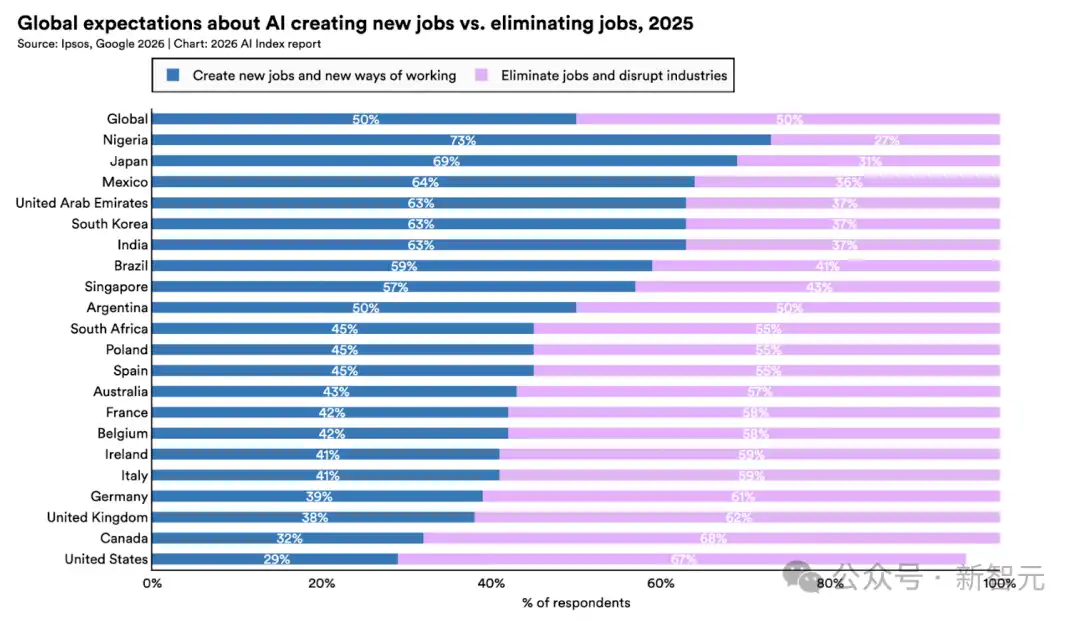
| |
|
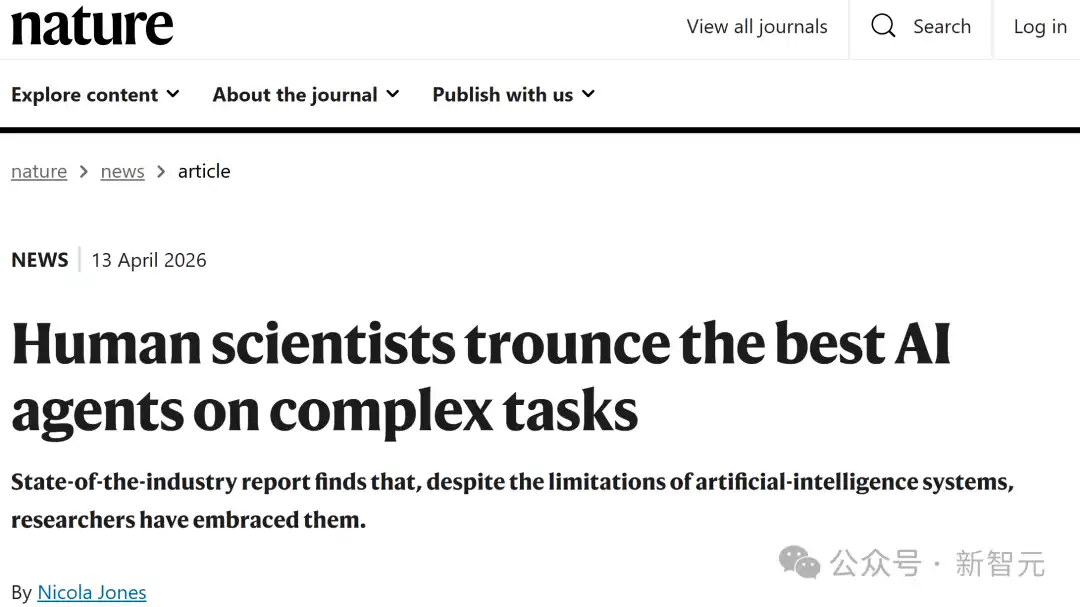
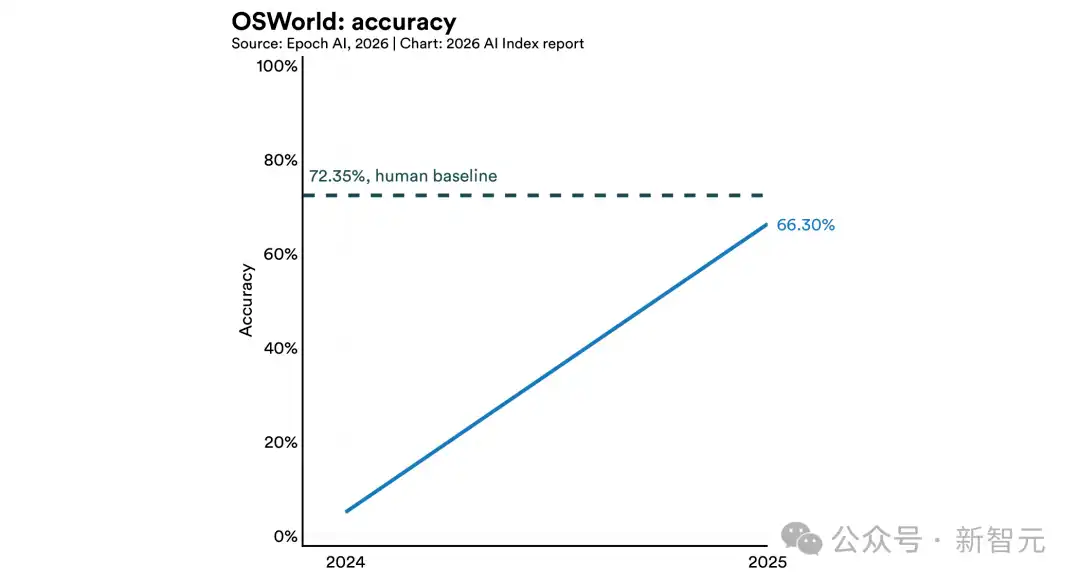
Also, in agent tasks, in the OSWorld test, frontier AI strength (66.3%) is approaching the human baseline.
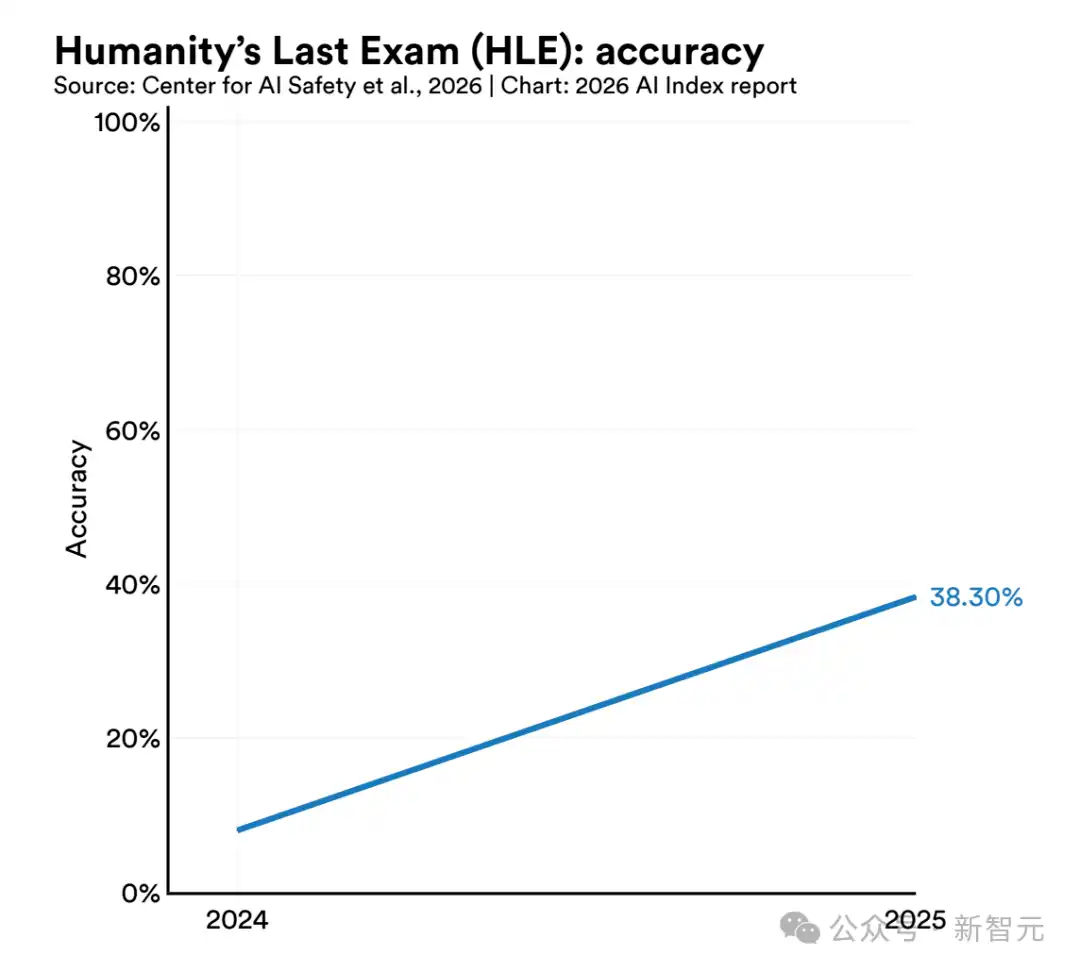
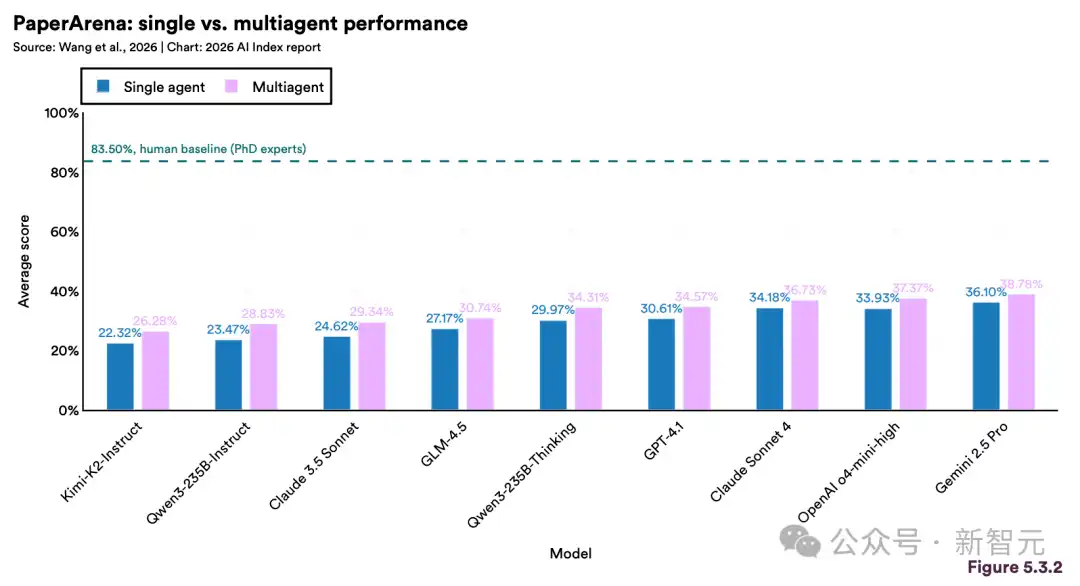
However, in the PaperArena test专门评估科研逻辑, the strongest AI-powered Agent scored only 39%, half the capability of a PhD student.
But this unevenness doesn't stop companies from integrating AI into production lines.
Another number from the AI Index is that the global enterprise AI adoption rate has reached 88%. Ninety percent of companies have integrated AI into some workflow.
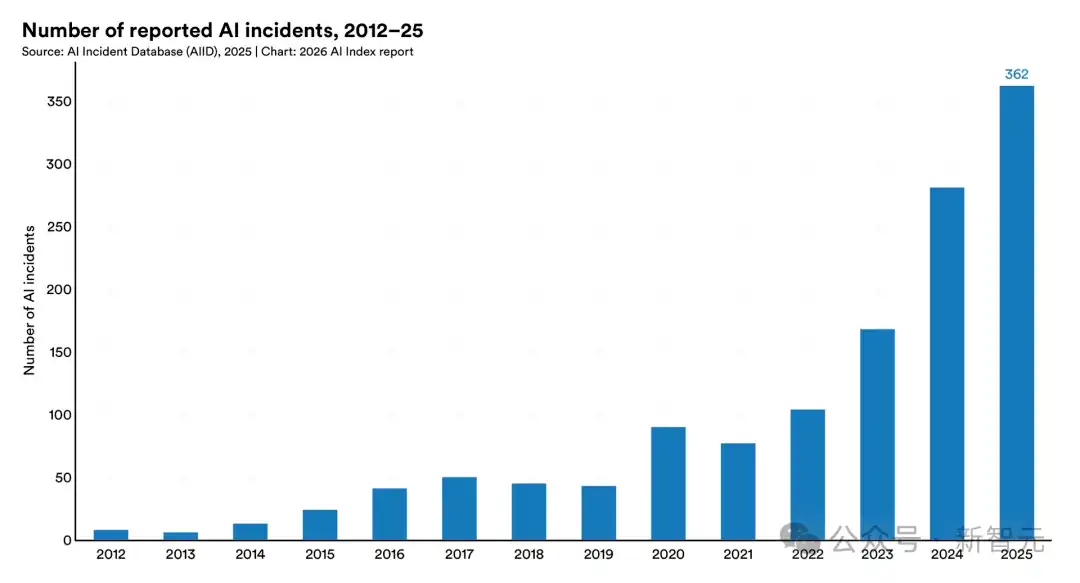
The cost is rising simultaneously. Recorded AI-related incidents increased from 233 in 2024 to 362.
Money is Accelerating: $581.7 Billion Poured into AI
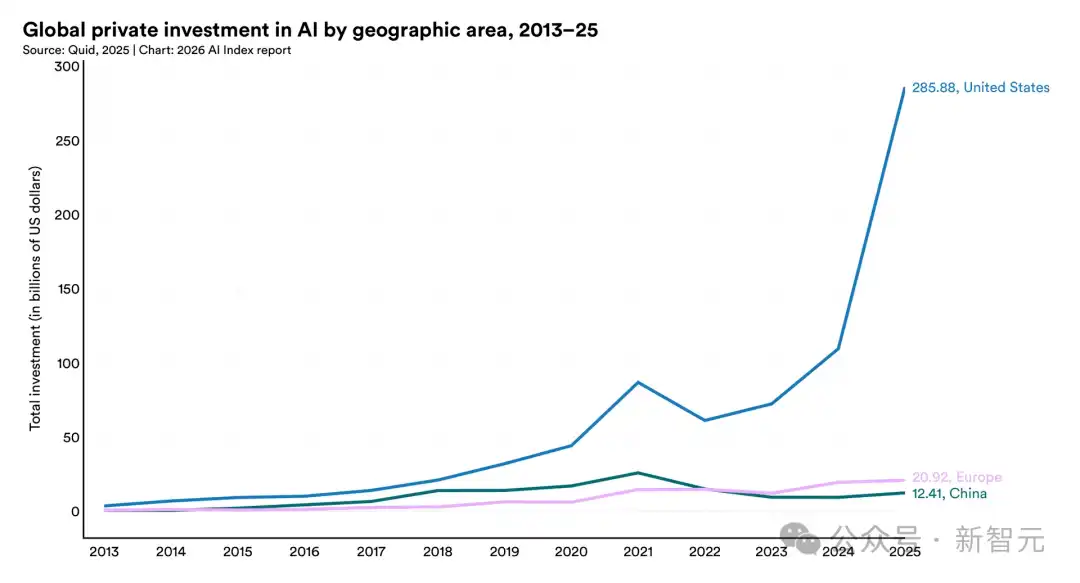
Global corporate AI investment in 2025 reached $581.7 billion, a year-on-year increase of 130%.其中, private investment was $344.7 billion, up 127.5% year-on-year.
Both curves almost doubled.
By country, the US is in a league of its own. US private AI investment in 2025 was $285.9 billion. And it added 1,953 AI startups in one year, also more than 10 times the number of the second-ranked country.
Money is accelerating into the US. But another core US resource is moving in the opposite direction.
People are Flowing Out: AI Researchers Entering the US Fell 89%
There's a set of numbers that makes one pause.
From 2017 to now, the number of AI researchers and developers entering the US has fallen by 89%.
More critically, this decline is accelerating. In the past year alone, the drop was 80%.
The US still has the highest density of AI researchers globally, but the inflow tap is tightening.
The curves of money and people are starting to反向. This is a situation not seen in the past decade.
Computing Power Rose 30-Fold in 3 Years, Lifelines in One Company's Hands
The AI capability curve is accelerating, but the computing power curve behind it is running even faster.
From 2021 to now, global AI computing power has increased 30-fold. Over the past three years, it has tripled every year.
This curve is supported by a few companies.
NVIDIA's GPUs alone account for over 60% of the world's AI computing power. Amazon and Google rank second and third with their own chips, but combined they are far behind NVIDIA.
And almost all these chips come from one foundry, TSMC. The steeper the computing power curve, the narrower the lifeline.
Meanwhile, the cost is also increasing.
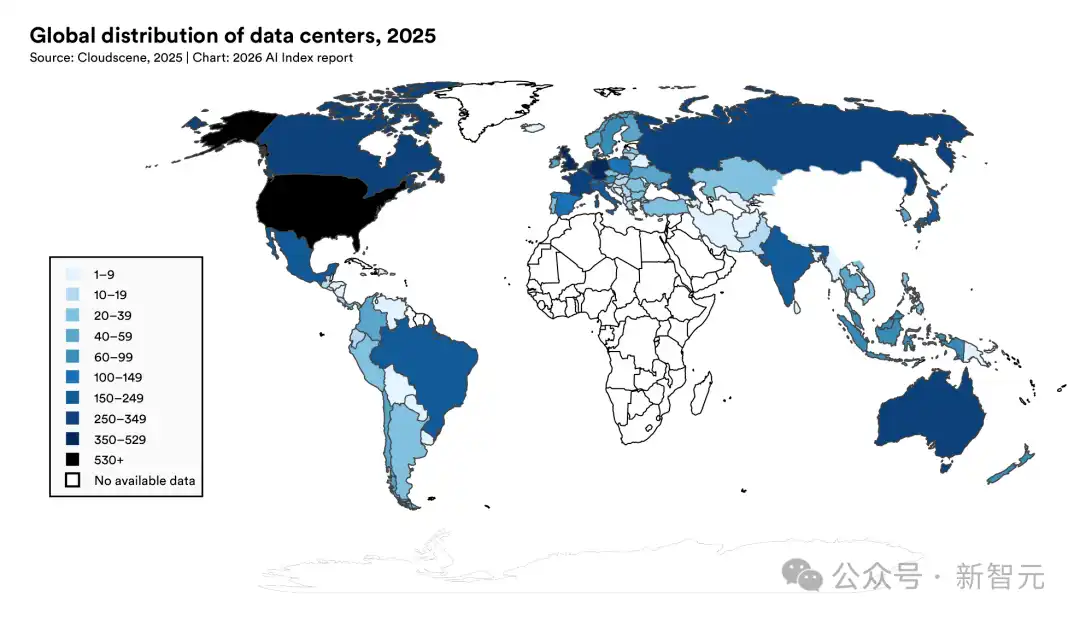
The total power of global AI data centers has reached 29.6 GW, equivalent to New York State's entire peak electricity demand. The estimated carbon emission for one training run of xAI Grok 4 is 72,816 tons of CO2 equivalent, equal to the tailpipe emissions of 17,000 cars driving for a year.
Where data centers are built, where electricity comes from, where chips are produced—these three questions have become the most headache-inducing issues on every AI company CEO's desk this year.
Generative AI Penetrated 53% in Three Years, Chinese Workplace Usage Exceeds 80%
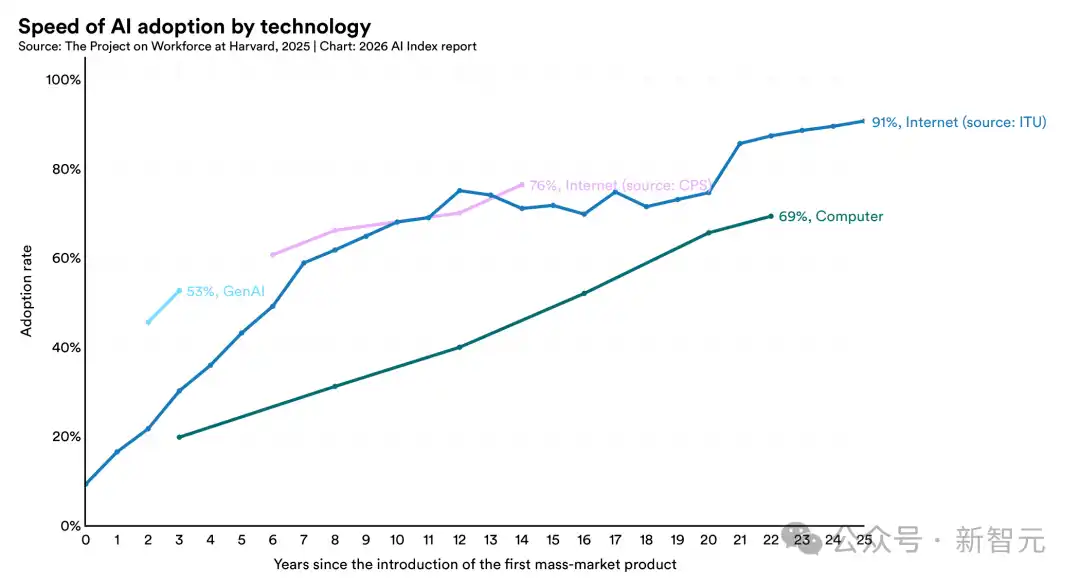
Generative AI reached a global population penetration rate of 53% within three years.
This speed is faster than personal computers, faster than the internet.
But penetration speed is highly correlated with country. Singapore 61%, UAE 54%, both ahead of the US. The US ranks only 24th among the surveyed countries, with a penetration rate of 28.3%.
If we change the dimension from consumers to the workplace, the contrast is greater.
Another set of data in the report shows that in 2025, 58% of employees globally had already started using AI regularly at work. But in five countries—China, India, Nigeria, UAE, Saudi Arabia—this proportion exceeded 80%.
China's workplace AI penetration rate is already more than 20 percentage points higher than the global average.
Even more interesting is consumer value.
AI Index estimates that by early 2026, generative AI tools create $172 billion in value annually for US consumers. From 2025 to 2026, the median value per user tripled.
The vast majority of users are still using the free version.
Entry-Level Positions Sharply Reduced, 22-25 Year-Old Dev Jobs Slashed 20%
The part of the entire AI Index that might be most沉默 for Chinese readers is probably the section on youth employment.
The number of employed software developers aged 22 to 25 has fallen by about 20% since 2024.
During the same period, older peer groups actually grew.
Not just development roles. Other high-AI-exposure industries like customer service are also showing the same pattern.
More worrying are the results of corporate surveys. Respondent executives generally expect future layoffs to be larger than in the past few months.
This isn't about the macro unemployment rate; it's about entry-level positions being precisely cut off.
If the first job is gone, the entire career ladder loses a rung. The long-term impact of this is something no one can calculate yet.
AI is Rewriting the Way Science is Done
If the employment section is cold, the science section is hot.
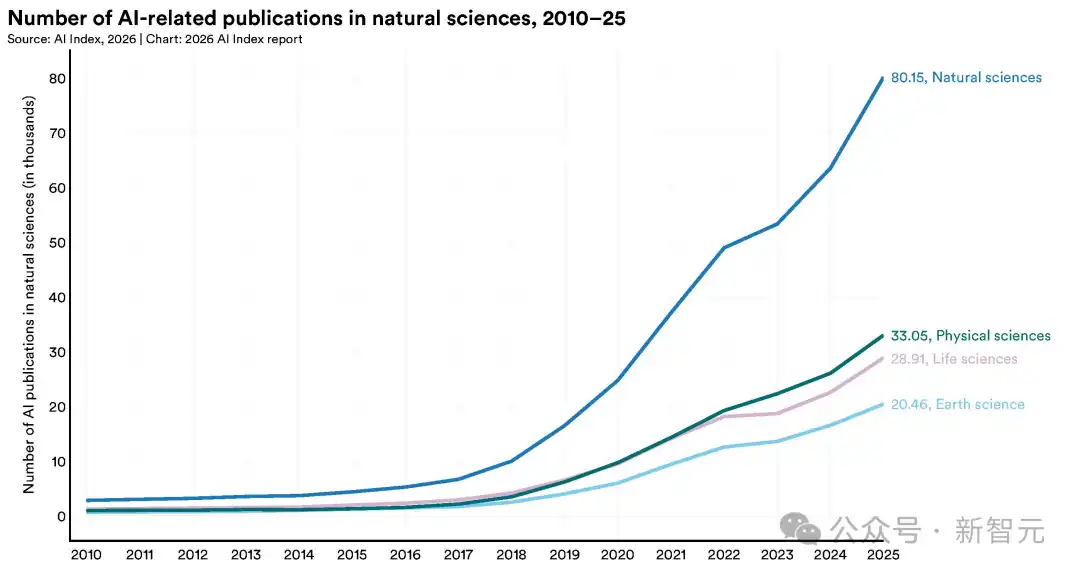
AI-related papers in natural sciences, physical sciences, and life sciences grew by 26% to 28% year-on-year in 2025.
Specifically in application, this year for the first time an AI completely ran an end-to-end weather forecasting process. From raw meteorological observation data directly outputting final forecasts for temperature, wind speed, humidity, with no traditional numerical models介入.
AI is moving from "helping you write papers" "helping you calculate numbers" to "making discoveries itself".
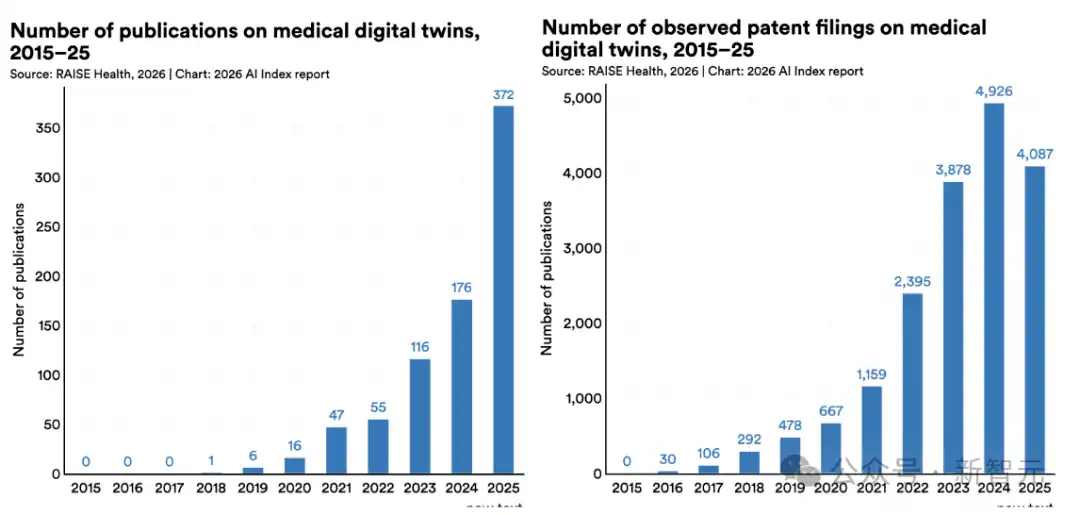
It's the same in hospitals. In 2025, many hospitals began deploying AI tools that can automatically generate clinical records from consultation dialogues. Doctors in multiple hospital systems reported that time spent writing medical records was reduced by up to 83%, with significant decreases in burnout.
But the same index pours cold water on medical AI. A review of over 500 clinical AI studies found that nearly half relied on exam-style datasets, and only 5% used real clinical data.
AI can reduce doctors' typing time, that's certain. AI's clinical value on real patients currently has many question marks.
Self-Learning Wave Explodes Globally, Formal Education Has Fallen Behind
Formal education can't keep up with AI.
4/5 of US high school and college students now use AI to complete school assignments. But only half of secondary schools have AI usage policies, and only 6% of teachers think these policies are clear.
Students are running ahead, teachers are still in place, rules haven't appeared yet.
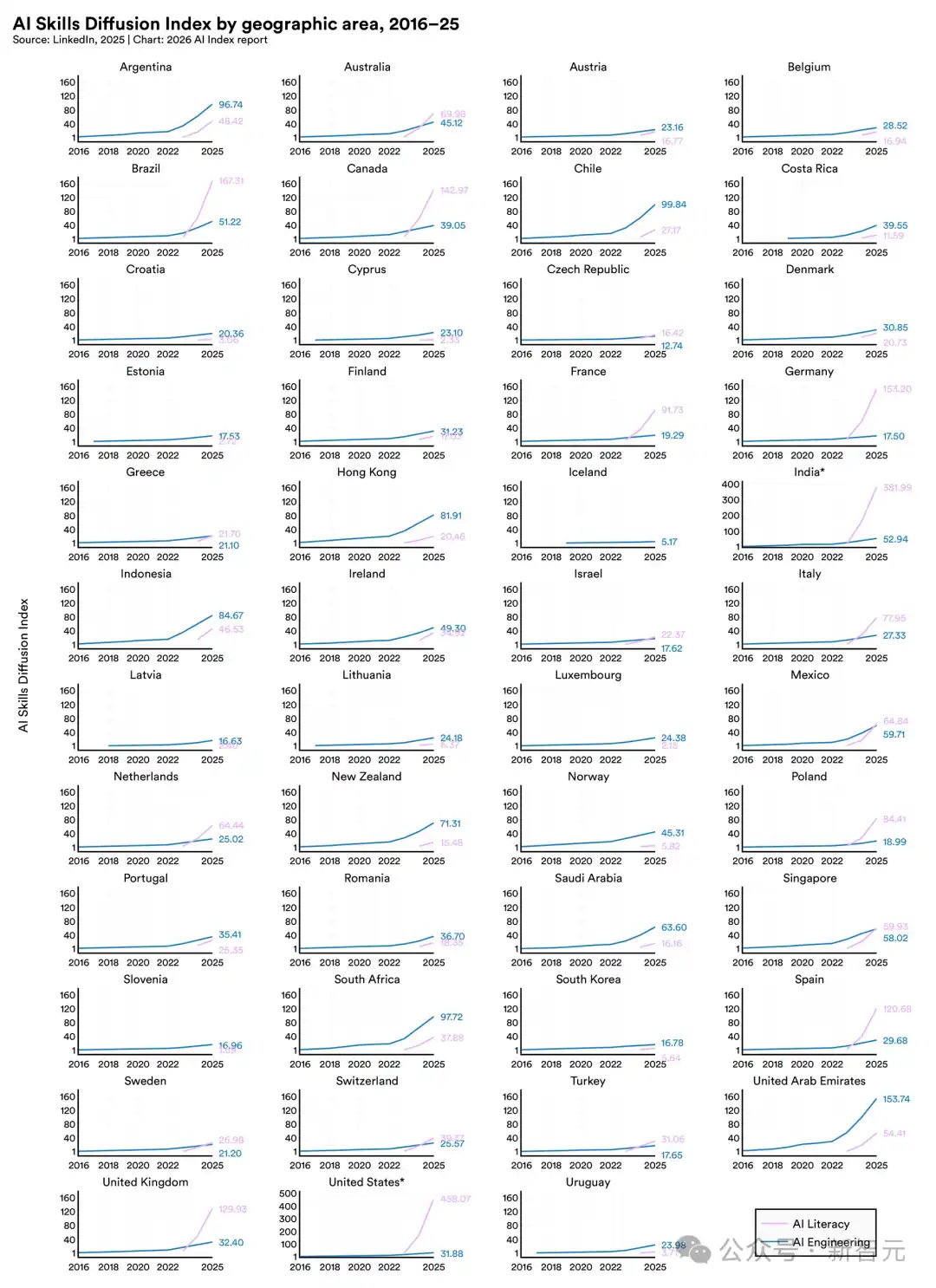
While formal education falls behind, the self-learning wave is exploding globally. It says the three countries with the fastest growth in learning AI engineering skills are the UAE, Chile, and South Africa.
Not the US, not Europe.
The steepest part of the skill curve is growing in places no one is looking.
Strongest Models Become the Most Opaque, Experts and Public are分裂
The strongest models are becoming the most opaque models.
The Foundation Model Transparency Index's average score fell from 58 last year to 40 this year. The AI Index directly点名, Google, Anthropic, OpenAI have all stopped公开 the training data scale and training duration of their latest models.
Of the 95 most representative models released last year, 80 did not公开 training code.
Public sentiment has also become more complex.
Globally, the proportion believing AI's benefits outweigh the risks rose from 52% to 59%. But during the same period, the proportion feeling nervous about AI rose from 50% to 52%.
Both directions are growing simultaneously.
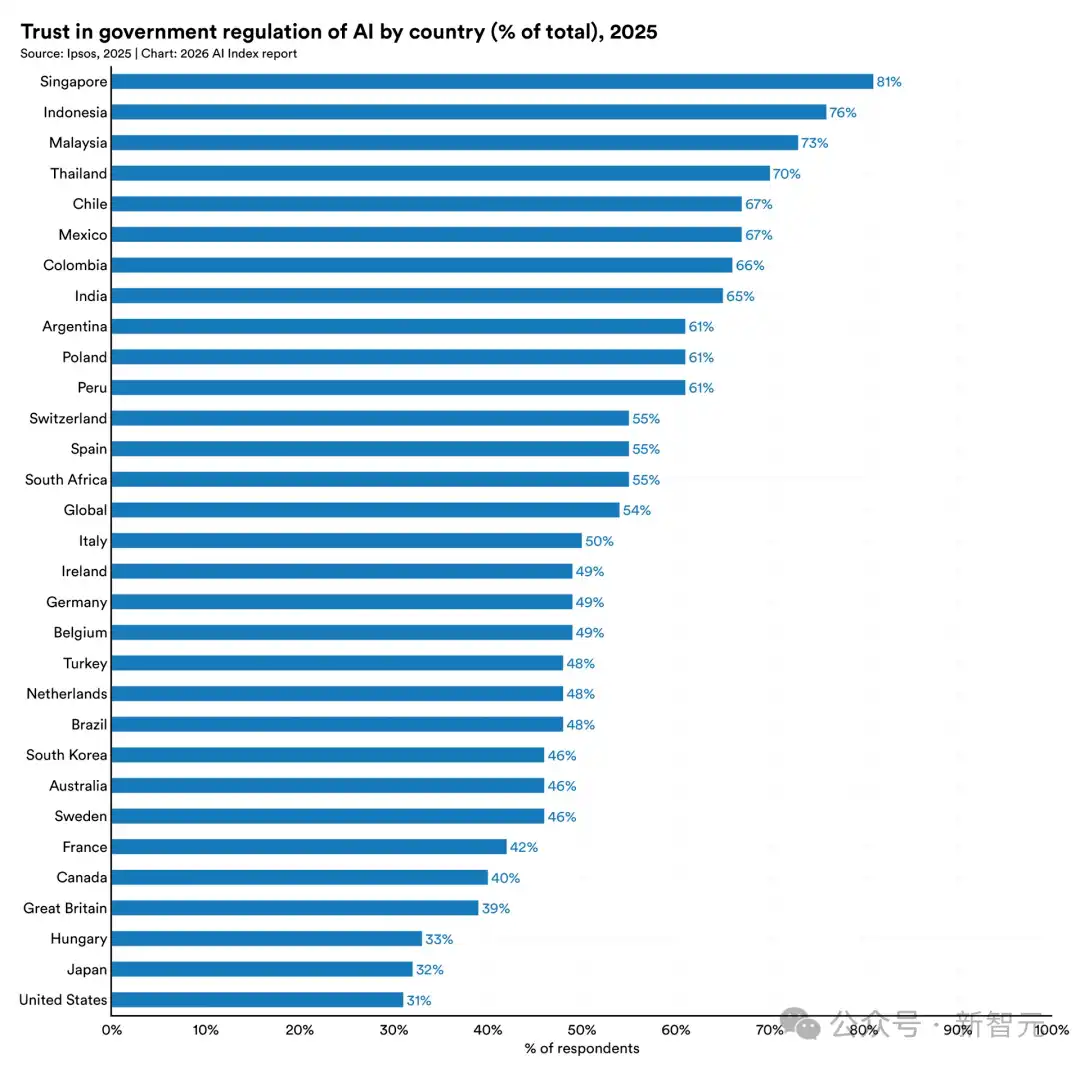
The most分裂 is the US. Only 33% of Americans think AI will make their jobs better, the global average is 40%. Americans' trust in their own government to regulate AI is the lowest among surveyed countries, 31%.
Singaporeans' trust in their government to regulate AI is 81%.
After the recent incident at Sam Altman's house was袭击, Silicon Valley insiders were "surprised to find" that ordinary people in the Instagram comments were not sympathetic, some even felt "it should be more intense".
They didn't realize things had gotten this bad.
The Pew and Ipsos data cited in the report show that the perception gap between experts and the public on the impact of AI on employment, healthcare, economy, etc.,普遍 exceeds 30 percentage points, with the largest gap reaching 50 percentage points.
On one side, the curves in the lab are soaring; on the other, ordinary people's unease is accumulating.
There is no bridge in between.
In Conclusion
The 423-page report has hundreds of charts, but it really only draws one picture.
The horizontal axis is time, the vertical axis is capability.
The model capability curve is flying, the computing power curve is flying, the investment curve is flying, the adoption rate curve is flying. Everything else is stagnating or moving downward.
This is the entire content of the 2026 AI Index.
AI is accelerating. Everything else is decoupling.
If you are in this industry, the question to ask now is not "what will the future be like", but "which curve are you standing on".
Связанные с этим вопросы
QWhat is the performance gap between the top AI models of the US and China according to the Stanford AI Index Report 2026?
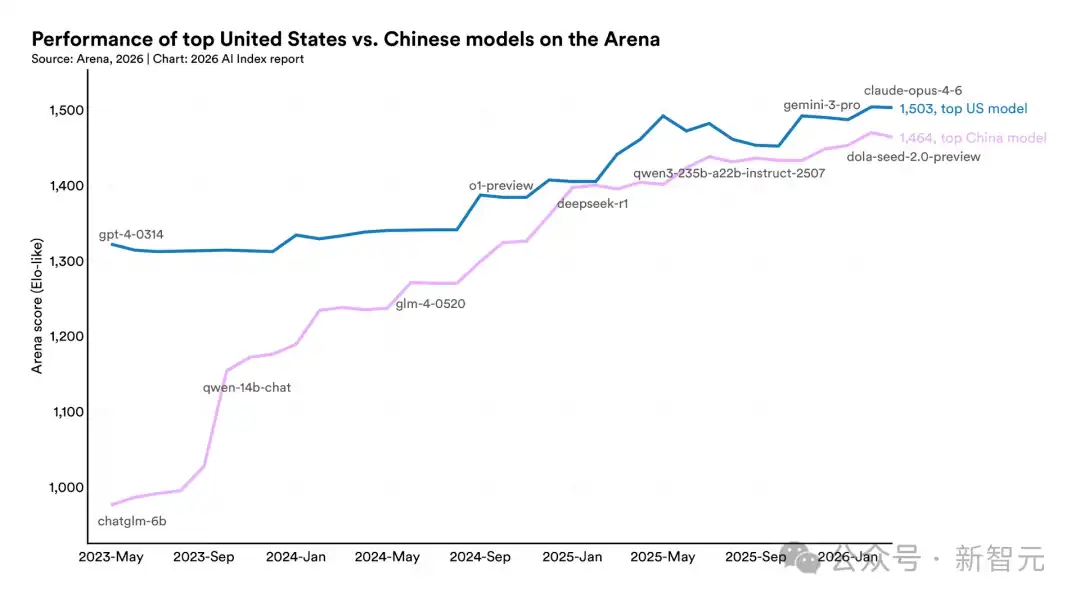
AThe performance gap between the top AI models of the US and China has narrowed to just 2.7%.
QWhich Chinese institutions or companies are ranked in the global top 10 for AI models?
AAlibaba, DeepSeek, Tsinghua University, and ByteDance are the Chinese institutions and companies ranked in the global top 10.
QWhat percentage of the world's top AI models in the past year came from industry rather than academia?
AOver 90% of the world's top AI models in the past year came from industry, not academia or government labs.
QWhat significant negative impact on employment is highlighted in the report, particularly for a specific age group?
AEmployment for software developers aged 22-25 has decreased by approximately 20% since 2024, as entry-level positions are being disproportionately affected.
QWhat is the term used in the report to describe the uneven and inconsistent development of AI capabilities?
AThe term used to describe the uneven development of AI capabilities is 'jagged frontier' (锯齿前沿).
Похожее
Из Кореи в США: благодаря ИИ рабочие профессии становятся всё востребованнее
Искусственный интеллект меняет структуру рынка труда, повышая спрос и зарплаты квалифицированных рабочих специальностей, в то время как традиционное высшее образование теряет привлекательность. Данные из США показывают, что доходы профессиональных училищ выросли на 11.4% в 2025 году, а число увольнений из-за внедрения ИИ достигло рекордных 38 579 в мае. Молодое поколение всё чаще выбирает рабочие профессии, считая их более стабильными в эпоху автоматизации. В США зарплаты таких специалистов, как электрики и сантехники, уже сравнялись или превзошли доходы многих офисных работников. В Корее выпускники профильных школ, например, полупроводниковой, практически гарантированно получают работу в таких компаниях, как Samsung. Дефицит кадров усугубляется массовым выходом на пенсию старшего поколения и бумом строительства инфраструктуры, в том числе для дата-центров. Крупные компании, такие как Meta и JPMorgan, инвестируют миллионы в программы обучения. Несмотря на растущий интерес, преодоление стереотипов о "непрестижности" рабочих профессий остаётся ключевой задачей для полного удовлетворения рыночного спроса.
marsbit2 мин. назад

marsbit2 мин. назад
От TPU к самосовершенствующимся агентам: как Джефф Дин видит следующий шаг в развитии ИИ
В статье на основе выступления Джеффа Дина на YC Startup School обсуждается эволюция ИИ от больших моделей к системам с долгосрочными агентами. Дин подчеркивает, что следующий этап ИИ — не просто более умные модели, а создание систем, способных к продолжительной автономной работе, самообучению и автоматизированным экспериментам. Ключевые темы включают смещение фокуса с размера моделей на организацию интеллекта, важность контекстной инженерии, аппаратной эффективности (особенно для вывода), а также возможности для стартапов в нишевых областях, где большие модели слабы. Он отмечает, что по мере удешевления генерации кода возрастает ценность четких спецификаций, правильной постановки задач и "вкуса" в выборе направлений. В итоге, главным становится не ответ модели, а создание надежных систем, способных выполнять сложные, многошаговые задачи.
marsbit5 мин. назад
marsbit5 мин. назад
Qualcomm: спад ажиотажа вокруг ИИ. Когда наступит выздоровление на рынке смартфонов?
Компания Qualcomm (QCOM.O) опубликовала финансовый отчёт за третий квартал 2026 финансового года (по состоянию на июнь 2026 года). Выручка составила 9,95 млрд долларов США, что на 4% меньше, чем годом ранее, но превысило рыночные ожидания. Однако маржинальность снизилась до 53,1%, не достигнув прогнозируемых 54,6%, главным образом из-за роста себестоимости, включая затраты на производство и память.
Основное давление на выручку оказал сегмент мобильных устройств, который упал на 19,6% до 5,09 млрд долларов. Это связано со снижением глобальных поставок смартфонов (кроме Apple) на 11%, а также с тенденцией производителей использовать старые платформы для снижения затрат. В то же время автомобильный бизнес продемонстрировал рост на 61% до 1,59 млрд долларов, а сегмент IoT вырос на 9% до 1,83 млрд.
Чистая прибыль составила 2 млрд долларов, однако операционная прибыль снизилась на 41% из-за падения маржинальности и роста расходов. Прогноз на следующий квартал по выручке (97-105 млрд долларов) соответствует ожиданиям, но прогноз по прибыли на акцию оказался ниже рыночных оценок.
На фоне слабости основного бизнеса Qualcomm активно развивает направление центров обработки данных (ЦОД) в сфере ИИ, представив четыре продуктовые линии: ускорители ИИ, коммерческие CPU, индивидуальные чипы и решения для подключения. Компания сотрудничает с Microsoft и Meta и ставит амбициозную цель по выручке от этого направления в 15 млрд долларов к 2029 финансовому году. Однако, поскольку данный бизнес ещё не вносит существенного вклада в выручку, а ожидания рынка в отношении ИИ снижаются, акции компании откатились с пиков, достигнутых на волне энтузиазма по поводу ИИ. В краткосрочной перспективе производительность компании по-прежнему зависит от восстановления рынка смартфонов и снижения цен на компоненты, такие как память.
marsbit5 мин. назад

marsbit5 мин. назад
Эксплойт Coldcard вызывает исход биткойнов, «бычья» консолидация крипторынка: Дайджест Ходлера, 2 августа
После утечки средств из кошельков Coldcard на сумму около $90 млн в биткойнах, мелкие держатели стали активно переводить средства на централизованные биржи. Объём переводов менее 1 BTC достиг максимума с 2022 года. По данным Galaxy Research, в результате трёх волн атак было скомпрометировано более 4500 адресов. Эксплойт использовал уязвимость в процессе генерации сида кошелька.
В США обсуждение "Закона о ясности" (Clarity Act) зашло в тупик из-за разногласий по этическим нормам для политиков и регулированию стейблкоинов. Вероятность принятия закона до истечения срока крайне мала.
Отчётность компаний за второй квартал показала снижение доходов: Coinbase сообщила о чистых убытках, а доход Robinhood от криптовалютных операций упал на 38%. При этом аналитик ARK Invest заявил, что индустрия вступает в фазу крупнейшей консолидации, что, по его мнению, является бычьим сигналом.
Чемпионат мира по футболу 2026 года принёс $20 млрд объёма на блокчейн-рынках прогнозов. За неделю Bitcoin и Ether потеряли около 3% стоимости. Среди альткоинов лучше всего себя показали Cardano (ADA) и Uniswap (UNI).
Аналитики Grayscale предположили, что дно рынка Bitcoin, возможно, уже достигнуто раньше традиционного четырёхлетнего цикла. В разделе FUD: основатель Telegram Павел Дуров объявлен в розыск в России, платформа Pump.fun уволила сотрудников перед получением ими токенов на миллионы долларов, а сотрудник Белого дома покинул пост на фоне обвинений в использовании инсайдерской информации для ставок на прогнозных рынках.
cointelegraph23 мин. назад

cointelegraph23 мин. назад
Популярные статьи
Добро пожаловать на HTX.com! Мы сделали приобретение Sonic (S) простым и удобным. Следуйте нашему пошаговому руководству и отправляйтесь в свое крипто-путешествие.Шаг 1: Создайте аккаунт на HTXИспользуйте свой адрес электронной почты или номер телефона, чтобы зарегистрироваться и бесплатно создать аккаунт на HTX. Пройдите удобную регистрацию и откройте для себя весь функционал.Создать аккаунтШаг 2: Перейдите в Купить криптовалюту и выберите свой способ оплатыКредитная/Дебетовая Карта: Используйте свою карту Visa или Mastercard для мгновенной покупки Sonic (S).Баланс: Используйте средства с баланса вашего аккаунта HTX для простой торговли.Третьи Лица: Мы добавили популярные способы оплаты, такие как Google Pay и Apple Pay, для повышения удобства.P2P: Торгуйте напрямую с другими пользователями на HTX.Внебиржевая Торговля (OTC): Мы предлагаем индивидуальные услуги и конкурентоспособные обменные курсы для трейдеров.Шаг 3: Хранение Sonic (S)После приобретения вами Sonic (S) храните их в своем аккаунте на HTX. В качестве альтернативы вы можете отправить их куда-либо с помощью перевода в блокчейне или использовать для торговли с другими криптовалютами.Шаг 4: Торговля Sonic (S)С легкостью торгуйте Sonic (S) на спотовом рынке HTX. Просто зайдите в свой аккаунт, выберите торговую пару, совершайте сделки и следите за ними в режиме реального времени. Мы предлагаем удобный интерфейс как для начинающих, так и для опытных трейдеров.
1.8k просмотров всегоОпубликовано 2025.01.15Обновлено 2026.06.02

Он решает проблемы масштабируемости, совместимости между блокчейнами и стимулов для разработчиков с помощью технологических инноваций.
2.4k просмотров всегоОпубликовано 2025.04.09Обновлено 2025.04.09
HTX Learn — ваш проводник в мир перспективных проектов, и мы запускаем специальное мероприятие "Учитесь и Зарабатывайте", посвящённое этим проектам. Наше новое направление .
1.9k просмотров всегоОпубликовано 2025.04.10Обновлено 2025.04.10