SpaceX's First Mars Pilot Selected is from China

marsbitОпубликовано 2026-06-09Обновлено 2026-06-09

Введение

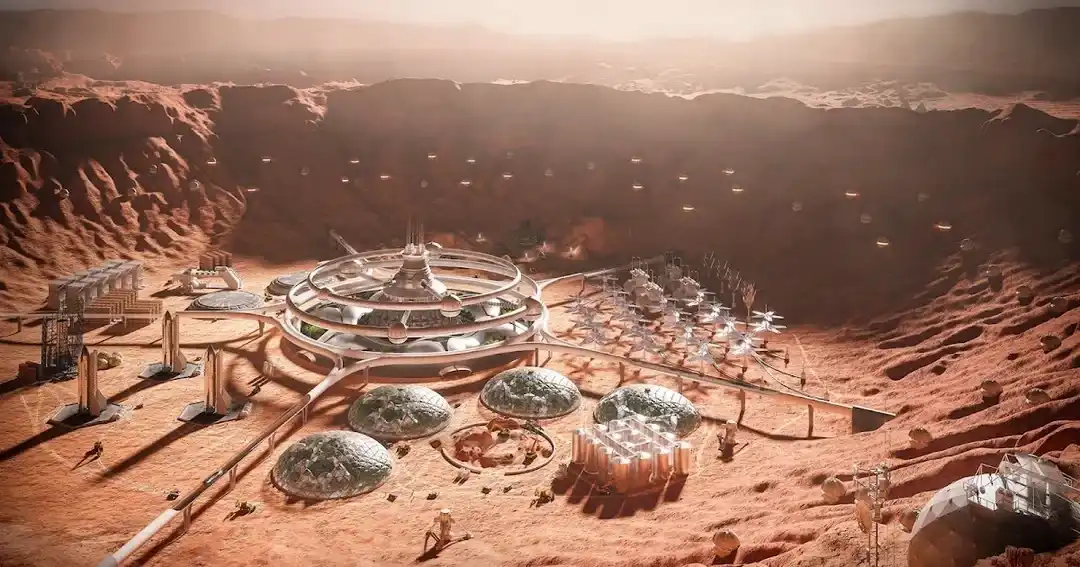
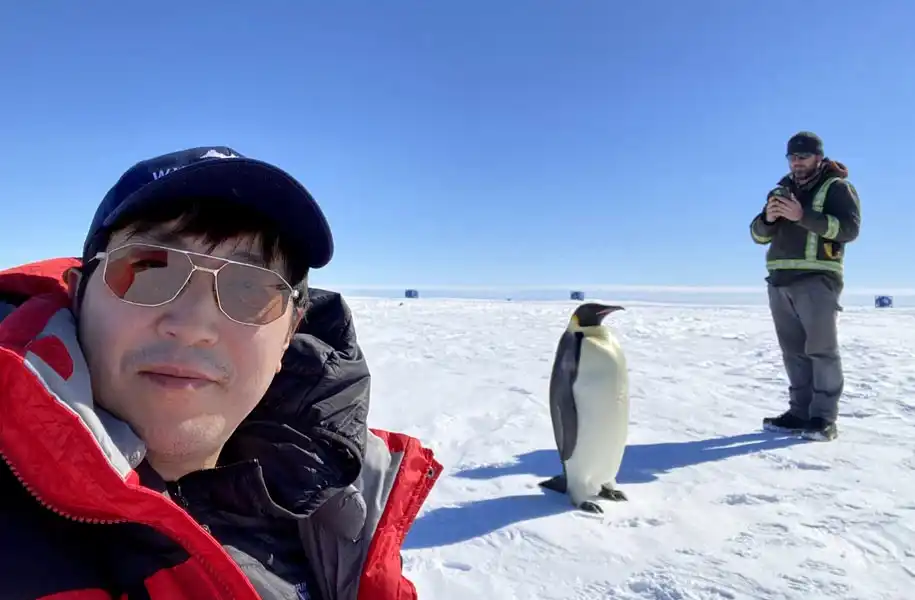
In a historic week marked by SpaceX's massive IPO, the focus shifts to Wang Chun, a Chinese Bitcoin billionaire selected as the commander for humanity's first crewed mission to Mars. Born in Tianjin in 1982, Wang's fascination with remote frontiers began in childhood with a world map. A programming prodigy, he later co-founded F2Pool, which grew into one of the world's largest Bitcoin mining pools, amassing his fortune. Wealth enabled Wang to pursue his exploratory passions. In April 2025, he funded and led the private Fram2 mission, a $200 million, three-and-a-half-day SpaceX Crew Dragon flight on a unique polar orbit to photograph Earth's poles from space. On May 21, 2026, SpaceX announced Wang as the commander for the inaugural crewed Mars flyby mission aboard a Starship—a two-year journey into deep space to gather critical data for establishing a sustainable human presence on Mars, aligning with Elon Musk's vision of a multiplanetary species. Unlike many in the crypto world, Wang views his wealth as a tool for exploration rather than an end goal. His story exemplifies using resources to push human boundaries and inspire curiosity, embodying what it means to discover one's life mission.

Author: Youth Wealth Development Association

No matter what, this week is destined to be recorded in history.

On June 12th, the largest company IPO in human history is about to debut. SpaceX is the behemoth created by Musk, embodying this world's richest man's ultimate fantasy of interstellar migration.

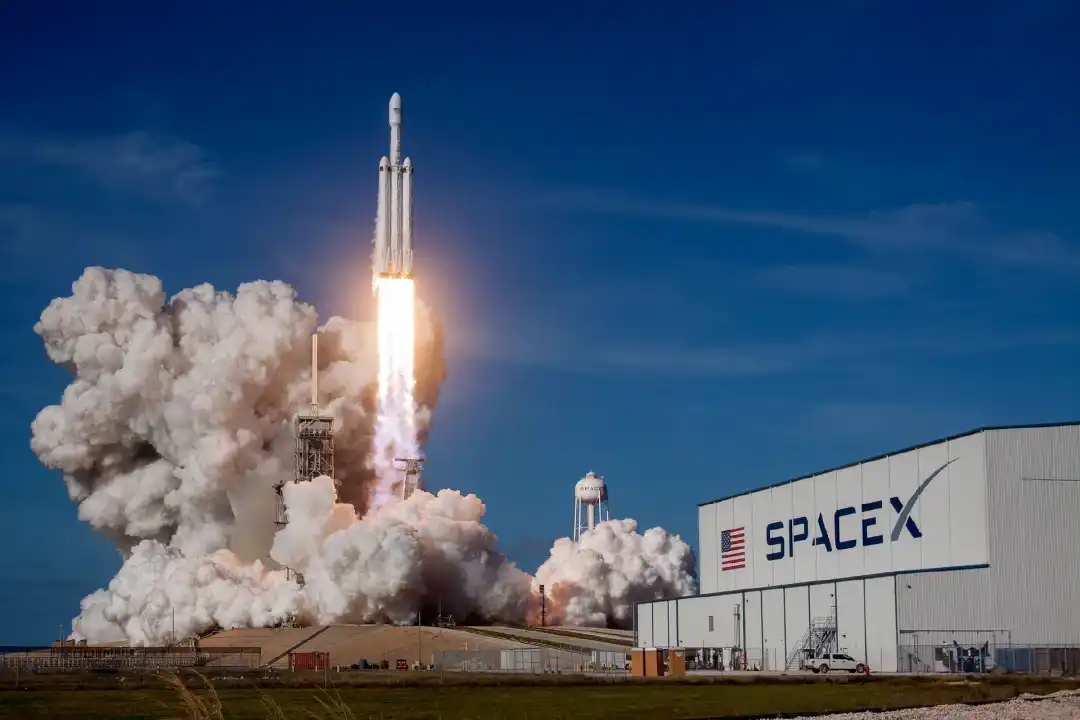
Over the past decade or so, SpaceX's Falcon rockets have launched a total of 656 times.

In 2025 alone, they launched 165 times—almost half of all global orbital launches.

The Dragon spacecraft has carried out more than twenty manned missions, sending over seventy people into orbit.

In SpaceX's prospectus, the word "Mars" appears 63 times. The "Mars Exploration Program" is also Musk's number one project, on which he has staked his entire future.

But today's article is not about SpaceX, nor is it about Musk. Instead, it's about the captain who will command humanity's first manned mission to Mars—a Bitcoin billionaire from Tianjin, Wang Chun.

Wang Chun spent his childhood with his grandparents.

In 1987, when Wang Chun was five years old, his grandfather picked up a world map while taking a walk. From then on, that map became his favorite toy.

What fascinated him wasn't the named places, but the blank spaces at the bottom of the map—the polar regions. At five years old, Wang Chun often stared at these most remote, most uninhabited corners of the Earth. He later said that from that moment on, he was captivated by those distant and unknown places.

Yet in reality, it wasn't until he was eighteen and went to university that he first traveled more than a hundred kilometers away from home.

At that time, Wang Chun didn't yet know just how vast a world he would explore in his lifetime.

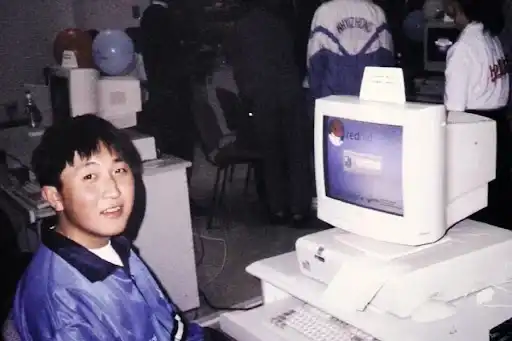
At thirteen, Wang Chun got his first computer. Besides playing games, he used it to write many programs. One of the earliest was a gravity simulator that visualized the motion of planets in the solar system.

In school, Wang Chun participated in various programming competitions, including the International Olympiad in Informatics (IOI) and ACM-ICPC. Later, based on these competition achievements, he skipped the national college entrance exam (Gaokao) and was directly admitted to university.

After graduation, Wang Chun joined a software company in Beijing. From that time on, he became obsessed with riding trains.

In 2007, he used all his weekends to travel by train for 75,900 kilometers. He meticulously recorded every trip, down to the minute and second, posting them on forums.

That year, he spent a total of two months entirely on train carriages. Every Friday after work, he headed straight to the train station, not returning to work until the following Monday.

This earned him the online nickname "高铁千次男" (the Thousand-Trip High-Speed Rail Guy).

Over the years, he traveled by train to every province in China.

In 2010, Wang Chun went abroad for the first time, first to Nepal, then to India. There, he boarded what was then India's longest direct train—the 16317 Himalaya Express. He rode from Kanyakumari at the southernmost tip of the subcontinent all the way to Kashmir in the far north, traversing the entire length of India from south to north.

This journey cost about $1,000, which was all his savings at the time.

In 2013, Wang Chun applied his programming skills to something almost nobody understood at the time—Bitcoin.

He partnered with "Shenyu" to set up China's first Bitcoin mining pool, named F2Pool, specifically for mining Bitcoin.

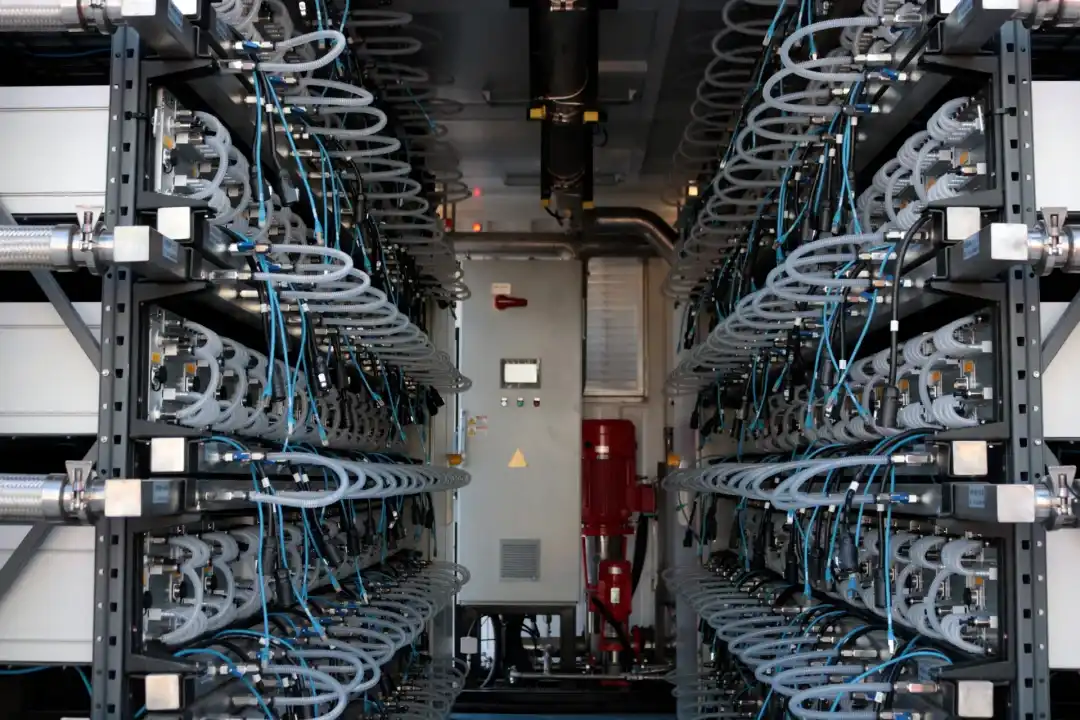
F2Pool grew astonishingly fast. Within a year of its founding, F2Pool became the world's largest Bitcoin mining pool. Over the next decade, more than 1.3 million Bitcoins were mined from this pool.

At its peak, F2Pool alone controlled over 30% of the global network's hash rate. In other words, back then, for every three Bitcoins mined worldwide, roughly one came from Wang Chun's pool.

By selling these "shovels," Wang Chun amassed enough wealth to become a dazzling Bitcoin billionaire.

After earning his fortune, Wang Chun finally had the chance to realize his childhood dreams of traveling the world and exploring the polar regions.

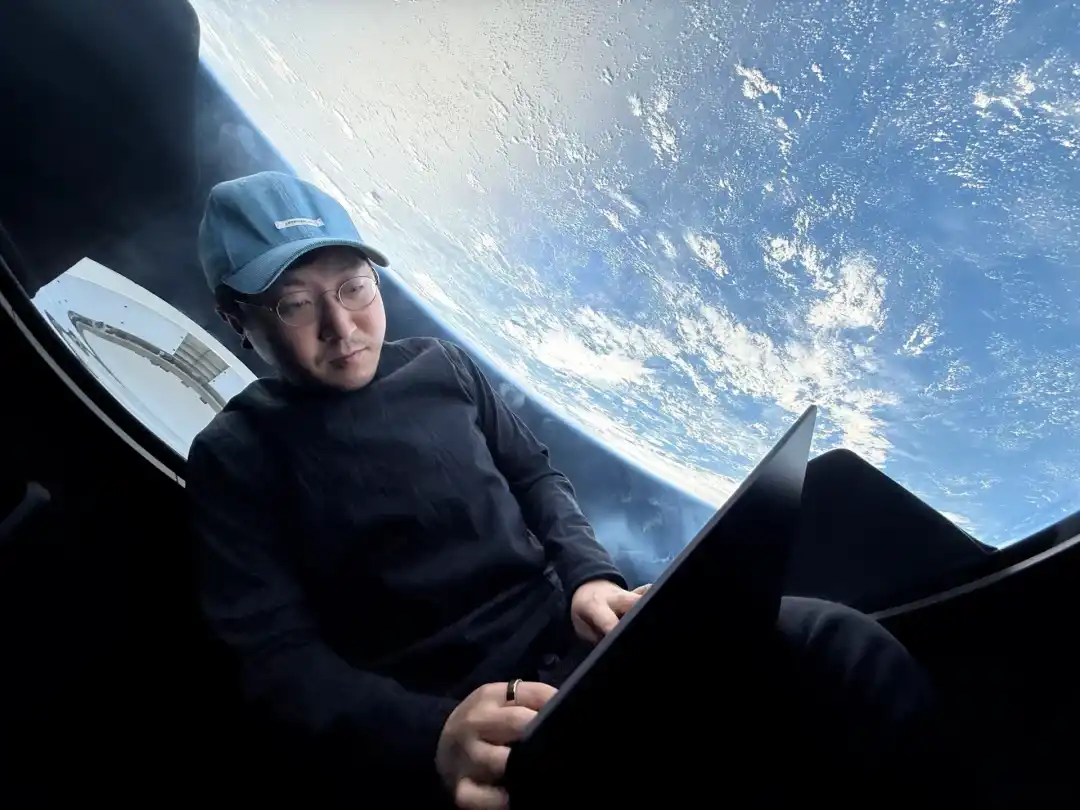
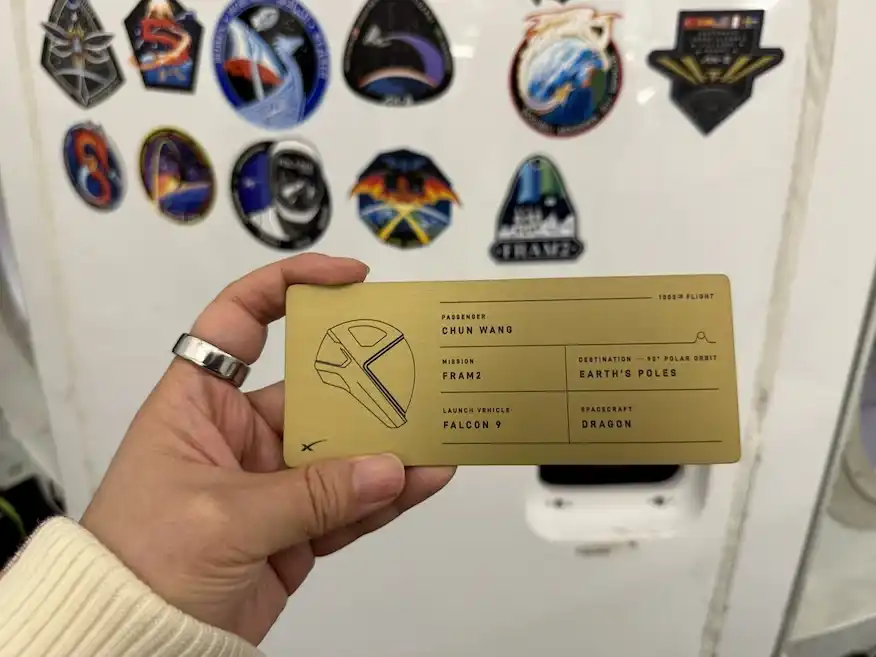
On April 1, 2025, Wang Chun embarked on the 1000th flight of his life. However, the destination of this flight wasn't any city, but a true frontier—space.

△This flight aboard SpaceX's Dragon spacecraft will be Wang Chun's 1000th flight to date

This mission, codenamed Fram2, was flown by SpaceX's most mature and most frequently used crewed spacecraft, the Dragon.

Its flight path was special: launching southward from Florida, entering a rare polar orbit, circling right over the North and South Poles, and "vertically" orbiting the entire Earth.

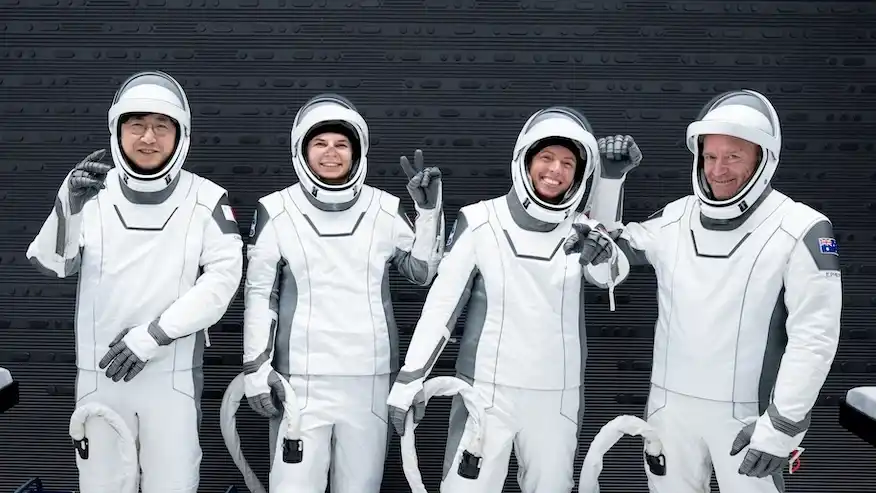
For this journey, Wang Chun paid out of his own pocket to charter all four seats on the Dragon spacecraft, costing approximately $200 million in total. He also personally selected his three crewmates: a film cinematographer, a robotics expert, and a polar explorer.

△The four astronauts of the Fram2 mission pose for a group photo in the suit-up room near Launch Pad 39A at NASA's Kennedy Space Center.

The mission plan and this unique orbital path were also designed by him personally. The purpose was to satisfy his childhood fascination with the polar regions.

Over the next three and a half days, they circled the Earth repeatedly, taking numerous photos of the polar regions and auroras from a space perspective, and incidentally capturing humanity's first X-ray image in space.

After returning from space, people marveled at Wang Chun's extreme challenge while also envying him for having finally achieved his life's ultimate goal.

But what nobody expected was that, for Wang Chun, all of this so far was just a warm-up.

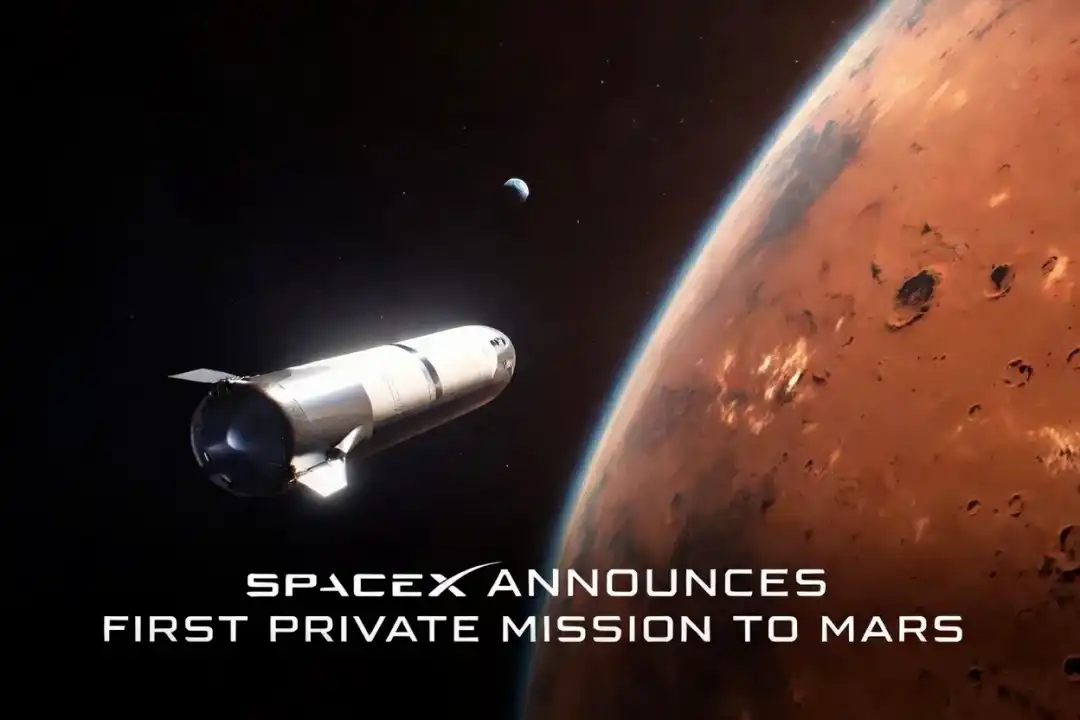
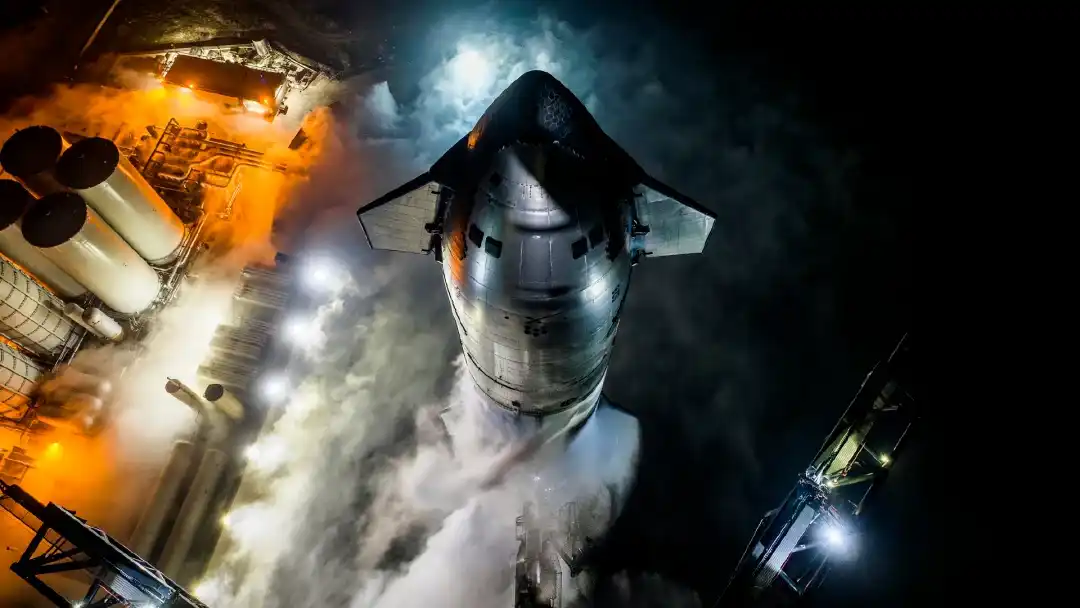
On May 21, 2026, SpaceX unveiled its next-generation spacecraft, "Starship." During the live broadcast, SpaceX also announced that Wang Chun would serve as commander for humanity's first manned mission to Mars.

It's a journey of roughly two years.

The spacecraft will carry him out of the Earth-Moon system, toward Mars, then loop back to Earth, covering hundreds of millions of kilometers in total. For much of those two years, he will be confined to a small cabin, floating in the pitch-black deep space.

And before departing for Mars, Wang Chun will also embark on a week-long lunar flyby mission with humanity's first self-funded space tourist, Dennis Tito, and his wife, coming as close as about 200 kilometers from the lunar surface.

During the two years following the launch of the manned Mars mission, Wang Chun and his crew will conduct extensive data collection work in deep space. The aim is to obtain crucial operational data for humanity, to transform Mars exploration from a short-term novel attempt into a truly sustainable, self-sufficient habitat.

For Musk and SpaceX, a Mars flyby was never the goal.

According to Musk's vision, the future involves building a real city on Mars. To that end, every twenty-six months or so, thousands of Starships would be launched, transporting equipment and people in trip after trip. The Martian city would begin with hundreds of millions of tons of prioritized equipment and supplies, ultimately leading to the arrival of one million people willing to live on Mars.

Humanity would thus become a true "multi-planetary species."

The Mars mission that Wang Chun is about to undertake in the next two years is the first step toward this audacious plan.

When most people talk about commercial space companies like SpaceX and Blue Origin, they are often amazed by the incredibly high costs or eagerly gossip about the super-rich who spend fortunes.

It seems that when discussing the door to space, the only topic left is "money."

But in terms of money, Wang Chun isn't even among the wealthiest. In this circle, giants like Changpeng Zhao (CZ) and Justin Sun have fortunes hundreds of times larger than his.

In the Bitcoin world, famous for creating overnight billionaires, he's at best upper-middle class.

But for Wang Chun, money has always been a tool, not a goal.

The extravagance and hedonism of the crypto world mostly stem from the greed stirred by rapidly accumulated wealth, which many cannot resist.

But Wang Chun hardly seems like someone from the crypto world.

When everyone else is looking down counting their money, only he looks up and counts the stars.

During the Fram2 mission, his total net worth was only a few hundred million dollars, yet without batting an eye, he spent a full $200 million to take his expedition team to space. That was essentially betting a large portion of his fortune on a three-and-a-half-day journey.

Compared to many of his peers who, upon making money, dive headfirst into a life of indulgence, Wang Chun's simplicity and purity are truly rare in today's era.

In an interview with CBS, he spoke about the significance of this mission: "This is not just about going to space; it's about pushing boundaries and sharing knowledge. We hope stories like these can inspire more people to follow their curiosity."

Stefan Zweig wrote in *Sternstunden der Menschheit* (Decisive Moments in History): "The greatest luck a person can have in life is to discover their mission in the middle of their life, in the prime of their years."

In this world, few are willing to venture into those desolate and harsh corners to explore our planet. Even fewer are willing to exhaust their wealth to actively seek out extreme environments.

Wang Chun is clearly one of those fortunate few.

Связанные с этим вопросы

QAccording to the article, what is Wang Chun's primary motivation for undertaking space missions?

AWang Chun's primary motivation stems from his childhood fascination with remote and unknown places, first inspired by a world map's polar regions. He views space exploration as a way to push boundaries and fulfill his lifelong curiosity.

QHow did Wang Chun accumulate the wealth that funded his space endeavors?

AWang Chun co-founded F2Pool, a major Bitcoin mining pool, in 2013. As it grew to become one of the world's largest, he amassed a fortune, becoming a Bitcoin billionaire, which provided the financial means for his space missions.

QWhat was significant about Wang Chun's Fram2 mission with SpaceX?

AThe Fram2 mission was significant because it was Wang Chun's 1000th flight. He chartered an entire SpaceX Dragon spacecraft for a 3.5-day journey on a unique polar orbit, allowing him and his crew to extensively photograph the Earth's poles and auroras from space.

QWhat historic role has SpaceX announced for Wang Chun in 2026?

AIn 2026, SpaceX announced that Wang Chun will serve as the commander for humanity's first crewed mission to fly to Mars. This approximately two-year journey is a critical first step in SpaceX's long-term plan to establish a city on Mars.

QHow does the article distinguish Wang Chun's attitude towards wealth from others in the cryptocurrency field?

AThe article states that unlike many in the crypto field who get caught up in wealth and indulgence, Wang Chun treats money as a tool, not a goal. He is distinguished by his willingness to invest a significant portion of his fortune into exploration and scientific missions to inspire curiosity in others.

Похожее

Apple's Desired On-Device AI Sees a Dark Horse Emerge: The First Cognitive Model is Born, 4B Matches GPT-5.4

A Chinese company, Tomorrow's Journey (Nextie), has introduced what it is calling the industry's first "cognitive model" for edge devices. Named New Journey Alpha, this 4-billion-parameter model reportedly matches the performance of trillion-parameter giants like GPT-5.4 in group intelligence tasks such as debate and collective decision-making. The development follows Andrej Karpathy's vision of stripping vast factual knowledge from large language models to retain only a smaller "cognitive core" capable of reasoning, planning, and knowing its own limits. This approach directly addresses the soaring computational costs and token expenses hindering AI's widespread deployment, as highlighted by incidents like Amazon shutting down an internal AI tool due to prohibitive costs. Trained via reinforcement learning on a corpus of academic papers from 1800-2020 to enhance generalization, the model enables three key advancements: 1) Improved decision quality in multi-agent systems, 2) Drastically reduced compute costs, allowing for cost-effective cloud or on-device (e.g., MacBook) deployment, and 3) The feasibility of "proactive" AI agents that act autonomously without user prompts, unlocking new commercial possibilities beyond today's reactive models. Built by the former Microsoft Xiaoice team—known for creating a 3.6B model that outperformed a 65B Llama model—the company is now focusing on the multi-agent systems sector, a field gaining significant investor interest. The model's economic impact is profound; by achieving high-level performance with minimal parameters, it fundamentally alters the cost structure of AI services, challenging the prevailing model of ever-larger parameter counts.

marsbit8 мин. назад

Apple's Desired On-Device AI Sees a Dark Horse Emerge: The First Cognitive Model is Born, 4B Matches GPT-5.4

marsbit8 мин. назад

OpenAI's 'Blueprint for the Future': Making AI Beneficial for Every Person on the Planet

A new transformative technology emerges every few generations. OpenAI draws a parallel with the advent of electricity in the 1920s, which initially brought convenience but ultimately enabled unprecedented progress in medicine, engineering, and living standards by empowering people to create new possibilities. AI is poised to recreate this phenomenon. Its true significance lies not in the technology itself, but in what people can achieve with it—from understanding a medical bill or starting a business to aiding scientific discovery. OpenAI believes AI should be universally accessible, allowing everyone to use it according to their own needs. This future, however, is not guaranteed. While transformative tech can centralize power, OpenAI's philosophy is that AI must serve humanity, augmenting human capabilities and broadly distributing its benefits. The company's first commitment is to build AI for human service, aiming to empower the many rather than concentrate power in a few. Safety, alignment with human intent, and oversight are paramount. OpenAI is optimistic about AI's potential to expand human welfare but remains clear-eyed about risks. The goal is to help people achieve more, not to replace them. Full automation is not the desired future; human judgment, values, and direction will become even more critical. OpenAI outlines three core goals: 1. Build automated AI researchers to accelerate and increasingly automate the research process itself, maintaining close human collaboration. The internal projection is that by March 2028, a significant portion of their research will be conducted by AI systems working alongside human researchers. 2. Accelerate economic development by advancing science, boosting productivity, and fostering growth, while ensuring the fruits are widely shared. 3. Provide a personal AGI for everyone on Earth, allowing individuals to benefit from this transformative technology in their own way. The company is entering its third phase, moving from foundational AGI research (Phase 1) to product deployment and learning from real-world use (Phase 2). The current challenge is making advanced AI abundant, affordable, safe, practical, and usable for all individuals and organizations. OpenAI concludes that a widely distributed power structure leads to a more resilient, adaptable, and free society. A positive AI future should not be controlled by a handful of entities but built, benefited from, and owned by many. If realized correctly, AI can become a cornerstone for enhancing global productivity, creativity, scientific advancement, and economic opportunity, fulfilling the mission to ensure AGI benefits all of humanity.

marsbit1 ч. назад

OpenAI's 'Blueprint for the Future': Making AI Beneficial for Every Person on the Planet

marsbit1 ч. назад

Arthur Hayes' New Article: AI Bubble Nears Bursting, Crypto Market Faces Short-Term Pressure

In a new essay, Arthur Hayes argues that the AI market bubble is approaching a rupture, which will place significant short-term pressure on crypto assets. He identifies rising oil prices, a trio of massive tech IPOs (SpaceX, Anthropic, OpenAI), and potential anti-AI political rhetoric from Trump as the three key catalysts for a correction. Hayes posits that the prolonged blockage of the Strait of Hormuz will drive energy prices higher, increasing operational costs for data centers and squeezing AI company profits. Simultaneously, the market may struggle to absorb the upcoming wave of multi-trillion dollar tech IPOs. Furthermore, with high inflation hurting his election chances, Trump could pivot to attacking the AI sector with proposals for heavy taxation and regulation to win over voters, spooking the market. Hayes notes that nearly all new dollar liquidity since 2022 has flowed into the AI sector, leaving little for Bitcoin, explaining its recent underperformance. He believes an AI stock crash would trigger a broad risk-off sentiment and credit contraction, dragging down crypto in the near term. Consequently, his fund, Maelstrom, has sold all AI-related stocks and non-core cryptocurrencies, retaining only Bitcoin and Ethereum while building positions in traditional energy stocks. He anticipates Bitcoin will bottom and resume its bull run only after the AI bubble pops and a new monetary easing cycle begins.

marsbit1 ч. назад

Arthur Hayes' New Article: AI Bubble Nears Bursting, Crypto Market Faces Short-Term Pressure

marsbit1 ч. назад

Торговля

Спот
Фьючерсы

Популярные статьи

Как купить S

Добро пожаловать на HTX.com! Мы сделали приобретение Sonic (S) простым и удобным. Следуйте нашему пошаговому руководству и отправляйтесь в свое крипто-путешествие.Шаг 1: Создайте аккаунт на HTXИспользуйте свой адрес электронной почты или номер телефона, чтобы зарегистрироваться и бесплатно создать аккаунт на HTX. Пройдите удобную регистрацию и откройте для себя весь функционал.Создать аккаунтШаг 2: Перейдите в Купить криптовалюту и выберите свой способ оплатыКредитная/Дебетовая Карта: Используйте свою карту Visa или Mastercard для мгновенной покупки Sonic (S).Баланс: Используйте средства с баланса вашего аккаунта HTX для простой торговли.Третьи Лица: Мы добавили популярные способы оплаты, такие как Google Pay и Apple Pay, для повышения удобства.P2P: Торгуйте напрямую с другими пользователями на HTX.Внебиржевая Торговля (OTC): Мы предлагаем индивидуальные услуги и конкурентоспособные обменные курсы для трейдеров.Шаг 3: Хранение Sonic (S)После приобретения вами Sonic (S) храните их в своем аккаунте на HTX. В качестве альтернативы вы можете отправить их куда-либо с помощью перевода в блокчейне или использовать для торговли с другими криптовалютами.Шаг 4: Торговля Sonic (S)С легкостью торгуйте Sonic (S) на спотовом рынке HTX. Просто зайдите в свой аккаунт, выберите торговую пару, совершайте сделки и следите за ними в режиме реального времени. Мы предлагаем удобный интерфейс как для начинающих, так и для опытных трейдеров.

1.4k просмотров всегоОпубликовано 2025.01.15Обновлено 2026.06.02

Как купить S

Sonic: Обновления под руководством Андре Кронье – новая звезда Layer-1 на фоне спада рынка

Он решает проблемы масштабируемости, совместимости между блокчейнами и стимулов для разработчиков с помощью технологических инноваций.

2.3k просмотров всегоОпубликовано 2025.04.09Обновлено 2025.04.09

Sonic: Обновления под руководством Андре Кронье – новая звезда Layer-1 на фоне спада рынка

HTX Learn: Пройдите обучение по "Sonic" и разделите 1000 USDT

HTX Learn — ваш проводник в мир перспективных проектов, и мы запускаем специальное мероприятие "Учитесь и Зарабатывайте", посвящённое этим проектам. Наше новое направление .

1.8k просмотров всегоОпубликовано 2025.04.10Обновлено 2025.04.10

HTX Learn: Пройдите обучение по "Sonic" и разделите 1000 USDT

Обсуждения

Добро пожаловать в Сообщество HTX. Здесь вы сможете быть в курсе последних новостей о развитии платформы и получить доступ к профессиональной аналитической информации о рынке. Мнения пользователей о цене на S (S) представлены ниже.

活动图片