South Korea Crypto Market Research Report: Market Restart and the Next Growth Cycle

marsbitОпубликовано 2025-12-15Обновлено 2025-12-15

Введение

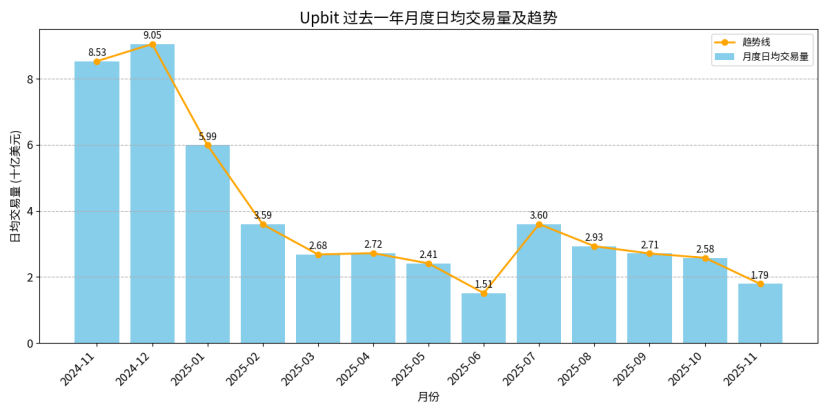
South Korea's crypto market is undergoing a significant structural reset, not a collapse. Key indicators show an 80% drop in Upbit's daily trading volume to $1.78 billion by November 2025, despite a 141% increase in new token listings. The "Kimchi Premium" has compressed to 1.75%, signaling reduced speculation. This normalization stems from regulatory delays in stablecoin legislation, strict capital controls under FETA limiting foreign liquidity, and capital rotation into the surging AI-driven stock market. Despite retail pullback, global giants like Binance are entering the market, attracted by Korea's high tech adoption rate, ongoing stablecoin pilots, and growing institutional interest in custody and tokenization. The market is shifting from speculation to utility-driven growth, with exchanges emphasizing user education and real product use cases. Future catalysts include potential Bitcoin ETF approval in 2026, which could unlock pension fund investments and improve liquidity. Partnerships between global chains (e.g., Sui, Solana, Arbitrum) and Korean giants (e.g., Shinhan Securities, Lotte Group) highlight Korea's evolution into a development hub. The reset represents a maturation toward a regulated, institution-friendly ecosystem, offering a strategic entry point for builders focused on real-world utility.

Key Signals

  • The South Korean digital asset market is undergoing one of the most significant structural resets in its history. Upbit's average daily trading volume fell from $9 billion in December 2024 to $1.78 billion in November 2025, a drop of approximately 80%. This occurred against a backdrop where the total number of new listings on Korean exchanges in 2025 actually increased by 141% year-on-year. Meanwhile, retail capital is fiercely rotating, flooding into the soaring stock market. Led by the AI chip sector, spearheaded by Samsung Electronics and SK hynix, the KOSPI index rose by about 70%.

  • The "Kimchi Premium," once seen as a hallmark phenomenon of the Korean market, historically maintained at around 10%, has now compressed to about 1.75%. This is not a massive capital flight, but a normalization process squeezing out speculative bubbles.
  • The Kimchi Premium refers to the price difference where cryptocurrencies like Bitcoin trade at a higher price on local Korean exchanges (e.g., Upbit, Bithumb) compared to global exchanges (e.g., Binance, Coinbase).
  • The core question is: Has Korea's crypto era ended, or is this a system reset before the next structural wave?

2. Behind the Freeze: Deconstructing the Slowdown in Korea's Crypto Market

This is not a short-term correction but a structural readjustment driven by a combination of regulation, capital controls, and investor fatigue.

2.1 Regulatory Delays and Uncertainty

  • The stablecoin bill, a core pillar for the future of digital assets in Korea, has been stalled for 7 months due to disputes over whether the "issuing entity should be a bank or a non-bank institution." There are currently 6 different proposals under review, and the Financial Services Commission (FSC) plans to consolidate them into a unified bill by the end of 2025.
  • This regulatory vacuum has slowed the pace of innovation on the institutional side and made Web2 companies exploring tokenization and settlement layer innovations more cautious, with the overall environment clearly shifting towards risk aversion.

2.2 Capital Outflow and Liquidity Trap

  • Korea's strict foreign exchange controls block overseas market makers and institutions from injecting liquidity, leading to a long-term trend of one-way capital outflow.
  • The Foreign Exchange Transactions Act (FETA): Non-residents cannot freely hold or flexibly use the Korean Won (KRW). The vast majority of large foreign exchange and capital movements require mandatory reporting or prior approval, significantly limiting the ability of overseas institutions to operate smoothly in the Korean market.
  • The Financial Supervisory Service's (FSS) "Foreign Exchange Business Processing Guidelines": Local banks face strict intraday position caps and are essentially prohibited from providing KRW liquidity to non-resident institutions, making it difficult for overseas market makers to establish KRW positions and provide truly bilateral liquidity services.
  • Although it is predicted that the revenue scale of Korea's digital asset market will reach $635 million by 2030, liquidity constraints remain prominent in the short term.
  • Interestingly, the Korean market is highly reliant on leveraged trading. Once a new catalyst emerges, such as regulatory clarity or a new global Bitcoin rally, the market could rebound extremely rapidly.

2.3 Constructive Correction, Not a True Crash

  • Rather than viewing the market cooling as a recession, it's better understood as a return to normalcy. Korea's cycle is aligning with global trends: shifting from speculation-driven extensive growth to a phase more focused on utility value. The focus of market participants is gradually moving from short-term trading to infrastructure, custody, compliance, and real-world application layers. Although painful, this phase is a necessary process to support sustainable future expansion.

3. Crypto Giants Land in Seoul Collectively

  • Even though local retail participation has significantly declined, global crypto giants are still actively increasing their bets on the Korean market. This counter-cyclical expansion precisely indicates that external players remain highly optimistic about Korea's population's technological literacy and the long-term potential of the institutional market.

3.1 Key Moves

  • In October 2025, Binance re-entered the Korean market in a major way by acquiring Gopax, ending a four-year absence. This was partly facilitated by the relaxation of foreign ownership restrictions in Korea and also releases a signal that Korea is willing to open up further to global crypto companies.
  • This acquisition lays the groundwork for more intense market competition, smoother liquidity channels, and more sophisticated product offerings, significantly upgrading the products and services available to local users.
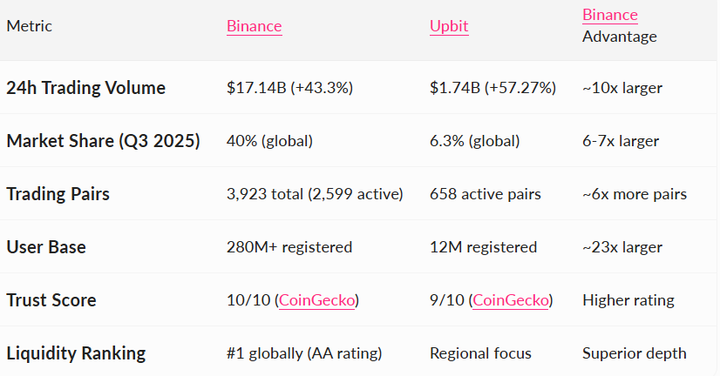
  • Core Performance Indicator Matrix

Source: Surf AI, 2025

3.2 Why Now?

This timing can be understood through three strategic factors:

  1. High Crypto Literacy and Extremely Fast Technology Adoption Rate
  • Korea remains one of the fastest markets globally in accepting and implementing emerging technologies, including AI and digital assets.
  1. Stablecoin Integration Prospects
  • Local banks, fintech companies, and internet giants like Kakao and Naver are exploring stablecoin pilots, potentially bridging the local financial system with the on-chain world.
  1. Sustained Institutional Demand
  • Korean institutional investors are increasingly interested in custody, asset tokenization, and legal, compliant digital asset allocation, laying the foundation for sustained long-term capital inflows.

4. Outlook

  • The current downturn is not an end, but a structural reset pushing the Korean market from pure speculative behavior towards utility value orientation, better aligned with institutional demand. Stablecoin legislation, institutional custody infrastructure, and a potential Bitcoin ETF are highly likely to become key pillars of the next growth phase. Korea is entering a new stage driven by real product value, user education, and compliant innovation.

4.1 Market Forecast

  • The Korean crypto market is expected to grow slowly at a compound annual growth rate (CAGR) of 2.94%, but the real inflection point is likely to come from a Bitcoin ETF potentially approved in 2026. This topic has been frequently discussed and rumored among Korean policymakers.
  • Once approved, potential changes include:
  • Formal participation by Korean pension and asset management institutions
  • Large-scale entry of overseas market makers
  • Higher quality price discovery and tighter bid-ask spreads

This could also potentially re-establish Korea's status as a regional "net inflow hub" for capital.

4.2 Korea's Web2 and Web3 Convergence

  • Korean large enterprise groups are delving deeper into the practical application layer of blockchain:
  • Banks, fintech companies, and large tech firms are testing stablecoin pilots and exploring payment and settlement rails related to the digital Korean Won.
  • Upbit and Bithumb have launched or expanded institutional custody services, enabling local institutions and overseas capital to re-enter the market in a compliant manner.
  • This signals a shift from speculation-dominated usage to an application model centered on infrastructure and practical use.

4.3 Global Comparison

  • Korea's regulatory direction is increasingly resembling Japan's: strict yet relatively predictable. If Korea can achieve similar regulatory clarity on key issues like stablecoins, asset tokenization, and digital asset ETFs, it has every opportunity to become one of Asia's most balanced crypto hubs, attracting both institutional builders and global liquidity.

4.4 From a Web3 Marketing Perspective: Why Korea Places Extra Importance on Product Usability

  • An important but often underestimated structural driver in Korea's next cycle is the increasing market demand for genuine product usability.
  • Korea is one of the few markets where exchanges and users actively test, verify, and deeply understand a project before truly accepting it. This trend is becoming more pronounced as the market transitions to a utility-driven phase.
  • For example:
  • Upbit's Quiz Events: Treating education as market infrastructure
  • Upbit often conducts quiz-based educational activities when listing new coins, requiring users to answer questions about:
  • The project's technical architecture
  • Token economic model
  • Use cases and real-world functions
  • Roadmap and risk profile
  • This is fundamentally different from the airdrop farming models common in other regions. The signal it sends is that Korean exchanges value verification, understanding, and user education more, and require projects to clearly and deeply explain their value.
  • Upbit X Surf Product Practical Usage Event
  • In 2025, Upbit and Surf collaborated on a product hands-on event, encouraging users to directly use the project's product, experience its functions, and produce meaningful usage results.
  • This clearly demonstrates a shift:
  • Korean exchanges are increasingly prioritizing validation based on actual usage experience, rather than superficial exposure marketing.
  • In Korea, a product being usable and user-friendly is itself the strongest marketing.
  • Narrative without execution cannot survive here long-term.

4.5 Investor Playbook

To position effectively during this reset phase, investors need to:

  • Continuously monitor key catalytic events, such as: FSC bill integration progress, Bitcoin ETF-related discussions, and upcoming stablecoin legislation.
  • Prioritize allocating to projects with long-term utility value, rather than tokens relying purely on sentiment and speculation.
  • Focus closely on macroeconomic indicators in the fourth quarter, as historically Korean retail investors have often re-entered the market en masse during risk-on recovery cycles.
  • Diversify allocations to reduce single holdings dependent entirely on political and regulatory timing for thematic narratives.

Furthermore, investors should focus on international ecosystems that are proactively establishing local presence and capabilities in Korea. A key trend shaping Korea's next cycle is the rapid formation of partnerships between global public chain ecosystems and Korean large enterprises. This预示着 Korea is transitioning from a market primarily focused on trading and consumption to a hub role of "co-development and deep infrastructure integration."

Case 1: Sui x t’order

  • Local Partner: t’order (Korea's dominant tableside ordering and POS network)
  • Integration Method: Supports KRW-pegged stablecoin payments,配合 QR code and facial recognition payment, zero fees for merchants, real-time settlement

Case 2: Solana x Shinhan Securities

  • Local Partner: Shinhan Securities (one of Korea's top securities firms)
  • Cooperation Method: Signed a strategic Memorandum of Understanding (MOU) to jointly support Web3 entrepreneurs, developers, and the Solana ecosystem in Korea, led by Superteam Korea

Case 3: Arbitrum x Lotte Group

  • Local Partner: Lotte Group (one of Korea's largest conglomerates)
  • Integration Method: Arbitrum provided significant developer grants to Caliverse (Lotte's metaverse platform) for integrating the Arbitrum blockchain

5. Korea's Crypto Winter is a Reset, Not a Retreat – And a Strategic Entry Window for Builders

Despite the current market contraction, Korea remains one of the world's most dynamic crypto markets. Stablecoins are helping Web2 large enterprises explore on-chain settlement and infrastructure tokenization; leading exchanges continue to expand custody and institutional services; and the possibility of a Bitcoin ETF approval significantly increases the probability of overseas liquidity flowing back to Korea.

Korea's crypto ecosystem is not coming to an end; it is maturing rapidly.

This reset means: Korea is transitioning from a hype-driven retail playground to a digital asset economic system with structural design, institutional support, and institutional participation as its core fulcrum.

Связанные с этим вопросы

QWhat is the 'Kimchi Premium' and how has it changed in the Korean crypto market recently?

AThe 'Kimchi Premium' refers to the price difference where cryptocurrencies like Bitcoin trade at a higher price on South Korean exchanges (e.g., Upbit, Bithumb) compared to global exchanges (e.g., Binance, Coinbase). Historically, it was around 10%, but it has now compressed to approximately 1.75%, indicating a normalization process where speculative泡沫 are being squeezed out rather than a massive capital flight.

QWhat are the main regulatory challenges currently facing the South Korean cryptocurrency market?

AThe main regulatory challenge is the delay and uncertainty surrounding stablecoin legislation. The bill, a core pillar for the future, has been stalled for 7 months due to debates over whether issuance should be led by banks or non-bank institutions. There are six different proposals under review, and the Financial Services Commission (FSC) aims to consolidate them into a unified bill by the end of 2025. This regulatory vacuum has slowed institutional innovation and made Web2 companies exploring tokenization more cautious.

QWhy are global crypto giants like Binance expanding into South Korea despite the current market downturn?

AGlobal crypto giants are expanding into South Korea due to its high crypto literacy, rapid technology adoption speed, the promising前景 of stablecoin integration being explored by local banks and tech giants, and growing institutional demand for custody, asset tokenization, and compliant digital asset allocation. They see long-term potential in the market's technical sophistication and institutional infrastructure, making it a strategic move despite short-term retail participation decline.

QWhat potential catalyst could significantly reverse the current market trend in South Korea?

AA significant potential catalyst is the approval of a Bitcoin ETF, which is frequently discussed among Korean policymakers and could be approved as early as 2026. This would likely lead to formal participation from Korean pension and asset management funds, large-scale entry of overseas market makers, higher-quality price discovery, tighter bid-ask spreads, and could re-establish South Korea as a regional 'net inflow hub' for capital.

QHow is the South Korean market's focus shifting from a Web3 marketing perspective according to the article?

AThe market is shifting towards a greater emphasis on product's real-world usability and functionality rather than mere narrative or hype. Exchanges like Upbit are implementing educational activities (e.g., quizzes on project technology and tokenomics) and product usage events (e.g., collaborating with Surf for hands-on experience) to validate projects. This trend indicates that a product being usable and useful is becoming the strongest marketing tool, and projects without execution cannot survive long-term in this market.

Похожее

South Korean Exchanges 'Battle' Regulators, Challenging the Boundaries of Enforcement and Legislation

South Korea's cryptocurrency industry is engaged in a rare, direct confrontation with regulators. The Financial Intelligence Unit (FIU), the primary anti-money laundering (AML) watchdog, has recently imposed heavy penalties on major exchanges like Upbit and Bithumb for alleged violations involving unregistered overseas VASPs and AML procedures. However, exchanges are now actively challenging these actions in court and through industry associations. In a significant shift, the Seoul Administrative Court ruled in favor of Upbit's operator, Dunamu, overturning part of an FIU-ordered business suspension. The court found the FIU's penalty criteria and justification insufficiently clear. Similarly, the court suspended the enforcement of a six-month business suspension against Bithumb pending a final ruling, citing potential irreversible harm to the exchange. Beyond legal battles, the industry is contesting proposed legislative amendments. The Digital Asset eXchange Alliance (DAXA) strongly opposes a draft rule that would mandate Suspicious Transaction Reports (STRs) for all crypto transfers over 10 million KRW (~$6,800). DAXA argues this "poison pill" clause violates legal principles and would overwhelm the STR system, increasing reports from 63,000 to an estimated 5.45 million annually for major exchanges, thereby crippling effective AML monitoring. This conflict highlights a structural tension in South Korea's crypto governance: comprehensive digital asset laws are still developing, while regulators rely heavily on AML enforcement. The industry's move from passive compliance to active legal and legislative challenges signifies a new phase, pressing for clearer rules and more proportionate enforcement. While short-term disputes may intensify, this clash could ultimately lead to a more mature and sustainable regulatory framework for South Korea's vibrant crypto market.

marsbit42 мин. назад

South Korean Exchanges 'Battle' Regulators, Challenging the Boundaries of Enforcement and Legislation

marsbit42 мин. назад

After 50x Storage Surge, Justin Sun Always Looks to the Next Decade

Sun Yuchen, known for his controversial stunts like a $30 million lunch with Warren Buffett (canceled due to a kidney stone) and eating a $6.2 million duct-taped banana, is often overshadowed by a significant fact: his decade-long track record of spotting major investment trends. In 2016, he famously advised young people to invest in Bitcoin, Nvidia, Tesla, and Tencent instead of buying property. A hypothetical $20,000 investment in Nvidia and Tesla from that list would now be worth over 50 million RMB. His latest major call was on November 6, 2025, predicting a "50x storage opportunity" tied to the AI boom, which materialized with Sandisk's stock surging nearly 50-fold by 2026. Looking ahead, Sun now focuses on the next frontier: Physical AI. He identifies four key areas: 1. **Embodied AI/Robotics**: He sees this reaching its "iPhone moment," with companies like UBTech and Galaxy General leading in commercialization. 2. **Drones**: Viewed as the first commercially viable form of Physical AI, revolutionizing sectors from warfare (e.g., AeroVironment's Switchblade) to logistics. 3. **Spatial Computing**: Beyond VR, it's about AI understanding physical space, a foundational technology for robotics and autonomous systems, exemplified by Apple's Vision Pro. 4. **Space Exploration**: After a 2025 suborbital flight with Blue Origin, Sun advocates for space as the ultimate frontier, discussing blockchain's potential role in space asset management and data transactions. His investment philosophy involves betting on entire, inevitable trends rather than single companies. For robotics, he sees Tesla (the body/manufacturer) and Nvidia (the brain/AI platform) as complementary plays. In defense drones, he highlights companies making tanks obsolete (AeroVironment) and those augmenting fighter jets (Kratos). For space, he participated in Blue Origin's flight and anticipates SpaceX's potential IPO to redefine the sector's valuation. Sun Yuchen's vision frames the next two decades not as a revolution in information flow (like the internet), but in the fundamental operation of the physical world through AI-powered robots, autonomous systems, and spatial intelligence, ultimately extending human and AI activity into space. While many still focus on conventional assets, he continues to look toward the next technological horizon.

marsbit1 ч. назад

After 50x Storage Surge, Justin Sun Always Looks to the Next Decade

marsbit1 ч. назад

The Billionaires Behind the Most Expensive Midterm Election in History

"The Most Expensive Midterm Elections and Their Billionaire Backers" This analysis details the unprecedented scale of spending in the 2026 midterm elections, highlighting the key billionaire donors shaping the political landscape. Jeff Yass, founder of Susquehanna International Group, has contributed over $81 million, ranking third among individual donors behind George Soros ($102.6M) and Elon Musk ($84.8M). Yass is a major donor to Trump's MAGA Inc. and supports school choice and various candidates. Overall, federal committees have raised over $4.7 billion this cycle, with political ad spending projected to reach $10.8 billion. Republican-aligned groups are significantly out-raising their Democratic counterparts. "Dark money" from undisclosed sources continues to grow. The core stakes involve control of Congress and policy direction for Trump's final term. Donors are also motivated by specific issues: Sergey Brin and Chris Larsen are funding opposition to a proposed California wealth tax and supporting crypto-friendly policies. Other top donors include OpenAI's Greg Brockman and his wife Anna ($50M total to MAGA Inc. and an AI-focused PAC), Richard Uihlein ($45.3M to conservative causes), venture capitalists Marc Andreessen and Ben Horowitz (each over $44M to crypto/AI PACs and MAGA Inc.), Miriam Adelson ($42.6M to GOP leadership PACs), Paul Singer ($33.9M), and Diane Hendricks ($25.8M to MAGA Inc.). The article notes that the peak fundraising period is still ahead, with major primaries approaching.

marsbit1 ч. назад

The Billionaires Behind the Most Expensive Midterm Election in History

marsbit1 ч. назад

The Largest IPO in History Is Approaching, Surpassing SpaceX, 28 Years of AI Self-Iteration, Countdown to Intelligence Explosion

"Anthropic Nears Trillion-Dollar IPO, Fueled by Explosive Growth and 2028 'Intelligence Explosion' Warning Anthropic is considering a deal valuing the AI company near $1 trillion, potentially leading to one of the largest IPOs ever and surpassing SpaceX. Its revenue has skyrocketed, with Annual Recurring Revenue (ARR) reaching $45 billion in May 2026—a 500% increase in just five months. This vertical growth curve is attributed to its key products, Claude Code and Cowork, dominating AI coding and enterprise collaboration. Beyond commercial success, co-founder Jack Clark issued a pivotal warning in an interview: there is a greater than 50% chance that by the end of 2028, AI systems will achieve recursive self-improvement—the ability to autonomously build a 'better version' of themselves, initiating an 'intelligence explosion.' This prophecy underpins the company's astronomical valuation, as the market prices in the potential for transformative and disruptive AI. Further signaling its ambition, Anthropic formed a $1.5 billion joint venture with Goldman Sachs and Blackstone, aiming to disrupt traditional consulting firms like McKinsey by deploying Claude AI for complex strategic work. This move tests AI's capacity to replace high-level cognitive labor, a precursor to its predicted autonomous evolution. The narrative presents a dual future: unprecedented economic opportunity alongside significant risks like economic restructuring and security threats. Anthropic's meteoric rise and Clark's 2028 prediction frame the coming years as a countdown to a potential technological singularity."

marsbit1 ч. назад

The Largest IPO in History Is Approaching, Surpassing SpaceX, 28 Years of AI Self-Iteration, Countdown to Intelligence Explosion

marsbit1 ч. назад

Торговля

Спот
Фьючерсы

Популярные статьи

Как купить S

Добро пожаловать на HTX.com! Мы сделали приобретение Sonic (S) простым и удобным. Следуйте нашему пошаговому руководству и отправляйтесь в свое крипто-путешествие.Шаг 1: Создайте аккаунт на HTXИспользуйте свой адрес электронной почты или номер телефона, чтобы зарегистрироваться и бесплатно создать аккаунт на HTX. Пройдите удобную регистрацию и откройте для себя весь функционал.Создать аккаунтШаг 2: Перейдите в Купить криптовалюту и выберите свой способ оплатыКредитная/Дебетовая Карта: Используйте свою карту Visa или Mastercard для мгновенной покупки Sonic (S).Баланс: Используйте средства с баланса вашего аккаунта HTX для простой торговли.Третьи Лица: Мы добавили популярные способы оплаты, такие как Google Pay и Apple Pay, для повышения удобства.P2P: Торгуйте напрямую с другими пользователями на HTX.Внебиржевая Торговля (OTC): Мы предлагаем индивидуальные услуги и конкурентоспособные обменные курсы для трейдеров.Шаг 3: Хранение Sonic (S)После приобретения вами Sonic (S) храните их в своем аккаунте на HTX. В качестве альтернативы вы можете отправить их куда-либо с помощью перевода в блокчейне или использовать для торговли с другими криптовалютами.Шаг 4: Торговля Sonic (S)С легкостью торгуйте Sonic (S) на спотовом рынке HTX. Просто зайдите в свой аккаунт, выберите торговую пару, совершайте сделки и следите за ними в режиме реального времени. Мы предлагаем удобный интерфейс как для начинающих, так и для опытных трейдеров.

1.3k просмотров всегоОпубликовано 2025.01.15Обновлено 2025.03.21

Как купить S

Sonic: Обновления под руководством Андре Кронье – новая звезда Layer-1 на фоне спада рынка

Он решает проблемы масштабируемости, совместимости между блокчейнами и стимулов для разработчиков с помощью технологических инноваций.

2.2k просмотров всегоОпубликовано 2025.04.09Обновлено 2025.04.09

Sonic: Обновления под руководством Андре Кронье – новая звезда Layer-1 на фоне спада рынка

HTX Learn: Пройдите обучение по "Sonic" и разделите 1000 USDT

HTX Learn — ваш проводник в мир перспективных проектов, и мы запускаем специальное мероприятие "Учитесь и Зарабатывайте", посвящённое этим проектам. Наше новое направление .

1.8k просмотров всегоОпубликовано 2025.04.10Обновлено 2025.04.10

HTX Learn: Пройдите обучение по "Sonic" и разделите 1000 USDT

Обсуждения

Добро пожаловать в Сообщество HTX. Здесь вы сможете быть в курсе последних новостей о развитии платформы и получить доступ к профессиональной аналитической информации о рынке. Мнения пользователей о цене на S (S) представлены ниже.

活动图片