Solana’s 90% slowdown: Is quantum-safe security killing SOL’s speed?

ambcryptoОпубликовано 2026-04-05Обновлено 2026-04-05

Введение

Solana's recent quantum security testing with Project Eleven has exposed a critical trade-off: implementing quantum-resistant signatures could slow the network by 90%. This is a significant challenge for Solana, as its core advantage has been its high speed and scalability, processing 31x more transactions than Ethereum with 1,191 TPS. This speed has fueled its growth in DeFi and stablecoin adoption, notably for non-USD currencies. The potential 90% slowdown forces Solana to balance its defining speed with future-proof security, risking its competitive edge if it cannot maintain both performance and protection against quantum computing threats.

Can a blockchain achieve both scalability and speed, or is it forced to prioritize one over the other?

Solana’s latest move has put this question in the spotlight for traders and developers. For years, Solana’s high-speed powered growth in its stablecoin market and transaction volume.

Put simply, its fast throughput allowed the network to handle huge transaction loads while maintaining strong on-chain liquidity.

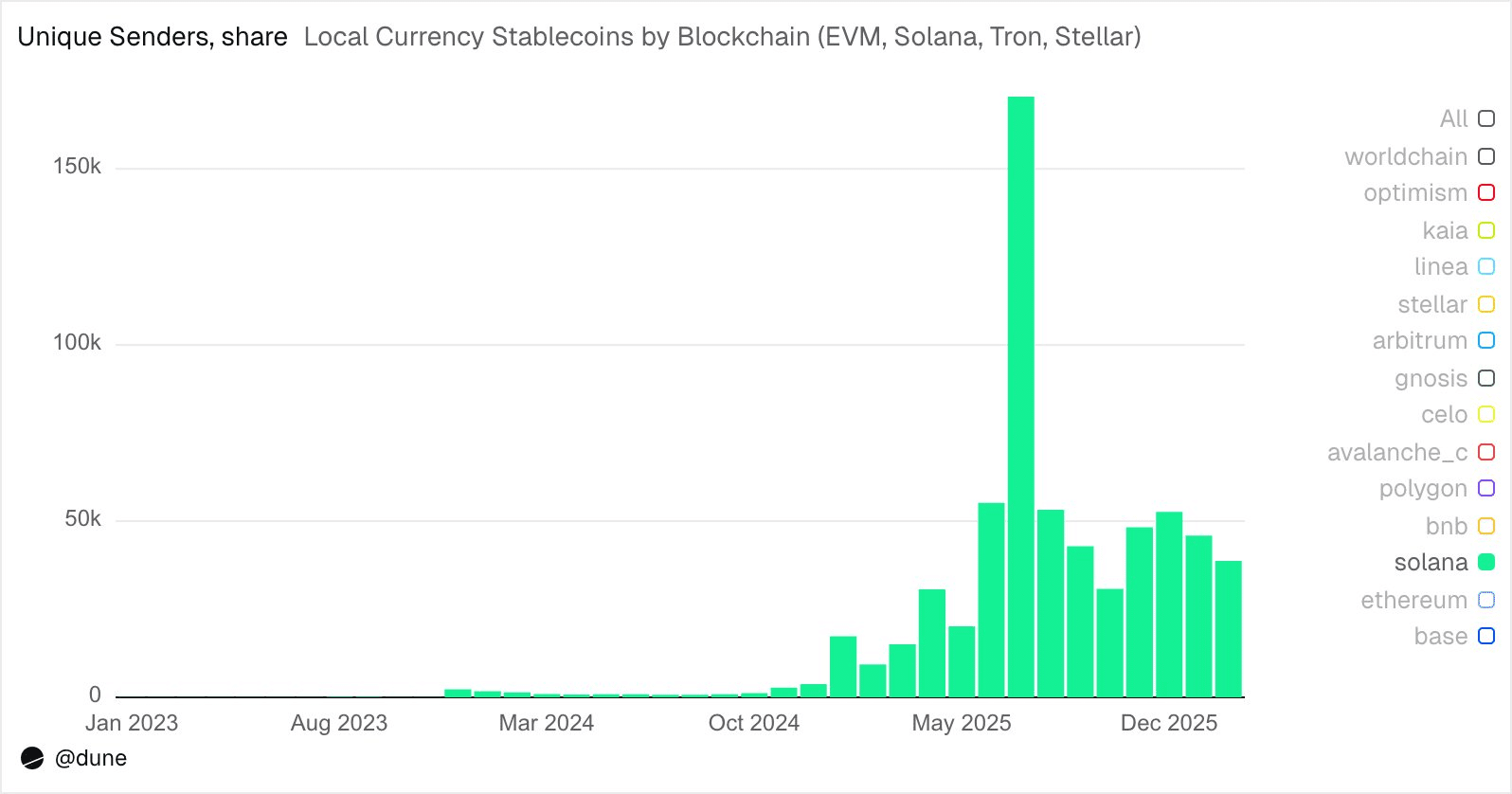
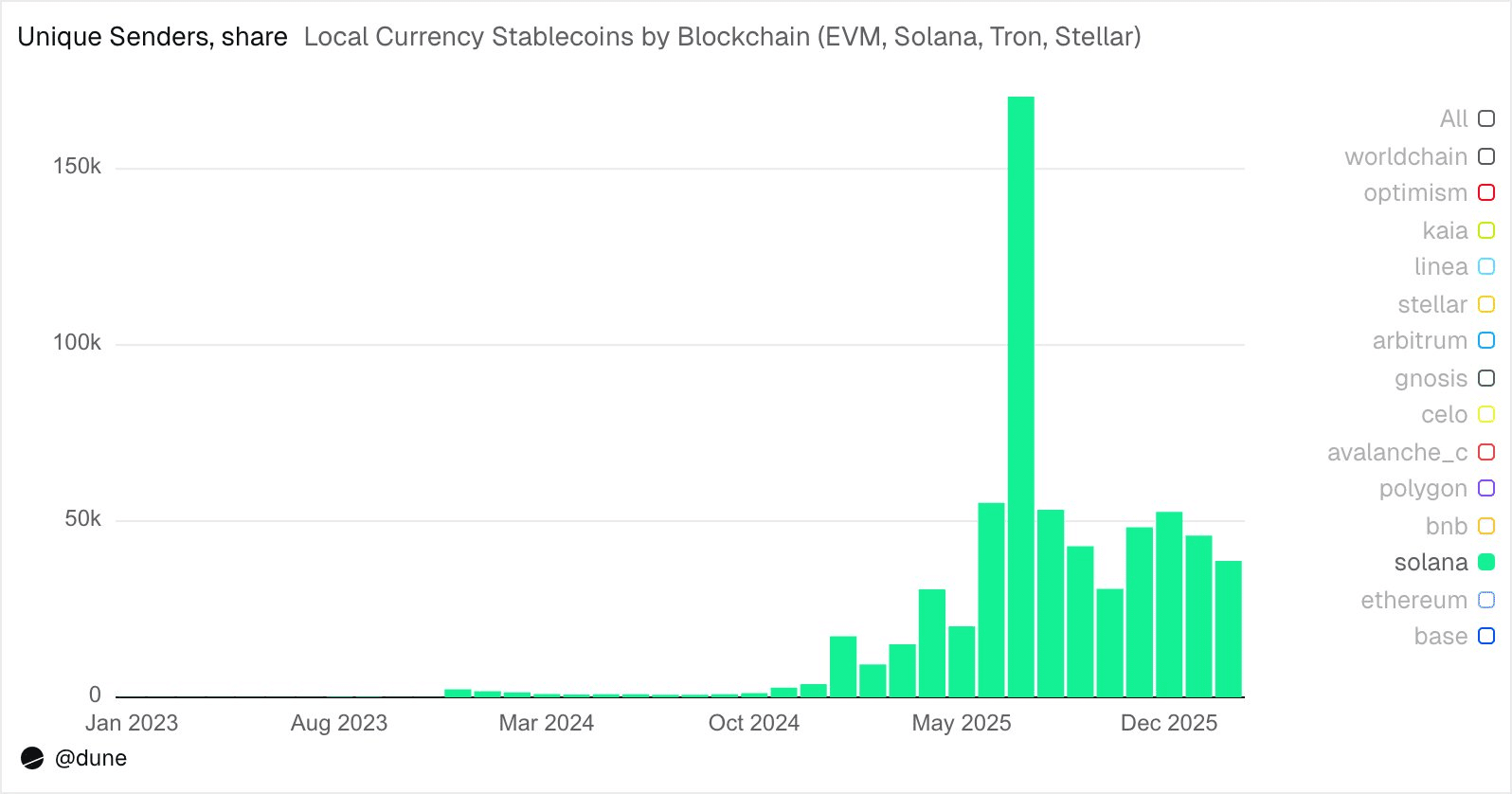
Look at Solana’s de-dollarization push: Dune data, as of press time, showed that Unique Senders of non-USD stablecoins on the network nearly tripled year-on-year, driven by EURC and BRZ adoption.

From a strategic standpoint, the network is clearly diversifying its stablecoin portfolio, laying the groundwork for broader DeFi expansion.

Source: Dune

From a technical perspective, however, this growth highlights Solana’s [SOL] strong underlying network fundamentals. Its high throughput, fast confirmation times, and robust on-chain liquidity have enabled it to support complex financial activity at scale, something that many competing blockchains still struggle with.

However, recent quantum testing revealed a trade-off, raising questions about whether Solana can keep its edge.

For context, Solana is working with Project Eleven to test quantum-safe signatures. Basically, it’s a way to protect the network from potential attacks by future quantum computers.

The catch?

Early tests show some big compromises.

Quantum-safe signatures are up to 40× larger, and the network ran roughly 90% slower. In simple terms, making Solana quantum-resistant could seriously slow down transactions, forcing the network to juggle speed, scalability, and security all at once.

That naturally brings up a tough question: Can Solana stay fast and secure while keeping its edge?

Speed vs security: Solana’s edge over Ethereum faces a critical test

The trade-off is clear: Either lock in security and slow down, or keep speed and take on more risk.

Recent quantum testing exposed this trade-off. To safeguard the network against future quantum attacks, Solana accepted a roughly 90% slowdown in speed.

As AMBCrypto noted, this is particularly challenging for Solana, since speed has long been its defining advantage over other layer-1s, especially Ethereum [ETH].

The impact of that advantage has been enormous.

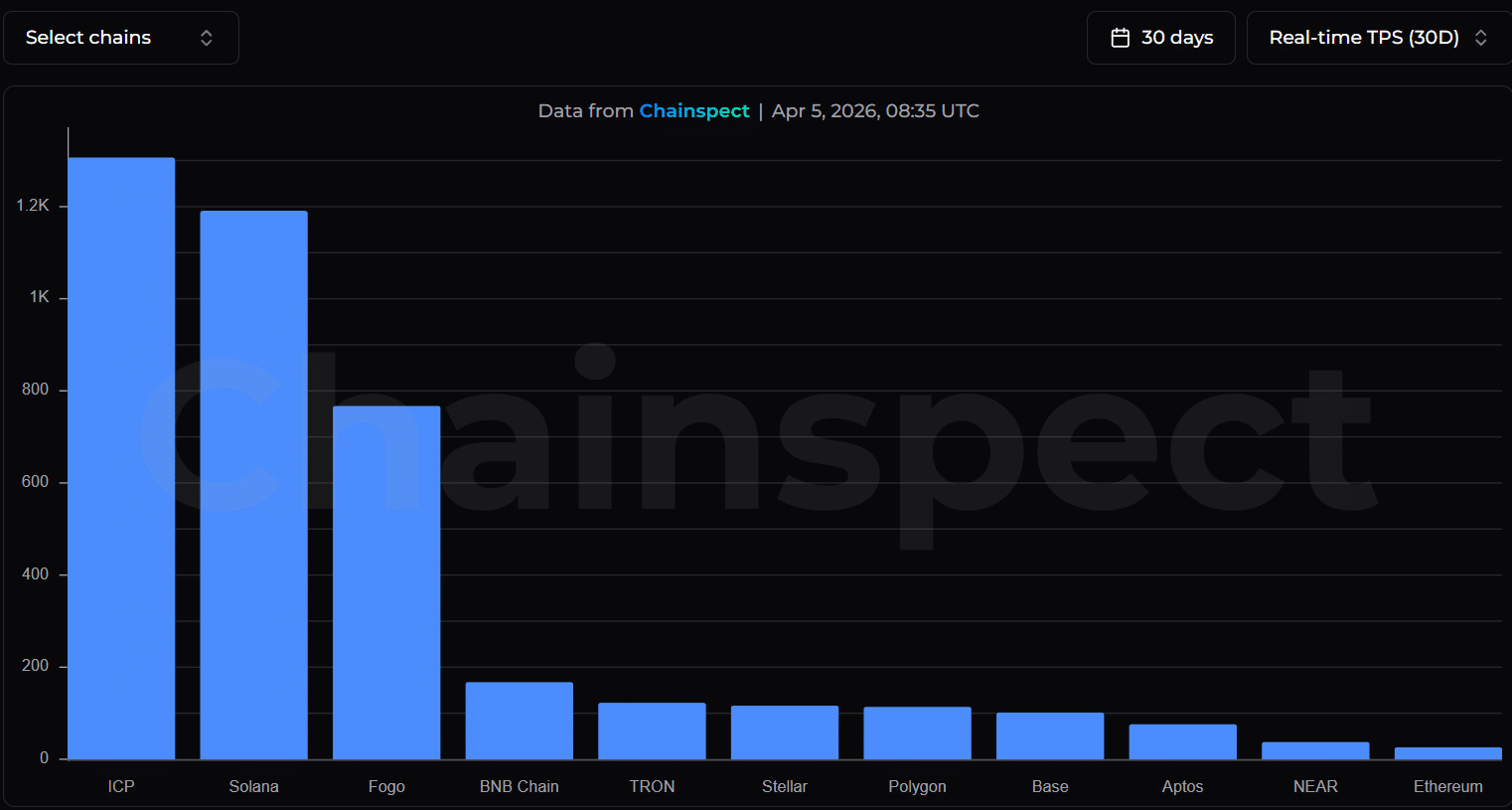
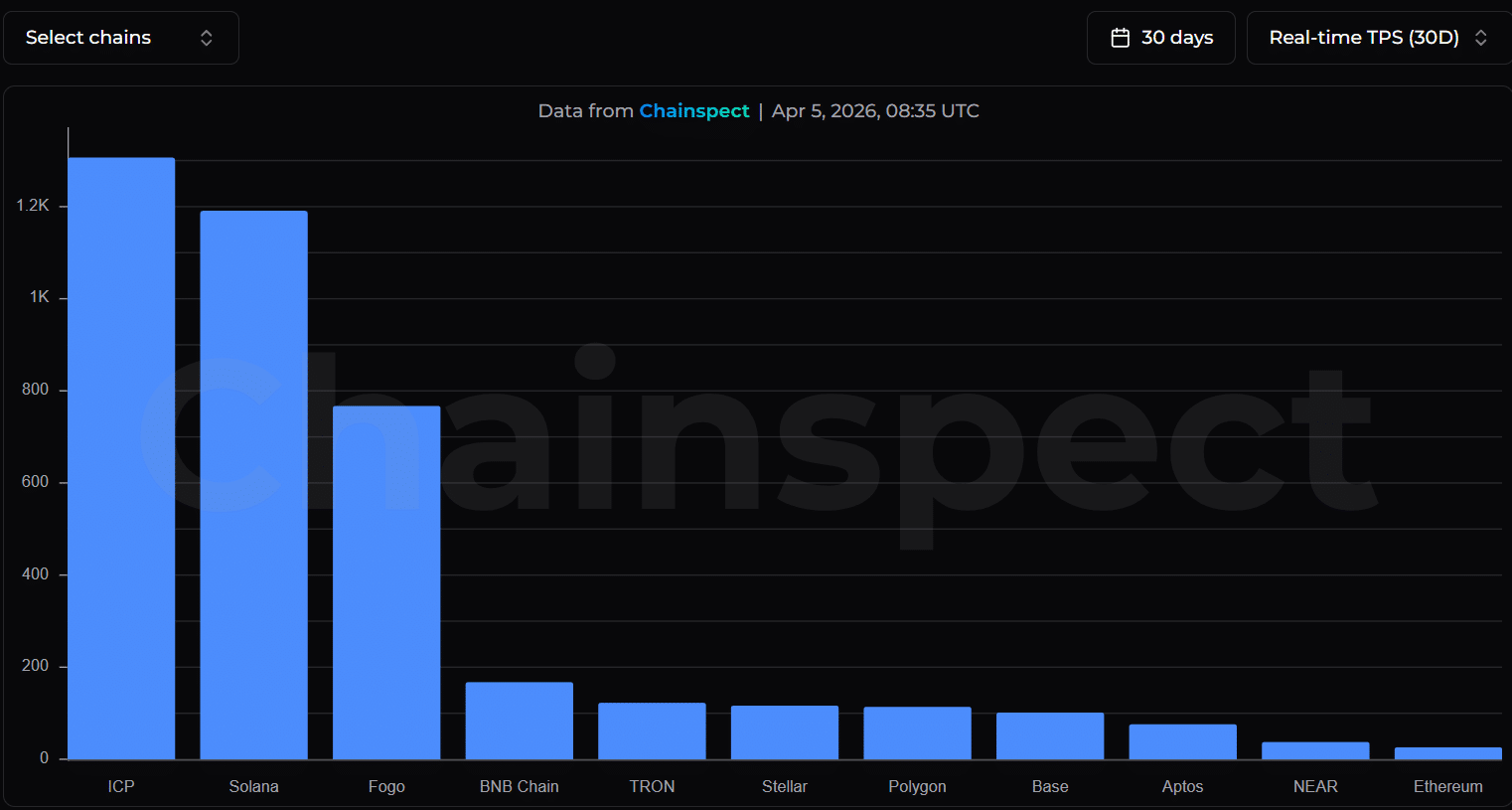
According to Chainspect data, Solana’s high throughput has given it a massive edge over Ethereum across multiple metrics. Look at transaction volume: Solana has processed 31× more transactions than Ethereum, reaching a staggering 106 billion transactions in total.

Source: Chainspect

Notably, this scalability comes straight from Solana’s high speed.

As the chart above shows, Solana ranks second among all blockchains with 1,191 real-time transactions per second (TPS), compared to Ethereum’s 25.99 TPS. This allows Solana to handle massive transaction loads efficiently, giving it a clear edge in DeFi, something slower L1s like Ethereum still struggle with.

According to AMBCrypto, that’s why the recent quantum testing is such a crucial moment.

A 90% slowdown in speed puts Solana’s signature advantage under pressure. Even more, it could slow DeFi growth just as competition from Ethereum is heating up.

This, in turn, forces the network to prove it can stay fast, secure, and ahead of the pack. Otherwise, it risks losing the edge that has long set it apart.


Final Summary

  • High throughput and fast TPS let Solana handle massive transactions, support DeFi growth, and outperform Ethereum across key metrics.
  • Moving toward quantum-safe security slows the network by 90%, forcing Solana to balance speed and security, or risk losing its lead.

Связанные с этим вопросы

QWhat is the main trade-off Solana faces according to the recent quantum testing?

AThe main trade-off is between security and speed. Implementing quantum-safe signatures would make the network roughly 90% slower, forcing Solana to choose between enhanced security against future quantum attacks and maintaining its signature high transaction speed.

QHow does Solana's transaction speed (TPS) compare to Ethereum's, and why is this significant?

ASolana's real-time TPS is 1,191, which is significantly higher than Ethereum's 25.99 TPS. This high speed and scalability have been Solana's defining advantage, allowing it to process 31 times more total transactions and efficiently support complex DeFi activity, which Ethereum struggles with.

QWhat evidence from the article shows Solana is diversifying its stablecoin ecosystem?

ADune data shows that the number of Unique Senders of non-USD stablecoins on Solana, such as EURC and BRZ, nearly tripled year-on-year. This indicates a strategic push to diversify its stablecoin portfolio as part of a broader DeFi expansion.

QWhat is the purpose of Solana's collaboration with Project Eleven?

ASolana is working with Project Eleven to test and implement quantum-safe signatures. The purpose is to protect the network from potential attacks by future quantum computers, thereby future-proofing its security.

QWhat is a key potential consequence for Solana if its network speed is significantly reduced?

AA key potential consequence is that Solana could lose its competitive edge, particularly in DeFi, just as competition from other layer-1s like Ethereum is increasing. A 90% slowdown could hinder its ability to handle massive transaction loads efficiently and support growth.

Похожее

Can a Hair Dryer Earn $34,000? Deciphering the Reflexivity Paradox in Prediction Markets

An individual manipulated a weather sensor at Paris Charles de Gaulle Airport with a portable heat source, causing a Polymarket weather market to settle at 22°C and earning $34,000. This incident highlights a fundamental issue in prediction markets: when a market aims to reflect reality, it also incentivizes participants to influence that reality. Prediction markets operate on two layers: platform rules (what outcome counts as a win) and data sources (what actually happened). While most focus on rules, the real vulnerability lies in the data source. If reality is recorded through a specific source, influencing that source directly affects market settlement. The article categorizes markets by their vulnerability: 1. **Single-point physical data sources** (e.g., weather stations): Easily manipulated through physical interference. 2. **Insider information markets** (e.g., MrBeast video details): Insiders like team members use non-public information to trade. Kalshi fined a剪辑师 $20,000 for insider trading. 3. **Actor-manipulated markets** (e.g., Andrew Tate’s tweet counts): The subject of the market can control the outcome. Evidence suggests Tate’sociated accounts coordinated to profit. 4. **Individual-action markets** (e.g., WNBA disruptions): A single person can execute an event to profit from their pre-placed bets. Kalshi and Polymarket handle these issues differently. Kalshi enforces strict KYC, publicly penalizes insider trading, and reports to regulators. Polymarket, with its anonymous wallet-based system, has historically been more permissive, arguing that insider information improves market accuracy. However, it cooperated with authorities in the "Van Dyke case," where a user traded on classified government information. The core paradox is reflexivity: prediction markets are designed to discover truth, but their financial incentives can distort reality. The more valuable a prediction becomes, the more likely participants are to influence the event itself. The market ceases to be a mirror of reality and instead shapes it.

marsbit45 мин. назад

Can a Hair Dryer Earn $34,000? Deciphering the Reflexivity Paradox in Prediction Markets

marsbit45 мин. назад

First Day Review of "Musk's WeChat" XChat: Even Worse Than Expected

Elon Musk's much-anticipated "WeChat-like" app, XChat, has officially launched after multiple delays. The initial review reveals a product that falls short of expectations, offering an experience largely similar to X Platform's (formerly Twitter) direct messages, despite being marketed as an encrypted communication tool. Key observations from the first-day test include: 1. The app's promoted "end-to-end encryption" and its claimed relation to Bitcoin's architecture were criticized by experts as a superficial attempt to capitalize on crypto buzz, with no real technical connection. 2. Musk's vision of an ad-free "secure communication system" is technically met, but only because the app is currently extremely basic, featuring only a single chat interface. 3. A promised anti-screenshot feature appears inconsistent; it works in X Platform group chats but fails within the XChat app itself, where screenshots still capture avatars. 4. The app supports 45 languages and has a 16+ age rating, indicating a broader tolerance for content compared to WeChat's 13+ rating. 5. A puzzling login process requires users to verify the email associated with their X account. 6. The touted encryption" feels minimal in practice, with its presence only indicated by a simple "Encrypted - Yes" label on messages. 7. Disappearing message timers for groups can be set from 5 minutes to 4 weeks, with the timer starting upon being read by a user. 8. Group invite links are shared with X Platform groups. 9. Group size limits are planned to be increased, aiming for 1000 members, a move that has drawn user criticism. 10. The app offers 8 different colored icons, and its chat bubbles are notably similar to WeChat's. Message deletion options mimic Telegram's. Crucially, many pre-announced features like importing X contacts, integrating Grok AI, X Money payments, and Cashtags are not yet available. The initial release is seen as a bare-bones and underwhelming first step.

Odaily星球日报1 ч. назад

First Day Review of "Musk's WeChat" XChat: Even Worse Than Expected

Odaily星球日报1 ч. назад

Торговля

Спот
Фьючерсы

Популярные статьи

Обсуждения

Добро пожаловать в Сообщество HTX. Здесь вы сможете быть в курсе последних новостей о развитии платформы и получить доступ к профессиональной аналитической информации о рынке. Мнения пользователей о цене на SOL (SOL) представлены ниже.

活动图片