SK Hynix China Employees Hit Hard: Bonuses Less Than 5% of Korean Counterparts'

marsbitОпубликовано 2026-05-11Обновлено 2026-05-11

Введение

"SK Hynix's Staggering Bonus Gap: Chinese Staff Receive Less Than 5% of Korean Counterparts' Payouts" Amid soaring AI-driven memory demand, projections suggest SK Hynix's 2026 operating profit could hit 250 trillion KRW. Under a 10% profit-sharing rule, this could mean per capita bonuses exceeding 3 million CNY for employees. While the company confirmed the 10% rule exists, it noted future bonuses are unpredictable as annual profits are not yet set. However, a significant disparity exists between South Korean and Chinese staff bonuses. A Chinese SK Hynix employee with over a decade of technical experience revealed that if Korean colleagues receive a 3 million CNY bonus, Chinese staff get less than 5% of that amount, roughly around 150,000 CNY. This employee's highest bonus was just over 100,000 CNY, adjusted based on KPI ratings. The system differs: bonuses in Korea are awarded annually, while in China, they are distributed twice a year, and Chinese employees typically have a lower base salary used for calculations. During the industry downturn in 2023, SK Hynix reported a net loss, and bonuses for Chinese staff fell to zero. Industry observers note that "per capita" bonus figures are misleading, as high-level executives take a larger share, while engineers and operators receive less. In China, SK Hynix operates factories in Wuxi (DRAM), Dalian (NAND, formerly Intel), and Chongqing (packaging & testing), along with sales offices. Recruitment posts show engineering monthly...

Original by Su Yang

Edited by Xu Qingyang

As SK Hynix's market cap continues to hit new highs, the "year-end bonus forecast" adds another layer of drama to the already booming memory sector.

Recently, news emerged that driven by the explosive demand for AI-powered storage, SK Hynix, a core memory supplier from South Korea, could see its 2026 operating profit ceiling reach 250 trillion won. Under a 10% profit-sharing rule, the maximum year-end bonus per employee could potentially exceed 3 million RMB.
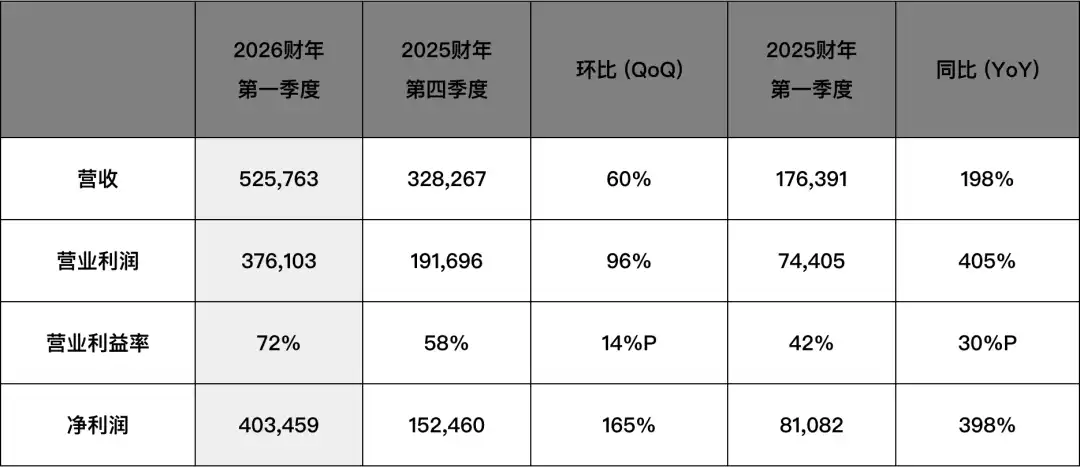
SK Hynix Performance Data

South Korean media, citing matchmaking agencies, claimed "SK Hynix employees are now unconditionally matched as A-tier in blind dates," and variety shows have jokingly referred to SK Hynix's vest uniforms as "having high gold content."

Investment bank Macquarie Securities further predicted that SK Hynix's 2027 operating profit could reach 447 trillion won. If the profit-sharing rule remains unchanged, the per-employee bonus payable in 2027 would be about 1.29 billion won, close to 6.1 million RMB.

In a response to *First Finance*, SK Hynix confirmed the authenticity of the 10% profit-sharing rule but emphasized that as the 2026 and next year's annual performance figures are not yet finalized, the bonus scale cannot be predicted, subtly refuting the accuracy of the 6.1 million RMB bonus figure.

While the predictions of massive year-end bonuses may not be entirely accurate, there is a clear disparity in bonuses between Chinese and South Korean employees.

"We have removed the bonus cap, but bonuses in China remain low," said an SK Hynix China employee. "In South Korea, it's settled once a year, while here in China, it's twice a year."

The employee revealed that if Korean employees get a 3 million RMB bonus, Chinese employees get less than 5% of that, roughly 150,000 RMB. "It's not that each of us gets 150,000; it's adjusted based on KPI ratings. The higher the rating, the higher the bonus. The most I've ever received was a little over 100,000."

This employee has been with SK Hynix for over 10 years and holds a technical position background.

In the super-cycle of the memory industry, expectations of huge year-end bonuses have sparked media reports suggesting that memory jobs have surpassed doctors and lawyers to become the most favored positions by mothers-in-law in the South Korean matchmaking market.

However, compared to the current heat, the memory downturn cycle was a completely different scene.

In fiscal year 2023, during the global semiconductor industry's "winter," SK Hynix's annual revenue fell approximately 27% to 32.77 trillion won, with a net loss of 9.14 trillion won. "The lowest point was around 2023 and 2024, with no bonus at all, it was 0," revealed the aforementioned SK Hynix China employee.

Regarding the highly publicized topic of "3 million+, 6 million+ RMB year-end bonuses per capita," multiple industry insiders have raised doubts, emphasizing that the per capita figure is not representative.

"The average is possible, but it definitely won't be 3 million per person. Executives take more, engineers get hundreds of thousands, and operators getting 100,000 RMB is also possible," said one semiconductor professional. "Take TSMC engineers as an example, their annual compensation can reach around 1 million RMB."

"I look at my income and then look at what's posted online. The numbers are vastly different," explained the SK Hynix China employee regarding the bonus disparity. "Their (Korean employees') monthly salaries are higher, and bonuses are distributed based on a proportion of 12 months' salary."

Currently, SK Hynix has three main factories in mainland China, located in Wuxi, Dalian, and Chongqing. The Wuxi facility primarily handles DRAM business, Dalian houses the NAND factory of Solidigm (acquired from Intel's assets), Chongqing is a packaging and testing base, and there are also sales companies providing technical support in Shenzhen, Beijing, and Shanghai.
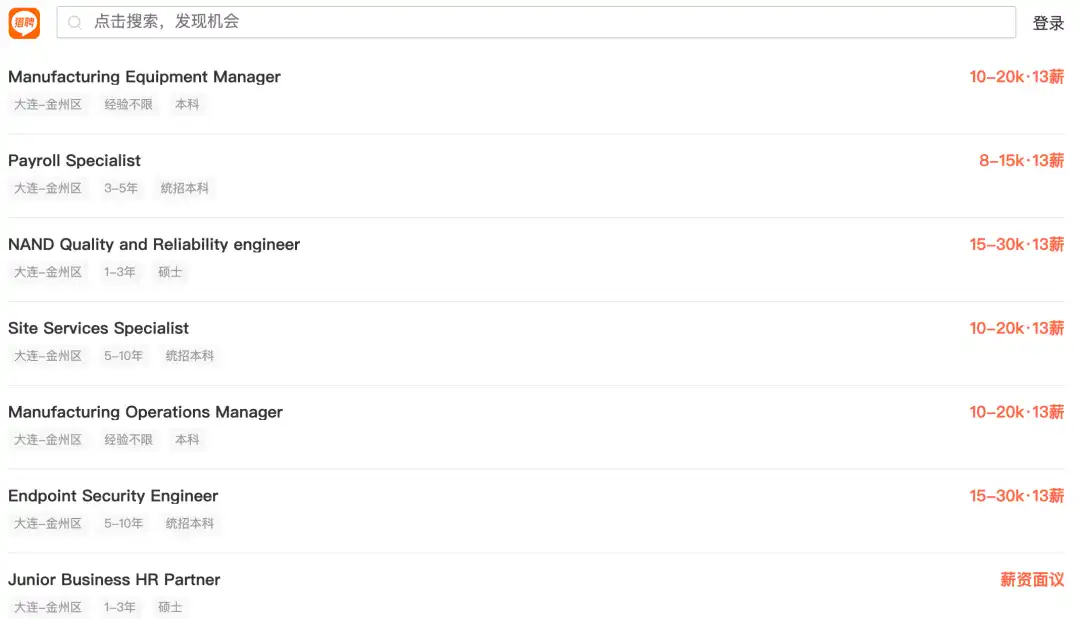
According to recruitment information on Liepin for the Dalian factory, monthly salaries for related engineer positions are generally in the range of 10,000 to 30,000 RMB, with a promised 13th-month salary, and senior engineer positions can offer up to 35,000 RMB per month.

In addition to salary, SK Hynix provides standard benefits like annual leave for Chinese employees. For example, support positions like sales do not require overtime work, but there are no stock-related incentives.

"Management gets it, but they are all Koreans. Chinese cannot be in management positions," emphasized the SK Hynix China employee.

Several former employees of South Korean companies stated that companies generally do not offer stock incentives to Chinese employees. In the view of a former Samsung employee, the Chinese company feels more like a sales entity, similar to a national-level agent concept.

"Now there are also mainland Chinese entering middle management. TSMC is similar," said former TSMC plant construction expert and Ronghe Semiconductor Consulting CEO Zihao Wu. "It's normal for Korean factories to have more Koreans and prioritize them. As they operate longer in mainland China, local management cadres will also emerge. It's not that absolute."

From industry and company forecasts, memory will remain a hot topic for the next 2-3 years, with "marriage jokes" and "uniform jokes" likely to keep appearing.

At the first-quarter earnings conference, SK Hynix's CFO stated that over the next three years, demand represented by HBM will most likely continue to exceed supply, and related growth will continue to revolve around to-B demand, a signal also reflected in SK Hynix's official press release.

SK Hynix stated: "Although the first quarter is typically a seasonally slow period, market demand remained strong, driven by increased investment in artificial intelligence (AI) infrastructure. The company maintained its upward performance momentum by expanding sales of high-value-added products such as High Bandwidth Memory (HBM), high-capacity server DRAM modules, and enterprise solid-state drives (eSSD)."

In summary, the above are all typical to-B customer demands.

This means that if memory suppliers like SK Hynix do not increase production capacity support for consumer-grade products, the topic of memory price hikes we've been discussing will continue to impact consumer-grade products and drive a wave of product price increases, persistently troubling cyber gamers with "digital gold."

Связанные с этим вопросы

QAccording to the article, what is the reported difference in bonus amounts between SK Hynix employees in China and those in Korea?

AAccording to an SK Hynix China employee with over 10 years of experience, if Korean employees receive a 3 million RMB bonus, the bonus for Chinese employees is less than 5% of that amount, around 150,000 RMB. The highest bonus this employee personally received was just over 100,000 RMB.

QWhat is the primary driver behind the booming performance and high bonus expectations for SK Hynix mentioned in the article?

AThe primary driver is the explosive demand for storage, particularly High Bandwidth Memory (HBM), fueled by investments in AI infrastructure. This demand is expected to outpace supply for the next 2-3 years.

QHow did the article describe the situation for SK Hynix employees during the semiconductor industry's downturn, specifically in 2023?

ADuring the 'winter period' of the semiconductor industry in 2023, SK Hynix reported significant losses. A Chinese employee stated that during the lowest points in 2023 and 2024, there were no bonuses at all ('it was 0').

QWhat are the main functions of SK Hynix's three factories in Mainland China as outlined in the article?

ASK Hynix has three main factories in China: the Wuxi factory focuses on DRAM business; the Dalian factory (formerly Intel assets) handles NAND production for Solidigm; and the Chongqing factory is a packaging and testing base.

QWhat critique does the article present regarding the 'per capita' bonus figures of 3 million+ or 6 million+ RMB being reported?

AThe article notes that industry insiders question the relevance of the 'per capita' figure, stating it is not representative of what every employee receives. They explain that high-level executives receive a much larger share, while engineers and production line workers receive significantly less, making the average figure misleading.

Похожее

The Value Distribution of Stablecoins

**Summary: The Value Distribution of Stablecoins** The article argues that stablecoins are evolving from mere trading tools into broader channels for dollar access. It divides the stablecoin ecosystem into four layers to analyze how value is distributed: 1. **Issuance Layer:** Mints stablecoins, holds reserve assets, and captures the spread between reserve yield and user costs (e.g., Tether, Circle). This layer currently earns the largest profit margin. 2. **Infrastructure Layer:** Connects stablecoins to the traditional financial system, handling fiat on/off-ramps, banking integration, compliance (KYC/AML), and asset management (e.g., Bridge, BVNK). This is the "unglamorous" but critical work, building the essential bridges between crypto and real-world finance. 3. **Acquiring/Distribution Layer:** Integrates stablecoins into merchant systems, manages payment flows, and provides enterprise financial software (e.g., Stripe, Coinbase). They act as the access point for businesses. 4. **Application Layer:** The end-users and businesses that ultimately use stablecoins for payments, settlements, or as a store of value. They benefit from convenience but have little pricing power. The core thesis is that while the issuance layer currently dominates profits, the often-overlooked **infrastructure layer holds significant long-term potential**. The real challenge and barrier to mass adoption is not the on-chain transfer of stablecoins (which is simple), but the complex "last mile" integration into existing business workflows, banking systems, and regulatory frameworks across different countries. Companies in this layer are currently in a "land grab" phase, investing heavily to build networks, secure bank partnerships, and establish compliance pathways. While their position is currently pressured by the profitable issuers above and distribution platforms below, the article suggests that if stablecoins become a default financial rail for businesses, the infrastructure providers who have done the hard work of integration will ultimately gain strong pricing power and become entrenched, essential players.

marsbit5 ч. назад

The Value Distribution of Stablecoins

marsbit5 ч. назад

The Value Distribution of Stablecoins

The Value Distribution of Stablecoins The article argues that stablecoins are evolving from a mere trading tool into a broad "dollar channel." It analyzes the industry's value chain through four layers: 1. **Issuance Layer (e.g., Tether, Circle):** The top layer that mints stablecoins, holds reserve assets, and captures the thickest interest rate spread. 2. **Infrastructure Layer (e.g., Bridge, BVNK):** Connects stablecoins to the traditional financial system, handling critical but complex "dirty work" like fiat on/off-ramps, banking integration, compliance (KYC/AML), and cross-border settlement. 3. **Acquiring/Distribution Layer (e.g., Stripe, Coinbase):** Embeds stablecoins into merchant systems, manages payment flows, and integrates with enterprise software. 4. **Application Layer:** End-users and businesses that ultimately use stablecoins for payments, settlement, or storing value. The author posits that while the issuance layer currently captures the most profit, the most overlooked and potentially critical layer is infrastructure. The core challenge for stablecoin adoption isn't the on-chain transfer (which is simple), but bridging the gap between blockchain and the real-world financial system. This involves solving practical problems for businesses: fiat conversion, reconciliation, tax handling, and user onboarding. Infrastructure companies are currently in a difficult "land-grab" phase—building networks, securing banking relationships, and achieving compliance country-by-country. They face pressure from both the profitable issuance layer above and distribution platforms below. However, the author suggests this layer is building a crucial moat. Once stablecoins become a default business rail, the infrastructure players who have done the hard work of integration may gain significant, durable value and pricing power.

链捕手5 ч. назад

The Value Distribution of Stablecoins

链捕手5 ч. назад

Торговля

Спот
Фьючерсы

Популярные статьи

Как купить S

Добро пожаловать на HTX.com! Мы сделали приобретение Sonic (S) простым и удобным. Следуйте нашему пошаговому руководству и отправляйтесь в свое крипто-путешествие.Шаг 1: Создайте аккаунт на HTXИспользуйте свой адрес электронной почты или номер телефона, чтобы зарегистрироваться и бесплатно создать аккаунт на HTX. Пройдите удобную регистрацию и откройте для себя весь функционал.Создать аккаунтШаг 2: Перейдите в Купить криптовалюту и выберите свой способ оплатыКредитная/Дебетовая Карта: Используйте свою карту Visa или Mastercard для мгновенной покупки Sonic (S).Баланс: Используйте средства с баланса вашего аккаунта HTX для простой торговли.Третьи Лица: Мы добавили популярные способы оплаты, такие как Google Pay и Apple Pay, для повышения удобства.P2P: Торгуйте напрямую с другими пользователями на HTX.Внебиржевая Торговля (OTC): Мы предлагаем индивидуальные услуги и конкурентоспособные обменные курсы для трейдеров.Шаг 3: Хранение Sonic (S)После приобретения вами Sonic (S) храните их в своем аккаунте на HTX. В качестве альтернативы вы можете отправить их куда-либо с помощью перевода в блокчейне или использовать для торговли с другими криптовалютами.Шаг 4: Торговля Sonic (S)С легкостью торгуйте Sonic (S) на спотовом рынке HTX. Просто зайдите в свой аккаунт, выберите торговую пару, совершайте сделки и следите за ними в режиме реального времени. Мы предлагаем удобный интерфейс как для начинающих, так и для опытных трейдеров.

1.5k просмотров всегоОпубликовано 2025.01.15Обновлено 2026.06.02

Как купить S

Sonic: Обновления под руководством Андре Кронье – новая звезда Layer-1 на фоне спада рынка

Он решает проблемы масштабируемости, совместимости между блокчейнами и стимулов для разработчиков с помощью технологических инноваций.

2.3k просмотров всегоОпубликовано 2025.04.09Обновлено 2025.04.09

Sonic: Обновления под руководством Андре Кронье – новая звезда Layer-1 на фоне спада рынка

HTX Learn: Пройдите обучение по "Sonic" и разделите 1000 USDT

HTX Learn — ваш проводник в мир перспективных проектов, и мы запускаем специальное мероприятие "Учитесь и Зарабатывайте", посвящённое этим проектам. Наше новое направление .

1.8k просмотров всегоОпубликовано 2025.04.10Обновлено 2025.04.10

HTX Learn: Пройдите обучение по "Sonic" и разделите 1000 USDT

Обсуждения

Добро пожаловать в Сообщество HTX. Здесь вы сможете быть в курсе последних новостей о развитии платформы и получить доступ к профессиональной аналитической информации о рынке. Мнения пользователей о цене на S (S) представлены ниже.

活动图片






