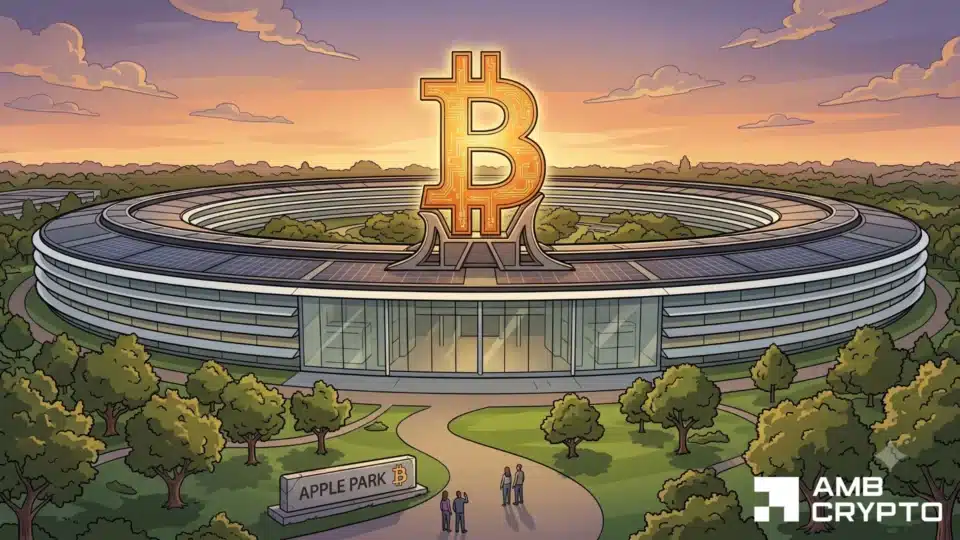
Shiba Inu’s $4M exploit sparks ‘Shib Owes You’ recovery plan – Details

ambcryptoОпубликовано 2025-12-30Обновлено 2025-12-30

Введение

Shiba Inu's lead developers have launched the "Shib Owes You" (SOU) recovery plan following a $4 million bridge exploit in September. This initiative converts verified user losses into dynamic, tradable NFTs on the Ethereum blockchain, providing victims with cryptographic proof of their claims. These debt NFTs update in real-time as revenue enters the restitution pool and can be traded on a secondary market. The plan enforces strict austerity measures, directing all SHIB-related revenue to the SOU pool. While the portal is not yet live and security risks remain, the community and institutional buyers have shown resilience, supporting SHIB's price despite recent volatility.

For Shiba Inu [SHIB], 2025 has been a battle between innovation and security.

Following a $4 million bridge exploit in September that rattled investor confidence, the project’s lead developers aren’t just promising a comeback; they’re tokenizing it.

On the 29th of December, OG developer Kaal Dhairya unveiled “Shib Owes You” (SOU). This comprehensive financial restructuring plan represents a radical departure from traditional make-good promises in decentralized finance.

All about “Shib Owes You”

The plan focuses on building secondary market liquidity for distressed debt.

Through the SOU system, verified user losses are transformed into dynamic, tradable NFTs, converting what was once a total loss into a usable financial asset.

For the Shib Army, this means victims don’t have to wait years for repayment; they now receive a cryptographic token they can hold, split, or sell at any time.

Remarking on the same, Dhairya said,

“This isn’t a promise in a database somewhere. It’s cryptographic proof that you own a claim, recorded permanently on the Ethereum blockchain.”

The layout

Instead of storing losses in private databases, each user claim becomes a dynamic NFT on Ethereum [ETH], audited by Hexens.

As revenue enters the restitution pool, each debt NFT updates automatically, giving users real-time on-chain visibility.

The system also enables a secondary market where claims can be merged, split, or sold, helping some users gain fast liquidity while allowing larger supporters to consolidate multiple claims.

However, to keep this recovery model robust, Kaal Dhairya has enforced strict austerity rules.

All SHIB–related revenue must feed into the SOU pool, including contributions from partner platforms, social channels, and ecosystem ventures.

This shift targets “value extractors” and moves the project from a marketing-driven approach to a restitution-first model.

Dhairya added,

“If we’re going to ask the community to be patient while we rebuild, then everyone who has access to ecosystem resources needs to be held to the same standard.”

Associated risks

The recovery still carries notable risks.

While the Plasma Bridge has been stabilized with a seven‐day withdrawal delay and hardware‐based custody, the SOU portal is not yet live. Dhairya has cautioned the Shib Army to beware of fake recovery sites seeking to exploit the situation.

Although the debt tokens exist in code, claims will remain locked until all security tests are complete. This gradual rollout reflects a strict security‐first approach designed to prevent another failure.

Despite the seriousness of the overhaul, the market has responded with strong buy‐side support rather than panic.

SHIB price action and more

At the time of writing, SHIB was trading at $0.057149, down 4.15% over the last 24 hours according to CoinMarketCap data.

However, this localized dip masks a massive institutional repositioning.

On the 10th of December, the ecosystem experienced its most intense whale activity since June. A total of 406 large‐scale transfers moved more than 1.06 trillion SHIB into exchanges.

Ordinarily, such inflows tend to signal an upcoming sell‐off. However, SHIB has held its ground.

This resilience suggests that both the Shib Army and institutional buyers are actively defending key support levels rather than exiting their positions.

Looking ahead, the success of the “Shib Owes You” framework will ultimately depend on execution. Even so, current market data shows a community that remains determined and far from defeated.


Final Thoughts

  • The SOU framework marks a bold experiment in turning losses into tradable, on‐chain financial assets.
  • Shiba Inu’s resilience highlights a community committed to recovery, even amid risks and market uncertainty.

Связанные с этим вопросы

QWhat is the 'Shib Owes You' (SOU) plan and what problem does it aim to solve?

AThe 'Shib Owes You' (SOU) plan is a comprehensive financial restructuring plan created by Shiba Inu's developers to address the $4 million bridge exploit from September. It aims to convert verified user losses into dynamic, tradable NFTs, turning a total loss into a usable financial asset and providing victims with liquidity instead of making them wait years for repayment.

QHow does the SOU system technically work to represent user claims?

AThe SOU system transforms each user's verified loss into a dynamic NFT recorded permanently on the Ethereum blockchain. These NFTs are audited by Hexens and automatically update as revenue enters the restitution pool, providing real-time on-chain visibility. They can also be traded, merged, or split on a secondary market.

QWhat austerity measures has Kaal Dhairya enforced to support the SOU recovery model?

AKaal Dhairya has enforced strict austerity rules where all SHIB-related revenue, including contributions from partner platforms, social channels, and ecosystem ventures, must be fed into the SOU pool. This shifts the project from a marketing-driven model to a restitution-first model and holds everyone with access to ecosystem resources to the same standard.

QWhat are the main risks associated with the SOU recovery plan mentioned in the article?

AThe main risks are that the SOU portal is not yet live, and users are cautioned to beware of fake recovery sites. Although the debt tokens exist in code, the claims will remain locked until all security tests are complete, reflecting a strict security-first approach to prevent another failure.

QHow did the market and the 'Shib Army' react to the exploit and the announced recovery plan?

ADespite the exploit and price dip, the market responded with strong buy-side support rather than panic. There was intense whale activity with large inflows into exchanges, but SHIB held its ground, suggesting the community and institutional buyers are actively defending key support levels and remain committed to recovery.

Похожее

Should You Buy SpaceX Stock at $1.7 Trillion? Here's What the Market Is Worried About

SpaceX is preparing for a massive IPO aiming to raise around $75 billion at a valuation of approximately $1.75 trillion. While its achievements in reusable rockets and the profitable Starlink satellite internet service are clear, the market is concerned about the aggressive valuation. Key issues include: the current $1.75 trillion valuation, which is about 94 times 2025 revenue, seems to price in not just existing businesses but also unproven future ventures like AI infrastructure and orbital data centers. Financially, while Starlink is profitable, the AI division, bolstered by the acquisition of xAI, is incurring massive losses and consuming the majority of capital expenditures. This acquisition also introduced complex related-party financing arrangements and debt onto SpaceX's balance sheet. Furthermore, corporate governance poses a challenge. SpaceX's dual-class share structure ensures founder Elon Musk retains absolute control, limiting ordinary shareholders' influence over high-risk, long-term strategic decisions. The future success of ambitious projects like the Starship rocket—critical for lowering costs and enabling new services—remains a significant variable for the valuation. In summary, the market's apprehension (FUD) centers not on doubting SpaceX's past technological triumphs but on questioning how much premium public investors should pay for a future that combines proven profits with highly speculative and capital-intensive new ventures, all under a governance structure that offers limited shareholder oversight.

marsbit22 мин. назад

Should You Buy SpaceX Stock at $1.7 Trillion? Here's What the Market Is Worried About

marsbit22 мин. назад

Breaking the DeFi Cascading Liquidation Curse: Vitalik Proposes a New Solution

Vitalik Buterin has proposed a new DeFi design to eliminate the automatic liquidation mechanism that causes market instability during sharp downturns. The current system, used by protocols like Aave, triggers forced sales when collateral value falls below a threshold, often exacerbating price drops and creating systemic selling pressure. Buterin's alternative model is based on splitting an asset like ETH into two synthetic option-like tokens, P and N, pegged to a price index. Their combined value always equals one ETH. Instead of sudden liquidation, a position's value gradually drifts from its target peg if the market moves. Users must proactively rebalance their holdings to maintain their desired exposure, transferring the management burden from the protocol to the user or automated tools. A key advantage is the reduced reliance on real-time oracles. Pricing decisions are deferred until contract expiry, allowing for more robust, fault-tolerant oracle designs. This removes a clear liquidation threshold that speculators can target for manipulation or MEV extraction. However, significant challenges remain. Frequent rebalancing could incur high slippage and transaction costs, necessitating new liquidity provider models. The design is better suited for hedging instruments than for stablecoins requiring a rigid 1:1 peg. While not an immediate replacement for existing systems, the proposal challenges the foundational assumption that instantaneous forced liquidation is an unavoidable necessity in DeFi, opening the door for fundamentally different risk management architectures.

marsbit27 мин. назад

Breaking the DeFi Cascading Liquidation Curse: Vitalik Proposes a New Solution

marsbit27 мин. назад

The End of Single-Factor Cryptography

The article "The End of Single-Factor Crypto" posits a fundamental shift in the cryptocurrency ecosystem. It argues the era where crypto asset valuations were predominantly driven by, and correlated with, Bitcoin's price is ending. The space is bifurcating into two distinct economies: endogenous and exogenous. The endogenous economy represents traditional crypto, where token and project values are directly tied to crypto market prices. The emerging exogenous economy comprises projects and businesses that may utilize blockchain technology or tokens but derive their fundamental value from external, non-crypto factors like consumer demand, subscription revenue, or real-world utility. Examples include AI inference platforms like Venice, fintech lenders using blockchain for efficiency, and stablecoin/payment infrastructure companies acquired by giants like Mastercard and Stripe. This shift means investment analysis must change. For exogenous assets, evaluating traditional business fundamentals—such as revenue streams, unit economics, and competitive moats—becomes more critical than tracking Bitcoin charts. While endogenous assets like Bitcoin remain relevant, the growth of the exogenous category is driven by measurable demand independent of crypto price cycles, paving the way for a new, more diversified market phase. Consequently, crypto is evolving from a single-factor, reflexive asset class into a multifaceted ecosystem with varied drivers and investment theses.

marsbit27 мин. назад

The End of Single-Factor Cryptography

marsbit27 мин. назад

Morning Post | Bitmine Plans to Raise $300 Million Through Preferred Stock Issuance; Polymarket Accuses Kalshi of Commercial Espionage

ChainCatcher's Daily Crypto Brief: Key developments from the past 24 hours include significant funding moves, regulatory actions, and market predictions. Bitmine announced a $300 million preferred stock fundraising. Polymarket accused rival prediction platform Kalshi of corporate espionage, citing numerous suspicious coincidences in product launches, a claim Kalshi strongly denied. The U.S. Department of Justice, in a joint "Disruption Week" anti-fraud operation with companies like Coinbase and Meta, froze over $3.8 million in cryptocurrency linked to scams. In infrastructure news, Macau completed its integration with the multi-central bank digital currency bridge, mBridge, aiming to build efficient cross-border payment channels. Cosmos Labs acquired the block explorer Mintscan. Market-wise, Geoffrey Kendrick, Standard Chartered's Head of Digital Assets Research, stated Bitcoin is nearing a bottom around $63,000, maintaining a year-end target of $100,000. He noted stability in U.S. spot Bitcoin ETF holdings. Ahead of SpaceX's anticipated IPO, internal insiders at Rocket Lab (RKLB) sold over $18.41 million in stock. In tokenization, Goldman Sachs partnered with Apex and Archax to launch a tokenized real estate fund. The meme token tracker GMGN reported the top trending tokens: on Ethereum, HEX, SHIB, LINK, PEPE, mUSD; on Solana, TROLL, swarms, WORLDCUP, neet, Buttcoin; and on Base, PEPE, toby, ODDS, ELSA, SKI.

链捕手42 мин. назад

Morning Post | Bitmine Plans to Raise $300 Million Through Preferred Stock Issuance; Polymarket Accuses Kalshi of Commercial Espionage

链捕手42 мин. назад

Торговля

Спот
Фьючерсы

Популярные статьи

Как купить S

Добро пожаловать на HTX.com! Мы сделали приобретение Sonic (S) простым и удобным. Следуйте нашему пошаговому руководству и отправляйтесь в свое крипто-путешествие.Шаг 1: Создайте аккаунт на HTXИспользуйте свой адрес электронной почты или номер телефона, чтобы зарегистрироваться и бесплатно создать аккаунт на HTX. Пройдите удобную регистрацию и откройте для себя весь функционал.Создать аккаунтШаг 2: Перейдите в Купить криптовалюту и выберите свой способ оплатыКредитная/Дебетовая Карта: Используйте свою карту Visa или Mastercard для мгновенной покупки Sonic (S).Баланс: Используйте средства с баланса вашего аккаунта HTX для простой торговли.Третьи Лица: Мы добавили популярные способы оплаты, такие как Google Pay и Apple Pay, для повышения удобства.P2P: Торгуйте напрямую с другими пользователями на HTX.Внебиржевая Торговля (OTC): Мы предлагаем индивидуальные услуги и конкурентоспособные обменные курсы для трейдеров.Шаг 3: Хранение Sonic (S)После приобретения вами Sonic (S) храните их в своем аккаунте на HTX. В качестве альтернативы вы можете отправить их куда-либо с помощью перевода в блокчейне или использовать для торговли с другими криптовалютами.Шаг 4: Торговля Sonic (S)С легкостью торгуйте Sonic (S) на спотовом рынке HTX. Просто зайдите в свой аккаунт, выберите торговую пару, совершайте сделки и следите за ними в режиме реального времени. Мы предлагаем удобный интерфейс как для начинающих, так и для опытных трейдеров.

1.4k просмотров всегоОпубликовано 2025.01.15Обновлено 2026.06.02

Как купить S

Sonic: Обновления под руководством Андре Кронье – новая звезда Layer-1 на фоне спада рынка

Он решает проблемы масштабируемости, совместимости между блокчейнами и стимулов для разработчиков с помощью технологических инноваций.

2.3k просмотров всегоОпубликовано 2025.04.09Обновлено 2025.04.09

Sonic: Обновления под руководством Андре Кронье – новая звезда Layer-1 на фоне спада рынка

HTX Learn: Пройдите обучение по "Sonic" и разделите 1000 USDT

HTX Learn — ваш проводник в мир перспективных проектов, и мы запускаем специальное мероприятие "Учитесь и Зарабатывайте", посвящённое этим проектам. Наше новое направление .

1.8k просмотров всегоОпубликовано 2025.04.10Обновлено 2025.04.10

HTX Learn: Пройдите обучение по "Sonic" и разделите 1000 USDT

Обсуждения

Добро пожаловать в Сообщество HTX. Здесь вы сможете быть в курсе последних новостей о развитии платформы и получить доступ к профессиональной аналитической информации о рынке. Мнения пользователей о цене на S (S) представлены ниже.

活动图片