SEC plans ‘token taxonomy’ for crypto assets even if CLARITY Act fails

ambcryptoОпубликовано 2026-03-05Обновлено 2026-03-05

Введение

U.S. regulators are advancing crypto guidelines independently of the stalled CLARITY Act. The SEC is developing a 'token taxonomy' to clarify how federal securities laws apply to crypto assets, providing regulatory obligations for firms and investors. Simultaneously, the CFTC is proposing rules for prediction markets and plans to issue guidance on crypto perpetual contracts. These efforts aim to establish enforceable frameworks even without broader legislation, as bipartisan support for the CLARITY Act remains uncertain due to disputes over stablecoin regulations.

U.S regulators could still offer clear guidelines for the crypto sector even if the broader market structure bill, the CLARITY Act, fails to become law.

Notably, the U.S. Securities and Exchange Commission (SEC) has already issued interpretive guidance on how to apply federal securities law to certain crypto assets.

The guidance is under White House review, with Bloomberg reporting that it will establish a ‘token taxonomy’ to help categorize crypto assets that fall under SEC jurisdiction.

An SEC spokesperson further clarified that,

“As Chairman Atkins said, the Commission will consider interpretive guidance around a token taxonomy for crypto assets – in line with market structure legislation – to ensure that investors and innovators have a clear understanding of their regulatory obligations.”

Worth noting that this is separate from the SEC’s pending rulemaking proposal on crypto asset offerings.

For ETF Prime’s Nate Geraci, the move would be net positive, especially if the CLARITY Act stalls.

“CLARITY Act would be better, but SEC apparently not waiting around for politicians to figure out how to classify crypto assets...”

Such regulatory clarity would establish an enforceable framework that allows crypto firms to register with the regulator, conduct disclosure requirements, and engage with investors, amongst other things.

In fact, some analysts who viewed the CLARITY Act as a ‘bad bill’ advocated for this route to safeguard the market.

CFTC pushes for prediction market rules

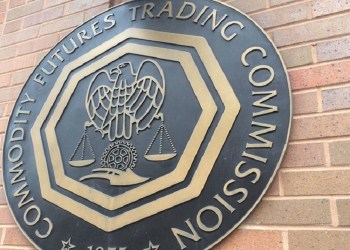
Separately, the Commodity Futures Trading Commission (CFTC), which handles derivatives trading, has pledged to unveil clear rules for booming prediction markets.

Like the SEC, the CFTC also submitted a proposal for rulemaking for the multi-billion-dollar prediction markets.

Besides, CFTC Chairman Mike Selig had pledged to unveil crypto perps guidelines by next month. Collectively, these regulatory moves could allow key players to operate even if the CLARITY Act fails to hit the finish line.

In fact, the bill stalled earlier in the year as the crypto and banking industries failed to reach a stablecoin yield deal.

Surprisingly, the White House has openly criticized banks for their hardline stance on stablecoin rewards and sided with the crypto industry. The ongoing rift could make it challenging to have full bipartisan support to advance the bill.

Even so, the current pro-crypto regulators may still offer the much-needed guidelines for players to operate with clear rules for the road.


Final Summary

  • The SEC submitted proposed guidelines on how to treat crypto assets that fall within federal securities law.
  • CFTC also pushed for rules for prediction markets, with experts billing the updates as ‘better’ if the CLARITY Act stalls.

Связанные с этим вопросы

QWhat is the SEC planning to establish for crypto assets, even if the CLARITY Act fails?

AThe SEC is planning to establish a 'token taxonomy' to help categorize crypto assets that fall under its jurisdiction.

QWhich U.S. regulatory body has pledged to unveil clear rules for prediction markets?

AThe Commodity Futures Trading Commission (CFTC) has pledged to unveil clear rules for prediction markets.

QWhat did the CFTC Chairman pledge to release by next month regarding crypto?

ACFTC Chairman Mike Selig pledged to unveil crypto perps (perpetuals) guidelines by next month.

QWhy did the CLARITY Act stall earlier in the year?

AThe CLARITY Act stalled because the crypto and banking industries failed to reach a stablecoin yield deal.

QAccording to the article, what would regulatory clarity from the SEC establish for crypto firms?

ARegulatory clarity would establish an enforceable framework that allows crypto firms to register with the regulator, conduct disclosure requirements, and engage with investors.

Похожее

The Value Distribution of Stablecoins

**Summary: The Value Distribution of Stablecoins** The article argues that stablecoins are evolving from mere trading tools into broader channels for dollar access. It divides the stablecoin ecosystem into four layers to analyze how value is distributed: 1. **Issuance Layer:** Mints stablecoins, holds reserve assets, and captures the spread between reserve yield and user costs (e.g., Tether, Circle). This layer currently earns the largest profit margin. 2. **Infrastructure Layer:** Connects stablecoins to the traditional financial system, handling fiat on/off-ramps, banking integration, compliance (KYC/AML), and asset management (e.g., Bridge, BVNK). This is the "unglamorous" but critical work, building the essential bridges between crypto and real-world finance. 3. **Acquiring/Distribution Layer:** Integrates stablecoins into merchant systems, manages payment flows, and provides enterprise financial software (e.g., Stripe, Coinbase). They act as the access point for businesses. 4. **Application Layer:** The end-users and businesses that ultimately use stablecoins for payments, settlements, or as a store of value. They benefit from convenience but have little pricing power. The core thesis is that while the issuance layer currently dominates profits, the often-overlooked **infrastructure layer holds significant long-term potential**. The real challenge and barrier to mass adoption is not the on-chain transfer of stablecoins (which is simple), but the complex "last mile" integration into existing business workflows, banking systems, and regulatory frameworks across different countries. Companies in this layer are currently in a "land grab" phase, investing heavily to build networks, secure bank partnerships, and establish compliance pathways. While their position is currently pressured by the profitable issuers above and distribution platforms below, the article suggests that if stablecoins become a default financial rail for businesses, the infrastructure providers who have done the hard work of integration will ultimately gain strong pricing power and become entrenched, essential players.

marsbit6 ч. назад

The Value Distribution of Stablecoins

marsbit6 ч. назад

The Value Distribution of Stablecoins

The Value Distribution of Stablecoins The article argues that stablecoins are evolving from a mere trading tool into a broad "dollar channel." It analyzes the industry's value chain through four layers: 1. **Issuance Layer (e.g., Tether, Circle):** The top layer that mints stablecoins, holds reserve assets, and captures the thickest interest rate spread. 2. **Infrastructure Layer (e.g., Bridge, BVNK):** Connects stablecoins to the traditional financial system, handling critical but complex "dirty work" like fiat on/off-ramps, banking integration, compliance (KYC/AML), and cross-border settlement. 3. **Acquiring/Distribution Layer (e.g., Stripe, Coinbase):** Embeds stablecoins into merchant systems, manages payment flows, and integrates with enterprise software. 4. **Application Layer:** End-users and businesses that ultimately use stablecoins for payments, settlement, or storing value. The author posits that while the issuance layer currently captures the most profit, the most overlooked and potentially critical layer is infrastructure. The core challenge for stablecoin adoption isn't the on-chain transfer (which is simple), but bridging the gap between blockchain and the real-world financial system. This involves solving practical problems for businesses: fiat conversion, reconciliation, tax handling, and user onboarding. Infrastructure companies are currently in a difficult "land-grab" phase—building networks, securing banking relationships, and achieving compliance country-by-country. They face pressure from both the profitable issuance layer above and distribution platforms below. However, the author suggests this layer is building a crucial moat. Once stablecoins become a default business rail, the infrastructure players who have done the hard work of integration may gain significant, durable value and pricing power.

链捕手6 ч. назад

The Value Distribution of Stablecoins

链捕手6 ч. назад

Торговля

Спот
Фьючерсы
活动图片