$SEA token delayed: OpenSea chooses market timing over a rushed launch

ambcryptoОпубликовано 2026-03-17Обновлено 2026-03-17

Введение

OpenSea has delayed the launch of its $SEA token, citing challenging market conditions across the crypto sector. CEO Devin Finzer emphasized that the token "only launches once," and the company prefers to wait for a more favorable environment rather than rushing the release during a period of weak market sentiment. To maintain user engagement, OpenSea is implementing several interim measures: cutting trading fees to 0% for 60 days, offering fee refunds to eligible users (who must forfeit earned "Treasures" points), and discontinuing its "Waves" rewards system in favor of a clearer timeline from the OpenSea Foundation. The decision reflects the current state of the NFT market, which, despite some recent growth, remains significantly smaller and less liquid than during its 2021 peak. With the broader crypto market also experiencing a slowdown—evidenced by the Fear and Greed Index lingering in the "fear" zone—OpenSea aims to launch $SEA only when both platform and market conditions improve.

In crypto, timing can make or break a project and can decide whether a new launch succeeds or fails. Many in the NFT community expected the 30th of March to be the launch day of OpenSea’s long-awaited $SEA token.

However, OpenSea CEO Devin Finzer has delayed the launch, saying,

Market conditions are challenging across crypto right now, and $SEA only launches once.

The reason behind the $SEA token delay

Elaborating on the issue, Finzer took to X and noted,

@openseafdn is pushing back the timeline. a delay is a delay. i’m not going to dress it up, and i know how it lands.

Instead of rushing the launch during a weak market, OpenSea is taking several steps to keep users engaged.

First, the platform will cut trading fees to 0% for 60 days starting on the 31st of March. This move aims to boost activity and attract users to its mobile app and perpetual Futures platform.

Second, OpenSea is offering fee refunds to users who traded during Rewards Waves 3 to 6. However, users who claim the refund must give up the “Treasures” points they earned.

Third, OpenSea will end the “Waves” rewards system. Instead, the company plans to move away from constant point-farming campaigns and follow a clearer timeline set by the OpenSea Foundation.

OpenSea CMO supports the decision

Standing in support of Finzer, Adam Hollander, CMO of OpenSea, added,

I’ve been a CEO before. the hardest decisions are those which are painful in the short-term and require deep conviction in your vision...there aren’t many CEOs who, when presented with the same situation, would decide to give back millions rebuild trust with their users.

That said, OpenSea’s decision to delay the $SEA token is closely linked to the current state of the NFT market. The industry has matured, but it has also become much smaller and less liquid compared to the 2021 boom.

The NFT market faces weak market sentiment

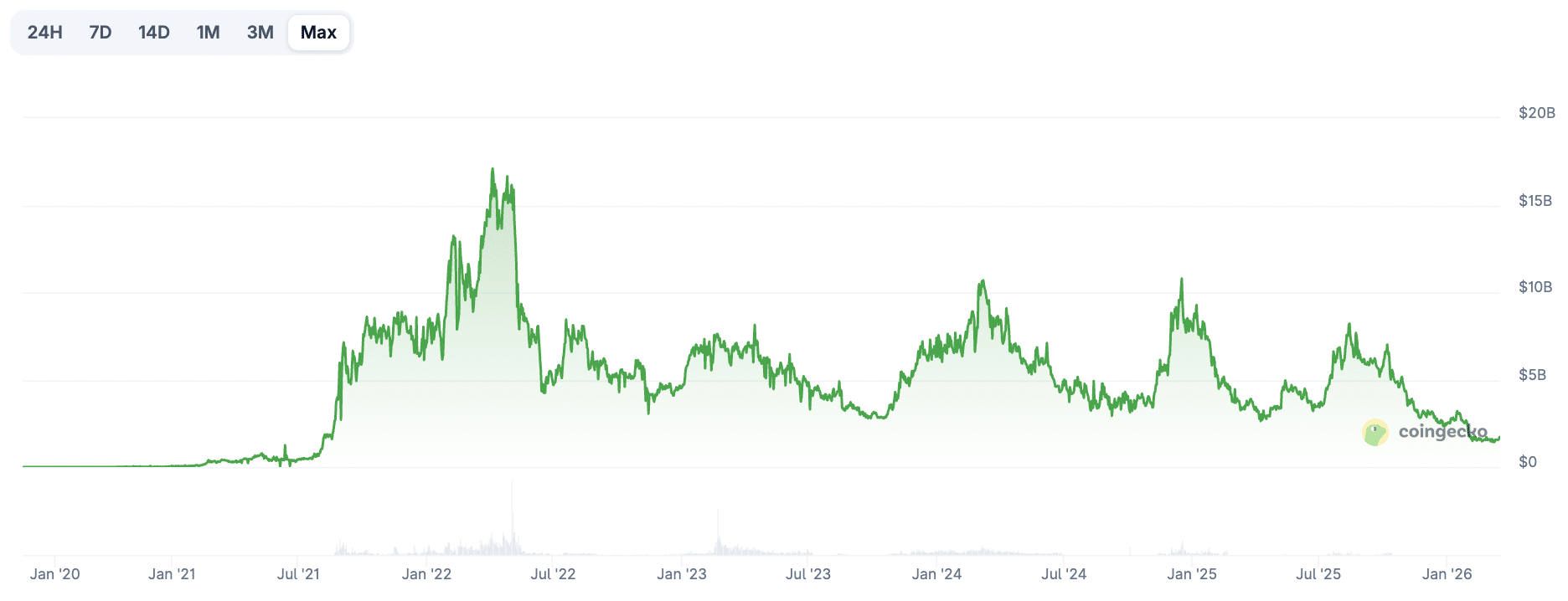
Presently, the global NFT market cap is around $1.75 billion, which is far below the levels seen during the peak of the NFT craze.

Source: Coingecko

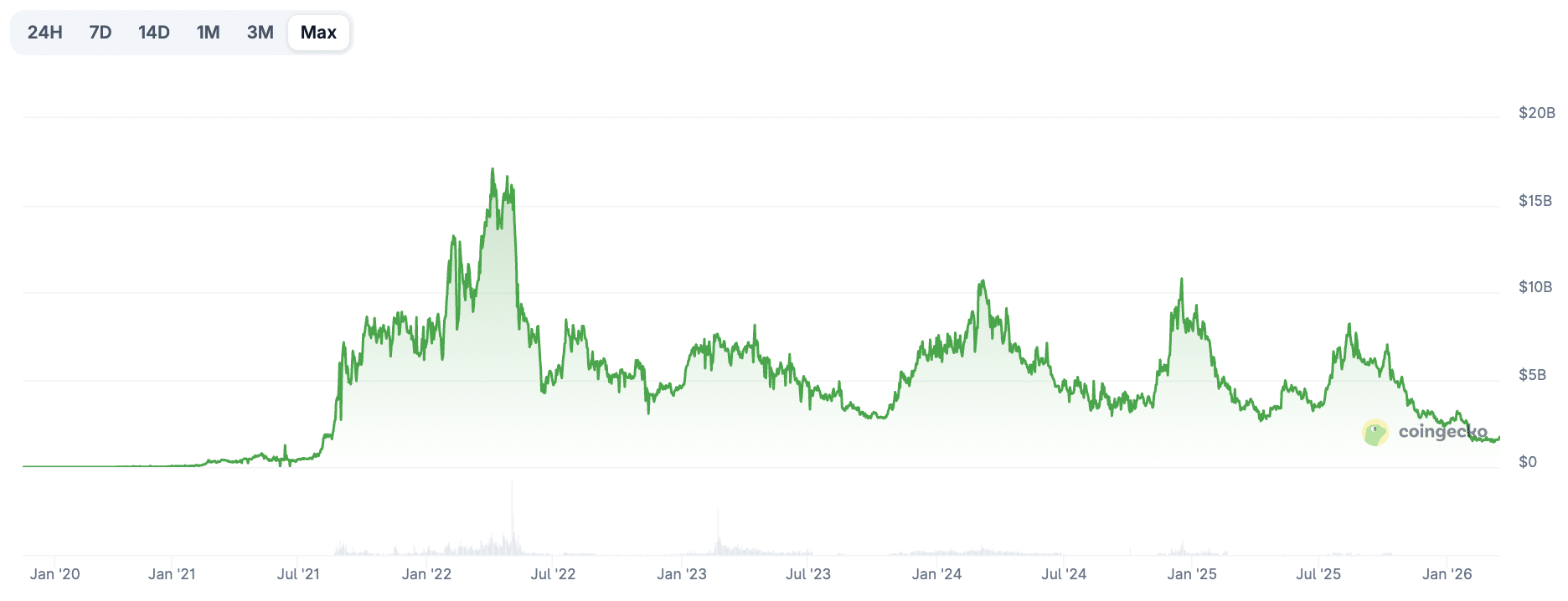
The NFT market cap has risen by about 4% in a day, but still, daily sales volume of around $1.73 million shows that trading activity is still limited.

Source: Coingecko

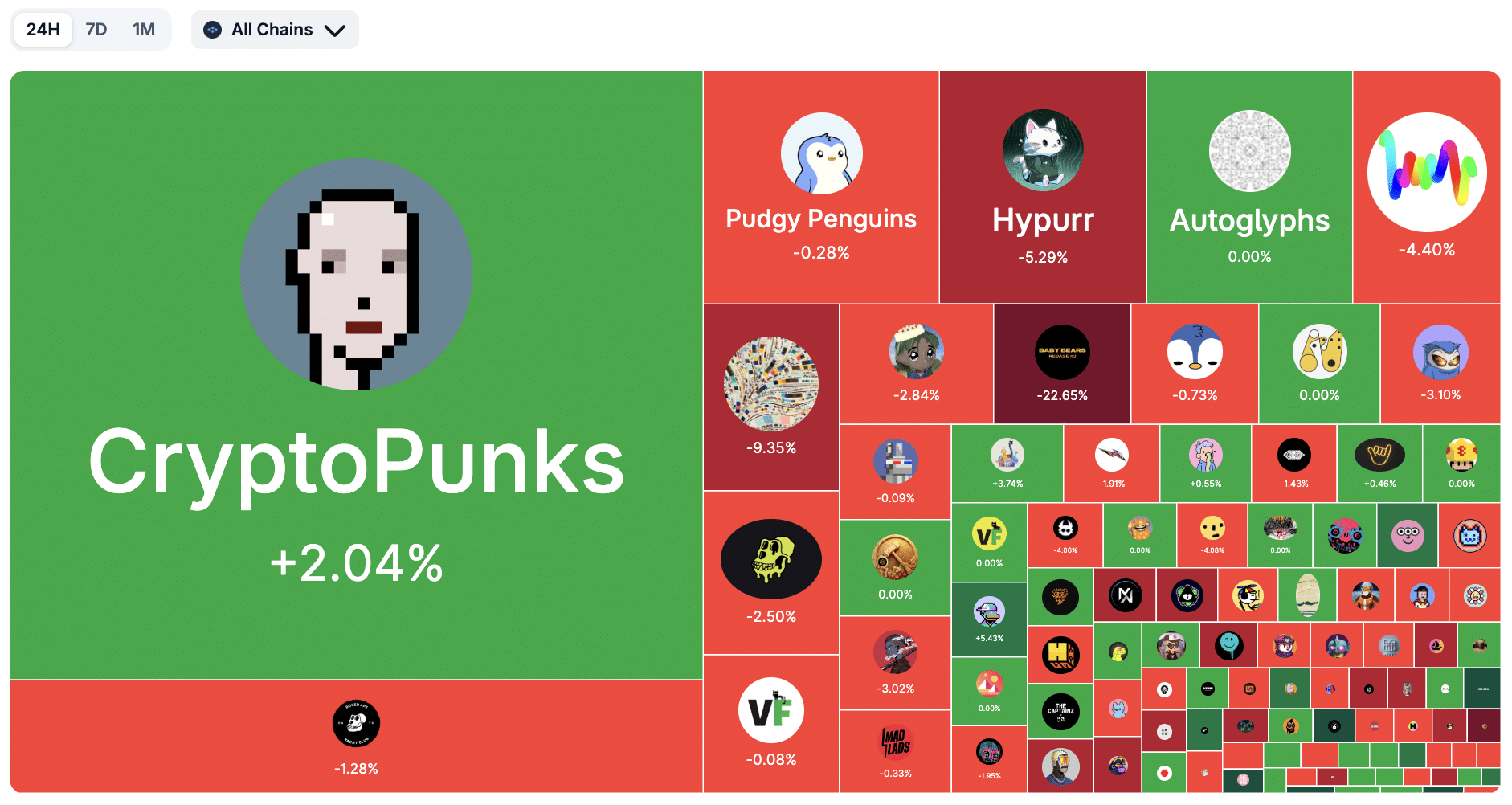
Although trading volume has increased by 39.1%, most activity remains concentrated in a few well-known NFT collections.

As a result, the market shows fast trading but limited depth, with only a small number of assets attracting strong demand.

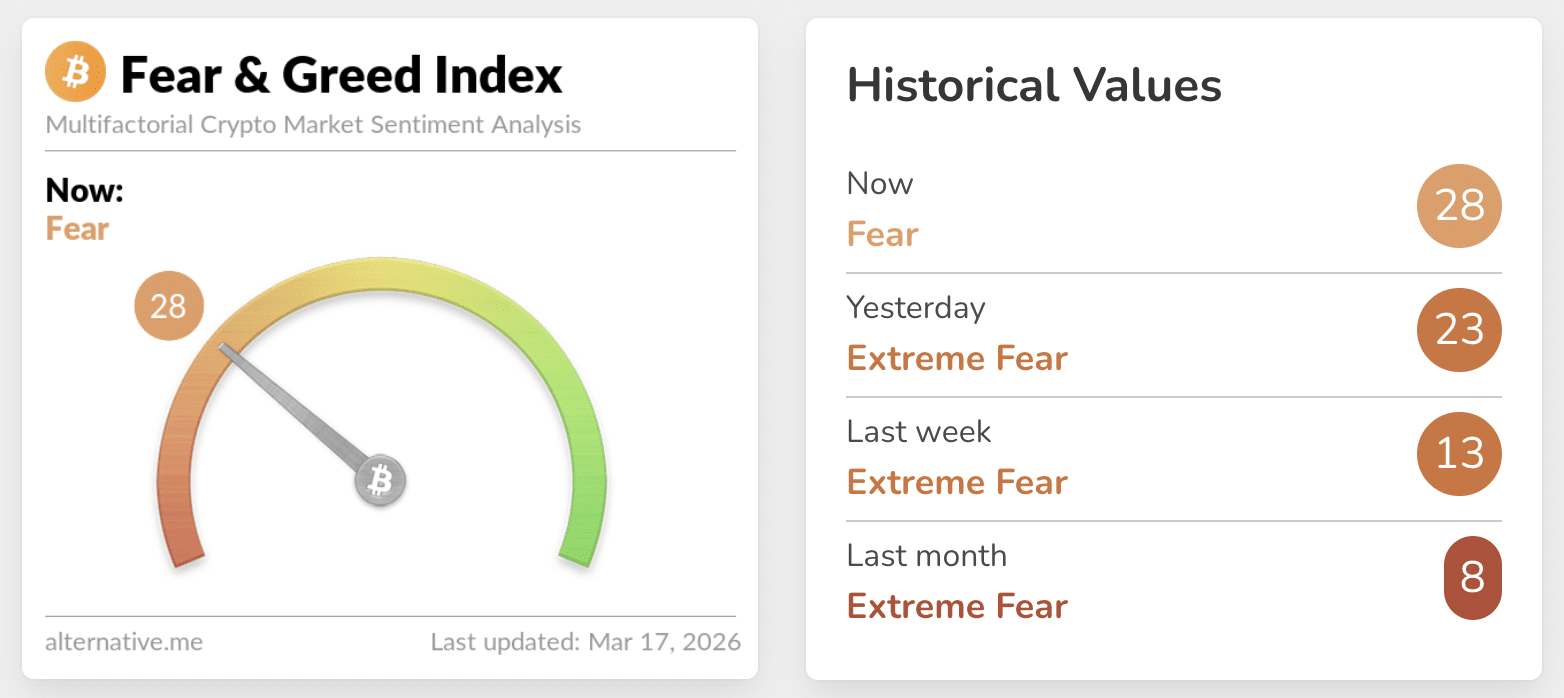
Well, this trend is not just limited to NFTs alone. The broader crypto market is also facing a slowdown. Notably, the crypto Fear and Greed Index reflects this cautious sentiment, remaining in the ‘fear’ zone, although it has slightly recovered from earlier ‘extreme fear’ levels.

Source: Alternative

By postponing the launch, the company may be trying to avoid releasing a major token during a period when there isn’t enough buying demand in the market.

Simply put, OpenSea plans to launch $SEA only when both the platform and market conditions improve.


Final Summary

  • OpenSea’s decision to delay the $SEA token shows the importance of launching a token when market demand is strong.
  • Compared to the boom of 2021, the NFT sector is now smaller and less liquid, forcing platforms to rethink their strategies.

Связанные с этим вопросы

QWhy did OpenSea delay the launch of the $SEA token?

AOpenSea delayed the launch due to challenging market conditions across the crypto space, as the company believes the $SEA token only launches once and wants to ensure it happens when market demand is strong.

QWhat steps is OpenSea taking to keep users engaged during the delay?

AOpenSea is cutting trading fees to 0% for 60 days, offering fee refunds to users who traded during Rewards Waves 3 to 6 (in exchange for forfeiting 'Treasures' points), and ending the 'Waves' rewards system to follow a clearer timeline set by the OpenSea Foundation.

QHow does the current NFT market cap compare to its peak levels?

AThe current global NFT market cap is around $1.75 billion, which is far below the levels seen during the peak of the NFT craze in 2021.

QWhat does the Crypto Fear and Greed Index indicate about current market sentiment?

AThe Crypto Fear and Greed Index remains in the 'fear' zone, reflecting cautious sentiment in the broader market, though it has slightly recovered from earlier 'extreme fear' levels.

QHow did OpenSea's CMO justify the decision to delay the token launch?

AOpenSea's CMO Adam Hollander supported the decision, stating that it requires deep conviction in the company's vision and that few CEOs would choose to give back millions to rebuild trust with users despite short-term pain.

Похожее

OpenAI Post-Training Engineer Weng Jiayi Proposes a New Paradigm Hypothesis for Agentic AI

OpenAI engineer Weng Jiayi's "Heuristic Learning" experiments propose a new paradigm for Agentic AI, suggesting that intelligent agents can improve not just by training neural networks, but also by autonomously writing and refining code based on environmental feedback. In the experiment, a coding agent (powered by Codex) was tasked with developing and maintaining a programmatic strategy for the Atari game Breakout. Starting from a basic prompt, the agent iteratively wrote code, ran the game, analyzed logs and video replays to identify failures, and then modified the code. Through this engineering loop of "code-run-debug-update," it evolved a pure Python heuristic strategy that achieved a perfect score of 864 in Breakout and performed competitively with deep reinforcement learning (RL) algorithms in MuJoCo control tasks like Ant and HalfCheetah. This approach, termed Heuristic Learning (HL), contrasts with Deep RL. In HL, experience is captured in readable, modifiable code, tests, logs, and configurations—a software system—rather than being encoded solely into opaque neural network weights. This offers potential advantages in explainability, auditability for safety-critical applications, easier integration of regression tests to combat catastrophic forgetting, and more efficient sample use in early learning stages, as demonstrated in broader tests on 57 Atari games. However, the blog acknowledges clear limitations. Programmatic strategies struggle with tasks requiring long-horizon planning or complex perception (e.g., Montezuma's Revenge), areas where neural networks excel. The future vision is a hybrid architecture: specialized neural networks for fast perception (System 1), HL systems for rules, safety, and local recovery (also System 1), and LLM agents providing high-level feedback and learning from the HL system's data (System 2). The core proposition is that in the era of capable coding agents, a significant portion of an AI's learned experience could be maintained as an auditable, evolving software system.

marsbit27 мин. назад

OpenAI Post-Training Engineer Weng Jiayi Proposes a New Paradigm Hypothesis for Agentic AI

marsbit27 мин. назад

Your Claude Will Dream Tonight, Don't Disturb It

This article explores the recent phenomenon of AI companies increasingly using anthropomorphic language—like "thinking," "memory," "hallucination," and now "dreaming"—to describe machine learning processes. Focusing on Anthropic's newly announced "Dreaming" feature for its Claude Agent platform, the piece explains that this function is essentially an automated, offline batch processing of an agent's operational logs. It analyzes past task sessions to identify patterns, optimize future actions, and consolidate learnings into a persistent memory system, akin to a form of reinforcement learning and self-correction. The article draws parallels to similar features in other AI agent systems like Hermes Agent and OpenClaw, which also implement mechanisms for reviewing historical data, extracting reusable "skills," and strengthening long-term memory. It notes a key difference from human dreaming: these AI "dreams" still consume computational resources and user tokens. Further context is provided by discussing the technical challenges of managing AI "memory" or context, highlighting the computational expense of large context windows and innovations like Subquadratic's new model claiming drastically longer contexts. The core critique argues that this strategic use of human-centric vocabulary does more than market products; it subtly reshapes user perception. By framing algorithms with terms associated with consciousness, companies blur the line between tool and autonomous entity. This linguistic shift can influence user expectations, tolerance for errors, and even perceptions of responsibility when systems fail, potentially diverting scrutiny from the companies and engineers behind the technology. The article concludes by speculating that terms like "daydreaming" for predictive task simulation might be next, continuing this trend of embedding the idea of an "inner life" into computational processes.

marsbit29 мин. назад

Your Claude Will Dream Tonight, Don't Disturb It

marsbit29 мин. назад

Торговля

Спот
Фьючерсы
活动图片