Источник: Bankless
Автор: David Christopher
Компиляция и редактирование: BitpushNews

Споры между Coinbase и Robinhood уже многократно обсуждались многими наблюдателями, включая нас.
Но системное обновление, выпущенное Coinbase 17 декабря, дало нам повод заново глубоко изучить эту тему. Компания объявила о запуске круглосуточной (24/5) торговли акциями и ETF без комиссий, нативной интеграции рынков прогнозов через Kalshi и агрегатора децентрализованных бирж (DEX), обеспечивающего мгновенный доступ к миллионам токенов — это явно стал четким шагом к превращению в «универсальное приложение (everything app)», способное конкурировать с широтой охвата Robinhood.
Эти анонсы прояснили будущее, которое строит Coinbase, и позволили нам более полно сравнить его с Robinhood. Их цель конкуренции теперь ясна: стать единой платформой, где пользователи управляют всей своей финансовой жизнью. Контролируя балансы пользователей, они контролируют и их поведение. Но подходы, с помощью которых они строят эту теорию «суперприложения», раскрывают две совершенно разные философии — и 2026 год проверит, какой фундамент окажется прочнее.
HOOD (Robinhood)
Robinhood строит финансовое суперприложение по-старому — путем постоянного добавления продуктов, пока пользователи не смогут управлять всей своей финансовой жизнью на одной платформе.
Помимо торговли акциями, опционами и криптовалютой, Robinhood предлагает своим 3,9 миллионам подписчиков Robinhood Gold набор продуктов, функциональность которых сравнима с необанком (digital bank). Эта подписка, выросшая на 77% в годовом исчислении, включает в себя кредитную карту с кэшбэком 3%, проценты на остаток наличности в размере 3,25% и совпадение взносов на IRA (индивидуальный пенсионный счет) на 3%. Зарплаты, сбережения, инвестиции и повседневные расходы пользователей сосредоточены в одном интерфейсе — это преимущество в данных, с которым традиционные брокеры не могут соперничать.
Эта позиция кажется особенно актуальной, если учитывать демографию — 75% из 26,9 миллионов фондированных клиентов Robinhood моложе 44 лет, это высокомобильная и «финансово грамотная» пользовательская база. Как считают Омар Канджи из Dragonfly и другие, эта база помогает компании стать основным бенефициаром ожидаемого в следующем десятилетии перехода богатства объемом более 10 триллионов долларов, когда старшее поколение передаст активы младшему. Эти наследники, скорее всего, объединят активы на платформе, которую они используют каждый день, — и Robinhood позиционирует себя как идеальную для повседневного использования.
Помимо функций цифрового банка, источники дохода Robinhood уже достаточно диверсифицированы. Торговля опционами остается их «дойной коровой». Криптовалюта приносит 21% общего дохода. Чистый процентный доход составляет 35% выручки. А бизнес на рынках прогнозов через Kalshi уже приносит 100 миллионов долларов годового дохода.
Данные подтверждают это:
-
Доход, основанный на сделках, вырос на 129% в годовом исчислении, в основном за счет криптовалюты.
-
Чистая прибыль в третьем квартале достигла рекордных 556 миллионов долларов — рост на 271% в годовом исчислении.
-
Операционные расходы остаются на прежнем уровне с сентября 2022 года.
COIN (Coinbase)
Coinbase также строит суперприложение — но с отчетливым «криптонативным» оттенком и со скрытым второстепенным амбициями.
На фронтенде Coinbase хочет стать единым местом, где пользователи управляют своей ончейн и офчейн финансовой жизнью, хотя пока в основном сосредоточены на первом. Декабрьское обновление системы прояснило это: круглосуточная (24/5) торговля акциями и ETF без комиссий, рынки прогнозов через Kalshi и постоянная ончейн-интеграция для мгновенного доступа к миллионам токенов. В сочетании с прямым депозитом, высокодоходными сбережениями через проценты по кредитованию USDC, возможностью занять до 5 миллионов долларов под BTC (до 1 миллиона под ETH) и получением криптовалютных вознаграждений за расходы через дебетовую карту — пазл суперприложения складывается.
Хотя цены на криптовалюты падают, строители и поставщики по-прежнему в деле.
Однако Coinbase не просто создает продукты для своих пользователей. Ее более грандиозное видение, кажется, заключается в том, чтобы превратить каждый предлагаемый продукт в подключаемую инфраструктуру, питающую все другие учреждения, выходящие в ончейн.
Теория здесь заключается в том, что традиционные финансовые (TradFi) гиганты, такие как JPMorgan, Fidelity и Morgan Stanley, не будут строить свою собственную криптоинфраструктуру. Они передадут бизнес на аутсорсинг Coinbase, потому что это дешевле, им не хватает технических знаний, а у Coinbase есть 13-летняя проверенная безопасность. Уже более 200 учреждений используют платформу Coinbase «Крипто как услуга (Crypto as a Service)» — это означает, что пользователи, возможно, торгуют криптовалютой через фронтенд традиционного банка, но Coinbase обрабатывает все в бэкенде.
Это внимание к инфраструктуре распространяется на всю сферу деятельности. Coinbase хранит биткоин и эфир для большинства крупных спот-ETF — почти монопольное положение в области крипто-кастоди. Они позволяют учреждениям использовать инфраструктуру Coinbase для выпуска собственных стейблкоинов. Приобретение Echo перенесло финансирование и выпуск токенов внутрь компании. А приобретение Deribit захватило около 90% открытого интереса по опционам на биткоин.
Структура доходов отражает это двойное внимание. Выручка в третьем квартале 2025 года составила 1,8 миллиарда долларов, при этом доход от подписок и услуг установил квартальный рекорд в 747 миллионов долларов (41% от общего дохода). Доход от стейблкоинов по партнерству USDC составил 354,7 миллиона долларов, увеличившись на 44% в годовом исчислении. Стейкинг принес 185 миллионов долларов. Активы под управлением превысили 300 миллиардов долларов благодаря притоку средств в ETF, а плата за кастоди составила около 143 миллионов долларов.
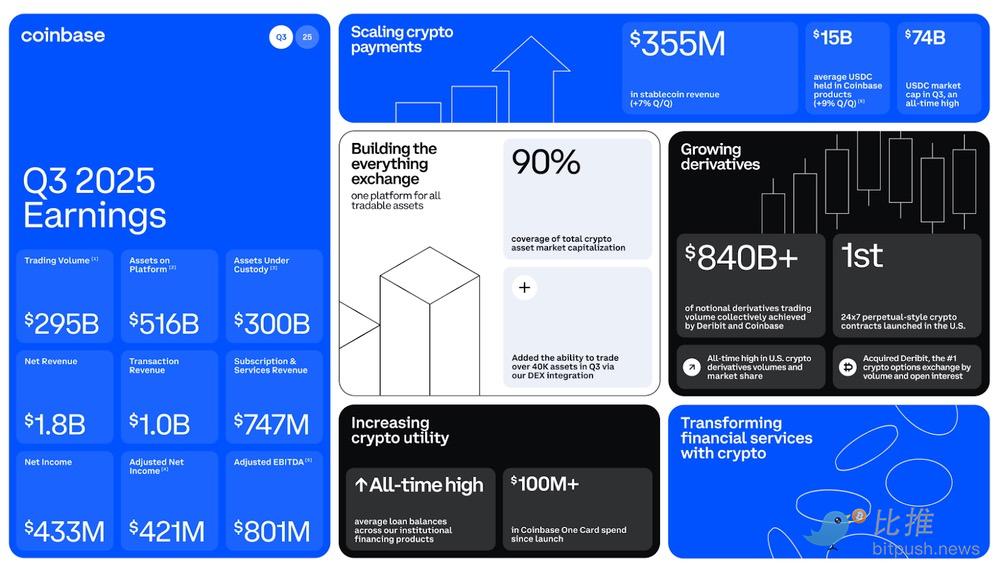
Грандиозное видение Robinhood — стать предпочтительным местом для обработки всех аспектов личной финансовой жизни, в то время как Coinbase играет в две игры одновременно: создает лучшее крипто-суперприложение для своих пользователей и одновременно становится бэкендом, питающим криптопродукты всех остальных.
Расхождение в криптостратегиях
Обе компании рассматривают криптовалюту как ядро своих амбиций в отношении суперприложений, но их методы отражают их происхождение.
Robinhood рассматривает криптовалюту как еще один класс активов наряду с акциями и опционами. Это драйвер дохода, который идеально вписывается в существующий набор продуктов. Приобретение Bitstamp (за 200 миллионов долларов) предоставило ему глобальные лицензии и институциональную инфраструктуру. Токенизированные акции (Tokenized equities) — в ЕС уже доступно около 800, включая частные компании, такие как OpenAI и SpaceX — расширяют предложение продуктов. Настоящим испытанием станет успех Robinhood Chain, который должен сделать многие из этих токенизированных акций более универсальными (например, для кредитования), хотя у нас пока мало подробностей о том, какую степень «DeFi» или другой ончейн-активности будет поддерживать эта сеть.
Помимо этого, Robinhood сталкивается с более прямыми ограничениями, такими как выбор токенов. В США пользователям доступно менее 50 токенов на платформе, в то время как Coinbase косвенно (через Jupiter и Base) предлагает почти неограниченное количество токенов, а напрямую поддерживает более 200.
Подход Coinbase к криптовалюте явно иной, он предлагает все: от собственной сети Layer 2 до различных продуктов, упомянутых в предыдущем разделе. Он уже установил стандарт для «криптоспецифичных» продуктов, так что теперь, кажется, переходит к фокусировке на построении рельсов для использования другими. Мы видим x402, предназначенный стать отраслевым стандартом для платежей между агентами (A2A), и объявление Coinbase о предоставлении платформы «Стейблкоин как услуга (Stablecoin-as-a-Service)» для компаний по созданию вайтлейбл-стейблкоинов, при этом Coinbase управляет всей технической сложностью. От выпуска до торговли и кастоди Coinbase занимает каждую стадию жизненного цикла актива.
Взгляд на 2026 год
Дорожные карты обеих компаний очень агрессивны — и все больше пересекаются.
Декабрьское обновление Coinbase 2025 года мощно вторглось на территорию Robinhood благодаря торговле акциями и ETF вне традиционных рыночных часов (благодаря токенизации) и анонсу бессрочных фьючерсов на акции в следующем году. Нативная интеграция Kalshi принесла рынки прогнозов. Кроме того, есть Coinbase Business и Coinbase Tokenize, первая — это унифицированная платформа для ведения бизнеса на основе криптовалюты, вторая — «сквозная» платформа для институциональной токенизации.
План Robinhood на 2026 год更深о погружается в криптоинфраструктуру. Токенизированные акции станут доступны для торговли 24/7 через Bitstamp в начале 2026 года, а к концу 2026 года станут доступны для вывода и композируемы в DeFi. В сфере рынков прогнозов Robinhood переходит от партнерства по дистрибуции к запуску собственного рынка. Платформа надеется предложить стейкинг криптовалют, но это зависит от одобрения регуляторов. У нее также есть амбиции по «социализации» торговли через Robinhood Social — это即将推出的信息流, где трейдеры могут публиковать контент и демонстрировать свои реальные сделки и прибыли/убытки. И, конечно, есть Robinhood Chain.
Проблема для Robinhood Chain будет заключаться в построении экосистемы разработчиков — а в этой области Base уже набрала обороты. Криптонативную культуру трудно создать искусственно.
Резюме
Возможно, здесь лучшей рамкой будет «COIN и HOOD», а не «COIN против HOOD». Эти две компании занимают разные ниши, которые соприкасаются, но не полностью перекрываются.
Robinhood — это и ставка на «суперприложение», и ставка на демографический перенос богатства. Поскольку 75% пользователей моложе 44 лет и есть полнофункциональный цифровой банк, удерживающий активы на платформе, компания готова стать новым центром для депозитов, расходов, инвестиций и спекуляций.
Coinbase — это ставка на технологическую трансформацию. Она делает ставку на то, что глобальная экономика перейдет в ончейн, и Coinbase станет уровнем инфраструктуры, питающим всех остальных — от ETF-кастоди до бэкенда стейблкоинов и криптоуслуг для традиционных банков.
Обе сталкиваются с рисками. Щедрые стимулы Gold от Robinhood (3% совпадение, 3% кэшбэк, 3,25% наличные проценты) дорого обходятся и уже показали уязвимость к снижению ставок — недавно эта ставка составляла 4-5%, и она напрямую привязана к ставке ФРС. Внедрение токенизации зависит от решений эмитентов, которые находятся вне контроля Robinhood. Для Coinbase рост пользователей по-прежнему остается огромным риском, ее количество месячных активных пользователей остается на одном уровне с 2021 года.
Более того, акции обеих компаний, возможно, уже находятся на высоких уровнях. За последние несколько лет эти акции были одними из главных победителей на рынке — на момент написания этой статьи акции Coinbase (COIN) выросли примерно в 7 раз по сравнению с минимумами 2022 года, а Robinhood (HOOD) — в 15 раз. Несмотря на недавнее отступление от исторических максимумов, их оценки остаются высокими после таких впечатляющих скачков. Это стоит учесть инвесторам.
В конечном счете, хотя обе компании создают финансовые суперприложения — и в процессе все больше вторгаются на территории друг друга — их видения фактически служат разным целям.
-
Robinhood стремится построить универсальную финансовую платформу — чтобы пользователям не нужно было покидать платформу для управления всеми аспектами своих финансов: банковскими операциями, повседневными расходами, торговлей и инвестициями — все в одном месте.
Coinbase же фокусируется на построении инфраструктуры для перевода всех в ончейн — она действительно создает крипто-суперприложение для своих пользователей, но что более важно, она становится бэкенд-рельсами, на которые опираются финансовые учреждения, финтех-компании и даже традиционные банки при входе в криптопространство.
Одна стремится стать вашим финансовым домом, другая — стать трубопроводом в основе финансового дома для всех. Обе могут добиться успеха.
Twitter:https://twitter.com/BitpushNewsCN
Группа общения比推 TG:https://t.me/BitPushCommunity
Подписка比推 TG: https://t.me/bitpush



















