RALPH memecoin collapses by 97% after developer sale sparks backlash – Details

ambcryptoОпубликовано 2026-01-24Обновлено 2026-01-24

Введение

The AI-themed memecoin RALPH, associated with the "Ralph Wiggum" trend, collapsed by 97% after a developer sold $300k worth of tokens into thin liquidity. The sale of 7.68 million RALPH tokens caused an 80% drop in a single 4-hour session, crashing the market cap from $50 million to around $5 million. The developer, who received the tokens for free, defended the move as "de-risking," sparking community backlash. A new investor lost $355k after buying just before the crash. The incident highlights the high risks of memecoins and the importance of personal research and risk management in cryptocurrency investments.

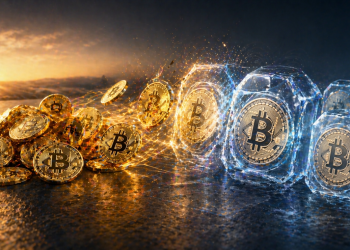
Ralph Coin [RALPH], the AI memecoin linked to the “Ralph Wiggum” trend, saw an 80% price drop after a developer sold $300k of the token into thin liquidity. The losses came in a single 4-hour trading session.

In an update on X on 22 January, Lookonchain noted that the developer sold 7.68 million RALPH tokens worth 1,888 Solana [SOL]. This was worth $245k at the time, and the memecoin’s market cap crashed from $50 million to around $5 million.

Bubblemaps shared on Thursday that the seller’s cluster still held 3% of the supply. At the time of writing, the token was down 97% since the initial selling.

What is RALPH?

Ralph Wiggum is a prompting technique. It loops the same AI instruction until a task is completed. Later on, the community created the RALPH memecoin. 99% of the token royalties go to the creator, Geoffrey Huntley, after a vesting schedule.

Given this position for free, the developer felt the need to “de-risk” his position, claiming on social media that “moments like this will test the paperhands from the diamond hands”. Understandably, this has drawn the community’s ire.

Other social media denizens have pointed out that the project developer did not create the token, did not ask to be given the token, and complained when the developer sold everything.

Lookonchain reported that a newly created wallet spent $470k to purchase RALPH. Hours later, the price crash occurred, forcing the wallet to sell its 10.19 million RALPH stash at a $355k loss.

Instead of debating who is in the right and who isn’t in this debacle, traders, investors, and especially new entrants to crypto should use this event to understand the importance of “do your own research.”

Even good investment theses are not infallible, underscoring the importance of risk management. Be prepared for the rug and when you encounter one, at least you won’t be surprised.


Final Thoughts

  • The Ralph Wiggum prompting technique places a coding agent in a continuous loop until the problem at hand is solved.
  • Developer sold the tokens given to him for roughly $300,000, causing the price to crash hard.

Связанные с этим вопросы

QWhat caused the RALPH memecoin to experience a 97% price collapse?

AThe price collapsed after a developer sold 7.68 million RALPH tokens (worth 1,888 SOL or approximately $245k) into thin liquidity, causing a massive sell-off.

QHow much did the memecoin's market capitalization drop following the developer's sale?

AThe market cap crashed from $50 million to around $5 million.

QWhat is the Ralph Wiggum prompting technique mentioned in the article?

AIt is an AI prompting technique that places a coding agent in a continuous loop until a given task is completed.

QWhat percentage of the token royalties go to the creator, Geoffrey Huntley?

A99% of the token royalties go to the creator after a vesting schedule.

QWhat key lesson should traders and investors take from this event according to the article?

AThe event underscores the importance of 'do your own research' (DYOR) and risk management, as even good investment theses are not infallible and one should always be prepared for potential 'rug pulls'.

Похожее

$292 Million KelpDAO Cross-Chain Bridge Hack: Who Should Foot the Bill?

On April 18, 2026, an attacker stole 116,500 rsETH (worth ~$292M) from KelpDAO’s cross-chain bridge in 46 minutes—the largest DeFi exploit of 2026. The stolen assets were deposited into Aave V3 as collateral, causing $177–200M in bad debt and triggering a cascade of losses across nine DeFi protocols. Aave’s TVL dropped by ~$6B overnight. This legal analysis argues that KelpDAO and LayerZero Labs share concurrent liability, with fault apportioned 60%/40%. KelpDAO negligently configured its bridge with a 1-of-1 decentralized verifier network (DVN)—a single point of failure—despite LayerZero’s explicit recommendation of a 2-of-3 setup. LayerZero, which operated the compromised DVN, failed to secure its RPC infrastructure against a known poisoning attack vector. Both protocols’ terms of service cap liability at $200 (KelpDAO) or $50 (LayerZero), but these limits are likely unenforceable due to unconscionability, gross negligence exceptions, and potential securities law invalidation (if rsETH is deemed a security under the Howey test). Aave’s governance also faces fiduciary duty claims for raising rsETH’s loan-to-value ratio to 93%—far above competitors’ 72–75%—without adequately assessing bridge risks, amplifying the systemic fallout. Practical recovery targets include LayerZero Labs (a registered Canadian entity), KelpDAO’s founders, auditors, and identifiable Aave governance delegates. The incident underscores escalating legal risks for DeFi protocols, infrastructure providers, and governance participants.

marsbit32 мин. назад

$292 Million KelpDAO Cross-Chain Bridge Hack: Who Should Foot the Bill?

marsbit32 мин. назад

Insider Trading in War: 5 People Involved, the Highest Earner Was Arrested

On April 24, the U.S. Department of Justice arrested U.S. Army Special Forces Staff Sergeant Gannon Ken Van Dyke for insider trading related to the capture of Venezuelan President Nicolás Maduro on January 3. Van Dyke allegedly profited over $400,000 by placing bets on a prediction market, Polymarket, using insider knowledge of the covert operation. According to the indictment, Van Dyke registered an account (0x31a5) on December 26 and made a series of bets predicting Maduro’s capture and U.S. military involvement in Venezuela. He withdrew most of his funds on the day of the operation and attempted to obscure his tracks by transferring assets through crypto and brokerage accounts. This case marks the first time the DOJ has prosecuted insider trading on Polymarket. PolyBeats had previously identified five suspicious accounts, including Van Dyke’s—the highest earner—in January. The other accounts, with profits ranging from $34,000 to $145,000, remain under unofficial scrutiny but have not been charged. Their lower profits, indirect access to information, and unclear legal boundaries may complicate prosecution. Polymarket has since strengthened its market integrity rules, explicitly prohibiting trading based on confidential or insider information. Van Dyke’s arrest, nearly four months after his trades, signals increased regulatory attention and the persistent traceability of blockchain-based transactions.

marsbit33 мин. назад

Insider Trading in War: 5 People Involved, the Highest Earner Was Arrested

marsbit33 мин. назад

Bitwise: Bullish on Bitcoin's Performance in the Second Half of the Year, AI and Regulation Will Spark a New Altcoin Season

Bitwise CIO Matt Hougan and Research Lead Ryan Rasmussen express strong bullish sentiment on Bitcoin's long-term prospects, suggesting that its $1 million price target may be too conservative. They argue Bitcoin serves a dual role: as digital gold and a potential global settlement asset, especially amid declining trust in traditional monetary systems. Despite a weak Q1 2026 where nearly all crypto assets and prices saw double-digit declines, the analysts remain optimistic due to strong forward-looking catalysts, including institutional adoption via Bitcoin ETFs from major firms like Morgan Stanley and Goldman Sachs. Geopolitical instability, such as Iran’s mention of using Bitcoin for international payments, increases the value of Bitcoin’s “out-of-the-money call option” as a non-political, global settlement currency. This enhances its appeal beyond a mere store of value. . Additionally, Hougan highlights that a clearer regulatory token framework under current SEC leadership, combined with AI efficiency gains and high-performance blockchains, could fuel a new “altseason” by late 2026. This may lead to a wave of legitimate, value-capturing token projects, unlike the earlier ICO boom. . Bitwise also announced an Avalanche ETF, citing its unique architecture and rapid growth in real-world asset (RWA) tokenization, which has surged 10x to nearly $30 billion in two years. The firm believes Layer 1 blockchains are still early in their growth cycle, with significant potential ahead.

marsbit1 ч. назад

Bitwise: Bullish on Bitcoin's Performance in the Second Half of the Year, AI and Regulation Will Spark a New Altcoin Season

marsbit1 ч. назад

Торговля

Спот
Фьючерсы

Популярные статьи

Неделя обучения по популярным токенам (2): 2026 может стать годом приложений реального времени, сектор AI продолжает оставаться в тренде

2025 год — год институциональных инвесторов, в будущем он будет доминировать в приложениях реального времени.

1.8k просмотров всегоОпубликовано 2025.12.16Обновлено 2025.12.16

Неделя обучения по популярным токенам (2): 2026 может стать годом приложений реального времени, сектор AI продолжает оставаться в тренде

Обсуждения

Добро пожаловать в Сообщество HTX. Здесь вы сможете быть в курсе последних новостей о развитии платформы и получить доступ к профессиональной аналитической информации о рынке. Мнения пользователей о цене на AI (AI) представлены ниже.

活动图片