Overnight, Crypto Moguls Were Severely Mocked by 'Vanity Fair'

marsbitОпубликовано 2026-03-18Обновлено 2026-03-18

Введение

Crypto industry leaders, including Cathie Wood (ARK Invest), Olaf Carlson-Wee (Polychain), and Michael Novogratz (Galaxy Digital), faced widespread mockery after a Vanity Fair cover story portrayed them in an unflattering light. The article, titled “Crypto’s True Believers Demand to Be Taken Seriously,” depicted the billionaires as eccentric and out-of-touch—highlighting their interests in alien life, extreme survivalism, and going barefoot, while questioning their influence on global power structures. Industry insiders criticized the piece for reinforcing negative perceptions. A former fashion photographer noted the deliberately demeaning composition of the photos, such as camera angles that diminished Wood’s stature and shadowy, unflattering shots of Novogratz. The coverage was seen as a deliberate attempt to ridicule the crypto elite rather than engage with the industry seriously. The incident sparked broader reflection: some argued that seeking validation from traditional media contradicts crypto’s original anti-establishment ethos. As one founder noted, “We weren’t built for Vanity Fair or Forbes. We were built to rebel against everything they represent.” The episode underscores the tension between crypto’s growing political influence and its struggle for cultural legitimacy.

Author: Gu Yu, ChainCatcher

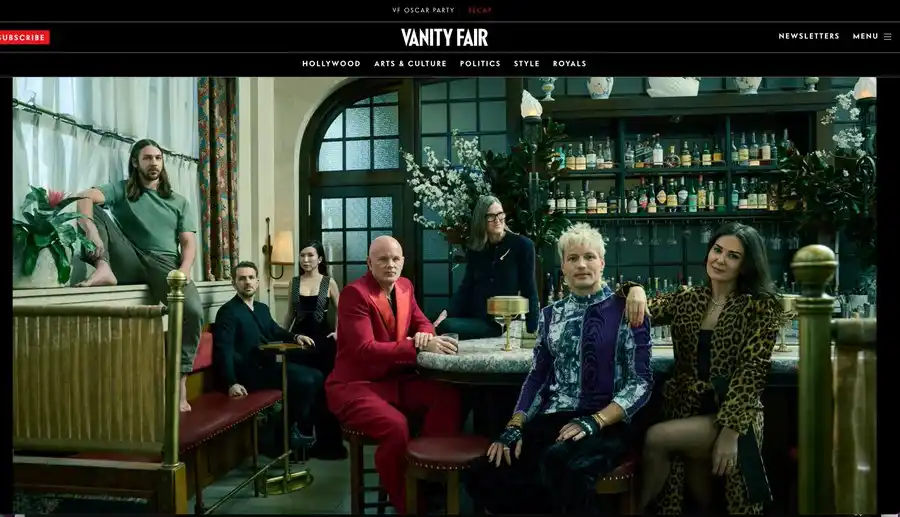
Overnight, a group photo of crypto moguls flooded the X timelines of all crypto practitioners, accompanied by overwhelming ridicule and criticism.

The protagonists in the picture include industry heavyweights such as ARK Invest CEO Cathie Wood, Polychain founder Olaf Carlson-Wee, and Galaxy Digital founder Michael Novogratz, but this still couldn't stop the storm, which even intensified.

Upon closer examination of this group photo, it can be identified as a work from the venerable celebrity magazine 'Vanity Fair,' published in the latest issue's cover story 'Cryptocurrency's True Believers Demand to Be Taken Seriously.'

Through close observation of the industry's core circle, this article delves into how, after enduring multiple rounds of regulatory storms and market crashes, the crypto industry is attempting to redefine the global power landscape in 2026 through massive political donations and a 'messianic' grand narrative.

Although the stories of crypto industry moguls have already appeared in a series of traditional magazines like 'Fortune' and 'The New York Times,' 'Vanity Fair,' as a media outlet deeply versed in celebrity culture, clearly has a more 'sinister' reporting perspective. The article doesn't dwell much on complex industry trends but instead spends considerable ink on the starkly contrasting private life details of these 'power restructurers.'

In the author's portrayal, these billionaires are depicted as a group of eccentrics who are both detached from reality and eager to dominate it: on one hand, they discuss the future of human civilization in mansions in Puerto Rico; on the other hand, they are obsessed with searching for extraterrestrial life, practicing extreme survivalism, and even often going barefoot in public.

Triple Crown Digital partner Noelle Acheson commented on this, saying, 'We can laugh (and indeed we want to laugh) at 'Vanity Fair's' photos, at the awkward poses and perplexing character portrayals... but the deeper question is: Is this how the mainstream media views the cryptocurrency industry? If so, we have a lot of work to do.'

In the view of most industry insiders, this article not only fails to positively portray cryptocurrency practitioners but also highlights stereotypes about the crypto industry.

Tally co-founder Dennison Bertram further revealed that this article is 'Vanity Fair' magazine deliberately mocking cryptocurrency and its related figures, with both text and photos filled with deep disdain and sarcasm. Before getting involved in cryptocurrency, he had worked as a fashion photographer for over a decade.

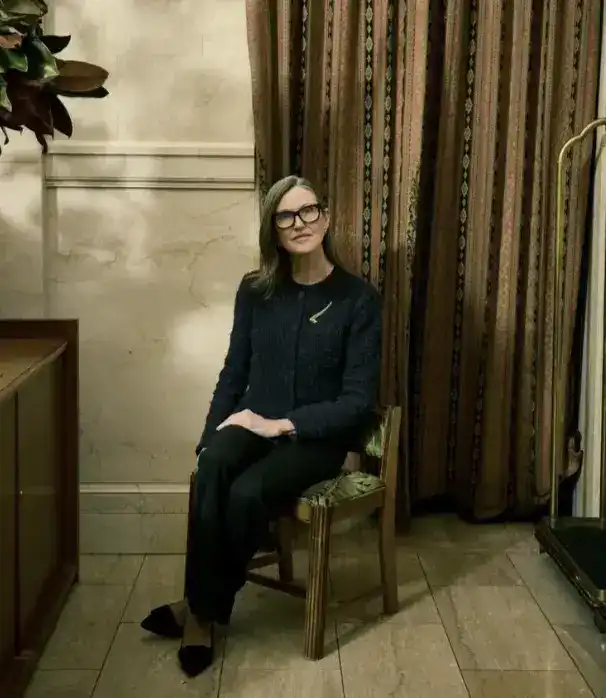
He analyzed Cathie Wood's individual portrait as an example: 'Here, Cathie Wood is deliberately made to appear small. The camera looks down on her, and the composition deliberately downplays her stature. The messy curtains, her crossed ankles, and the intentionally placed luggage cart all contribute to the deliberately created冷酷无情 (cold and ruthless) effect in the frame. Could there be a more mean-spirited visual effect than this?'

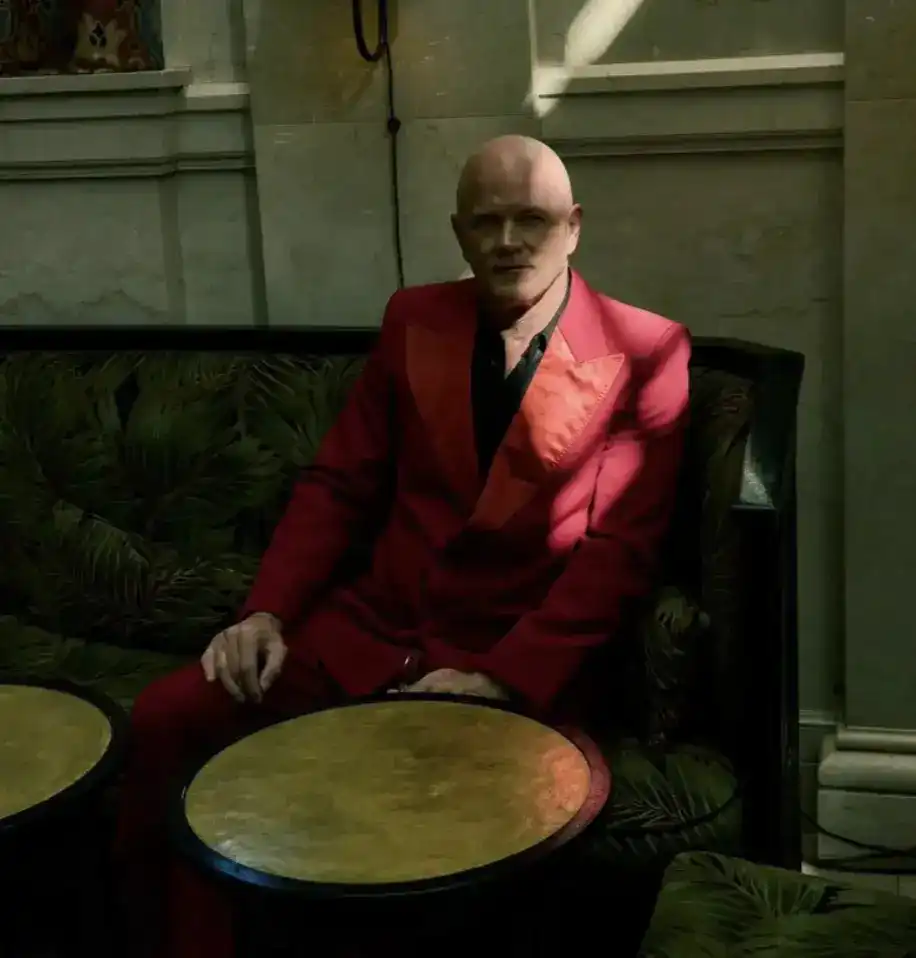
Looking at Michael Novogratz's photo: 'His eyes are squinted, looking fierce. Why? Because he's wearing glasses. He's holding them, almost invisible. His face is deliberately cast in shadow, appearing very menacing. Again, it's a mess, everything is crooked, nothing is整齐划一 (neat and uniform). Is this a positive image? I don't think so at all.'

A group of moguls who rose to the top through the crypto industry, originally attempting to seek more recognition and support from the outside world through 'Vanity Fair' magazine, unexpectedly fell into a huge 'trap' and ended up appearing as clown-like figures in the public eye. This is undoubtedly a painful lesson.

At this point, the very act of seeking validation in mainstream magazines has itself become an object of criticism. Nozomi founder Jinelle D'Lima believes that Satoshi Nakamoto and the cypherpunks never sought approval. 'The key point is, you don't need their approval: capital flows don't need it, the network runs without it, everything operates without it. We weren't built to cater to 'Vanity Fair' or 'Forbes.' We were built to resist everything they represent: gatekeepers, the establishment, and those who decide what is legitimate and what is illegal.'

'Now we're on the cover. Could it be any more ironic? This isn't like us. We were never supposed to be these people.' Jinelle D'Lima said.

The reason 'Vanity Fair's' report has become a vortex of controversy is that it reveals an awkward predicament for the crypto industry: Even though the industry attempts to exchange astronomical political donations and 'capitulation' to the mainstream financial system for 'serious treatment' from mainstream circles, within the aesthetic and value systems of mainstream culture, these new elites are still viewed as a subcultural group with cult-like overtones.

This PR disaster might be telling everyone: the true power of the crypto industry has never been in the mainstream media coverage, but in the code that can run just fine without needing to be 'taken seriously'.

Связанные с этим вопросы

QWhat was the main criticism from the crypto community regarding Vanity Fair's article and photos?

AThe crypto community criticized Vanity Fair for portraying industry leaders in a mocking and disrespectful manner, using unflattering photos and emphasizing eccentric personal details rather than serious industry trends, which reinforced negative stereotypes.

QHow did Dennison Bertram analyze the photographic techniques used in Cathie Wood's portrait?

ADennison Bertram, a former fashion photographer, analyzed that Cathie Wood was deliberately made to appear small through a top-down camera angle, cluttered background with messy curtains, crossed ankles, and a luggage cart, creating a冷酷无情 (cold and ruthless) visual effect.

QWhat deeper issue did Noelle Acheson raise about the Vanity Fair coverage?

ANoelle Acheson raised the concern that if this is how mainstream media perceives the cryptocurrency industry, then there is still significant work to be done to improve its image and understanding among traditional outlets.

QAccording to Jinelle D'Lima, what is seeking validation from mainstream magazines like Vanity Fair contrary to?

AJinelle D'Lima stated that seeking validation from mainstream magazines contradicts the original ethos of crypto pioneers like Satoshi Nakamoto and cypherpunks, who built the industry to resist gatekeepers, institutions, and those who decide legitimacy, rather than to seek their approval.

QWhat lesson did the Vanity Fair incident teach the crypto industry about its power and acceptance?

AThe incident highlighted that the crypto industry's true power lies in its code and decentralized operation, which function without needing validation from mainstream media or traditional financial systems, and that seeking acceptance from these circles may result in misrepresentation and ridicule.

Похожее

KOL's Perspective: Why Is SOL Set to Rise from This Point?

**Summary: Why SOL is Positioned for Growth at This Level** The article argues that SOL is poised for an upward move from its current price point, citing several key factors. Primarily, SOL has just broken out of a 4-month consolidation phase. This breakout signals a return of risk appetite to the broader crypto market, as SOL is seen as a key indicator of overall crypto health. The token's ownership has reportedly shifted from short-term traders and tourists to long-term accumulators, leading to low volume. Any meaningful increase in trading activity could thus trigger significant upward momentum. Fundamental strengths include strong institutional adoption, integration with DeFi and RWAs (Real-World Assets), and the potential benefits from the Clarity Act. Despite its high volatility—having dropped 70% from its all-time high but still up 12x from its bear market low—SOL is highlighted as one of the few tokens from the last cycle to reach new highs. It boasts a robust ecosystem of applications, users, and protocols. Future catalysts include the expected influx of AI developers following the Miami Accelerate conference, which focused on AI on Solana. Furthermore, Solana is positioned as the premier chain for memecoin activity, a trend expected to continue and drive network usage and fees. The article concludes that recent price action reflects a healthy transfer to long-term holders, setting the stage for growth.

marsbit29 мин. назад

KOL's Perspective: Why Is SOL Set to Rise from This Point?

marsbit29 мин. назад

Those Pre-Bitcoin PoW Protocols Have Recently Been Reimplemented

This article details a recent surge in replicating pre-Bitcoin Proof-of-Work (PoW) protocols, specifically focusing on Hal Finney's 2004 RPOW (Reusable Proofs of Work). Within five days in May 2026, multiple independent builders in the Bitcoin/cypherpunk community launched projects inspired by this early electronic cash proposal. The initiative began with Fred Krueger's `rpow2.com`, a centralized but auditable system that replaced RPOW's original IBM 4758 hardware with Ed25519 signatures. Initially a faithful replica, it later adopted Bitcoin-like features (21M supply cap, difficulty adjustment) and a controversial 5.24% founder allocation. This sparked rapid forks, including `rpow4.com` which incorporated full Bitcoin parameters, a prediction market (`rpowmarket.com`), and a DEX (`rpow2swap.com`). Concurrently, Mike In Space created a prototype of Wei Dai's 1998 b-money proposal (`b-money.replit.app`), pushing the historical exploration even further back. The article contrasts these centralized, server-dependent experiments with Bitcoin's core innovation of decentralized, trustless consensus. It also highlights a parallel development: the `HASH` project on Ethereum, which uses smart contract hooks to enable a purely fair-launch, browser-mineable PoW token with 0% allocations to team or VCs. The collective activity is framed as a meme-driven, educational exploration of cypherpunk history rather than a serious financial movement, with all projects heavily disclaiming any investment value.

marsbit34 мин. назад

Those Pre-Bitcoin PoW Protocols Have Recently Been Reimplemented

marsbit34 мин. назад

South Korean Exchanges 'Battle' Regulators, Challenging the Boundaries of Enforcement and Legislation

South Korea's cryptocurrency industry is engaged in a rare, direct confrontation with regulators. The Financial Intelligence Unit (FIU), the primary anti-money laundering (AML) watchdog, has recently imposed heavy penalties on major exchanges like Upbit and Bithumb for alleged violations involving unregistered overseas VASPs and AML procedures. However, exchanges are now actively challenging these actions in court and through industry associations. In a significant shift, the Seoul Administrative Court ruled in favor of Upbit's operator, Dunamu, overturning part of an FIU-ordered business suspension. The court found the FIU's penalty criteria and justification insufficiently clear. Similarly, the court suspended the enforcement of a six-month business suspension against Bithumb pending a final ruling, citing potential irreversible harm to the exchange. Beyond legal battles, the industry is contesting proposed legislative amendments. The Digital Asset eXchange Alliance (DAXA) strongly opposes a draft rule that would mandate Suspicious Transaction Reports (STRs) for all crypto transfers over 10 million KRW (~$6,800). DAXA argues this "poison pill" clause violates legal principles and would overwhelm the STR system, increasing reports from 63,000 to an estimated 5.45 million annually for major exchanges, thereby crippling effective AML monitoring. This conflict highlights a structural tension in South Korea's crypto governance: comprehensive digital asset laws are still developing, while regulators rely heavily on AML enforcement. The industry's move from passive compliance to active legal and legislative challenges signifies a new phase, pressing for clearer rules and more proportionate enforcement. While short-term disputes may intensify, this clash could ultimately lead to a more mature and sustainable regulatory framework for South Korea's vibrant crypto market.

marsbit1 ч. назад

South Korean Exchanges 'Battle' Regulators, Challenging the Boundaries of Enforcement and Legislation

marsbit1 ч. назад

After 50x Storage Surge, Justin Sun Always Looks to the Next Decade

Sun Yuchen, known for his controversial stunts like a $30 million lunch with Warren Buffett (canceled due to a kidney stone) and eating a $6.2 million duct-taped banana, is often overshadowed by a significant fact: his decade-long track record of spotting major investment trends. In 2016, he famously advised young people to invest in Bitcoin, Nvidia, Tesla, and Tencent instead of buying property. A hypothetical $20,000 investment in Nvidia and Tesla from that list would now be worth over 50 million RMB. His latest major call was on November 6, 2025, predicting a "50x storage opportunity" tied to the AI boom, which materialized with Sandisk's stock surging nearly 50-fold by 2026. Looking ahead, Sun now focuses on the next frontier: Physical AI. He identifies four key areas: 1. **Embodied AI/Robotics**: He sees this reaching its "iPhone moment," with companies like UBTech and Galaxy General leading in commercialization. 2. **Drones**: Viewed as the first commercially viable form of Physical AI, revolutionizing sectors from warfare (e.g., AeroVironment's Switchblade) to logistics. 3. **Spatial Computing**: Beyond VR, it's about AI understanding physical space, a foundational technology for robotics and autonomous systems, exemplified by Apple's Vision Pro. 4. **Space Exploration**: After a 2025 suborbital flight with Blue Origin, Sun advocates for space as the ultimate frontier, discussing blockchain's potential role in space asset management and data transactions. His investment philosophy involves betting on entire, inevitable trends rather than single companies. For robotics, he sees Tesla (the body/manufacturer) and Nvidia (the brain/AI platform) as complementary plays. In defense drones, he highlights companies making tanks obsolete (AeroVironment) and those augmenting fighter jets (Kratos). For space, he participated in Blue Origin's flight and anticipates SpaceX's potential IPO to redefine the sector's valuation. Sun Yuchen's vision frames the next two decades not as a revolution in information flow (like the internet), but in the fundamental operation of the physical world through AI-powered robots, autonomous systems, and spatial intelligence, ultimately extending human and AI activity into space. While many still focus on conventional assets, he continues to look toward the next technological horizon.

marsbit2 ч. назад

After 50x Storage Surge, Justin Sun Always Looks to the Next Decade

marsbit2 ч. назад

Торговля

Спот
Фьючерсы
活动图片