OpenAI Experiences Internal Strife Again! Major Leadership Shake-Up on the Eve of IPO

marsbitОпубликовано 2026-04-06Обновлено 2026-04-06

Введение

OpenAI is experiencing significant internal turmoil and executive reshuffling just as it prepares for a potential IPO later this year. Key changes include COO Brad Lightcap transitioning to a special projects role, Chief Marketing Officer Kate Rouch resigning for health reasons, and Chief App Officer Fidji Simo taking a medical leave. These departures and reassignments have raised concerns about management stability during a critical period. Additionally, tensions have emerged between CEO Sam Altman and CFO Sarah Friar over the IPO timeline. Altman is pushing for a faster launch, aiming to go public before competitor Anthropic, and has publicly committed to $600 billion in future AI infrastructure investments. Friar, however, advocates for a more cautious approach, citing the immense internal preparation required and uncertainties around the company’s financial sustainability given slowing revenue growth and massive compute expenditure commitments. These developments have led to speculation about OpenAI’s ability to execute a successful IPO this year, with external observers and industry insiders questioning both its business model and internal cohesion amid fierce competition and financial pressures.

OpenAI, eager to go public before Company A, turns around only to find:

Ahhh, the house is on fire!!

On one hand, there is intense personnel turmoil at the top—the COO is moving to a special project, and several key executives are leaving or taking leave;

On the other hand, the CEO leading the IPO and the CFO controlling the purse strings are reported to be at odds over the timeline.

How should we put it? Compared to the recent billion-dollar funding round and the new progress on GPT-6, this reversal came way too fast.

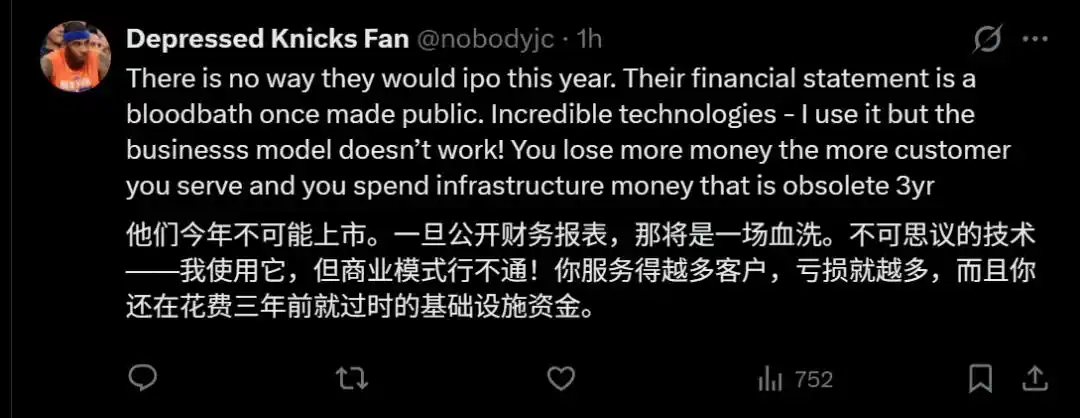
As the news broke, netizens also raised new doubts about whether OpenAI can successfully go public this year:

Sam's tensions with everyone else on Earth are intensifying.
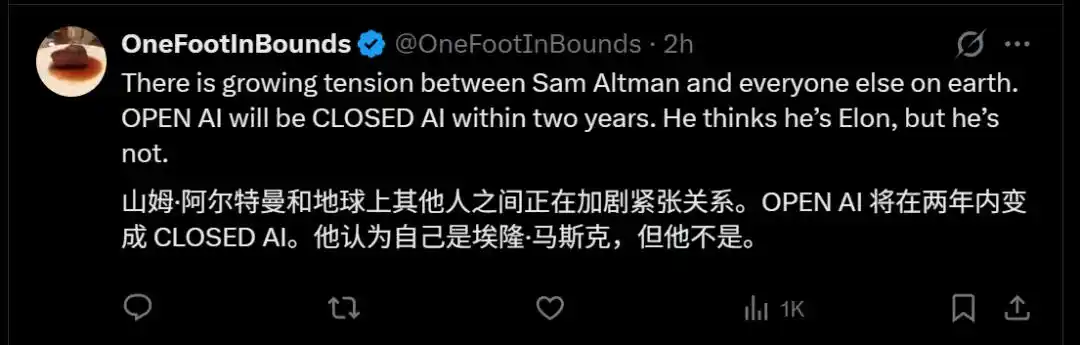
They can't go public this year... After trying it, the business model doesn't seem viable.
So, what exactly is happening at OpenAI?

IPO Imminent, Leadership in Turmoil

The first thing happening at OpenAI is quite intriguing:

Right at the critical juncture of securing a record $122 billion in funding and sprinting towards an IPO, several key executives are either changing roles, taking leave, or leaving.
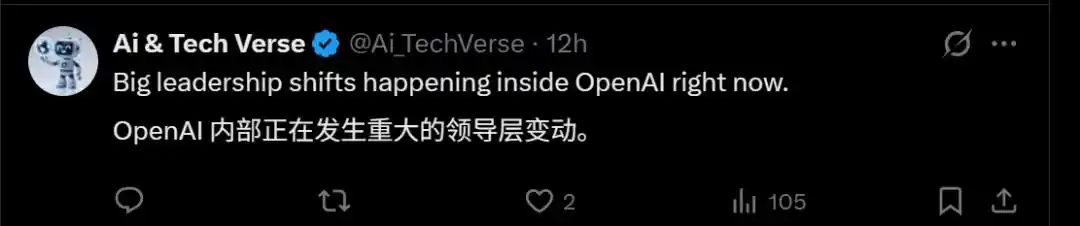
According to Bloomberg, its long-time Chief Operating Officer Brad Lightcap will transition to a new role, leading "special projects" and reporting directly to CEO Altman.

Although the "special projects" are not explicitly defined, one of the responsibilities is related to OpenAI's strategic shift towards the B2B market—

overseeing the formation of joint ventures with private equity firms to sell software to enterprises.

On the surface, Brad Lightcap seems to have been given a significant responsibility, but in terms of title, he has indeed lost his identity as "OpenAI's chief steward."

As a result, netizens unanimously think Brad Lightcap has been "kicked upstairs."

The person replacing Brad Lightcap as COO is Denise Dresser, who was appointed as Chief Revenue Officer at OpenAI just late last year.

Before joining OpenAI, Denise Dresser was the CEO of the globally renowned collaboration platform Slack, particularly skilled in commercial expansion.

But after only three months in the role, she was pushed into the COO position, so this adjustment doesn’t look like a "routine handover" at all.

Taking a step back, even if the changes involving the first two executives are explained as part of OpenAI's normal strategic adjustments—

after all, the overall direction is for commercial considerations.

But the fact that two other executives, one taking leave and the other leaving, and happening around the same time, seems to hint at something else?

One of them on leave is Fidji Simo, who joined OpenAI as Chief App Officer last May.

It's worth noting that she was a major hire for OpenAI—she spent 10 years at Facebook (now Meta), directly responsible for the entire Facebook App, later moved to Instacart as CEO, and took the company public during a overall downturn in tech stocks.

And now, she stated in an internal memo to employees that due to "particularly poor health over the past month," she has decided to take several weeks off for recovery.

During her leave, OpenAI President Greg Brockman will temporarily take over her role, overseeing the product department.

The one leaving is Chief Marketing Officer Kate Rouch, also citing health reasons—leaving to focus on cancer treatment.

She also specifically mentioned that if her condition allows, she might return in a limited capacity later.

OpenAI is currently looking for a new Chief Marketing Officer.

Seeing this, some might ask: Aren't health reasons normal?

Yes, they are. But precisely because it's so normal, so faultless, it makes people even more suspicious.
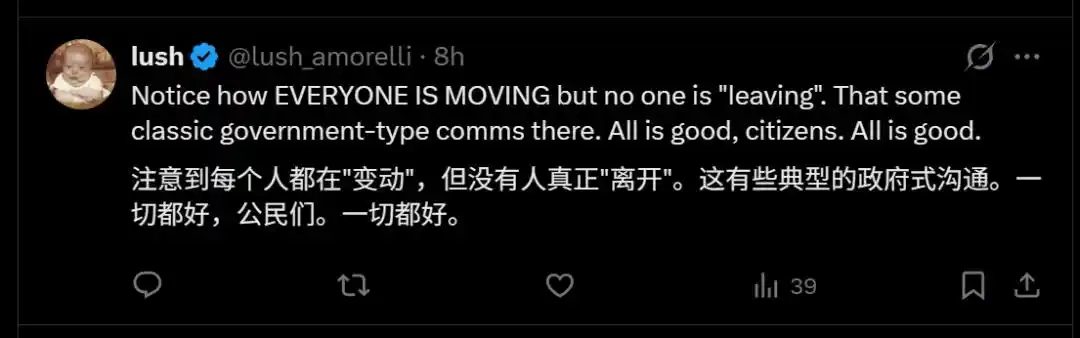
Not to mention, doesn't this seem like a scene from "The Return of the Empress"?

The specific events are familiar to everyone, so we won't elaborate here, just one point—at that time, many people (including the current president of OpenAI) also expressed their stance or temporarily laid low using leave as a reason.

So, on the surface, everything has a reasonable explanation—role change is strategic, leave is for health, and departure is understandable.

But when the timelines overlap, it's hard not to think one step further:

Why exactly at this critical juncture of the IPO sprint?

After all, for a company heading towards the capital market, the most important things are stability and predictability, especially the continuity of the core management team.

And now, OpenAI is collectively staging such a drama.

Altman and CFO Diverge on IPO Timeline

What's worse, there are signs that the relationship between the CEO and CFO, these two key roles, is also quite delicate.

They have major disagreements on the IPO timeline:

Altman seeks "speed", hoping to go public in Q4 of this year before Anthropic (Company A was rumored to be planning an IPO as early as October).

To go public faster, he also publicly承诺 (committed - note: the original Chinese word 承诺 (chéngnuò) means promise/commit) to invest $600 billion over the next five years (anyway, putting the word out first).

And it's important to know that OpenAI itself once estimated that it would burn through over $200 billion before generating positive cash flow.

CFO Sarah Friar seeks "stability", believing the amount of internal preparation work needed for the IPO is enormous, and targeting this year is somewhat aggressive.

As a financial expert who previously took Square public, she expressed her concerns privately to colleagues earlier this year.

Especially since the IPO is backed by Altman's "$600 billion" promise, she is uncertain whether such massive investments in AI servers will truly be needed in the coming years, and whether the slowing revenue growth can support these commitments.
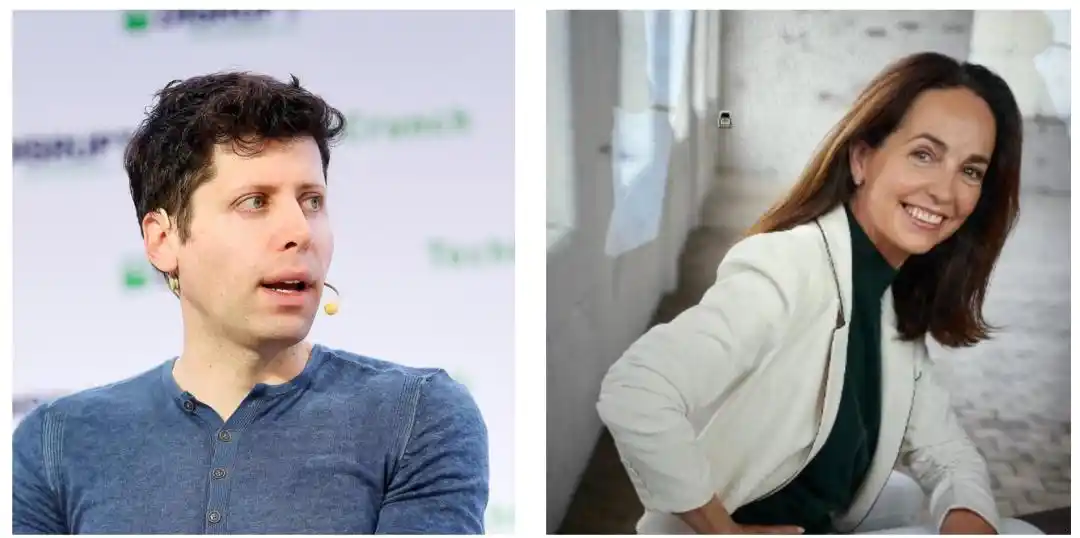
This strategic divergence has also cast a shadow over their working relationship.

It is reported that although the two appeared harmonious at a private dinner Altman hosted for investors earlier this year, those around them have vaguely sensed:

This is only superficial; their relationship has become strained.

A clear example is that in recent months, when Altman was discussing server expenses with senior executives of a top investment firm, Sarah Friar was not included.

If she had never participated before, it might be different, but the key is that Sarah Friar was present at previous events discussing the same topic.

So even other attendees felt that Altman might indeed have done it on purpose.

And even more unusually, since last August, Sarah Friar's reporting line was adjusted—

no longer reporting directly to CEO Altman, but to the head of the applications business.

In the eyes of outsiders, "this is a rare organizational arrangement in any large company."

At this point, the "discord" between the two has gradually come to light.

So the question is, is Sarah Friar's concern justified? Especially regarding Altman's承诺 (commitment) of $600 billion.

The answer is: It really is.

According to public information, this $600 billion is primarily for computing power expenditure—OpenAI has signed long-term server leasing agreements with Oracle, Microsoft, and Amazon totaling approximately $665 billion, valid until 2030.

The key is that this is not a "pay-as-you-go" contract; in some cases, OpenAI must commit billions of dollars years in advance to fund partners building custom data centers for it.

This dramatically increases the spending pressure on OpenAI.

But on the other end, OpenAI's revenue is not proportional to its burn rate—

Although it just secured $122 billion in new funding from NVIDIA, Amazon, etc., they privately warned investors in February that its cash consumption by 2030 would be more than double previous forecasts.

Moreover, due to increasingly fierce competition from Anthropic and Google Gemini, its gross profit margin on revenue already fell short of expectations last year.

Under multiple pressures, the CEO of old rival Company A also jumped in to subtly mock—

If one misjudges the speed of technology-driven revenue growth, locking in massive data center investments years in advance would be "disastrous," even leading to bankruptcy.

Although the OpenAI president later countered this comment in a podcast, the financial pressure on OpenAI has indeed reached a point that cannot be ignored.

One More Thing

It is worth mentioning that CEOs and CFOs "clashing" before an IPO is not uncommon.

A long time ago, Airbnb had a similar situation, but the outcome then was—

The CFO left, the leadership turmoil triggered a wave of executive departures, but the CEO still successfully took Airbnb public.

(P.S.: The Airbnb CEO is also an informal advisor to Altman, and the two have a good personal relationship).

It remains to be seen how this will end.

Reference links:[1]https://x.com/WesRoth/status/2040776475214012560[2]https://www.theinformation.com/articles/openai-ceo-cfo-diverge-ipo-timing[3]https://x.com/i/status/2040894109817393240

This article is from the WeChat public account "QbitAI", author: Focus on Frontier Technology

Связанные с этим вопросы

QWhat major leadership changes are happening at OpenAI ahead of its planned IPO?

AOpenAI is undergoing significant leadership changes, including COO Brad Lightcap transitioning to a special projects role, Chief Revenue Officer Denise Dresser being promoted to COO, Chief Application Officer Fidji Simo taking a leave of absence, and Chief Marketing Officer Kate Rouch resigning.

QWhat is the reported disagreement between CEO Sam Altman and CFO Sarah Friar?

ACEO Sam Altman wants to pursue a fast IPO in Q4 of this year to beat competitor Anthropic to market, while CFO Sarah Friar advocates for a more cautious approach, believing the internal preparation workload is too large for a 2024 target and expressing concerns about the financial commitments.

QWhat financial pressure is OpenAI facing according to the article?

AOpenAI faces immense financial pressure from long-term server leasing agreements totaling approximately $665 billion with partners like Oracle, Microsoft, and Amazon, which require significant upfront capital commitments. This is compounded by revenue that is not keeping pace with the burn rate and increased competition.

QWhy are the timing and nature of the executive changes seen as suspicious?

AThe changes are seen as suspicious because they are concentrated at a critical juncture just before a planned IPO, a period when stability and predictability in the core management team are paramount for investor confidence. The coincidental timing of multiple high-profile departures and role changes, all with seemingly 'normal' explanations, has led to speculation about internal turmoil.

QWhat precedent does the article mention for a CEO and CFO disagreeing before an IPO?

AThe article mentions that a similar situation occurred at Airbnb, where the CFO departed and executive turmoil led to other高管离职s, but the CEO ultimately still successfully took the company public. It also notes that Airbnb's CEO is an informal advisor to Sam Altman.

Похожее

Near Returns to the AI Stage: Transformation into a Public Chain Due to 'Payroll Difficulties,' Agent and Privacy Emerge as New Growth Narratives

NEAR Returns to AI Origins: From Payroll Struggles to Blockchain, Now Focusing on AI Agents and Privacy NEAR Protocol's journey began not with grand blockchain ambitions, but from a practical hurdle: its AI startup founders, including Transformer paper co-author Illia Polosukhin, couldn't efficiently pay international developers in 2017. This led them to pivot and build a high-performance, scalable blockchain. After years navigating various crypto narratives like sharding and cross-chain interoperability, NEAR is now leveraging its AI roots to re-enter the AI arena. A key driver is its "NEAR Intents" layer, which abstracts complex cross-chain transactions. Users simply state their goal (e.g., swap BTC for ETH), and a solver network finds the optimal route. This system has processed over $20B in cross-chain volume, generating significant fee revenue. A major growth area is private transactions via "Confidential Intents/Swaps," which hide trade details until settlement to protect against MEV and front-running. Remarkably, private swaps recently accounted for over 40% of NEAR's transaction volume, highlighting strong demand but also potential regulatory scrutiny. With its AI-founder pedigree, NEAR is positioning itself at the intersection of blockchain, AI agents, and privacy, aiming to become infrastructure for the emerging agent economy while navigating the challenges of its rapid adoption.

marsbit8 мин. назад

Near Returns to the AI Stage: Transformation into a Public Chain Due to 'Payroll Difficulties,' Agent and Privacy Emerge as New Growth Narratives

marsbit8 мин. назад

From Ethereum to AI's 'CROPS': What Exactly is This Set of 'Slow Variables' That Vitalik Repeatedly Emphasizes?

In recent discussions, Vitalik Buterin has frequently emphasized the concept of "CROPS," a framework defining core values for Ethereum's development. CROPS stands for Censorship Resistance, Capture Resistance, Open Source, Privacy, and Security. Initially outlined in the Ethereum Foundation's "EF Mandate," it represents a commitment to user sovereignty, ensuring that the network resists external control, remains open, protects privacy, and prioritizes security. The relevance of CROPS extends beyond Ethereum's foundational principles, becoming crucial in the context of AI integration. As AI agents begin handling wallet operations and automated transactions, the risk increases that users may cede control over their digital assets, privacy, and intentions to centralized AI service providers. A "CROPS AI" would therefore emphasize local execution where possible, privacy-preserving remote model calls (e.g., using zero-knowledge proofs), and transparent, verifiable processes to maintain user agency. Vitalik highlights a significant convergence between "CROPS Ethereum access layer" and "CROPS AI." Both address the same fundamental challenge: how users can access powerful services—be it blockchain data via RPCs or AI models—without exposing sensitive information or relinquishing ultimate control. This intersection points toward a future digital entry point that is more private, secure, and user-controlled. Ultimately, CROPS is not merely an abstract ideal but a practical guidepost. It steers development—from protocol resilience and wallet design to AI agent safety—towards a future where users retain self-sovereignty even as digital systems grow more complex and powerful. In an era of accelerating AI adoption, these "slow variables" of censorship resistance, openness, privacy, and security may define Ethereum's enduring value.

marsbit18 мин. назад

From Ethereum to AI's 'CROPS': What Exactly is This Set of 'Slow Variables' That Vitalik Repeatedly Emphasizes?

marsbit18 мин. назад

Silicon Valley 'Startup Guru' Steve Hoffman: Web3 + AI Could Be a Trap

Silicon Valley investor and "Godfather of Startups" Steve Hoffman warns that combining Web3 with AI is likely a trap, not a promising venture. In an interview, Hoffman argues that while AI is a foundational technology touching all industries, Web3 adds complexity, friction, and regulatory risk without solving mainstream consumer or business needs. He advises founders to focus on deep, specialized applications where startups can out-iterate giants, rather than on generic features easily replicated by large tech companies. Hoffman observes that Silicon Valley will lead foundational AI research, while China excels at rapid, large-scale application and commercialization, particularly in robotics. He stresses that AI-driven autonomous agents capable of collaborative, multi-step tasks are 2-4 years away, which will cause significant job displacement. The solution is not to slow AI but to redesign business models around human-AI collaboration and reform social systems like education and retraining. For startups, Hoffman recommends focusing on vertical, expertise-heavy domains to build defensibility. He sees major opportunities in AI fraud detection and cybersecurity. Key founder mindsets include systemic thinking over feature-focus, relentless customer centricity, building adaptive teams, and deeply understanding AI's capabilities and limits. Hoffman is also leading a non-profit initiative to establish university centers aimed at training future leaders in responsible, human-value-aligned AI innovation.

marsbit1 ч. назад

Silicon Valley 'Startup Guru' Steve Hoffman: Web3 + AI Could Be a Trap

marsbit1 ч. назад

Token Inefficient, Economy Tokenless

The article "Tokens Aren't Economical, Economics Aren't Tokenized" analyzes a pivotal shift in the AI industry from a technology-driven narrative to one dominated by capital efficiency. It highlights two concurrent trends: a severe capital shortage due to the exorbitant and recurring costs of compute (e.g., OpenAI's high burn rate) and a wave of corporate spin-offs where major tech companies are separating their AI units (like Kuaishou's Kling and Baidu's Kunlunxin). The core argument is that AI's "anti-internet" business model, where user growth increases costs rather than profits, has created a disconnect between high valuations and actual cash flow. Spin-offs address this by allowing AI assets to be valued independently. Within a parent company, they are seen as cost centers, but as standalone entities, they are priced based on their growth potential and scarcity in the primary market, leading to massive valuation premiums (e.g., Kling's estimated value tripling post-spin-off). The industry is at an inflection point, moving from "model worship" to "value realization." The competition is evolving from a pure compute (GPU) race to a broader focus on systemic efficiency and full-stack engineering (involving CPUs and orchestration) to achieve viable commercialization. The year 2026 is framed as a critical moment where the industry must definitively answer how to economically translate AI capability into tangible business value, reshaping the sector's future power structure.

marsbit1 ч. назад

Token Inefficient, Economy Tokenless

marsbit1 ч. назад

Торговля

Спот
Фьючерсы
活动图片