Данный отчет подготовлен Tiger Research. В 2025 году правительство США проводит политику поддержки криптовалют, и ее цель проста и понятна: заставить существующую криптовалютную отрасль функционировать по тем же правилам, что и традиционный финансовый сектор.
Ключевые выводы
-
США стремятся интегрировать криптовалюты в свою существующую финансовую инфраструктуру, а не просто поглотить всю отрасль.
-
За последний год Конгресс, Комиссия по ценным бумагам и биржам (SEC) и Комиссия по торговле товарными фьючерсами (CFTC) путем введения и корректировки правил постепенно включают криптовалюты в эту систему.
-
Несмотря на напряженность между регуляторами, США совершенствуют нормативную базу, одновременно поддерживая рост отрасли.
1. Поглощение США криптовалютной индустрии
После переизбрания президента Трампа администрация представила ряд радикальных про-криптовалютных политик. Это знаменует собой резкий отход от прежней позиции, когда криптовалютная отрасль в основном рассматривалась как объект регулирования и контроля. США вступили в ранее немыслимую фазу, практически в одностороннем порядке поглощая криптоиндустрию своей существующей системой.
Смена позиций SEC и CFTC, а также выход традиционных финансовых учреждений на криптовалютный рынок свидетельствуют о широких структурных изменениях.
Особенно примечательно, что все это произошло всего через год после переизбрания президента Трампа. Какие конкретные изменения произошли к настоящему времени на нормативно-правовом уровне?
2. Год перемен в позиции США по криптовалютам
В 2025 году с приходом к власти администрации Трампа политика США в отношении криптовалют достигла переломного момента. Исполнительная власть, Конгресс и регуляторы действовали согласованно, сосредоточившись на снижении неопределенности рынка и интеграции криптовалют в существующую финансовую инфраструктуру.
2.1. Комиссия по ценным бумагам и биржам (SEC)
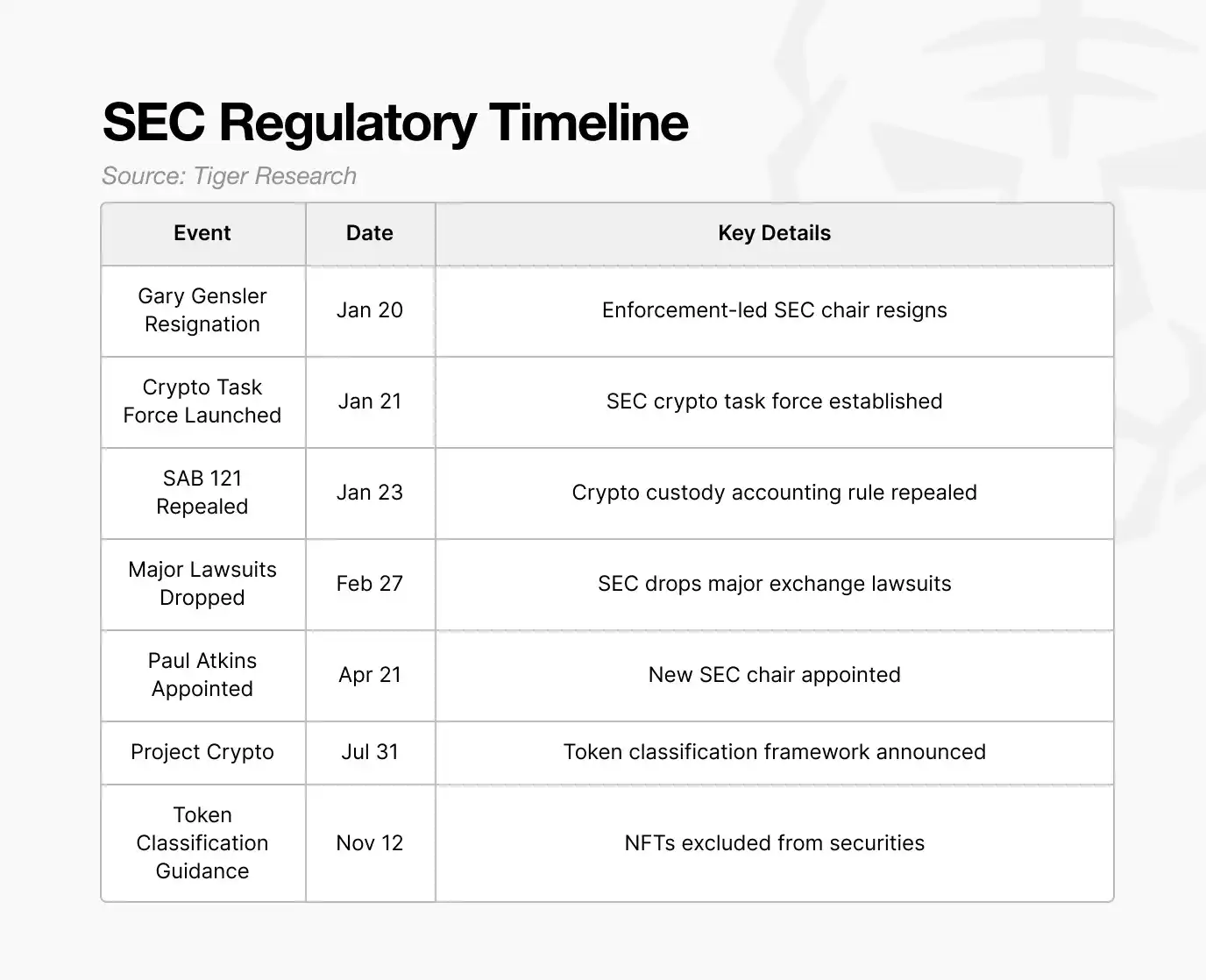
Ранее SEC в основном полагалась на правоприменительные меры в отношении деятельности, связанной с криптовалютами. В громких делах, касающихся Ripple, Coinbase, Binance и стейкинговых услуг Kraken, SEC подавала иски, не предоставив четких критериев относительно правового статуса токенов или того, какая деятельность разрешена, часто основывая свои действия на последующем толковании. Это заставляло криптовалютные компании тратить больше усилий на управление регуляторными рисками, а не на развитие бизнеса.
Эта позиция начала меняться после ухода с поста председателя Гэри Генслера, который придерживался консервативных взглядов на криптоиндустрию. Под руководством Пола Аткинса SEC перешла к более открытой политике, начав создавать базовые правила, направленные на включение криптоиндустрии в нормативные рамки, а не только на регулирование через судебные разбирательства.
Ключевым примером является анонс «криптопроекта». Через этот проект SEC обозначила свое намерение: установить четкие стандарты для определения того, какие токены являются ценными бумагами, а какие нет. Этот некогда неопределившийся регулятор начинает перестраивать себя в более инклюзивный орган.
2.2. Комиссия по торговле товарными фьючерсами (CFTC)
Источник: Tiger Research
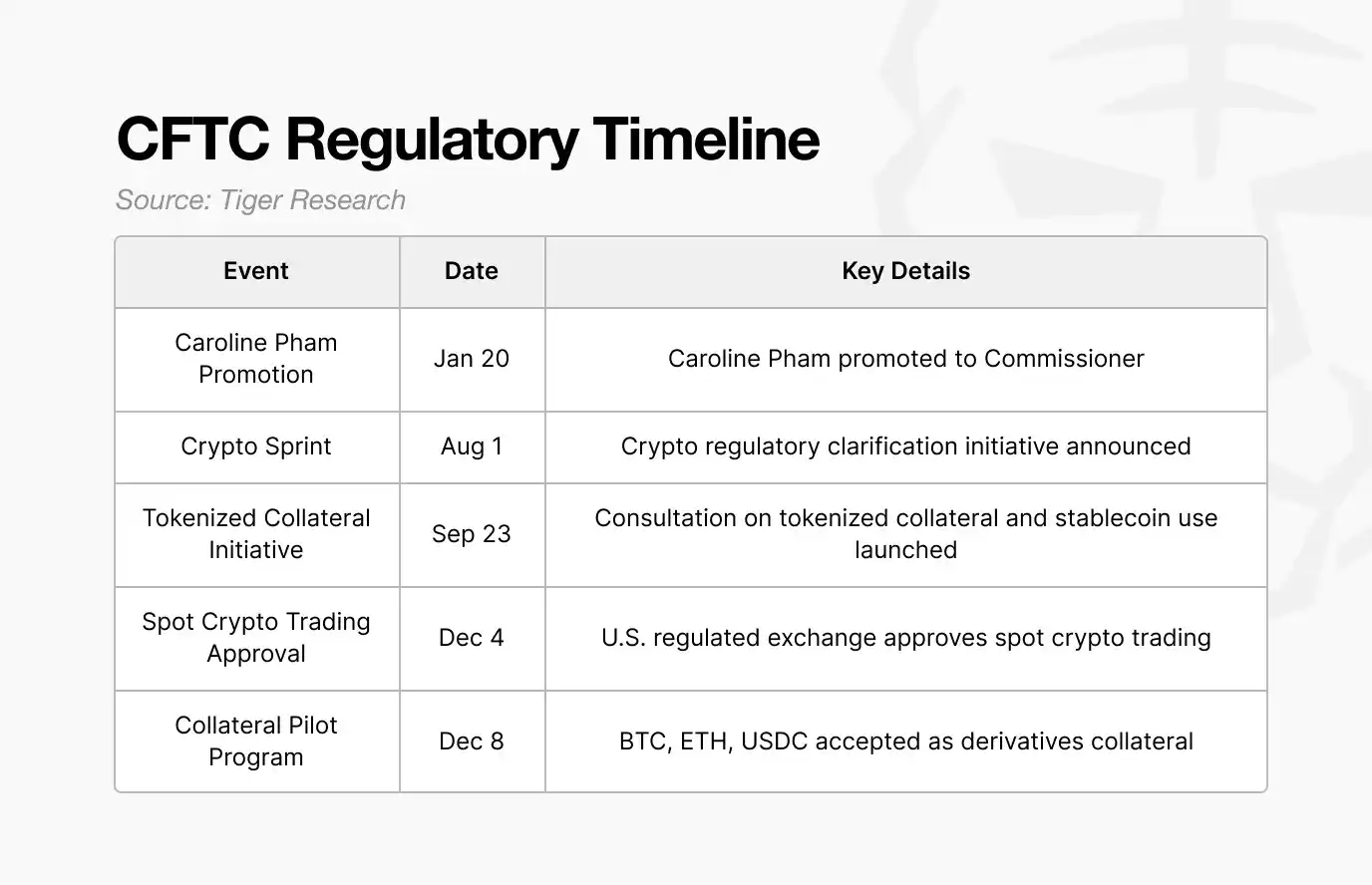
Ранее вовлеченность CFTC в криптовалюты в значительной степени ограничивалась регулированием рынка деривативов. Однако в этом году она заняла более активную позицию, официально признав биткоин и эфириум товарами и поддержав их использование традиционными институтами.
«Пилотная программа цифрового залогового обеспечения» является ключевой инициативой. В рамках этой программы биткоин, эфириум и USDC были одобрены в качестве залога для сделок с деривативами. CFTC применила коэффициенты дисконтирования и стандарты управления рисками, обращаясь с этими активами так же, как и с традиционным залоговым обеспечением.
Это изменение показывает, что CFTC больше не рассматривает криптоактивы исключительно как спекулятивные инструменты, а начинает признавать их стабильными залоговыми активами, сопоставимыми с традиционными финансовыми активами.
2.3. Валютное контролирующее управление (OCC)
Источник: Tiger Research
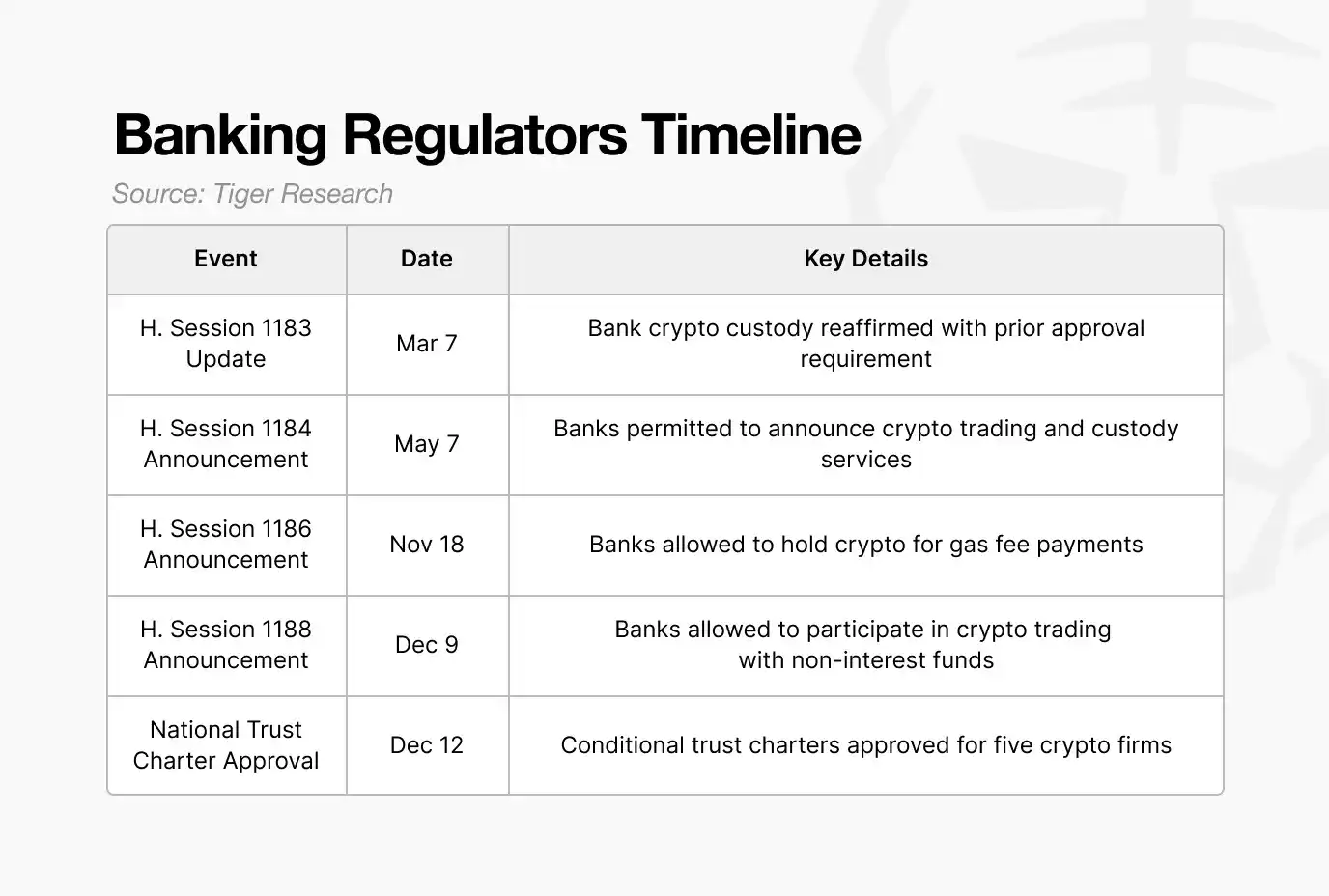
Ранее OCC дистанцировалось от криптовалютной индустрии. Криптовалютным компаниям приходилось получать лицензии в каждом штате, им было трудно войти в федеральную банковскую систему, их expansion был ограничен, связь с традиционной финансовой системой была структурно затруднена, и поэтому они в основном могли работать только вне регулируемой системы.
Сейчас этот подход изменился. OCC выбрало путь включения криптовалютных компаний в существующие банковские нормативные рамки, а не их исключения из финансовой системы. Оно выпустило серию интерпретирующих писем (официальных документов, разъясняющих, разрешена ли конкретная финансовая деятельность), постепенно расширяя разрешенный спектр деятельности, включая хранение криптоактивов, торговлю и даже оплату банком комиссий за сетевые транзакции.
Эта серия изменений достигла кульминации в декабре: OCC условно одобрило национальные трастовые банковские уставы для таких крупных компаний, как Circle и Ripple. Этот шаг имеет большое значение, поскольку он предоставляет этим криптокомпаниям статус, равный статусу традиционных финансовых институтов. Под единым федеральным надзором они могут работать по всей стране, а переводы, которые раньше требовали посредничества банков, теперь могут обрабатываться напрямую, как в традиционных банках.
2.4. Законодательство и исполнительные приказы
Источник: Tiger Research
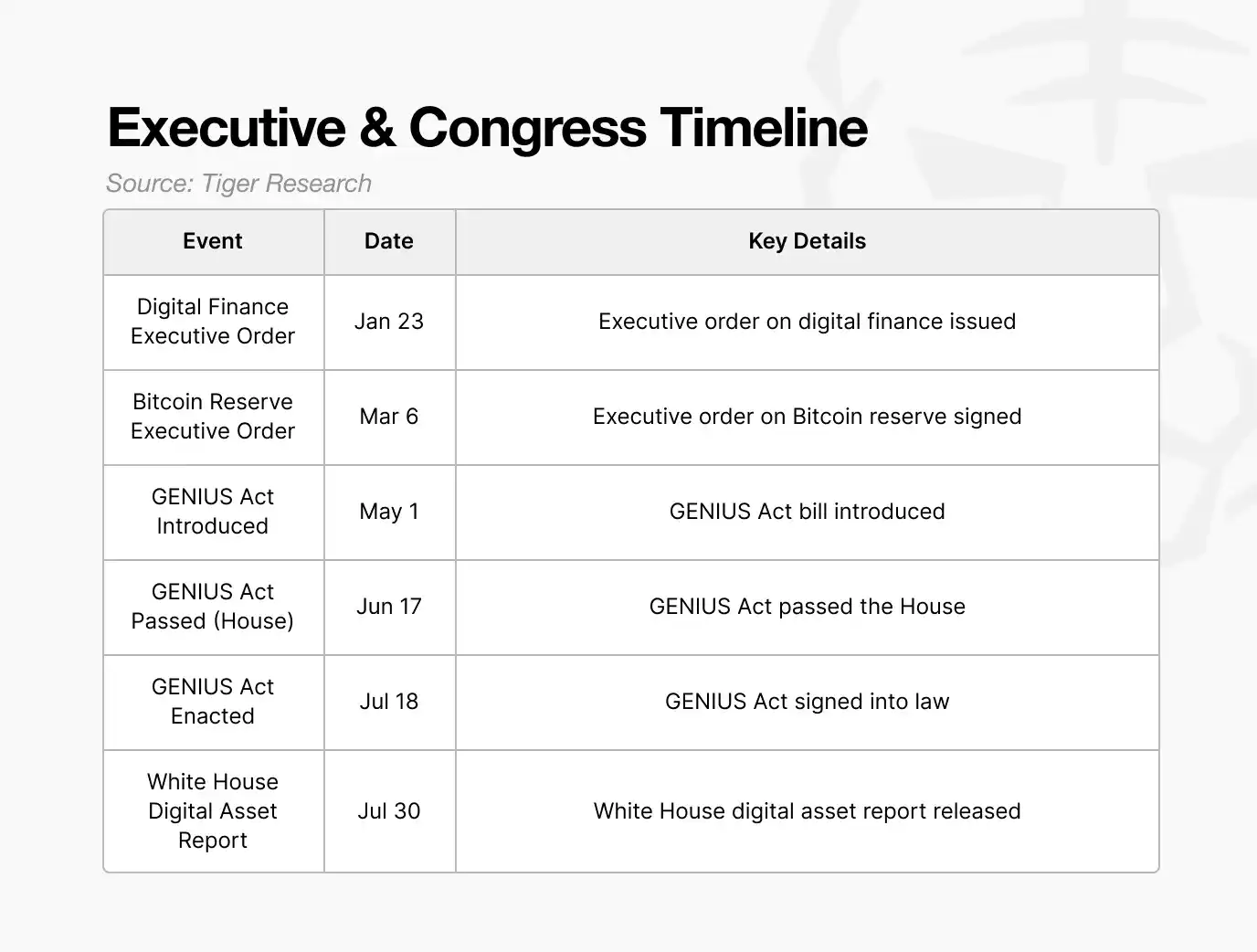
Ранее, хотя США с 2022 года начали разрабатывать законодательство о стейблкоинах, неоднократные задержки привели к появлению регуляторного вакуума на рынке. Отсутствовали четкие стандарты в отношении состава резервов, регуляторных полномочий, требований к эмитентам и т.д. Инвесторы не могли надежно проверить, держат ли эмитенты достаточные резервы, что вызывало опасения по поводу прозрачности резервов некоторых эмитентов.
Закон «GENIUS» решает эти проблемы, четко определяя требования к эмитентам стейблкоинов и стандарты резервов. Он требует, чтобы эмитенты держали резервы, эквивалентные 100% выпуска, запрещает репо резервных активов и объединяет регуляторные полномочия в руках федеральных финансовых регуляторов.
Таким образом, стейблкоины стали цифровыми долларами, обладающими гарантированной платежеспособностью и получившими юридическое признание.
3. Направление задано: конкуренция и сдержки并存ствуют
За последний год направление криптовалютной политики США стало очевидным: интеграция криптоиндустрии в正规льную финансовую систему. Однако этот процесс не является единообразным и бесконфликтным.
Внутри США по-прежнему существуют разногласия. Споры вокруг сервиса микширования приватности Tornado Cash являются ярким примером: исполнительная власть активно применяет правоприменение, чтобы блокировать потоки незаконных средств, в то время как председатель SEC публично предупреждает о недопустимости чрезмерного подавления приватности. Это показывает, что внутри правительства США нет полного единства в понимании криптовалют.
Но эти разногласия не равносильны нестабильности политики, они скорее являются inherent характеристикой американской системы принятия решений. Учреждения с разными обязанностями интерпретируют проблемы со своей точки зрения, иногда публично выражая несогласие, двигаясь вперед через сдержки и убеждение. Напряжение между строгим правоприменением и защитой инноваций может создавать краткосрочные трения, но в долгосрочной перспективе это способствует тому, что регуляторные стандарты становятся все более конкретными и точными.
Ключевой момент заключается в том, что это напряжение не блокирует процесс. Даже в дебатах США продолжают продвигаться по нескольким направлениям параллельно: разработка правил SEC, интеграция инфраструктуры CFTC, институциональное поглощение OCC и установление стандартов через законодательство Конгресса. Оно не ждет полного консенсуса, а позволяет конкуренции и координации идти hand in hand, continuously продвигая систему вперед.
В конечном счете, США не пошли ни по пути полного laissez-faire в отношении криптовалют, ни по пути их подавления, а одновременно перестроили регулирование, лидерство и рыночную инфраструктуру. Преобразуя внутренние дебаты и напряженность в движущую силу, США выбрали стратегию, направленную на привлечение центра глобальной криптовалютной индустрии к себе.
Прошедший год стал ключевым именно потому, что это направление вышло за рамки заявлений и реально преобразовалось в конкретную политику и исполнение.





















