On the Eve of Fed Policy: The Dual Test of "Trillion-Dollar Tariff Ruling" and "Non-Farm Payroll Report"

marsbitОпубликовано 2026-01-09Обновлено 2026-01-09

Введение

Key events this week are set to reshape U.S. markets, with major implications for stocks, bonds, and metals. The Supreme Court may rule on the legality of Trump-era tariffs, potentially requiring refunds of up to $133 billion. A ruling against tariffs could boost S&P 500 profits but worsen the deficit, complicating Fed policy. Separately, the U.S. may decide on metals tariffs under Section 232 by January 10, affecting silver, platinum, and palladium. Meanwhile, the Bloomberg Commodity Index rebalancing is forcing significant sell-offs in gold and silver, adding volatility. Finally, the December nonfarm payrolls report on January 9 will be a critical data point for the Fed’s upcoming policy decision. Investors should brace for heightened market swings.

Written by: Wall Street Insights

This weekend is bound to be eventful.

The market is holding its breath for a true "major test." From the Supreme Court's "trillion-dollar tariff ruling" to the "tariff stick" targeting metals, and the "forced selling" by passive funds, the market is in the midst of multiple storm eyes this week.

The outcomes of these three key events, erupting in quick succession, will profoundly reshape market trends and directly impact the pricing logic of U.S. stocks, U.S. bonds, and precious metals markets.

Additionally, at 21:30 Beijing time on January 9 (Friday), the U.S. Bureau of Labor Statistics (BLS) will release the December non-farm payroll report.

After weeks of data vacuum caused by the government shutdown, this report will serve as a "reliable reading" for the economy's health and the most decisive reference before the Fed's January policy meeting, directly influencing its choice between "standing pat" or "continuing rate cuts."

At this "major test" juncture, fastening your seatbelt and guarding against volatility risks might be the best strategy.

Below, we break down these heavyweight changes one by one.

01 1,000 Companies "Besiege" the White House: Will the Trillion-Dollar Tariffs Be Refunded?

An unprecedented legal "siege" is underway in Washington.

According to the latest statistics, over 1,000 companies have officially filed lawsuits attempting to overturn the current tariff policies and demanding refunds totaling up to a hundred billion dollars in tariffs.

This includes listed giants like Costco and Goodyear Tire & Rubber Co. Dozens of entities joined the fray just in the first few days of 2026.

The focus of this lawsuit is the final ruling by the U.S. Supreme Court on the legality of the comprehensive tariff plan introduced by Trump.

According to CCTV News, the Supreme Court has set this Friday (U.S. Eastern Time) as the opinion release day. Although it is not yet confirmed whether it includes the tariff case, the market widely expects the ruling to be announced as early as this week.

What happens if the court rules the tariffs illegal?

  • Bullish for U.S. Stocks: Wells Fargo chief equity strategist Ohsung Kwon estimates that if tariffs are overturned, the EBIT of S&P 500 component companies in 2026 could increase by about 2.4% compared to last year. Canceling tariffs would directly improve corporate profits, benefiting the stock market.
  • Bearish for U.S. Bonds: The flip side of the coin is that canceling tariffs would削弱 an important source of government revenue, exacerbating federal deficit concerns and potentially triggering a sell-off in U.S. bonds.
  • Policy Complication: If refunds form additional economic stimulus, the Fed's rate-cutting path will become more complex.

Even if the Supreme Court rules it illegal, the specific refund process (involving approximately $133 billion) may still need to be handled by lower courts, and the White House might invoke other laws to re-impose restrictions, meaning policy uncertainty will persist long-term.

02 Critical Minerals Tariff Countdown: Silver, Platinum Face "Nerve-Wracking Moment"

Besides the comprehensive tariff case, the results of the U.S. "Section 232" investigation on critical minerals are expected to be announced this Saturday (January 10). This decision directly affects the fate of Comex silver and platinum group metals.

The Citi research team provided a detailed scenario analysis:

If tariffs are imposed: The market will have an implementation window of about 15 days, triggering a short-term "rush to ship to the U.S." behavior. This will push up domestic U.S. benchmark pricing and the Exchange for Physical (EFP) premium.

As of January 7, EFP pricing indicates the market expects a platinum tariff of about 12.5%, palladium about 7%, and silver about 5.5%. These implied tariff rates reflect market uncertainty amidst high volatility.
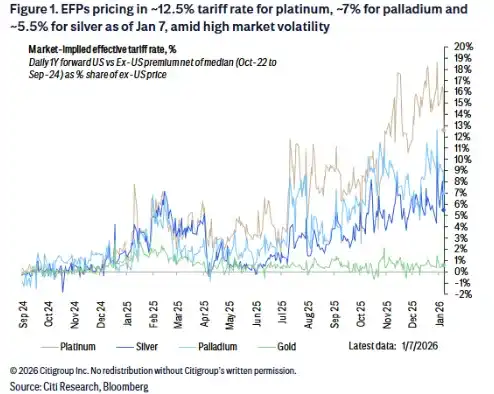
(Expected Tariff Rates from EFP Pricing)

If no tariffs are imposed: Metals will flow out of the U.S. to other global regions, easing pressure on London spot prices and potentially causing a price pullback.

What's the view on specific varieties?

  • Silver (Likely Safe): Due to heavy U.S. reliance on silver imports, Citi believes no tariff is the base case, and even if imposed, Canada and Mexico might be exempt. However, in a "no tariff" scenario, silver prices could face temporary downward pressure.
  • Palladium (High Risk): Most likely to face tariffs (e.g., 50%). If imposed, U.S. domestic import costs would rise sharply, pushing up futures prices.
  • Platinum (A Coin Toss): Whether tariffs will be imposed is currently extremely uncertain.

The investigation results were originally due on October 12, 2025, and President Trump has 90 days to take action, meaning the deadline is around January 10 (this Saturday). However, Citi believes that given the large number of commodities involved, President Trump's action might be indefinitely delayed, in which case silver and PGM prices are likely to continue rising during this period.

03 Technical Sell-off Approaches: The "Bloody Week" of Commodity Index Rebalancing

Beyond fundamental news, a "passive storm" on the funding side has already begun.

The highly anticipated annual weight rebalancing of the Bloomberg Commodity Index (BCOM) started after the close on January 8 and will continue until January 14. To maintain the diversification rule that no single commodity weight exceeds 15%, this adjustment poses significant selling pressure on the precious metals sector.

Gold: Weight reduced from 20.4% to 14.9%, facing selling pressure equivalent to 3% of total holdings.

Silver: Faces particularly huge pressure! Weight will be drastically cut from 9.6% to 3.94%, with expected selling volume reaching up to 9% of total holdings.

This "non-fundamental" selling triggered by index rules forces speculative funds to stay on the sidelines, exacerbating short-term volatility.
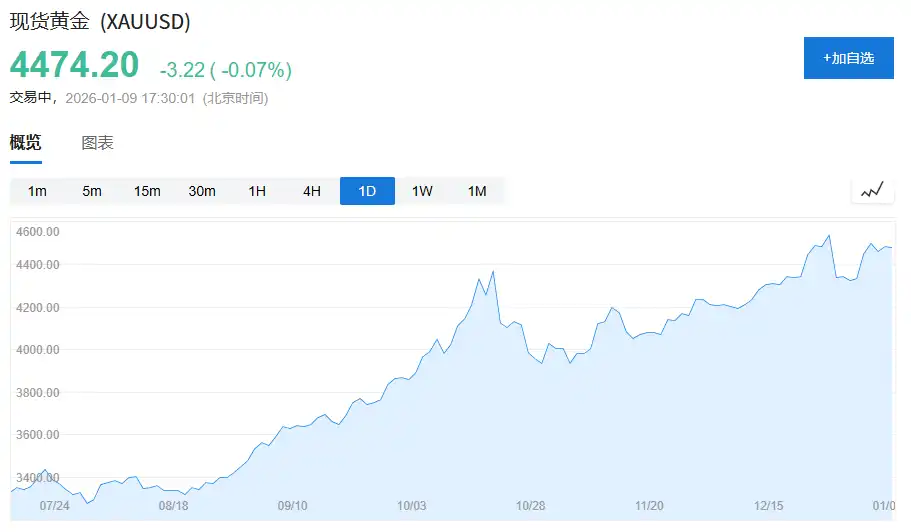
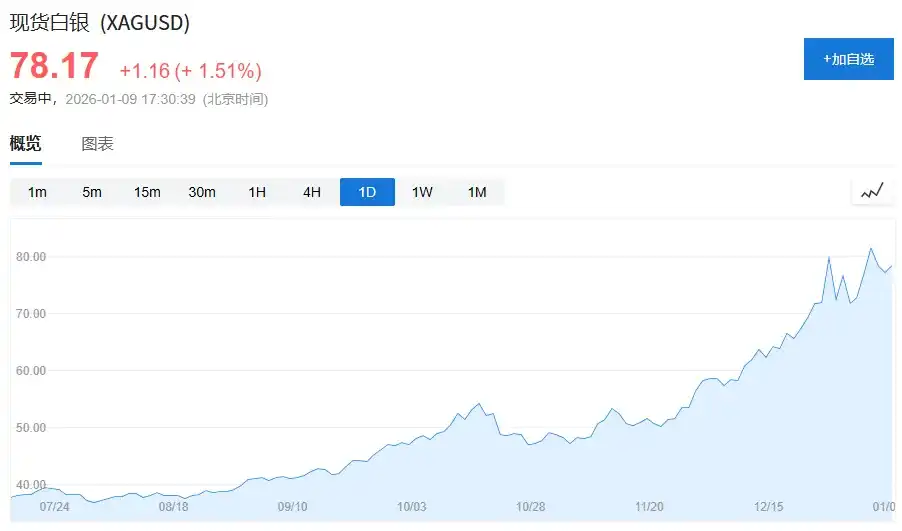
It's worth noting that the decline in gold, silver, and other precious metals comes after a rare epic rally. Spot gold surged over 70% throughout 2025, and silver gains once reached about 150%, entering a frenzy mode from December 23 last year and continuously hitting record highs. Such massive short-term profit accumulation makes the market extremely fragile when facing liquidity events.

Although Goldman Sachs analysts believe that as long as the tight London inventory situation persists, liquidity is the key determinant of prices, in the short term, investors' nerves must be strained in the face of such large-scale passive fund "repositioning."


Связанные с этим вопросы

QWhat are the three major events that are creating a 'storm' for the markets this week, according to the article?

AThe three major events are: 1) The U.S. Supreme Court's ruling on the legality of the 'trillion-dollar tariff' policy. 2) The expected announcement of the 'Section 232' investigation results on critical minerals, which could impose new tariffs. 3) The technical selling pressure from the Bloomberg Commodity Index (BCOM) annual rebalancing.

QWhy is the upcoming U.S. non-farm payrolls report on January 9th considered so crucial for the Federal Reserve?

AThe non-farm payrolls report is considered a 'reliable reading' of the economy's health after a data vacuum caused by the government shutdown. It is the most decisive reference point for the Fed's January policy meeting, directly influencing its choice to either 'stand pat' or 'continue with interest rate cuts'.

QWhat are the potential market impacts if the Supreme Court rules the broad tariff policy is illegal?

AA ruling that the tariffs are illegal could: 1) Boost U.S. stocks (e.g., lift S&P 500 companies' EBIT by ~2.4% by improving corporate profits). 2) Be negative for U.S. Treasuries by reducing a key government revenue source and worsening deficit concerns. 3) Complicate the Fed's rate-cutting path if refunds act as an additional economic stimulus.

QAccording to Citigroup's analysis, which metal is at the highest risk of having new tariffs imposed, and which is least likely?

AAccording to Citigroup: Palladium is at the highest risk, with a high probability of a significant tariff (e.g., 50%) being imposed. Silver is the least likely ('low probability') to see tariffs, as the U.S. heavily relies on imports and any potential tariffs would likely exempt Canada and Mexico.

QWhat is causing the significant technical selling pressure on gold and silver this week?

AThe selling pressure is caused by the annual rebalancing of the Bloomberg Commodity Index (BCOM). To maintain its diversification rule that no single commodity can exceed a 15% weight, the index is forced to sell significant amounts of gold (reducing its weight from 20.4% to 14.9%) and silver (reducing its weight drastically from 9.6% to 3.94%), creating non-fundamental, passive fund-driven selling.

Похожее

SharpLink CEO: How to Understand Ethereum Developers Just Exceeded 1 Million?

SharpLink CEO reflects on the milestone of Ethereum surpassing 1 million historical developers, emphasizing that this figure represents the largest pool of technical talent ever assembled around an open, permissionless blockchain network. While approximately 232,000 developers remain active, the key question for the crypto industry is not which chain is fastest, but where the best builders choose to build long-term. Ethereum's advantage lies in a decade-long accumulation of infrastructure, standards, tools, liquidity, and a cohesive culture, making it the default operating system for programmable finance. This developer base is tackling complex challenges: the Glamsterdam upgrade aims to enhance scalability while preserving core principles; synchronous composability seeks to unify Rollup ecosystems; and significant efforts are underway for post-quantum security. Ethereum's deeper network effects stem from composability and shared standards (like the EVM and Solidity), creating a flywheel of more developers, tools, and liquidity. Three reinforcing strengths cement Ethereum's lead: credible neutrality (secured by ~900k validators), a modular architecture with interconnected Rollups, and a culture that attracts top researchers. The ecosystem is consolidating as the trusted coordination layer for internet-native finance, favored by large institutions valuing security and liquidity. The future of Ethereum is being built by this global community of founders and architects.

链捕手9 мин. назад

SharpLink CEO: How to Understand Ethereum Developers Just Exceeded 1 Million?

链捕手9 мин. назад

A Clod of Chinese Soil Chokes Two Japanese Giants

"Chinese Soil Chokes Japanese Giants" The production of a key electronic specialty gas, tungsten hexafluoride (WF6), vital for manufacturing AI chips, was halted by two leading Japanese producers—Kanto Denka and Central Glass. Their shutdown was not due to a technological failure but a sudden, critical shortage of a raw material they had long taken for granted: ultra-high-purity (6N-grade) tungsten powder, which is almost entirely sourced from China. Following a quiet Chinese export announcement in January 2026, tungsten powder shipments to Japan dropped to zero for months. Despite frantic efforts, Japanese companies found no viable alternative; imported powder was three times more expensive and lacked the required purity. Their existing stockpiles were exhausted by mid-2026. WF6 is essential for depositing tungsten into the microscopic contact holes of High Bandwidth Memory (HBM) chips, which are crucial for advanced processors like those from Nvidia. While Japanese firms had mastered producing ultra-pure WF6 gas, their entire supply chain relied on China's 6N tungsten powder—a dependency now revealed as a fatal vulnerability. China's dominance in this "soil" results from decades of painstaking R&D by companies like Xiamen Tungsten and China Tungsten & Hightech. They overcame immense technical hurdles, such as separating chemically similar molybdenum from tungsten, to achieve mass production of the world's purest tungsten powder. With their primary suppliers gone, Kanto Denka and Central Glass announced a permanent halt to WF6 production starting July 1, 2026. This immediately created a supply crisis for major semiconductor manufacturers like Samsung and SK Hynix, forcing them to urgently seek and certify new Chinese suppliers for WF6 itself. The reversal marks a dramatic shift: China has moved from exporting low-value raw materials to controlling the high-purity foundation of a critical global tech supply chain, upending a long-established industrial hierarchy.

marsbit40 мин. назад

A Clod of Chinese Soil Chokes Two Japanese Giants

marsbit40 мин. назад

Without Tencent, What's Left for Suiyuan?

The article centers on the crucial question posed in the title: what is Seyond Technology really worth if its dominant customer, Tencent, were to stop purchasing its AI chips? As the last of China's "Four AI Chip Dragons" to secure approval for a public listing, Seyond's IPO filing reveals a profound and controversial dependency. In 2025, 74.9% to over 80% of its revenue came from Tencent. The piece argues that this extreme customer concentration is not merely a vulnerability but a strategic outcome of China's AI industry evolution. It contrasts Seyond's path with its peers (Moore Thread, Biren Technology, and MetaX), noting that while others raced to market with ambitious stories, Seyond focused first on securing and delivering for a major client. Its explosive revenue growth—with Q1 2026 up 1474.85% year-on-year—is driven by concentrated orders from Tencent, which itself faces massive, escalating AI compute demands for products like its Yuanbao and Hunyuan models. The relationship is framed as a deliberate, symbiotic cultivation of a supply chain. As both a major shareholder (20.26%) and primary client, Tencent is actively fostering Seyond to build a controllable, stable alternative to NVIDIA, similar to how global tech giants historically nurtured key suppliers. The high switching costs—involving software stacks and deployed systems—create a deep "ecological moat" for Seyond within Tencent's ecosystem. The analysis positions the AI chip landscape in three tiers: NVIDIA as the global leader, Huawei's Ascend as the state-backed player, and commercial firms like Seyond competing for market orders. Seyond is increasingly seen as "Tencent's compute foundation," with its product roadmap closely aligned with the tech giant's needs. The conclusion is that the industry's metric for success is shifting from fundraising and technical specs to real orders, delivery capability, and ecosystem binding. Seyond's value, therefore, lies not just in its chips but in holding a massive, multi-year procurement order from China's largest internet company—a tangible asset arguably more telling than any technical whitepaper in the current climate. The core insight is that for domestic chips, the ultimate challenge isn't just catching up technologically with NVIDIA, but earning the trust, scenarios, and recurring orders from a major anchor client.

marsbit1 ч. назад

Without Tencent, What's Left for Suiyuan?

marsbit1 ч. назад

Торговля

Спот
Фьючерсы
活动图片




