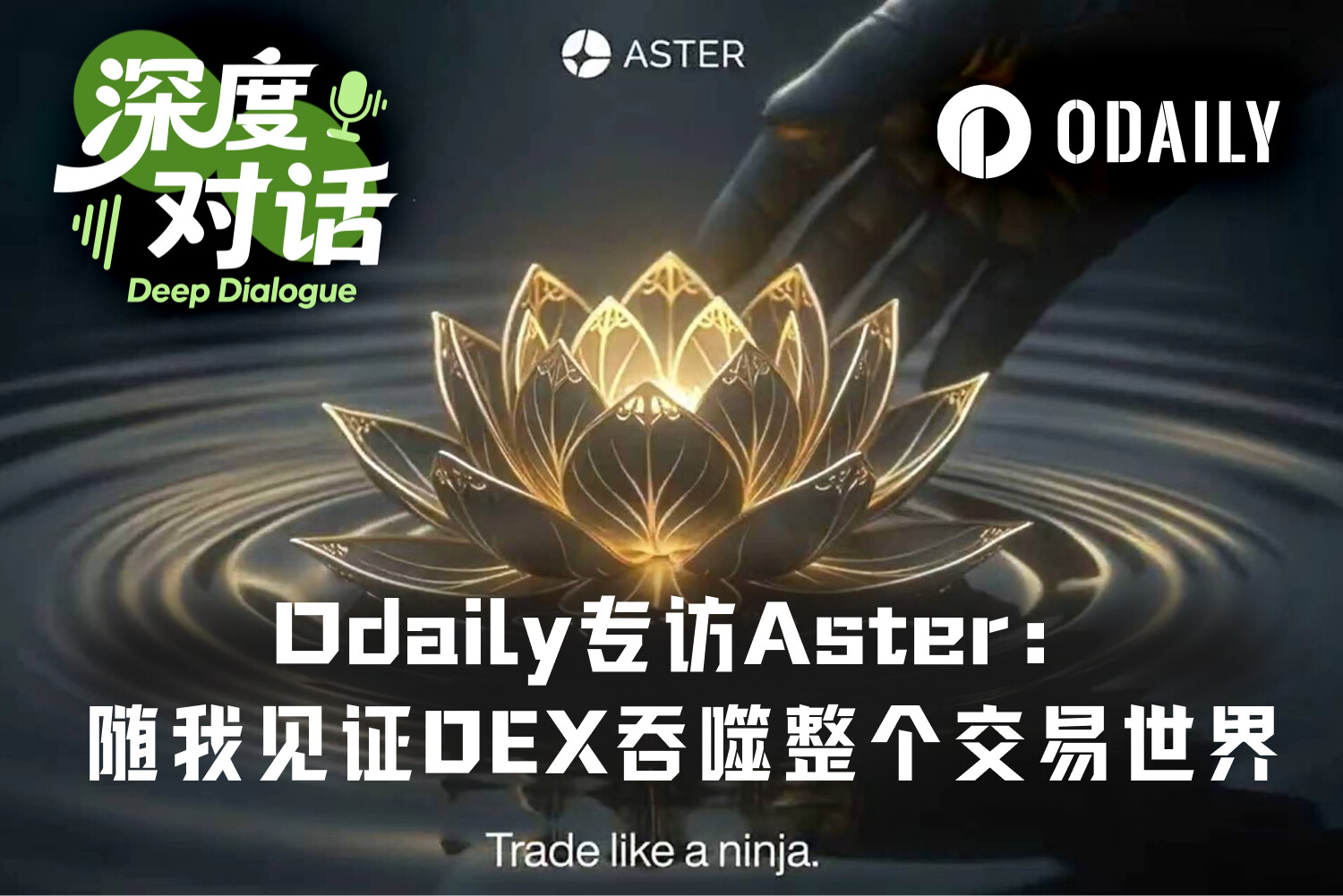
Odaily Interviews Aster: DEX Will Ultimately Devour the Entire Trading World, Optional Privacy is the Key Ladder

Odaily星球日报Опубликовано 2026-03-31Обновлено 2026-03-31

Введение

Odaily Interview with Aster: DEX Will Ultimately Devour the Trading World, Optional Privacy is the Key Ladder Aster has initiated key steps to build institutional-grade private DeFi infrastructure, marked by the launch of its Layer 1 mainnet, Aster Chain, on March 17. The mainnet offers traders fair ordering and optional privacy. This was followed by the launch of its native staking function on March 20. The project has rapidly evolved from an innovative Perp DEX into a complete infrastructure layer, achieving record-breaking trading volumes in late 2025 and a successful TGE. In an interview, CEO Leonard explained their core logic: launching a mainnet *after* securing users and revenue, not with a "cold start." This ensures every step is validated by real market demand. Aster's key differentiator is its unique "optional privacy" value proposition, implemented through a ZK + Stealth Address architecture. This allows for automatic privacy for each transaction while maintaining verifiability. The team believes this feature is a prerequisite for mass adoption and will be a primary driver for institutional use of DEXs, forming the core of their moat. Looking ahead, Aster predicts the DEX landscape will evolve into an oligopoly dominated by a few major players. The project is actively pursuing partnerships with both Web2 and Web3 entities, with significant interest from financial firms looking to build markets or list assets on its chain. For the immediate future, Aster's Q2 fo...

Recently, Aster marked its first anniversary as a new starting point, initiating key steps to build institutional-grade privacy DeFi infrastructure. On March 17, the Aster Chain mainnet officially launched, dedicated to providing traders with fair sequencing and optional privacy trading experiences. Shortly after, on March 20, Aster Chain's native staking feature went live, deeply binding network security with ecosystem growth through a dual reward mechanism.

From repeatedly breaking trading volume records in the second half of 2025, to successfully completing the brand upgrade and TGE, to the current L1 mainnet launch, Aster is rapidly evolving from an innovative Perp DEX into a more complete infrastructure layer.

However, in the current context of L1 oversaturation, cold market sentiment, major macro changes, and severely fragmented attention, is launching an L1 the best timing? What are the differentiated advantages of Aster Chain? And what are the upcoming roadmap plans?

To answer these questions, Odaily Planet Daily specially interviewed Aster CEO Leonard, delving into its key decisions over the past year, insights into industry challenges, and the long-term vision of building "trusted Infrastructure".

I found that the core logic lies in: "First have users and revenue, then launch the mainnet," rather than a "cold start." This ensures that every step Aster takes is grounded in real demand and market validation. Simultaneously, Aster Chain's unique "optional privacy" value proposition will be the source of its moat.

There is much in Aster's story worth pondering for Web3 entrepreneurs. Below, the story will be told in the first person by Aster CEO Leonard, enjoy~

What Did Aster Do Right in the Past Year?

Starting in the second half of 2025, the platform's 24h trading volume kept breaking records, from $1 billion in June to reaching $11 billion in September, feeling the project's rapid development. Also in September, during Aster's TGE, achievements like a 24h trading volume breakthrough of $345 million, 330,000 new wallet addresses, and platform TVL exceeding $1 billion solidified Aster's position in the DEX market. When trading volumes broke records, it made us realize that we entered the right track at the right time.

Alongside the TGE, the brand also successfully transitioned from APX to Aster.

And when we launched the L1 mainnet with truly "optional privacy" functionality, it was a unique product unavailable on the market and a prerequisite for on-chain trading moving towards mass adoption.

How Did We Get Through the Darkest Times?

When we initially underwent the rebranding, the market was almost monopolized by Hyperliquid, and no one thought anyone could challenge their position. For a long time before our TGE, the general public thought this was impossible. Before the Aster TGE, the estimated FDV (Fully Diluted Valuation) wasn't high, but we ultimately received a valuation far exceeding expectations, which also triggered a re-evaluation of Perp DEX (Perpetual Contract Decentralized Exchange) projects by the market.

In fact, we once postponed the TGE plan because we felt there was room for product improvement before the official launch. However, we later decided to choose "execution speed" over "pursuing perfection". Looking back, this was the right decision.

The lesson learned is: In an emerging market like Perp DEX, there is no so-called "standard playbook" for handling the toughest problems. Most consensus advice only applies to normal conditions. There's no magic here, only believing in what you do and working hard.

And the core belief that can lead the team to "embrace hardship" is: DEX will ultimately devour the entire trading world, and "optional privacy" is the key to achieving this process.

Behind the High-Speed Growth, Which Team Growth Experiences Can Be Reused?

As the project scaled, we proactively moved away from the early decision-making model reliant on intuition, instead deeply relying on data. Aster's current organizational structure is more refined, decision-making is more systematic, and team metrics are clearer to achieve quantifiable, trackable growth.

Although the organization is growing, some underlying logic remains constant: the owner consciousness of all members, taking full responsibility for the final outcome; rejecting hesitation, action first; result-oriented, processes must ultimately translate into substantive value for users and the protocol.

To maintain the early team's execution and judgment, we adopted three major strategies: Extreme flatness, rejecting internal friction, minimizing management layers as much as possible, reducing ineffective communication links, ensuring transparent and symmetric information; Decision delegation, full authorization: Give teams clear KPIs and Ownership, delegate decision-making power to those closest to the action; Land first, perfect later, emphasizing "quick delivery, small steps fast running", letting the market provide first-hand correction feedback, completing iteration and optimization in a real environment.

The Hardest Time for a New L1? How Does Aster Chain Define Itself?

First, let's talk about the differentiated technical design. Aster Chain adopts a ZK + Stealth Address architecture: Stealth Address makes every transaction automatically private, ZKproof makes every private transaction verifiable. (Friends interested in the technical details of how Aster Chain balances on-chain fund transparency and transaction privacy, please refer to the Gitbook.)

For developers, we launched Aster Code, which is an ecosystem for fee sharing. The core benefit is allowing developers to build their own trading interfaces and directly automate revenue generation from them.

Furthermore, Aster Code also improves developers' integration efficiency, provides a transparent and controlled authorization mechanism, and supports data monitoring and instant settlement.

The Real Challenge of L1: After the Mainnet Launch, How to Make Developers and Users Stay?

The L1 battle is a competition for liquidity.

Technical solutions are basic requirements; users should not feel the difference between centralized and decentralized architectures when trading. Users of Aster Perp DEX are inherently users of Aster Chain. We had users, even revenue, before launching the mainnet. This is the model for successful projects in this cycle, not building a chain first and then looking for a business model.

Regarding ecosystem growth, I believe the privacy option will drive substantive adoption of decentralized trading by institutions, which has always been a past obstacle. Now that we provide privacy features, institutions will at least start trying to move part of their trading flow on-chain. The reasoning is sound: they want diversification, and many institutions already believe the future of trading lies in DEXs. They just needed a viable solution. And now, that solution has emerged: Aster Chain.

What Will the Future Industry Landscape Be? And What is Aster's Moat?

Privacy and core trading experience are our core. In the liquidity competition track, network effects mean capital will inevitably concentrate towards the top players. I believe it's highly likely that an "oligopoly"格局 dominated by the top three players will form in the future; for DEXs, this concentration could be even higher.

Because for DEXs, geographical region or market segment limitations barely exist. Competitive differentiation mainly comes from different design principles and philosophies. Just like Aster always focuses on privacy and is willing to make necessary trade-offs for this core value, this反而 constitutes our moat, allowing us to survive in the long-term competition.

When Contacting B-end, What Point Most Impresses Potential Partners?

Aster Chain is actively promoting cooperation in both Web2 and Web3 fields.

Web3 companies have huge potential for product collaboration with us. For example, we are talking with other stablecoin projects, exploring cooperation models similar to the World Liberty Financial architecture. Additionally, we are also focusing on prediction markets because there is high overlap between prediction market users and perp DEX traders, and the cross-selling opportunities are obvious.

On the Web2 side, most conversations focus on financial companies. The most common point of interest is: building markets on Aster or getting assets listed. This type of cooperation is the easiest阶段性 goal for them to achieve. Although the cycle for establishing cooperation with large companies, especially regulated financial institutions, is long, once confirmed, we will announce it publicly.

What Should We Do Now? Backcasting Based on Judgments About the Future

After the mainnet launch, Aster's Q2 priorities include:

  • Attracting users, professional traders, and institutional traders with privacy needs;
  • Increasing asset types and liquidity;
  • Expanding the ecosystem through Aster Code and Aster Chain;
  • Strengthening token utility and governance;
  • Optimizing the trading interface (UI/UX)......

Crypto Market Downturn, External AI Hype, Any Rhythm Adjustments or Countermeasures from Aster?

Aster cannot predict the market, can only focus on building, surviving the winter and continuously creating value is the only certain path to the next ATH.

As for the AI trend, Aster has already provided relevant skill interfaces for AI Agents. Although not AI experts, we can empower AI developers and Agents, allowing them to build tools on Aster and provide us feedback on how to optimize the product, making Aster not only human-friendly but also attractive to AI Agents.

Years later, I hope the industry's evaluation of Aster is: infrastructure that users can trust long-term and can carry funds and strategies.

Связанные с этим вопросы

QWhat is the core belief driving Aster's vision for the future of trading?

AThe core belief is that DEX will eventually consume the entire trading world, and 'optional privacy' is the key enabler to achieve this vision.

QWhat was Aster's strategy for launching its L1 mainnet, and why was it considered successful?

AAster adopted a 'users and revenue first, then launch the mainnet' approach instead of a 'cold start.' This ensured each step was validated by real market demand and user needs, making the launch successful.

QHow does Aster Chain achieve a balance between on-chain transparency and transaction privacy?

AAster Chain uses a ZK + Stealth Address architecture: Stealth Address ensures each transaction is private, while ZK-proofs make every private transaction verifiable, maintaining transparency and privacy.

QWhat is Aster Code, and how does it benefit developers on the Aster Chain ecosystem?

AAster Code is a fee-sharing ecosystem that allows developers to build their own trading interfaces and automatically earn revenue from it. It also improves integration efficiency with transparent authorization mechanisms and real-time settlement.

QWhat does Aster identify as its main competitive advantage or 'moat' in the DEX landscape?

AAster's moat is its focus on privacy and core trading experience. By prioritizing optional privacy and making necessary trade-offs, it creates a defensible position in the long-term competitive DEX market.

Похожее

When Doing Cryptocurrency Payment, the First Thing is Licenses, What is the Second?

When launching a crypto payment business, obtaining the necessary licenses is the crucial first step. However, the second, and arguably more critical, step is designing a comprehensive operational framework that forms a coherent business loop. This loop must be clearly understood and executable by all stakeholders: banks, payment partners, exchanges, on-chain analytics providers, regulators, and your internal team. Many projects mistakenly believe a single license permits all operations. Licenses merely grant entry; they don't define how the specific business functions. The real challenge lies in detailing every aspect of the workflow. This involves clarifying the customer base, the flow of fiat and crypto assets, the settlement process, and establishing clear lines of responsibility for risks like AML compliance, sanctions screening, chargebacks, and regulatory inquiries. A robust framework must answer seven core questions: Who are the clients and merchants? Who collects fiat and crypto? Who handles conversion and custody? And who is ultimately accountable for compliance and risk management? Projects often fail not from a lack of licensing, but during due diligence when they cannot convincingly explain these operational details. Therefore, beyond securing licenses, the priority must be constructing a closed-loop system. This system ensures the business model is transparent, risks are managed, responsibilities are delineated, contracts are aligned, and the entire process is comprehensible to partners and regulators. The true competitive edge in crypto payments lies not in acquiring a license quickly, but in integrating licensing, banking, compliance, and operations into a sustainable and executable whole.

marsbit19 мин. назад

When Doing Cryptocurrency Payment, the First Thing is Licenses, What is the Second?

marsbit19 мин. назад

Arthur Hayes Analysis: AI Bubble Nears Burst, Crypto Market Faces Short-Term Pressure

Arthur Hayes argues that the current AI market is a bubble poised to burst, which will exert downward pressure on the crypto market in the near term. The core trigger is rising oil prices due to the US-Iran conflict and a blockade of the Strait of Hormuz. Higher energy costs directly increase the operational expenses of AI data centers, squeezing profit margins for companies like Google, Anthropic, and OpenAI. Hayes predicts that persistent inflation from high oil prices will force Trump, in a bid to win the November election, to turn public sentiment against the AI industry. He may propose regulations and taxes on data centers and AI companies to appeal to voters concerned about costs and job displacement. Such political rhetoric could shatter market confidence. Furthermore, the market is unlikely to healthily absorb the massive concurrent IPOs of SpaceX, Anthropic, and OpenAI, which together seek valuations in the trillions. The combination of soaring energy costs, overwhelming equity supply, and negative political pressure will puncture the AI bubble. Hayes notes that nearly all new USD liquidity since 2022 has flowed into AI, leaving crypto like Bitcoin behind. When the AI bubble bursts, liquidity will contract sharply, pulling down all risk assets, including cryptocurrencies. In response, Hayes's fund, Maelstrom, has sold all AI-related stocks and non-core cryptocurrencies. It maintains core positions in Bitcoin and Ethereum while increasing exposure to energy sector equities, betting on rising oil and gas prices. He expects Bitcoin to bottom after the AI-led market decline, before rallying again with future monetary easing.

Foresight News33 мин. назад

Arthur Hayes Analysis: AI Bubble Nears Burst, Crypto Market Faces Short-Term Pressure

Foresight News33 мин. назад

To C, To B, and the Next Big Thing Called To A

After To C and To B, the Next Wave is To A: Serving AI Agents In a recent quarterly earnings call, Meituan's Wang Xing introduced a new concept: To A (To Agent), signifying that future business services will increasingly target AI Agents as primary clients, not just consumers or merchants. This shift implies that internet giants must now consider how to make their services more appealing for AI Agents to recommend, fundamentally altering traditional distribution logic. This "To A era" is prompting an unusual trend of alliances among major tech companies. Unlike previous competitive battles, firms like Meituan, Tencent, JD.com, Huawei, OPPO, and OpenAI are rapidly forming partnerships. The reason is strategic: as AI Agents become the primary user interface, handling tasks from a single command (e.g., "Book a Japanese restaurant for tomorrow"), the risk for platforms is being bypassed entirely. Companies are positioning themselves within this new value chain. Three primary strategies are emerging: 1. **Super-Entry Points + Service Providers:** Platforms like Tencent's Yuanbao, WeChat, and ChatGPT aim to be the first-stop Agent, integrating various services (food delivery, shopping, travel) from partners like Meituan and JD.com. 2. **Apps as Callable Services:** Companies like Meituan, JD.com, and Uber are ensuring their core services remain accessible and callable by external Agents, shifting from front-end apps to back-end capabilities. 3. **System-Level Agent Entry Points:** Smartphone makers (Huawei, Honor, OPPO) are leveraging their OS-level AI assistants to control the initial user command, redistributing it to relevant service apps. While alliances offer mutual benefit—entry points gain service capabilities, and service providers gain traffic—inherent conflicts of interest exist. A dominant Agent platform could eventually attempt to connect directly with suppliers (restaurants, hotels), bypassing current aggregators like Meituan or Ctrip. Other unresolved challenges include the potential for Agent recommendations to become a new form of paid ranking and unclear accountability for faulty recommendations. The current rush to form alliances is a defensive move by service providers to secure their position before the landscape solidifies. In this To A-driven restructuring, the greatest risk is not losing the race but failing to hear the starting gun.

marsbit42 мин. назад

To C, To B, and the Next Big Thing Called To A

marsbit42 мин. назад

The More Lifelike the Robot, the More Terrifying? Unveiling the 'Uncanny Valley Effect' in the Era of Humanoid Robots

As humanoid robots become increasingly lifelike, they confront a significant psychological barrier known as the "Uncanny Valley Effect," a concept proposed by Japanese roboticist Masahiro Mori in 1970. This phenomenon describes a dip in human comfort and acceptance when robots appear almost, but not perfectly, human. Minor imperfections in facial expressions, eye movements, or skin texture trigger a subconscious sense of unease, as the brain detects something trying, yet failing, to mimic a person. Examples range from the controversial human-like robot Sophia to animated characters in films like *The Polar Express*. The effect poses a key design challenge for robotics companies. Some, like Boston Dynamics, avoid it entirely by creating highly capable but visibly mechanical robots. Others, like Hanson Robotics, push for greater human likeness despite the risk. For consumer robots, especially in homes, most manufacturers opt for stylized or clearly mechanical designs to ensure broader acceptance. While the Uncanny Valley remains a powerful force, its impact may diminish over time through technological advancements that achieve near-perfect realism or through generational familiarity as people grow accustomed to interacting with humanoid machines. Ultimately, navigating this psychological frontier requires as much understanding of human perception as of robotics technology itself.

marsbit42 мин. назад

The More Lifelike the Robot, the More Terrifying? Unveiling the 'Uncanny Valley Effect' in the Era of Humanoid Robots

marsbit42 мин. назад

Торговля

Спот
Фьючерсы

Популярные статьи

Как купить ASTER

Добро пожаловать на HTX.com! Мы сделали приобретение Aster (ASTER) простым и удобным. Следуйте нашему пошаговому руководству и отправляйтесь в свое крипто-путешествие.Шаг 1: Создайте аккаунт на HTXИспользуйте свой адрес электронной почты или номер телефона, чтобы зарегистрироваться и бесплатно создать аккаунт на HTX. Пройдите удобную регистрацию и откройте для себя весь функционал.Создать аккаунтШаг 2: Перейдите в Купить криптовалюту и выберите свой способ оплатыКредитная/Дебетовая Карта: Используйте свою карту Visa или Mastercard для мгновенной покупки Aster (ASTER).Баланс: Используйте средства с баланса вашего аккаунта HTX для простой торговли.Третьи Лица: Мы добавили популярные способы оплаты, такие как Google Pay и Apple Pay, для повышения удобства.P2P: Торгуйте напрямую с другими пользователями на HTX.Внебиржевая Торговля (OTC): Мы предлагаем индивидуальные услуги и конкурентоспособные обменные курсы для трейдеров.Шаг 3: Хранение Aster (ASTER)После приобретения вами Aster (ASTER) храните их в своем аккаунте на HTX. В качестве альтернативы вы можете отправить их куда-либо с помощью перевода в блокчейне или использовать для торговли с другими криптовалютами.Шаг 4: Торговля Aster (ASTER)С легкостью торгуйте Aster (ASTER) на спотовом рынке HTX. Просто зайдите в свой аккаунт, выберите торговую пару, совершайте сделки и следите за ними в режиме реального времени. Мы предлагаем удобный интерфейс как для начинающих, так и для опытных трейдеров.

801 просмотров всегоОпубликовано 2025.09.25Обновлено 2026.06.02

Как купить ASTER

Обсуждения

Добро пожаловать в Сообщество HTX. Здесь вы сможете быть в курсе последних новостей о развитии платформы и получить доступ к профессиональной аналитической информации о рынке. Мнения пользователей о цене на ASTER (ASTER) представлены ниже.

活动图片