NVIDIA Chose Unitree but Replaced Its Hands

marsbitОпубликовано 2026-06-10Обновлено 2026-06-10

Введение

Nvidia selected Unitree, a leading humanoid robotics company, for its Isaac GR00T reference platform but replaced Unitree's own dexterous hand with one from Sharpa, a two-year-old Singapore-based startup with origins in Hesai's robotics team. While Unitree provides the robot body, celebrated for its advanced motion control, the focus shifted to Sharpa's Wave hand. This hand, featuring 22 active degrees of freedom and a high-precision Dynamic Tactile Array (DTA) sensor system for real-time force and texture feedback, demonstrated superior capabilities in complex manipulation tasks like handling playing cards, peeling eggs, and assembling computers. Nvidia's choice highlights a key industry pivot from locomotion to sophisticated, tactile-enabled manipulation. The integration places Sharpa's hardware within Nvidia's Isaac Lab framework, central to simulation and AI training pipelines for embodied intelligence. However, the dexterous hand sector remains highly competitive, with rivals like Lingxin Qiaoshou, Critical Point, and Parxeni Perception rapidly advancing in funding, technology, and product development.

Unitree was selected by NVIDIA, but NVIDIA did not choose Unitree's hands.

While Unitree Technology passed its IPO review on the STAR Market, its H2 Plus robot was also chosen by NVIDIA as the body for NVIDIA's Isaac GR00T reference humanoid robot.
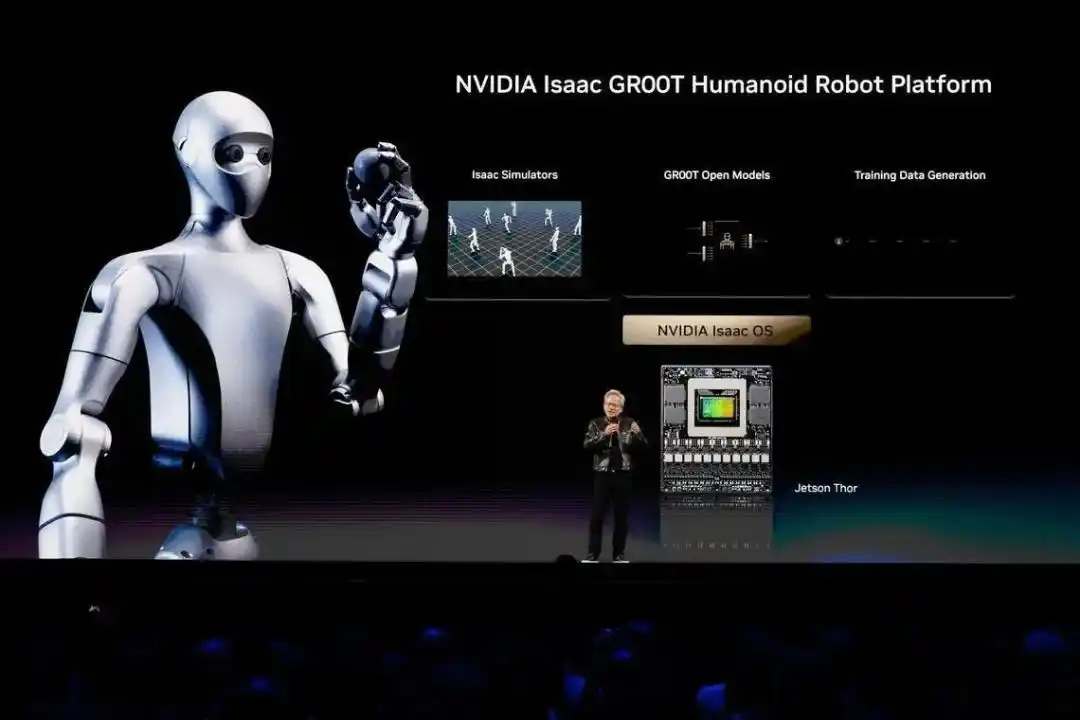
This powerful partnership has ignited excitement in both the Embodied AI and broader AI circles. After all, NVIDIA's leading position in the industry speaks for itself, and Unitree has secured its place in the global top tier of humanoid robots with its outstanding robot locomotion capabilities.

What's truly surprising is that this reference robot does not use Unitree's own dexterous hands; they have been replaced with hands from Sharpa Wave.

Sharpa is a dexterous hand company founded only two years ago, headquartered in Singapore. Its core team originates from the dexterous hand team established by Hesai Technology in 2024. It doesn't have the same high profile as Unitree, nor does it appear frequently in funding news like Lingxin Qiaoshou or Lingjiedian.

Sharpa's dexterous hands also appeared on this year's CCTV Spring Festival Gala in the sketch "My Most Unforgettable Night" featuring Shen Teng and Ma Li. However, within the niche dexterous hand sector, it remains a very low-key player.
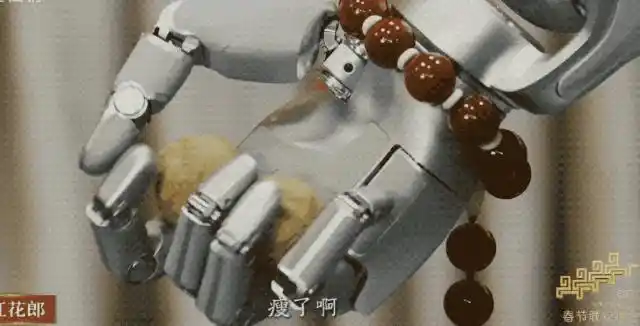
Now, however, it stands alongside Unitree at NVIDIA's embodied AI table.

One is responsible for the body, the other for the hands.

The question is, what makes a two-year-old dexterous hand company worthy of NVIDIA's attention?

Unitree's Hands Lost This Time

In reality, Unitree does have its own dexterous hands.

Judging from its public product lineup, Unitree has already launched the Dex series of dexterous hands, ranging from three-finger to five-finger configurations, and their performance is not bad.

But what NVIDIA wanted this time might not just be "hands that can be mounted on a humanoid robot."

From a technical perspective, Sharpa's dexterous hands indeed have their advantages.

In 2024, Hesai Technology formed a dexterous hand team, which became the predecessor of Sharpa. Transitioning from Hesai's LiDAR for autonomous driving to dexterous hands seems like quite a "crossover" move for Sharpa.

To many, autonomous driving and robotics are two completely different industries.

But for a company like Hesai, there is some common technical accumulation between the two fields.

Autonomous driving requires machines to perceive, understand, and make decisions in real-time within complex environments, demanding high sensor accuracy, system reliability, and engineering capabilities. Robots face similar problems when entering the real world to perform tasks.

The difference lies in that autonomous driving solves "how the vehicle sees the world," while dexterous hands solve "how the robot touches the world."

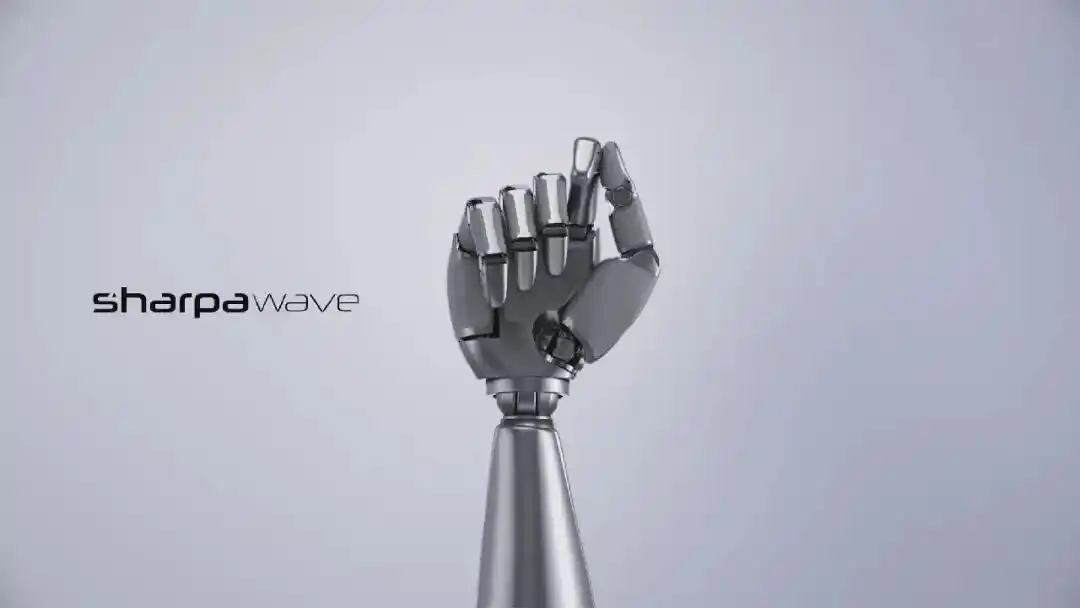
It is precisely because of this that Sharpa migrated its past capabilities to another track. Soon after its founding, Sharpa launched its flagship product, the Sharpa Wave dexterous hand.
In the field of dexterous hands, a long-standing contradiction exists: performance and mass production are often difficult to achieve simultaneously.

Some products use underactuated designs, controlling multiple joints with fewer motors, which lowers costs but limits flexibility and control precision. Others pursue capabilities close to the human hand, resulting in complex structures, high prices, and difficulty in large-scale deployment.

Sharpa chose a middle path.

The Sharpa Wave features 22 active degrees of freedom, with overall dimensions close to a 1:1 ratio with the human hand. To achieve higher control precision, it employs a direct-drive transmission architecture, enhancing joint responsiveness and motion control capability.

However, more crucial than the number of degrees of freedom is Sharpa's investment in its tactile sensing system.

In the humanoid robot industry, an increasingly clear trend is that vision alone is insufficient to meet complex manipulation needs.

Sharpa developed a tactile system called the Dynamic Tactile Array (DTA). It integrates micro-cameras and over 1,000 tactile sensing units inside each fingertip, allowing the robot to perceive pressure changes, recognize textures, slipping, and contact states, thereby gaining a form of "tactile feedback" similar to human fingertips.

According to data disclosed by Sharpa, its tactile sensing precision can reach the 0.005N level, with a refresh rate of 180Hz; the control frequency for the entire hand reaches 500Hz, and the output force of a single fingertip exceeds 20N.

These specifications all point toward the same goal: to truly enable robots to handle objects in the real world.

This is not entirely the same direction as Unitree's own dexterous hands.

Unitree's Dex series is more closely aligned with its own integrated robot system. Whether it's the three-finger or five-finger configuration, the focus is on enabling the robot to perform grasping and manipulation within its own body, locomotion control, and development ecosystem.

In other words, it's not that Unitree's hands are inferior; it's just that for NVIDIA's reference robot, Sharpa's hands better meet the requirements.

Therefore, the value of Sharpa Wave lies in turning "touching the world" into a data entry point that robots can perceive, provide feedback on, and train with.

But specifications are just specifications. To prove that a dexterous hand truly has the ability to "touch the world," it must be demonstrated through specific tasks.

And the reason Sharpa has gained market attention is precisely because it has translated these specifications into a series of operational demonstrations that have caught the eye of its peers.

Sexy Dexterous Hand, Dealing Cards Online

At the IROS 2025 (International Conference on Intelligent Robots and Systems) product exhibition, a demonstration by Sharpa left a deep impression on the industry: a Sharpa dexterous hand drew a single playing card from a deck held in another hand and placed it on a table.
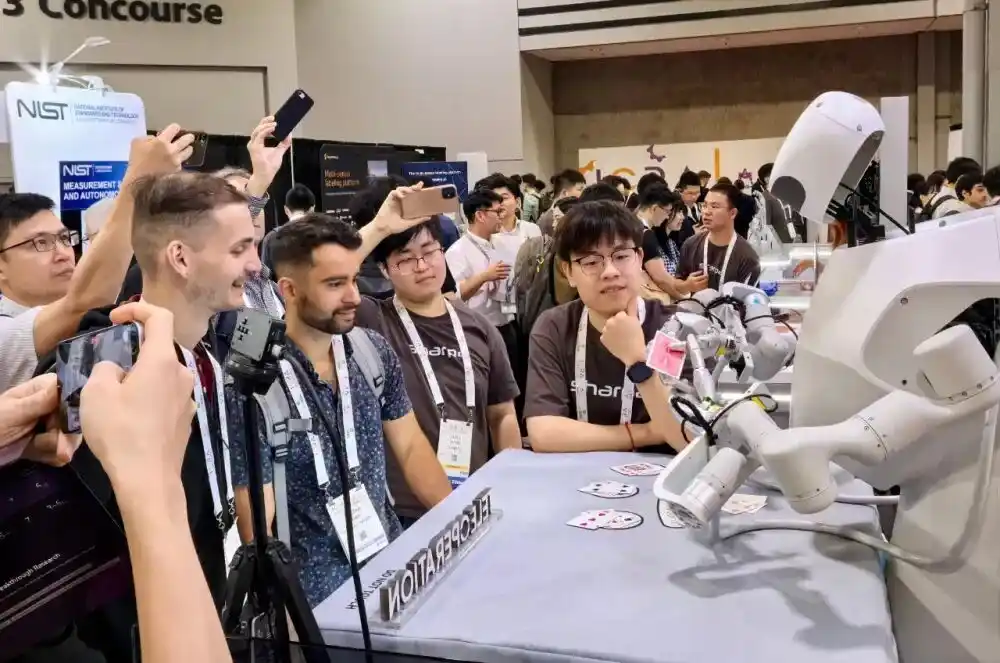
The reason it was so impressive lies in the fact that the action of dealing a playing card places extremely high demands on the force control precision of the dexterous hand and its predictive capability regarding the sliding and extraction of the card.

Furthermore, Sharpa has released a series of demonstration videos: autonomously peeling an eggshell, peeling an apple, dealing playing cards, folding paper pinwheels, and even assembling a computer case—including precisely inserting a graphics card and tightening the securing screws.

These tasks might seem like fun demos, but for the robotics industry, they represent entirely different levels of technical difficulty. Because grasping an object is not difficult; what's truly challenging is controlling the contact process.

A robot can easily pick up an egg but might not know when to increase or decrease force; it can recognize a playing card but may struggle to prevent the paper from slipping or deforming.

Many of the capabilities demonstrated by Sharpa essentially point to the same question: Can a robot adjust its actions in real-time through tactile feedback, just like a human?

This is where the DTA tactile system comes into play.

When the robot makes contact with an object, its fingertips can perceive pressure changes, friction states, and object slipping trends in real-time and feed this back to the control system for dynamic adjustment. Objects like eggs, paper, and fruit—soft or fragile—precisely highlight the value of this system.

At the same time, Sharpa is not content with being just a supplier of dexterous hands. In 2026, the company officially released its first full-body humanoid robot: Sharpa North.

At CES 2026, North demonstrated tasks such as playing table tennis, taking photos with a selfie stick, and dealing playing cards. However, the most representative demonstration was the autonomous assembly of a paper pinwheel, a task involving over 30 steps.

The entire process, from identifying parts and grasping materials to folding, assembling, and final completion, lasted several minutes and involved a large amount of bimanual coordination and sequential action planning. This indicates that the Sharpa robot possesses the potential to complete long-sequence, multi-step tasks.

From dexterous hands to humanoid robots, from a hardware supplier to a full-stack system developer, Sharpa's path is becoming increasingly clear:

It is not satisfied with being just a component of a robot. What it truly aims to do is become part of the next-generation embodied intelligence platform.

And "platform" is also a key word for NVIDIA's reference robot this time.

If the previous demonstrations proved that Sharpa's hands can perform complex manipulations, then the next, more crucial question is: What can such hands bring to NVIDIA?

Peers Are Racing to Flip the Table

For Sharpa, being chosen by NVIDIA is undoubtedly a landmark moment.

But the more critical point is that within this reference robot system, Sharpa occupies a rather pivotal position.

Because NVIDIA's goal with the "reference robot" is to build a reusable development foundation for the embodied intelligence industry, enabling developers, research institutions, and robotics companies to conduct training, verification, and development based on this framework.

In this framework, Unitree provides the body. With its locomotion control capabilities, Unitree solves the problem of how a robot stands up, walks, and moves.

What Sharpa adds is how the robot actually reaches out and does work once it stands in front of an object.

But for NVIDIA, this is not the whole story.

More importantly, Sharpa's product has been integrated into Isaac Lab. This is the most core open-source simulation training framework within NVIDIA's robotics ecosystem.

In the teleoperation phase, a human operator can control the 22-DOF dexterous hand using a data glove, mapping hand movements in real-time to robot joint movements. These recorded movements then become data for imitation learning and policy training, turning into samples that can be trained, reused, and expanded upon later.

Precisely because of this, Sharpa has secured more than just an ordinary hardware seat. It has inserted itself into NVIDIA's entire workflow, from teleoperation data collection, simulation training, policy evaluation, to real-world deployment. This is the core value of its collaboration with NVIDIA.

Of course, being favored by NVIDIA doesn't mean Sharpa has already secured victory, as the dexterous hand sector is evolving rapidly.

Over the past year or so, capital has been chasing this "hand" forward: companies like Lingxin Qiaoshou, Lingjiedian, InSight Robotics, AII Technology, Paxon Perception, etc., are all accelerating iteration around high degrees of freedom, tactile feedback, force control precision, and mass production capabilities.

Some are competing on funding speed and product deployment.

For example, Lingxin Qiaoshou has completed multiple rounds of funding since 2025, with its valuation reportedly reaching $3 billion after its B+ round in 2026, and its target valuation for the next round rumored to be as high as $6 billion. InSight Robotics also completed C1 and C2 funding rounds totaling hundreds of millions of RMB in 2026, continuing to focus on R&D for dexterous manipulation technology, innovation in core components, and product delivery capabilities.

Others are competing on tactile sensing.

Paxon Perception's product line already covers multi-dimensional tactile sensors, the DexH series of tactile dexterous hands, the humanoid robot TORA, and completed a B+ round of over 1 billion RMB in funding in March 2026.

AII Technology's new-generation dexterous hand also prominently features high-density array tactile sensors, pressure sensing capability from 0.1N to 25N, and other selling points.

This means that today's specifications—22 DOF, DTA tactile system, and NVIDIA reference design—could be surpassed tomorrow by new hands with lower costs, higher stability, or stronger data-closing capabilities.

But at least for this moment, NVIDIA has made its judgment clear:

As the industry shifts from "who can make the robot walk" to "who can make the robot work," a pair of sufficiently smart hands has become as important as its legs.

This article is from the WeChat public account "Blue Character Plan," author: Chester

Трендовые криптовалюты

Связанные с этим вопросы

QWhy did NVIDIA choose Unitree's H2 Plus robot as the reference humanoid body for its NVIDIA Isaac GR00T platform, but then replace its hands?

ANVIDIA selected Unitree's H2 Plus for its excellent locomotion and full-body control capabilities, which placed it in the global first tier of humanoid robots. However, NVIDIA replaced Unitree's own Dex-series dexterous hands with Sharpa Wave hands because Sharpa's hands, with their 22 active degrees of freedom, high-precision direct-drive architecture, and advanced Dynamic Tactile Array (DTA) system, were deemed better suited for the complex manipulation tasks and data-collection needs of the reference platform.

QWhat are the key technological features of Sharpa's Wave dexterous hand that distinguished it for NVIDIA's selection?

ASharpa Wave's key features include: 22 active degrees of freedom in a human 1:1 scale, a direct-drive transmission architecture for high-speed response and control precision, and its proprietary Dynamic Tactile Array (DTA) system. The DTA integrates micro-cameras and over 1,000 tactile sensing units in each fingertip, providing high-frequency (180Hz) and high-precision (0.005N) force/tactile feedback. This allows the hand to perceive texture, slippage, and contact states, enabling complex, real-world manipulation tasks.

QHow does Sharpa's background at Hesai Technology relate to its development of advanced robotic hands?

ASharpa's core team originated from the dexterous hand team formed by Hesai Technology (a leading LiDAR company for autonomous vehicles) in 2024. While autonomous driving and robotics seem different, they share common technical challenges: high demands for sensor precision, system reliability, and engineering capabilities in complex, real-world environments. Sharpa leveraged Hesai's expertise in these areas, transferring capabilities from solving 'how vehicles see the world' to solving 'how robots touch and interact with the world.'

QWhat is the strategic significance of Sharpa Wave being integrated into NVIDIA's Isaac Lab framework?

AIntegration into NVIDIA's Isaac Lab—the core open-source simulation training framework for robotics—positions Sharpa not just as a hardware supplier but as a key part of NVIDIA's embodied AI development stack. In this framework, human operators can use data gloves to control the 22-DoF hand for teleoperation, generating real-time manipulation data. This data then becomes foundational for imitation learning and policy training within Isaac Lab, creating a closed-loop from data collection and simulation to real-world deployment. This gives Sharpa a crucial role in NVIDIA's platform ecosystem.

QWhat does NVIDIA's choice of Sharpa over Unitree's own hand signify about the current priorities in the humanoid robotics industry?

ANVIDIA's choice signals a shift in industry focus from 'who can make the robot walk and move' to 'who can make the robot perform useful work.' While stable locomotion (Unitree's strength) remains foundational, advanced manipulation capabilities are now considered equally critical for practical application. The selection highlights the growing importance of high-fidelity tactile sensing, precise force control, and the ability to handle complex, long-horizon manipulation tasks as key differentiators for next-generation embodied intelligence platforms.

Похожее

Отправляй сообщения и переводи монеты? Telegram этим летом «встроит» криптокошелек для 1 млрд пользователей

Создатель Telegram Павел Дуров объявил о запуске летом этого года собственного встроенного некастодиального криптокошелька Gram для более чем 1 млрд пользователей приложения. Кошелек позволит совершать мгновенные переводы без комиссий. В отличие от текущего сервиса @wallet, которым управляет сторонняя компания, новый кошелек будет родной функцией Telegram, где пользователи будут самостоятельно контролировать свои приватные ключи. После анонса цена токена GRAM (ранее Toncoin) выросла примерно на 8%, хотя все еще значительно ниже исторических максимумов. Это событие знаменует возвращение Дурова к проекту TON после урегулирования с SEC в 2020 году и является частью его дорожной карты «Make TON Great Again». Запуск происходит в период усиления конкуренции между суперприложениями в сфере платежей: X Money Илона Маска развивает фиатные переводы, а Meta изучает интеграцию стейблкоинов. Telegram делает ставку на криптонативное решение, используя свою огромную аудиторию и близость к криптосообществу. Однако остаются неясными ключевые детали, такие как техническая реализация «нулевых комиссий», поддержка активов помимо GRAM, а также конкретные сроки запуска, помимо обещания «летом».

marsbit40 мин. назад

Отправляй сообщения и переводи монеты? Telegram этим летом «встроит» криптокошелек для 1 млрд пользователей

marsbit40 мин. назад

Предложение Hyperliquid HIP-4 подпитывает стейкинг HYPE по мере роста долгосрочных перспектив

Протокол Hyperliquid (HYPE) представил предложение HIP-4, направленное на создание разрешенных рынков прогнозов и расширение функционала за пределы вечных фьючерсов до базового инфраструктурного уровня для ончейн-приложений. Для запуска новых рынков разработчикам необходимо застейкать 500 000 токенов HYPE. Меры по обеспечению качества рынков призваны трансформировать Hyperliquid из создателя продуктов в инфраструктуру для сторонних разработчиков. Уверенность в долгосрочных перспективах проекта растет, что подтверждается увеличением позитивного настроя вокруг HYPE и активным стейкингом. Крупный трейдер предпочел застейкать токены на сумму около $15,5 млн вместо фиксации прибыли. Общий объем застейканных токенов достиг почти 439 млн, что составляет около 43.9% от общего предложения, укрепляя безопасность сети и сокращая ликвидное предложение. Рыночная структура также демонстрирует силу: открытый интерес превысил $11 млрд при сбалансированных ставках финансирования и ограниченных ликвидациях, что указывает на взвешенный подход трейдеров. Укрепление фундаментальных показателей, таких как рост доходов и TVL, поддерживает оптимистичный прогноз. Успешная реализация обновлений и дальнейшее внедрение пользователями будут ключевыми факторами для поддержания текущего импульса роста.

ambcrypto43 мин. назад

Предложение Hyperliquid HIP-4 подпитывает стейкинг HYPE по мере роста долгосрочных перспектив

ambcrypto43 мин. назад

Через 7 месяцев после краха Huiwang: крупная перетасовка среди платформ-гарантов в Юго-Восточной Азии

За семь месяцев после краха платформы гарантийных платежей Huiwang в Юго-Восточной Азии началась крупная перетасовка на рынке. Такие платформы, как XinBi (Newpay), Linghang (Tiger), Jinbei (Jinbo), Dali (Tiancheng) и Fuli Lai, активно заполняют образовавшийся вакуум, обслуживая теневой бизнес, включая отмывание денег, онлайн-азартные игры, мошенничество в «промышленных парках» и даже торговлю людьми. По данным аналитиков, общий объем средств, проходящих через эти платформы, исчисляется миллиардами долларов США. Крах Huiwang, связанного с камбоджийской группой Prince и конфискацией США 150 000 BTC, не остановил индустрию, а привел к ее реструктуризации и росту новых игроков, которые действуют еще более скрытно. Эксперты подчеркивают, что эти платформы, иногда называемые «азиатским Alipay», являются не законными финансовыми сервисами, а ключевым элементом инфраструктуры для преступной деятельности в регионе.

Odaily星球日报52 мин. назад

Через 7 месяцев после краха Huiwang: крупная перетасовка среди платформ-гарантов в Юго-Восточной Азии

Odaily星球日报52 мин. назад

Свет слабеет: что происходит с криптовалютными венчурными фондами?

**Крипто-венчурные фонды на перепутье: от нишевых игроков к интеграции** Когда-то узкоспециализированные крипто-фонды, такие как Paradigm, были первопроходцами, обладавшими уникальными знаниями и готовыми брать на себя высокие риски нового рынка. Однако сегодня, как показывает пример Paradigm, собравшего 1,2 млрд долларов для инвестиций в ИИ и робототехнику, эти границы размываются. История повторяется по модели Карлоты Перес: по мере взросления технологии (крипто переходит от «фазы установления» к «фазе внедрения») исчезает информационное преимущество специалистов. Традиционные финансовые гиганты, такие как BlackRock или Visa, теперь понимают блокчейн и приходят в отрасль, но им нужны не технические детали, а регуляторные и банковские связи. Это привело к «эффекту гантели» на рынке венчурного капитала. Гигантские универсальные фонды (a16z, Sequoia) и небольшие нишевые игроки выживают, в то время как фонды среднего размера, составляющие большинство крипто-специалистов, оказываются в «зоне смерти». Их размера недостаточно для конкуренции за крупные раунды с гигантами, а доходности только от крипто-стартапов может не хватить для выполнения обязательств перед инвесторами (LP). Поэтому они вынуждены диверсифицироваться, как Framework Ventures, или полностью менять фокус. Даже оставшиеся «чистыми» крипто-фонды, такие как Dragonfly или a16z, сужают свою стратегию до блокчейн-инфраструктуры для финансов (стейблкоины, рынки предсказаний), области, которая также интересует крупные универсальные фонды. Это создает проблемы для крипто-стартапов: им приходится конкурировать за внимание инвесторов с модными ИИ-проектами, а также они теряют поддержку в финансировании важной, но неприбыльной на ранних этапах инфраструктуры, которую раньше строили специализированные фонды. В будущем термин «крипто-инвестор» может устареть, как когда-то «интернет-инвестор». Крипто станет базовой инфраструктурой, а не отдельным классом активов. Рынок будет разделен: крупные универсальные фонды будут финансировать зрелые проекты, а небольшие специализированные фонды — поддерживать нишевые инновации. При этом появляется новая тенденция: такие проекты, как Hyperliquid, успешно запускаются вообще без венчурного капитала, через сообщество. Эра, когда крипто зависело от специализированных VC, подходит к концу, открывая путь новой, более интегрированной и самостоятельной модели роста.

Foresight News1 ч. назад

Свет слабеет: что происходит с криптовалютными венчурными фондами?

Foresight News1 ч. назад

Когда консенсус формируется всё быстрее, во что ставят молодые инвесторы?

Статья «Когда консенсус ускоряется, на что делают ставки молодые инвесторы?» (издание Huxiu) анализирует новые тенденции в технологических инвестициях на фоне быстрого развития ИИ, робототехники, коммерческой космонавтики и квантовых вычислений. Молодые инвесторы смещают фокус от простого преследования технологических трендов к пониманию реальных путей интеграции технологий в промышленность. Выделяются четыре ключевых направления: 1. **ИИ переходит в физический мир:** Инвестиции смещаются от облачных моделей к периферийным устройствам, роботам (включая воплощённый интеллект) и интеллектуальному оборудованию. Акцент делается не на демонстрационных возможностях, а на надёжности, стоимости развёртывания и реальной окупаемости. 2. **Конкурентное преимущество смещается к «интеллектуальной маховичной модели»:** Вместо вопроса «чей ИИ-модель мощнее» важен вопрос, какая компания может встроить возможности модели в рабочие процессы, создав цикл обратной связи «данные — обучение — улучшение продукта». Это создаёт долгосрочный барьер, как показывают примеры компаний Zhipu AI и Kling AI. 3. **Новые базовые технологии для преодоления дефицита данных:** По мере исчерпания общедоступных данных качественного обучения растёт интерес к таким подходам, как обучение с подкреплением и самоиграющие модели. Научные базовые модели (например, для биологии, химии) рассматриваются как перспективное, но сложное направление для генерации новых высококачественных данных. 4. **Терпеливый капитал для глубоких технологий:** В таких сферах, как коммерческая космонавтика и квантовые вычисления, где циклы разработки и валидации длительны, инвесторы должны рано оценивать фундаментальный потенциал, инженерные компетенции команд и готовность сопровождать проекты в долгосрочной перспективе, даже при неопределённости технических путей. Общий вывод: современный технологический инвестор должен глубже понимать язык технологий, оценивать не только финансовые модели, но и инженерные, и коммерческие траектории, и делать выбор в условиях, когда консенсус ещё не сформирован.

marsbit1 ч. назад

Когда консенсус формируется всё быстрее, во что ставят молодые инвесторы?

marsbit1 ч. назад

Торговля

Спот

Популярные статьи

Как купить S

Добро пожаловать на HTX.com! Мы сделали приобретение Sonic (S) простым и удобным. Следуйте нашему пошаговому руководству и отправляйтесь в свое крипто-путешествие.Шаг 1: Создайте аккаунт на HTXИспользуйте свой адрес электронной почты или номер телефона, чтобы зарегистрироваться и бесплатно создать аккаунт на HTX. Пройдите удобную регистрацию и откройте для себя весь функционал.Создать аккаунтШаг 2: Перейдите в Купить криптовалюту и выберите свой способ оплатыКредитная/Дебетовая Карта: Используйте свою карту Visa или Mastercard для мгновенной покупки Sonic (S).Баланс: Используйте средства с баланса вашего аккаунта HTX для простой торговли.Третьи Лица: Мы добавили популярные способы оплаты, такие как Google Pay и Apple Pay, для повышения удобства.P2P: Торгуйте напрямую с другими пользователями на HTX.Внебиржевая Торговля (OTC): Мы предлагаем индивидуальные услуги и конкурентоспособные обменные курсы для трейдеров.Шаг 3: Хранение Sonic (S)После приобретения вами Sonic (S) храните их в своем аккаунте на HTX. В качестве альтернативы вы можете отправить их куда-либо с помощью перевода в блокчейне или использовать для торговли с другими криптовалютами.Шаг 4: Торговля Sonic (S)С легкостью торгуйте Sonic (S) на спотовом рынке HTX. Просто зайдите в свой аккаунт, выберите торговую пару, совершайте сделки и следите за ними в режиме реального времени. Мы предлагаем удобный интерфейс как для начинающих, так и для опытных трейдеров.

1.7k просмотров всегоОпубликовано 2025.01.15Обновлено 2026.06.02

Как купить S

Sonic: Обновления под руководством Андре Кронье – новая звезда Layer-1 на фоне спада рынка

Он решает проблемы масштабируемости, совместимости между блокчейнами и стимулов для разработчиков с помощью технологических инноваций.

2.4k просмотров всегоОпубликовано 2025.04.09Обновлено 2025.04.09

Sonic: Обновления под руководством Андре Кронье – новая звезда Layer-1 на фоне спада рынка

HTX Learn: Пройдите обучение по "Sonic" и разделите 1000 USDT

HTX Learn — ваш проводник в мир перспективных проектов, и мы запускаем специальное мероприятие "Учитесь и Зарабатывайте", посвящённое этим проектам. Наше новое направление .

1.9k просмотров всегоОпубликовано 2025.04.10Обновлено 2025.04.10

HTX Learn: Пройдите обучение по "Sonic" и разделите 1000 USDT

Обсуждения

Добро пожаловать в Сообщество HTX. Здесь вы сможете быть в курсе последних новостей о развитии платформы и получить доступ к профессиональной аналитической информации о рынке. Мнения пользователей о цене на S (S) представлены ниже.

活动图片















