North Korean ‘fake Zoom’ crypto hacks now a daily threat: SEAL

cointelegraphОпубликовано 2025-12-15Обновлено 2025-12-15

Введение

A North Korean hacking group is conducting multiple fake Zoom meeting scams daily to steal cryptocurrency, according to cybersecurity nonprofit SEAL. The attack begins with a message from a compromised Telegram account of someone the victim knows, luring them into a fake Zoom call. Before the call, a malicious link is shared that appears legitimate. During the call, hackers pretend to have audio issues and send a malware-infected file. Once executed, the malware compromises the victim’s device, enabling theft of crypto, passwords, private keys, and Telegram accounts. Security researcher Taylor Monahan warns these attacks have already stolen over $300 million. If infected, users should immediately disconnect their device from the internet, transfer crypto to new wallets, change all passwords, enable two-factor authentication, and perform a full device wipe. It is also critical to secure Telegram accounts and alert all contacts to prevent further spread.

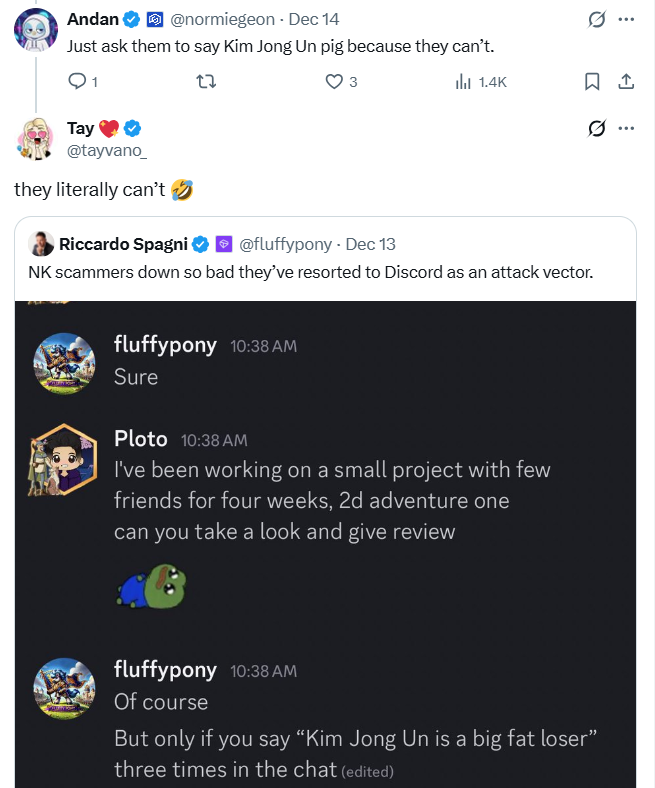
Cybersecurity nonprofit Security Alliance (SEAL) warns they’re now seeing multiple daily attempts by North Korean hackers to scam victims using fake Zoom meetings.

The scam involves tricking victims into downloading malware during a fake Zoom call, which enables hackers to steal sensitive data, including passwords and private keys. Security researcher Taylor Monahan warned that the tactic has already looted over $300 million from users.

Source: Security Alliance

How the fake Zoom call scam works

Monahan said the scam starts with a message from a Telegram account of someone known to the victim, who is lulled into a false sense of security due to familiarity. The conversation then leads to an invitation to catch up over Zoom.

“They’ll share a link before the call that is usually masked to look real. There you can see the person + some of their partners/colleagues. These videos are not deepfakes as widely reported. They are real recordings from when they got hacked or public sources (podcasts),” she said.

However, once the call begins, the hackers feign audio issues and send a patch file, which, when opened, infects devices with malware. The hackers then end the sham call under the guise of rescheduling for another day.

Related: Upbit hack puts Binance’s emergency freeze policy under scrutiny

“Unfortunately, your computer is already compromised. They just play it cool to prevent detection. They will eventually take all your crypto. And your passwords. And your company/protocol's shit. And your Telegram account. Then you will go on to rekt all your friends.”

Here’s what to do if you’ve clicked the malware link

Monahan warns that anyone who has clicked on a link shared during a suspicious Zoom call should immediately disconnect from WiFi and turn off the affected device.

Then, use another device to transfer crypto to new wallets, change all passwords, activate two-factor authentication where possible, and perform a full memory wipe on the infected device before using it again.

She also stresses it’s “critical” to secure Telegram accounts to prevent the bad actors from gaining control by opening on a phone, going into settings, devices, terminating all other sessions, changing the password and adding or updating multifactor authentication.

Monahan said the hackers are gaining control of Telegram accounts and using the stored contacts to find and scam new victims.

Source: Taylor Monahan
“Lastly, if they hack your telegram, you need to TELL EVERYONE ASAP. You are about hack your friends. Please put your pride aside and SCREAM about it.”

Magazine: Meet the onchain crypto detectives fighting crime better than the cops

Похожее

US Stocks Suffer Worst Plunge Since 2025: Three Triggers Ignite Tech Stock Valuation Reset

The US stock market experienced its most severe sell-off since the 2025 tariff crisis on June 5th, 2025. The Nasdaq Composite plummeted 4.18%, the S&P 500 fell 2.64%, and the Dow Jones dropped 695 points. The panic stemmed from three converging factors. First, Broadcom's earnings report ignited fears of a slowdown in AI growth. While its AI chip revenue surged 143% YoY to $10.8B, its Q3 AI revenue guidance of $16B fell short of the $17.2B consensus. This triggered a massive sector-wide sell-off, with the Philadelphia Semiconductor Index crashing 10.26% and semiconductor stocks losing roughly $1.3 trillion in market value in a single day. Second, a shockingly strong May jobs report crushed hopes for Federal Reserve rate cuts. Non-farm payrolls added 172,000 jobs, doubling expectations. This robust data, combined with persistently high oil prices above $92/barrel due to the ongoing Iran war and blockade of the Strait of Hormuz, drastically increased market expectations for a potential Fed rate hike instead of a cut. Higher interest rates compress the valuations of growth-heavy tech stocks. Third, the prolonged Iran conflict continues to fuel inflationary pressures, complicating the Fed's policy decisions and undermining the "inflation is tamed" narrative. Together, these events challenged the twin pillars of the market rally: the "limitless AI growth" story and expectations for imminent monetary easing. The sell-off spread globally, impacting Asian and European markets and cryptocurrencies. The article posits this is likely a severe "valuation repricing" rather than the end of the AI story. The underlying demand for AI remains strong, but investor expectations for growth speed and the prices they are willing to pay are being recalibrated. Key upcoming factors include the June FOMC meeting, future AI company earnings, and developments in the Iran conflict.

marsbit4 ч. назад

US Stocks Suffer Worst Plunge Since 2025: Three Triggers Ignite Tech Stock Valuation Reset

marsbit4 ч. назад

From Madison Square Garden to Kalshi: Prediction Markets Break into the NBA Finals

From Madison Square Garden to Kalshi: Prediction Markets Break into the NBA Finals Prediction markets are playing a significant role in the 2026 NBA Finals, particularly around the New York Knicks' unexpected 2-0 series lead. Platforms like Kalshi and Polymarket have seen massive trading volumes, exceeding hundreds of millions of dollars on championship and related markets. Their influence extends beyond online trading. Kalshi's official partnership with Madison Square Garden has given it prominent physical branding at the arena. Furthermore, local businesses like The Jeffrey bar are using prediction market contracts to hedge the risk of game-result-based promotions, turning potential losses into manageable costs—a concept similar to the famous "Mattress Mack" strategy from traditional sports betting. These markets differentiate themselves by offering a wider, more entertainment-focused range of "event contracts" beyond typical game outcomes, such as predicting celebrity attendance. They also have broader accessibility across the U.S. compared to age- and location-restricted traditional sportsbooks. However, their rapid integration into sports raises regulatory and ethical questions. The NBA is cautiously engaging, discussing integrity frameworks with regulators like the CFTC. While the league permits minor investments like Giannis Antetokounmpo's stake in Kalshi, it advocates for strict rules to prevent insider trading. Many fans express concern on platforms like Reddit, fearing that the close ties between prediction markets, the league, and players could compromise the game's integrity. The NBA Finals has thus become a high-stakes testing ground, showcasing prediction markets' commercial potential while challenging traditional boundaries between financial trading, entertainment, and gambling.

marsbit6 ч. назад

From Madison Square Garden to Kalshi: Prediction Markets Break into the NBA Finals

marsbit6 ч. назад

Recursive Self-Improvement AI Gains Traction, Google Pours Cold Water, While DeepSeek and Others Approach the Fringes

The term "recursive self-improvement" (RSI), where AI improves itself autonomously, is gaining momentum in the AI industry. Startups like Recursive Superintelligence and projects such as Andrej Karpathy's Auto-Research aim to create systems where AI designs, implements, and validates its own research, moving toward superintelligence. While Google CEO Sundar Pichai cautions that such exponential acceleration is not yet a reality, progress is evident. For instance, Anthropic reported its Claude Code writes nearly 100% of the team's code, though it still lacks true self-direction. Analysts frame RSI development in stages: "adequacy" (systems functioning without humans), "parity" (matching human research quality), and "supremacy" (exceeding human-AI collaboration). Reaching parity could trigger rapid, unpredictable advancement due to AI's continuous operation. In China, companies like DeepSeek and Baidu incorporate self-optimization techniques without explicitly branding them as RSI, focusing on algorithmic efficiency and reinforcement learning. However, challenges remain, including "model collapse" from training on AI-generated data and the immense computational and open-collaboration requirements. Ultimately, RSI represents a trend of increasing automation in AI development, potentially reducing human oversight in the creation process itself.

marsbit6 ч. назад

Recursive Self-Improvement AI Gains Traction, Google Pours Cold Water, While DeepSeek and Others Approach the Fringes

marsbit6 ч. назад

Торговля

Спот
Фьючерсы

Популярные статьи

Как купить ZEST

Добро пожаловать на HTX.com! Мы сделали приобретение Zest Protocol (ZEST) простым и удобным. Следуйте нашему пошаговому руководству и отправляйтесь в свое крипто-путешествие.Шаг 1: Создайте аккаунт на HTXИспользуйте свой адрес электронной почты или номер телефона, чтобы зарегистрироваться и бесплатно создать аккаунт на HTX. Пройдите удобную регистрацию и откройте для себя весь функционал.Создать аккаунтШаг 2: Перейдите в Купить криптовалюту и выберите свой способ оплатыКредитная/Дебетовая Карта: Используйте свою карту Visa или Mastercard для мгновенной покупки Zest Protocol (ZEST).Баланс: Используйте средства с баланса вашего аккаунта HTX для простой торговли.Третьи Лица: Мы добавили популярные способы оплаты, такие как Google Pay и Apple Pay, для повышения удобства.P2P: Торгуйте напрямую с другими пользователями на HTX.Внебиржевая Торговля (OTC): Мы предлагаем индивидуальные услуги и конкурентоспособные обменные курсы для трейдеров.Шаг 3: Хранение Zest Protocol (ZEST)После приобретения вами Zest Protocol (ZEST) храните их в своем аккаунте на HTX. В качестве альтернативы вы можете отправить их куда-либо с помощью перевода в блокчейне или использовать для торговли с другими криптовалютами.Шаг 4: Торговля Zest Protocol (ZEST)С легкостью торгуйте Zest Protocol (ZEST) на спотовом рынке HTX. Просто зайдите в свой аккаунт, выберите торговую пару, совершайте сделки и следите за ними в режиме реального времени. Мы предлагаем удобный интерфейс как для начинающих, так и для опытных трейдеров.

267 просмотров всегоОпубликовано 2026.05.19Обновлено 2026.06.02

Как купить ZEST

Обсуждения

Добро пожаловать в Сообщество HTX. Здесь вы сможете быть в курсе последних новостей о развитии платформы и получить доступ к профессиональной аналитической информации о рынке. Мнения пользователей о цене на A (A) представлены ниже.

活动图片