Meta Spent $90 Billion to Close the Metaverse, $2 Billion to Let AI Live in Your Computer

marsbitОпубликовано 2026-03-19Обновлено 2026-03-19

Введение

Meta spent $90 billion to build the metaverse, only to shut down its flagship VR platform, Horizon Worlds, on June 15. The virtual world, launched in 2021 with great fanfare, failed to attract a meaningful user base despite massive investment. Its closure marks a symbolic end to Meta’s ambitious—and costly—bet on the metaverse, which accumulated nearly $90 billion in losses over seven years. Simultaneously, Meta is aggressively pivoting to AI. It acquired AI startup Manus for $2 billion, which recently launched a desktop version allowing AI to operate directly on users' local machines—reading files, running apps, and executing commands. In contrast to the metaverse’s weak adoption, Manus reached one million paid users within eight months. The shift is stark: Meta is cutting 20% of its workforce—around 15,000 jobs—and reallocating nearly its entire $115–135 billion capital expenditure budget toward AI infrastructure. This abrupt turn reflects industry-wide FOMO (fear of missing out) on AI, similar to the metaverse hype half a decade ago. Companies like Block, Shopify, and Amazon are also slashing jobs to fund AI investments. While Meta faces internal challenges—including delayed AI models and executive departures—its drastic realignment underscores a broader trend: the consensus has shifted from virtual worlds to ambient AI. The question remains whether this new bet will prove more sustainable than the last.

Author: Curry, Deep Tide TechFlow

On October 28, 2021, Mark Zuckerberg stood next to a legless virtual avatar and announced the company's name change from Facebook to Meta.

At the time, he said the metaverse would reach one billion people within a decade, host hundreds of billions of dollars in digital commerce, and provide job opportunities for millions of creators and developers.

That year, the metaverse was the sexiest concept on Earth.

Microsoft talked about building a metaverse version of Teams, NVIDIA launched Omniverse, Nike opened a virtual store on Roblox... No one wanted to miss the boat.

Meta didn't just buy a ticket; it bought the entire ship.

Looking back now, the product Horizon Worlds can be understood as the core evidence for Meta's rebranding story—you put on a headset, enter a virtual world, and hang out, play, and hold meetings with other people's cartoon avatars.

When it launched at the end of 2021, it was the flagship project personally endorsed by Zuckerberg. But four and a half years later, one billion people have not come to play.

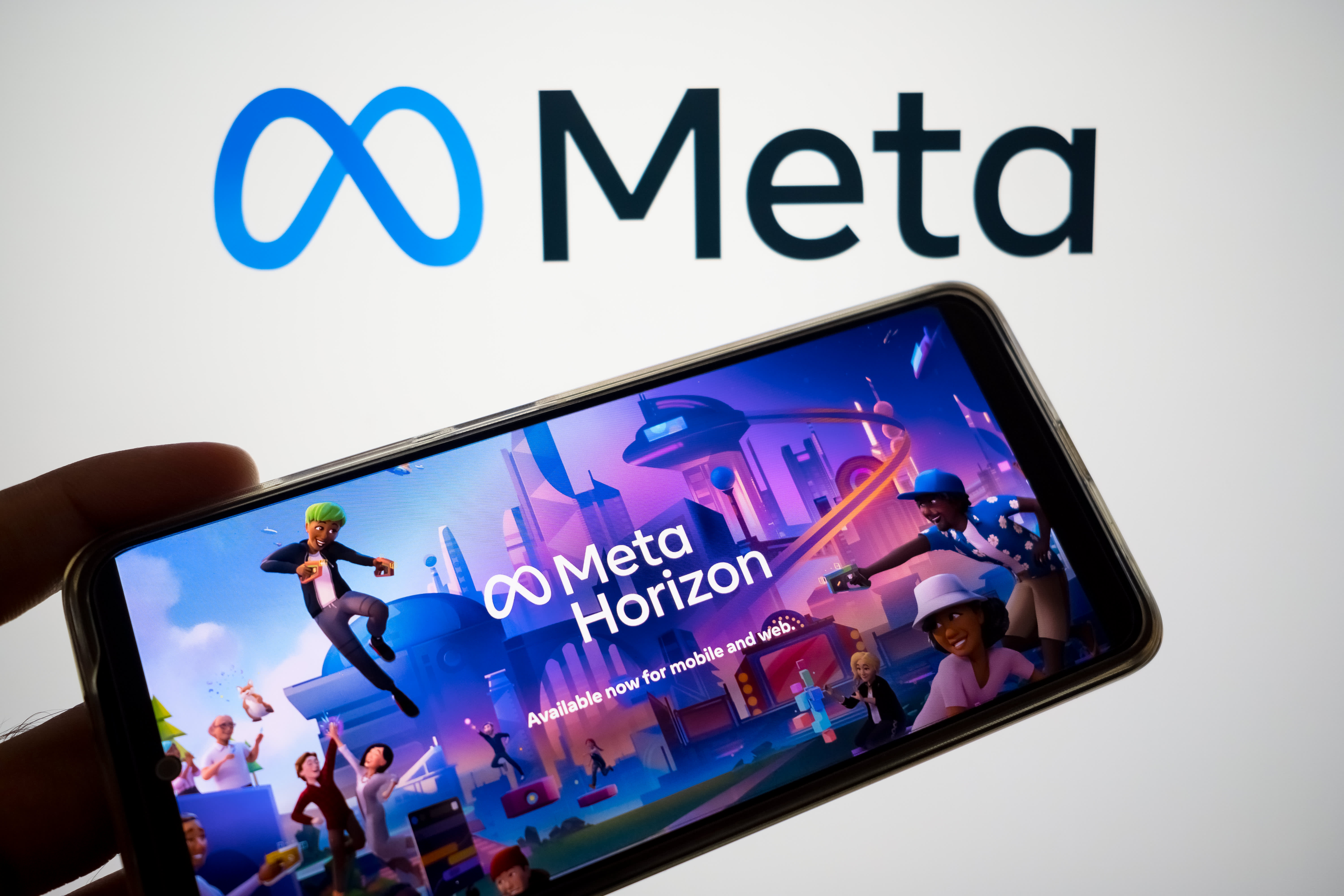
On March 17, Meta posted an announcement on its community forum: the VR version of Horizon Worlds will be completely shut down on June 15, at which point the app will be removed from Quest headsets and the virtual world will no longer be accessible. A mobile version will remain available and continue to operate.

It's a bit like a restaurant closing its dine-in service and only keeping takeout, but this restaurant was originally built for dine-in.

The department footing the bill is called Reality Labs. Its cumulative operating losses over seven years are close to $90 billion. It lost $6 billion in the most recent quarter alone, with revenues of less than $1 billion, not even covering one-sixth of the losses.

In January of this year, this department laid off over 1,000 people, shut down multiple VR content studios, and canceled almost all ongoing virtual world projects.

The boat ticket everyone was afraid of missing in 2021—now the ship has sunk, and the ticket is still clutched in their hands.

In mid-March, Reuters reported that Meta was planning to lay off about 20% of its workforce, nearly 15,000 people. If implemented, this would be the largest round of layoffs since 2022.

At the same time, Meta's capital expenditure budget for this year is $115 to $135 billion, almost entirely poured into AI infrastructure.

Shut down the virtual world, lay off one-fifth of the people, and pour all the saved money and freed-up positions into AI.

The day the news came out, Meta's stock price still rose by 3%. When Zuckerberg said he would go all-in on the metaverse in 2021, the capital market applauded the same way.

The answer was already on the table the day before Horizon Worlds announced its shutdown.

Virtual World Closes, Personal Computer Steps In

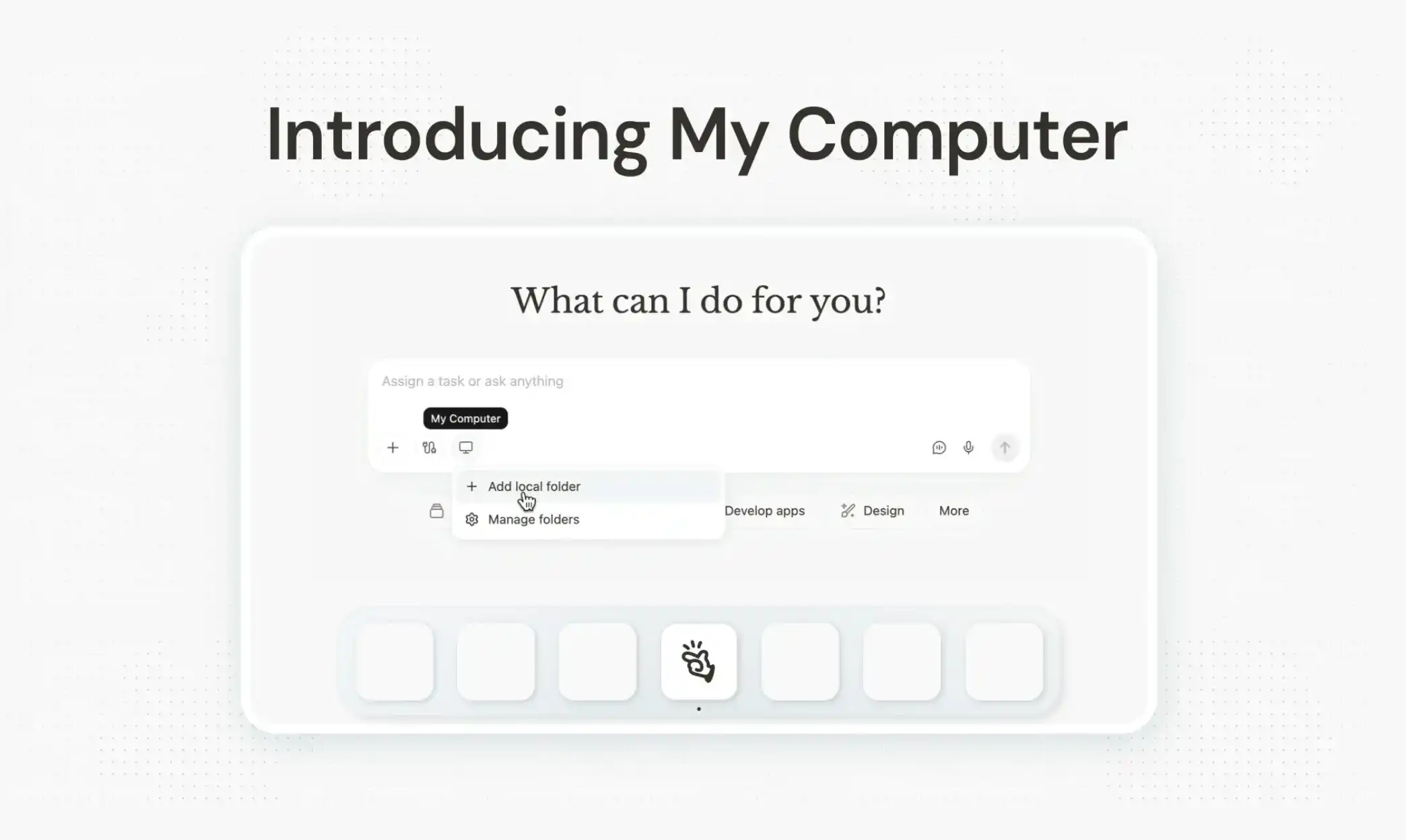
On March 16, Manus, acquired by Meta for a hefty $2 billion, launched its desktop version.

It features a function called "My Computer" that brings AI down from the cloud directly into your local machine: reading files, opening applications, running terminal commands.

This happened the day before Horizon Worlds announced its shutdown.

The year Horizon Worlds launched, the experience was like this:

You spend a couple thousand dollars on a Quest headset, put it on, adjust the pupil distance, draw a safety boundary, and then enter a cartoon-style virtual lobby. The people inside have no legs and float around to move. You can explore themed worlds, play mini-games, and chat with strangers' virtual avatars.

After half an hour, the headset starts pressing on your face. After an hour, some people start feeling dizzy.

Meta spent four years and $90 billion on this lobby. The result is that it never disclosed active user numbers. Not for secrecy, but because it wouldn't look good.

The Manus Desktop experience is like this:

You download an application, open it, and type a sentence. For example, "Organize the thousands of files in my Downloads folder by type." It scans your hard drive, automatically creates subfolders, and automatically sorts and archives everything, all without you touching the keyboard.

In a demo, someone had it write a macOS application from scratch in a local development environment; it took 20 minutes. Don't forget, Manus reached one million paid users within eight months of its previous launch, with annualized revenue exceeding $100 million.

When everyone says Meta overpaid for Manus, perhaps compare it to the now-shut-down metaverse project Horizon Worlds.

A product that spent $90 billion trying to get you into a virtual world, and no one came. A product that spent $2 billion to come into your real desktop, has real revenue and use cases—which one would you choose?

The same company, the same week, shut down the former and bet on the latter.

It used to be Meta building a world for you to come to. Now it's AI coming through the screen to you.

But having the right direction doesn't mean the path is smooth. After this U-turn, Meta doesn't exactly look more at ease.

The Metaverse and AI Might Be the Same Kind of FOMO

If you only read the headlines, Meta now looks like a company making one blunder after another.

The metaverse burned $90 billion and was shut down. The flagship AI model, Avocado, originally scheduled for release in March, was delayed to May after internal testing found its reasoning and programming lagged behind同期 (contemporary) products from Google, OpenAI, and Anthropic.

The previous generation, Llama 4, was released last year to a lukewarm reception, failing to stir much excitement in the developer community. It was reported that the company even internally discussed temporarily licensing Google's Gemini to fill in for its own products—a company spending $135 billion on AI infrastructure, needing to borrow someone else's model.

Chief AI Scientist Yann LeCun left to start his own company; the new AI head, Alexandr Wang, poached from Scale AI for $14.3 billion, hasn't yet delivered results...

Layoffs of 20%, shutting down the metaverse, model delays—the news from just one week painted a picture of a company that doesn't know what it's doing.

But if you shift your gaze away from Meta and look at the entire industry, you'll notice one thing:

Everyone is doing the exact same thing, embracing AI wholeheartedly.

In February of this year, Block's CEO Jack Dorsey announced laying off 4,000 people, nearly half the company. The layoff letter had no embellishments, stating directly that intelligent tools have changed how companies are built and operated, and smaller teams can achieve more. The stock price rose 25% that night.

Shopify's CEO sent a new rule to the whole company: from now on, if you want to request more headcount, first prove that AI can't do the job.

Amazon cut 16,000 jobs in January and targeted its robotics department in March. Atlassian laid off 1,600 people, saying it would pour all resources into AI enterprise software.

In the first 74 days of 2026, 166 tech companies laid off nearly 56,000 people in total.

Does this picture feel familiar?

2021 was like this too. After Zuckerberg renamed Meta, Microsoft talked about a metaverse Teams, NVIDIA pushed Omniverse, Nike opened a virtual store on Roblox, Disney established a metaverse division, Shanghai and Seoul released metaverse strategic plans...

Everyone was chasing the same direction. Everyone was afraid of missing out.

Five years have passed. The direction has changed, but the way of chasing hasn't.

Last time, the consensus was "the metaverse is the next computing platform." Meta spent $90 billion proving this consensus wrong. This time, the consensus is "AI can replace everything." Every company is cutting staff, slashing budgets, and pouring the saved money into AI.

There's only one difference: the last consensus has been disproven; this one hasn't yet.

But consensus is consensus. Its characteristic is that everyone believes it simultaneously, and then everyone discovers they were wrong simultaneously. The time difference in the middle is the speed at which money burns.

Meta isn't a company that's dumber than others. It just places bigger bets than anyone else each time, so when the consensus flips, its fall is the loudest.

In 2021, the whole industry bet on the metaverse, and Meta changed its name. In 2026, the whole industry is betting on AI, and Meta is laying off a fifth of its people.

Looking back five years from now, did everyone bet right on this round of AI?

No one knows. But we all know that when this question was asked in 2021, everyone's answer was also "of course we did."

Связанные с этим вопросы

QWhat was the main reason for Meta to shut down Horizon Worlds VR version?

AHorizon Worlds failed to attract a significant user base despite massive investment, with Meta never disclosing active user numbers due to poor performance.

QHow much cumulative operating loss did Meta's Reality Labs department incur over seven years?

AReality Labs incurred cumulative operating losses of nearly $90 billion over seven years.

QWhat is the key feature of Meta's newly launched Manus Desktop application?

AManus Desktop features 'My Computer' functionality, allowing AI to operate directly on a user's local computer to perform tasks like file organization and application development without manual input.

QHow did Meta's stock market react to the news of restructuring and AI investment?

AMeta's stock price rose by 3% following announcements of restructuring,裁员, and increased AI investment, similar to the positive market response during its initial metaverse push.

QWhat broader industry trend does the article compare Meta's AI shift to?

AThe article compares Meta's AI shift to the earlier metaverse trend, noting that both involved industry-wide FOMO (fear of missing out), with companies aggressively reallocating resources to pursue the perceived next big technological paradigm.

Похожее

South Korean Exchanges 'Battle' Regulators, Challenging the Boundaries of Enforcement and Legislation

South Korea's cryptocurrency industry is engaged in a rare, direct confrontation with regulators. The Financial Intelligence Unit (FIU), the primary anti-money laundering (AML) watchdog, has recently imposed heavy penalties on major exchanges like Upbit and Bithumb for alleged violations involving unregistered overseas VASPs and AML procedures. However, exchanges are now actively challenging these actions in court and through industry associations. In a significant shift, the Seoul Administrative Court ruled in favor of Upbit's operator, Dunamu, overturning part of an FIU-ordered business suspension. The court found the FIU's penalty criteria and justification insufficiently clear. Similarly, the court suspended the enforcement of a six-month business suspension against Bithumb pending a final ruling, citing potential irreversible harm to the exchange. Beyond legal battles, the industry is contesting proposed legislative amendments. The Digital Asset eXchange Alliance (DAXA) strongly opposes a draft rule that would mandate Suspicious Transaction Reports (STRs) for all crypto transfers over 10 million KRW (~$6,800). DAXA argues this "poison pill" clause violates legal principles and would overwhelm the STR system, increasing reports from 63,000 to an estimated 5.45 million annually for major exchanges, thereby crippling effective AML monitoring. This conflict highlights a structural tension in South Korea's crypto governance: comprehensive digital asset laws are still developing, while regulators rely heavily on AML enforcement. The industry's move from passive compliance to active legal and legislative challenges signifies a new phase, pressing for clearer rules and more proportionate enforcement. While short-term disputes may intensify, this clash could ultimately lead to a more mature and sustainable regulatory framework for South Korea's vibrant crypto market.

marsbit25 мин. назад

South Korean Exchanges 'Battle' Regulators, Challenging the Boundaries of Enforcement and Legislation

marsbit25 мин. назад

After 50x Storage Surge, Justin Sun Always Looks to the Next Decade

Sun Yuchen, known for his controversial stunts like a $30 million lunch with Warren Buffett (canceled due to a kidney stone) and eating a $6.2 million duct-taped banana, is often overshadowed by a significant fact: his decade-long track record of spotting major investment trends. In 2016, he famously advised young people to invest in Bitcoin, Nvidia, Tesla, and Tencent instead of buying property. A hypothetical $20,000 investment in Nvidia and Tesla from that list would now be worth over 50 million RMB. His latest major call was on November 6, 2025, predicting a "50x storage opportunity" tied to the AI boom, which materialized with Sandisk's stock surging nearly 50-fold by 2026. Looking ahead, Sun now focuses on the next frontier: Physical AI. He identifies four key areas: 1. **Embodied AI/Robotics**: He sees this reaching its "iPhone moment," with companies like UBTech and Galaxy General leading in commercialization. 2. **Drones**: Viewed as the first commercially viable form of Physical AI, revolutionizing sectors from warfare (e.g., AeroVironment's Switchblade) to logistics. 3. **Spatial Computing**: Beyond VR, it's about AI understanding physical space, a foundational technology for robotics and autonomous systems, exemplified by Apple's Vision Pro. 4. **Space Exploration**: After a 2025 suborbital flight with Blue Origin, Sun advocates for space as the ultimate frontier, discussing blockchain's potential role in space asset management and data transactions. His investment philosophy involves betting on entire, inevitable trends rather than single companies. For robotics, he sees Tesla (the body/manufacturer) and Nvidia (the brain/AI platform) as complementary plays. In defense drones, he highlights companies making tanks obsolete (AeroVironment) and those augmenting fighter jets (Kratos). For space, he participated in Blue Origin's flight and anticipates SpaceX's potential IPO to redefine the sector's valuation. Sun Yuchen's vision frames the next two decades not as a revolution in information flow (like the internet), but in the fundamental operation of the physical world through AI-powered robots, autonomous systems, and spatial intelligence, ultimately extending human and AI activity into space. While many still focus on conventional assets, he continues to look toward the next technological horizon.

marsbit1 ч. назад

After 50x Storage Surge, Justin Sun Always Looks to the Next Decade

marsbit1 ч. назад

The Billionaires Behind the Most Expensive Midterm Election in History

"The Most Expensive Midterm Elections and Their Billionaire Backers" This analysis details the unprecedented scale of spending in the 2026 midterm elections, highlighting the key billionaire donors shaping the political landscape. Jeff Yass, founder of Susquehanna International Group, has contributed over $81 million, ranking third among individual donors behind George Soros ($102.6M) and Elon Musk ($84.8M). Yass is a major donor to Trump's MAGA Inc. and supports school choice and various candidates. Overall, federal committees have raised over $4.7 billion this cycle, with political ad spending projected to reach $10.8 billion. Republican-aligned groups are significantly out-raising their Democratic counterparts. "Dark money" from undisclosed sources continues to grow. The core stakes involve control of Congress and policy direction for Trump's final term. Donors are also motivated by specific issues: Sergey Brin and Chris Larsen are funding opposition to a proposed California wealth tax and supporting crypto-friendly policies. Other top donors include OpenAI's Greg Brockman and his wife Anna ($50M total to MAGA Inc. and an AI-focused PAC), Richard Uihlein ($45.3M to conservative causes), venture capitalists Marc Andreessen and Ben Horowitz (each over $44M to crypto/AI PACs and MAGA Inc.), Miriam Adelson ($42.6M to GOP leadership PACs), Paul Singer ($33.9M), and Diane Hendricks ($25.8M to MAGA Inc.). The article notes that the peak fundraising period is still ahead, with major primaries approaching.

marsbit1 ч. назад

The Billionaires Behind the Most Expensive Midterm Election in History

marsbit1 ч. назад

The Largest IPO in History Is Approaching, Surpassing SpaceX, 28 Years of AI Self-Iteration, Countdown to Intelligence Explosion

"Anthropic Nears Trillion-Dollar IPO, Fueled by Explosive Growth and 2028 'Intelligence Explosion' Warning Anthropic is considering a deal valuing the AI company near $1 trillion, potentially leading to one of the largest IPOs ever and surpassing SpaceX. Its revenue has skyrocketed, with Annual Recurring Revenue (ARR) reaching $45 billion in May 2026—a 500% increase in just five months. This vertical growth curve is attributed to its key products, Claude Code and Cowork, dominating AI coding and enterprise collaboration. Beyond commercial success, co-founder Jack Clark issued a pivotal warning in an interview: there is a greater than 50% chance that by the end of 2028, AI systems will achieve recursive self-improvement—the ability to autonomously build a 'better version' of themselves, initiating an 'intelligence explosion.' This prophecy underpins the company's astronomical valuation, as the market prices in the potential for transformative and disruptive AI. Further signaling its ambition, Anthropic formed a $1.5 billion joint venture with Goldman Sachs and Blackstone, aiming to disrupt traditional consulting firms like McKinsey by deploying Claude AI for complex strategic work. This move tests AI's capacity to replace high-level cognitive labor, a precursor to its predicted autonomous evolution. The narrative presents a dual future: unprecedented economic opportunity alongside significant risks like economic restructuring and security threats. Anthropic's meteoric rise and Clark's 2028 prediction frame the coming years as a countdown to a potential technological singularity."

marsbit1 ч. назад

The Largest IPO in History Is Approaching, Surpassing SpaceX, 28 Years of AI Self-Iteration, Countdown to Intelligence Explosion

marsbit1 ч. назад

Торговля

Спот
Фьючерсы
活动图片