Managing a Company Valued at Nearly a Trillion Dollars, Anthropic's CEO Has Only One Direct Report

marsbitОпубликовано 2026-06-12Обновлено 2026-06-12

Введение

Anthropic CEO Dario Amodei has only one direct report, his chief of staff, in a stark departure from the tech industry trend of CEOs managing many direct reports. Company executives instead report to President Daniela Amodei, Dario's sister, who handles daily operations. This structure allows Dario, a researcher by background, to focus his time on long-term strategy, research direction, and cultivating company culture, which he sees as critical as Anthropic grows rapidly and hires from larger tech firms. He spends significant time on company-wide meetings and writing about AI's societal impact. Harvard professor Raffaella Sadun suggests such a narrow span of control is suitable for companies like Anthropic that face novel, high-stakes problems requiring top-level judgment, as it protects the CEO's time as the scarcest resource.

Bloomberg interviewed Anthropic CEO Dario Amodei and uncovered a very interesting detail: as the CEO of a company valued at nearly a trillion dollars, he has only one direct report.

That is his Chief of Staff, Avital Balwit. All other company executives (CFO, CCO, etc.) do not report to him, but instead report to his sister, President Daniela Amodei. Daniela handles the daily operations and is accountable to the board.

Why It's Unusual

The prevailing trend in the tech industry now is "flattening," where CEOs directly manage an increasing number of people. Jensen Huang manages 60 people and holds no one-on-one meetings, with the logic being "if the CEO directly manages 60 people, you can eliminate 7 layers of management." Sam Altman manages about 6.

Dario manages only 1, going completely against this trend.

Why He Does It This Way

Dario's background is as an academic researcher (Ph.D. in biophysics from Princeton, previously a researcher at Google and OpenAI), not a professional manager.

He believes the CEO's greatest value lies in "zooming out" activities: strategic direction, research judgment, organizational culture, and contemplating the impact of AI on human civilization. These tasks require large blocks of uninterrupted time. Daily management ("zooming in") fragments time, preventing deep thinking on big-picture issues. Therefore, he completely separates these two functions, focusing solely on the former and handing the latter entirely to Daniela.

His exact words are: "If you have a bunch of things to deal with tomorrow, it's very hard to focus on the strategic big picture."
Where He Spends His Time

He spends roughly half his time on cultural development. Specifically, he holds a bi-weekly all-hands meeting called the "Dario Vision Quest," where he writes a long memo and speaks for an hour.

His biggest worry is: as the company rapidly expands from a few hundred to 2,500 people, with many new hires coming from large tech companies, if Anthropic's culture isn't proactively instilled, these employees will default to replicating the practices of their former companies, diluting the company culture.

He spends the remaining time on research direction, strategy, and writing long-form public articles. He dedicates significant time to thinking about what AI means for human civilization and outputs his thoughts through these long public articles.

The Logic Behind the Sibling Division of Labor

This arrangement is not arbitrary but based on their complementary backgrounds. Dario comes purely from a research background, having served as VP of Research at OpenAI; Daniela comes from an operational background, having been an early employee at Stripe and leading safety and policy teams at OpenAI, being more adept at managing "people." They each do what they excel at.

Another notable detail: All seven of Anthropic's co-founders are still with the company.

In tech startups, it's common for co-founders to leave over time; having all seven remain is indeed rare. The Amodei siblings point to this as proof of the company's cultural cohesion.

A Harvard Professor's Explanation: What Kind of Company Needs What Kind of Management Span

Harvard Business School professor Raffaella Sadun provides a framework. She compares a company to a problem-solving machine: lower-level employees handle routine problems, while harder, newer problems move up the hierarchy.

If a company mostly faces known types of problems, the CEO can manage many people because those underneath can handle things themselves. The leaders of various divisions at Nvidia know what they need to do, so Jensen Huang can manage 60 people and the operation still runs smoothly.

But if a company constantly faces entirely new, high-risk problems without ready-made answers, the CEO needs a narrower span of control to reserve time for the matters that truly require his judgment. Anthropic is such a case: where are the safety boundaries, should they cooperate with the military, how to choose the technological path for the next-generation model—these are all novel questions.

Her conclusion is: "The manager's time is the scarcest resource."

The essence of organizational structure is to protect this scarce resource.

Full Translation:

Anthropic CEO Dario Amodei Has Only One Direct Report

Bloomberg · June 10, 2026

Key Takeaways

· Anthropic PBC CEO Dario Amodei has only one direct report, Chief of Staff Avital Balwit, which is extremely rare in the tech industry.

· The company's executive team reports to Anthropic President Daniela Amodei, who handles daily operations and is accountable to the board, allowing Dario to focus on strategic thinking and research direction.

· Dario spends a significant amount of time discussing Anthropic's culture with employees. Maintaining the company culture is his and Daniela's top priority amid rapid growth.

Despite Dario Amodei's immense influence at Anthropic PBC, the co-founder and chief executive officer has just one direct subordinate at the artificial intelligence company.

This is uncommon in the tech industry. Many tech leaders today are flattening hierarchies and broadening their spans of control. OpenAI CEO Sam Altman has about six direct reports, while Nvidia CEO Jensen Huang says 60 people report directly to him.

Anthropic is experimenting with a different leadership model: a CEO who leaves almost all his time for strategic thinking, organizational culture, and input on research direction and strategy, rather than managing senior executives. The company's executive team instead reports to Dario's sister, Anthropic President Daniela Amodei, who oversees most daily operations and is accountable to the Anthropic board. The only person Dario directly manages is his chief of staff, Avital Balwit.

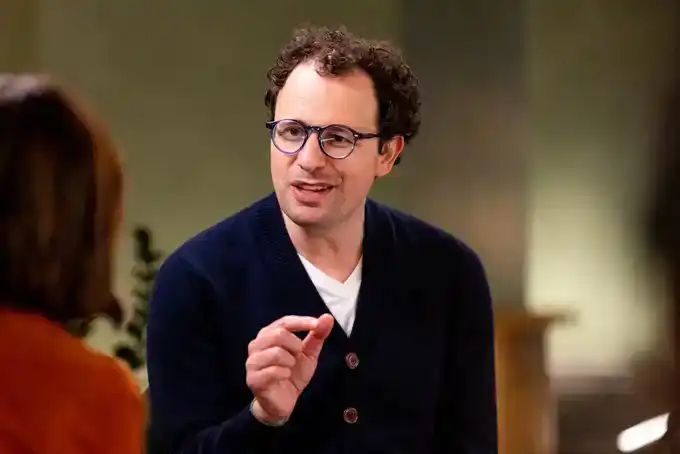
"It is incredibly freeing," Dario said in an interview with Emily Chang for Bloomberg's "The Circuit" program. "It allows me to do all the things I should be doing much more easily than I ever did before."

For Dario, a first-time founder and a Princeton Ph.D. in biophysics whose early career was spent in a research lab, that often means spending a lot of time thinking about artificial intelligence and its implications for humanity. He does this via companywide "Vision Quest" meetings—where he reflects on a broad range of topics—and long public essays.

"It's a matter of focus and context in many ways. If you have a bunch of things you have to deal with tomorrow, it's very hard to focus on the strategic big picture," he said. "And so separating these two things can often be very useful so you can do both well."

Before co-founding Anthropic, Dario was a vice president of research at OpenAI, leaving over disagreements with the ChatGPT maker's leadership to start Anthropic in 2021. Prior to that, he was a senior research scientist at Google.

Daniela has more experience managing people at tech startups, having been an early employee at Stripe and also leading safety and policy teams at OpenAI.

Anthropic, valued at close to $1 trillion in its latest funding round, is working toward a public listing ahead of rival OpenAI.

The company brought on veteran tech executives in 2024, including Chief Financial Officer Krishna Rao, and in 2025 hired Chief Commercial Officer Paul Smith to support rapid expansion. They work alongside all seven of Anthropic's co-founders, whom the Amodei siblings have long cited as evidence of a cohesive culture.

Dario estimates he spends "maybe half" his time talking to employees about "Anthropic culture and how culture works," and said maintaining the company's culture is perhaps his and Daniela's "No. 1 priority."

"When you're growing this fast, you hire a lot of people from big tech companies. And if you don't tell them how Anthropic works, they will naturally replicate the only thing they know, which is how their previous companies work," he said.

Harvard Business School economist and management professor Raffaella Sadun says that how many people a CEO directly manages, beyond personal preference or leadership style, also reflects the nature of the organization's work. A company can be thought of as a problem-solving machine, she says, with lower-level staff handling routine matters and tougher issues and exceptions moving up the chain.

That suggests a CEO can have a wider span of control when other leaders in the organization are seasoned experts who can independently handle their areas of responsibility; but when a company faces a steady stream of novel problems and high-stakes decisions that require more senior judgment—like Anthropic—a narrower span might be necessary.

In either case, the organization must be thoughtfully constructed. "The manager's time is the scarcest resource," Sadun said. Ideally, a company's architecture is designed to protect that resource.

Связанные с этим вопросы

QWhat is the unconventional aspect of Dario Amodei's leadership at Anthropic?

AAs the CEO of a company valued at nearly a trillion dollars, Dario Amodei has only one direct report: his chief of staff, Avital Balwit. This contrasts sharply with the broader industry trend of CEOs expanding their span of control.

QWhy does Dario Amodei choose to have only one direct report?

ADario comes from a research background and believes the CEO's primary value lies in 'zoom out' activities like strategic direction, research judgment, organizational culture, and pondering AI's impact on humanity. He delegates all day-to-day 'zoom in' operational management to his sister, President Daniela Amodei, to protect large blocks of uninterrupted thinking time.

QHow does Dario Amodei spend most of his time at Anthropic?

AHe spends roughly half his time on cultural-building activities, primarily through bi-weekly all-hands meetings called 'Dario Vision Quest,' where he presents a long memo. The rest of his time is dedicated to research direction, strategy, and writing long-form public articles on AI's implications for civilization.

QWhat is the rationale behind the division of responsibilities between Dario and Daniela Amodei?

AThe division is based on complementary expertise. Dario's background is purely in research, while Daniela has extensive operational experience from roles at Stripe and OpenAI. This setup allows each to focus on their strengths: Dario on long-term strategy and culture, Daniela on daily operations and people management.

QAccording to Professor Raffaella Sadun, what determines the optimal span of control for a CEO?

AProfessor Sadun explains that a CEO's span of control depends on the nature of the problems the company faces. If a company deals mostly with known problems where leaders can operate independently, a wider span (more direct reports) is feasible. If it constantly faces novel, high-stakes problems requiring senior judgment (like Anthropic), a narrower span is necessary to protect the CEO's time, which is the most scarce resource.

Похожее

The Most Advanced Large Models Are Now Subject to Export Controls Like Enriched Uranium

In an unprecedented move mirroring the control of enriched uranium, the US Commerce Department has imposed an export control ban on Anthropic's advanced AI models, Fable 5 and Mythos 5, forcing their global shutdown. This marks the first time a purely digital entity—a set of neural network weights—has been subjected to such hardware-like strategic export restrictions, based not on physical scarcity but on its concentrated "capability density." The article draws a direct parallel to the historical control of nuclear technology, arguing that just as uranium ore becomes a controlled substance only when enriched to a critical threshold, AI capabilities become subject to regulation when compressed into a single, potent, and easily accessible interface. This "enriched AI" is seen as crossing a threshold where its aggregated power poses a potential threat. The author predicts three major consequences over the next decade. First, capability auditing will become institutionalized, with governments setting compliance checklists and thresholds for model power, triggering automatic export controls. Second, jurisdictional boundaries will blur as US export controls extend their reach globally, governing any user of American AI services regardless of location, forcing non-US entities to reconsider their AI supply chain dependencies. Third, a technological bifurcation will occur, splitting the AI landscape into a restricted, high-risk track of advanced US proprietary models and a more reliable track of open-source or locally developed alternatives, where guaranteed access may outweigh raw performance. The core crisis exposed is the lack of a legal property rights framework for AI "intelligence." While companies invest heavily in integrating these models into their production systems, legally they only purchase a service that can be revoked at any time, leaving them with no recourse for their sunk investments. The conclusion warns of a permanently fractured digital world where the most capable models may not be the most usable, and clear, unassailable ownership of technology will become paramount.

marsbit13 мин. назад

The Most Advanced Large Models Are Now Subject to Export Controls Like Enriched Uranium

marsbit13 мин. назад

From a $300 Million Valuation to a 'Fire Sale' at Tens of Millions: What Happened to Messari?

On June 12, leading crypto data and capital markets platform Blockworks announced its acquisition of competitor Messari for over $10 million. This price represents a significant discount from Messari's 2022 valuation peak of approximately $300 million, highlighting the survival pressures faced by high-valuation startups during the bear market and a consolidation wave in data infrastructure. Blockworks, founded in 2018, began as a media and events company but has pivoted to focus on institutional-grade data, investor relations, and compliance tools. Its recent Series A extension round, valuing the company at $192 million, aimed to fund this shift and strategic acquisitions like this one. Messari, also founded in 2018, grew as a go-to platform for professional crypto research and data, raising a $35 million Series B at its $300 million valuation in late 2022. However, the prolonged bear market and subsequent internal changes, including founder Ryan Selkis's departure in 2024, increased operational pressures. The acquisition integrates Messari's extensive data platform and API capabilities with Blockworks's strengths in issuer-side disclosure, investor relations, and compliance workflows. The combined entity aims to build a unified "system of record" for the on-chain market. This reflects a broader industry trend where high-quality, structured data is becoming critical for institutional adoption, AI agents, and creating data moats akin to traditional financial platforms like Bloomberg. The deal exemplifies how market consolidation is reshaping the fragmented crypto data landscape.

marsbit41 мин. назад

From a $300 Million Valuation to a 'Fire Sale' at Tens of Millions: What Happened to Messari?

marsbit41 мин. назад

If the AI Bubble Is Already Bursting, Who Will Truly Survive?

If the AI Bubble is Bursting, Who Will Remain? The debate over an AI bubble is intensifying, with figures like Ray Dalio warning of high levels and Jensen Huang seeing immense, early-stage opportunity. Both views hold truth: a speculative bubble in capital markets likely exists, mirroring the dot-com era, but the underlying technological shift is real and transformative. History shows that while bubbles burst—wiping out overvalued companies and speculative capital—they often leave behind critical physical and digital infrastructure. The dot-com bust, for instance, eliminated many firms but left the global fiber optic networks and data centers that enabled the rise of Amazon, Netflix, and cloud computing. Today's massive AI infrastructure investments (projected at trillions by 2030) in data centers, power, cooling, and GPUs may follow a similar path, creating the foundation for future applications. A key divergence from past bubbles is the "Jevons Paradox" effect in AI. As the cost of AI inference has plummeted by over 99.7% since 2023, enterprise spending on AI has skyrocketed. Cheap "tokens" have unlocked vast, previously uneconomical use cases, moving AI from simple chatbots into core business workflows—code generation, legal document review, scientific simulation, and financial analysis. The market is now in a phase of self-correction, weeding out superficial "API-wrapper" startups, but this cleansing process strengthens the ecosystem. The long-term trajectory is clear. The value is gradually shifting from capital expenditure (CapEx) on hardware to operational expenditure (OpEx) on transformative applications. As AI becomes a utility, the winners will be firms that deeply integrate it to solve vertical industry problems in law, healthcare, finance, and manufacturing. The泡沫 will recede, but the foundational shift towards an AI-powered era across all sectors is irreversible. The underlying productive force of AI contains no bubble.

marsbit1 ч. назад

If the AI Bubble Is Already Bursting, Who Will Truly Survive?

marsbit1 ч. назад

Торговля

Спот
Фьючерсы

Популярные статьи

Как купить S

Добро пожаловать на HTX.com! Мы сделали приобретение Sonic (S) простым и удобным. Следуйте нашему пошаговому руководству и отправляйтесь в свое крипто-путешествие.Шаг 1: Создайте аккаунт на HTXИспользуйте свой адрес электронной почты или номер телефона, чтобы зарегистрироваться и бесплатно создать аккаунт на HTX. Пройдите удобную регистрацию и откройте для себя весь функционал.Создать аккаунтШаг 2: Перейдите в Купить криптовалюту и выберите свой способ оплатыКредитная/Дебетовая Карта: Используйте свою карту Visa или Mastercard для мгновенной покупки Sonic (S).Баланс: Используйте средства с баланса вашего аккаунта HTX для простой торговли.Третьи Лица: Мы добавили популярные способы оплаты, такие как Google Pay и Apple Pay, для повышения удобства.P2P: Торгуйте напрямую с другими пользователями на HTX.Внебиржевая Торговля (OTC): Мы предлагаем индивидуальные услуги и конкурентоспособные обменные курсы для трейдеров.Шаг 3: Хранение Sonic (S)После приобретения вами Sonic (S) храните их в своем аккаунте на HTX. В качестве альтернативы вы можете отправить их куда-либо с помощью перевода в блокчейне или использовать для торговли с другими криптовалютами.Шаг 4: Торговля Sonic (S)С легкостью торгуйте Sonic (S) на спотовом рынке HTX. Просто зайдите в свой аккаунт, выберите торговую пару, совершайте сделки и следите за ними в режиме реального времени. Мы предлагаем удобный интерфейс как для начинающих, так и для опытных трейдеров.

1.5k просмотров всегоОпубликовано 2025.01.15Обновлено 2026.06.02

Как купить S

Sonic: Обновления под руководством Андре Кронье – новая звезда Layer-1 на фоне спада рынка

Он решает проблемы масштабируемости, совместимости между блокчейнами и стимулов для разработчиков с помощью технологических инноваций.

2.3k просмотров всегоОпубликовано 2025.04.09Обновлено 2025.04.09

Sonic: Обновления под руководством Андре Кронье – новая звезда Layer-1 на фоне спада рынка

HTX Learn: Пройдите обучение по "Sonic" и разделите 1000 USDT

HTX Learn — ваш проводник в мир перспективных проектов, и мы запускаем специальное мероприятие "Учитесь и Зарабатывайте", посвящённое этим проектам. Наше новое направление .

1.8k просмотров всегоОпубликовано 2025.04.10Обновлено 2025.04.10

HTX Learn: Пройдите обучение по "Sonic" и разделите 1000 USDT

Обсуждения

Добро пожаловать в Сообщество HTX. Здесь вы сможете быть в курсе последних новостей о развитии платформы и получить доступ к профессиональной аналитической информации о рынке. Мнения пользователей о цене на S (S) представлены ниже.

活动图片