KuCoin Launches 24/7 Stock Index Perpetual Contracts Featuring Tesla and MicroStrategy

TheNewsCryptoОпубликовано 2026-03-13Обновлено 2026-03-13

Введение

KuCoin has launched 24/7 Stock Index Perpetual Contracts, starting with Tesla (TSLAUSDT) and MicroStrategy (MSTRUSDT). These synthetic derivatives allow round-the-clock trading with entry from just $1 USDT. They feature institutional-grade pricing, session-aware mark pricing, and EMA-based smoothing to reduce volatility risks around traditional market hours. The product aims to bridge TradFi and crypto by offering continuous, accessible cross-asset trading without actual stock ownership. KuCoin CEO highlighted the move as part of their Trust-First strategy to provide robust, real-time risk management. Availability may be restricted in some jurisdictions, and trading carries significant risk.

KuCoin, a leading global crypto platform founded on trust, today announced the debut of its Stock Index Perpetual Contracts, with the first batch of contracts set to list, including the Tesla Index Perpetual Contract (TSLAUSDT) and the MicroStrategy Index Perpetual Contract (MSTRUSDT). The new product, which combines 24/7 trading, micro-contract entry from 1 USDT, and a risk control framework based on institutional-grade pricing, session-aware mark pricing, and EMA-based transition smoothing, offers qualified global users a more continuous, flexible, and risk-conscious tool for cross-asset allocation while further growing KuCoin’s cross-market derivatives infrastructure under its Trust-First strategy. Traditional finance (TradFi) and crypto infrastructure continue to converge.

Portfolio management is moving away from single-market participation and toward continuous risk management across time zones and asset classes as global markets become more linked and event-driven. Liquidity levels in conventional equities markets may fluctuate significantly around market open and close, leading to short-term price disruptions and raising the possibility of technical liquidations. By introducing equity-linked derivatives into a crypto-native, always-on trading environment, KuCoin’s Stock Index Perpetual Contracts are intended to overcome that structural constraint.

Key features include:

  • 24/7 Trading Access: Equity-linked contracts are always accessible outside of regular market hours.
  • Micro-Contract Entry: With positions starting at only $1 USDT, participation is more accessible to people worldwide.
  • Institutional-Grade Pricing Framework: To better represent underlying market dynamics and lessen traders’ exposure to volatility across a range of liquidity situations, session-aware mark pricing and institutional-grade reference pricing methods are used.
  • A pricing strategy called EMA-Based Transition Smoothing aims to lessen sudden disruptions around market open and closing.

BC Wong, CEO of KuCoin, said:

“Global capital markets are moving toward a new phase defined by liquidity, real-time risk management, and seamless access. We believe next-generation financial infrastructure must go beyond asset tokenization. It must also provide more reliable pricing, more continuous market access, and more disciplined risk controls. The launch of our Stock Index Perpetual Contracts reflects KuCoin’s long-term commitment to supporting the convergence of TradFi and Crypto through infrastructure built on trust.”

In order to promote stable market operations and user safety, it will keep improving the product architecture, including possible improvements to pricing methodology, risk management systems, and liquidity mechanisms. In addition to broadening KuCoin’s derivatives offering, this launch embodies the fundamental tenet of its Trust-First strategy: long-term value in market innovation rests not just on increased asset availability but also on the robustness of the infrastructure and risk controls that underpin it.

KuCoin, a well-known international cryptocurrency platform with over 40 million users in more than 200 countries and regions, was founded in 2017. With access to more than 1,000 listed tokens, spot and futures trading, institutional wealth management, and a Web3 wallet, the platform offers cutting-edge digital asset services.

KuCoin’s dedication to superior security is shown by its SOC 2 Type II and ISO 27001:2022 certifications, which have been acknowledged by Forbes and Hurun. Under CEO BC Wong, KuCoin continues to grow its regulated footprint, establishing a dependable and trustworthy digital-asset ecosystem with AUSTRAC registration in Australia and a MiCA license in Austria.

*Important Notice:

  • These contracts are synthetic derivative products designed to track the price movements of certain publicly available equity benchmarks. They are stablecoin-settled perpetual derivative contracts and do not represent ownership of any stocks or securities, and no shares will be delivered.
  • Access to these products may not be available in certain jurisdictions and may be restricted based on applicable laws and platform compliance requirements. Trading derivatives involves significant risk, including the potential loss of your entire margin. If you have any questions, please seek independent advice. Before trading, please review the Terms of Use, Futures Services Terms, and Risk Disclosure Statements (as updated from time to time).
TagsexchangeKuCoin

Связанные с этим вопросы

QWhat are the key features of KuCoin's new Stock Index Perpetual Contracts?

AThe key features include 24/7 trading access, micro-contract entry starting at $1 USDT, an institutional-grade pricing framework with session-aware mark pricing, and EMA-based transition smoothing to reduce disruptions around market open and close.

QWhich specific perpetual contracts are included in the first batch of KuCoin's Stock Index Perpetual Contracts?

AThe first batch includes the Tesla Index Perpetual Contract (TSLAUSDT) and the MicroStrategy Index Perpetual Contract (MSTRUSDT).

QWhat problem do KuCoin's Stock Index Perpetual Contracts aim to solve in traditional equity markets?

AThey aim to overcome structural constraints in traditional equity markets where liquidity fluctuates significantly around market open and close, leading to short-term price disruptions and increased risk of technical liquidations.

QWhat certifications demonstrate KuCoin's commitment to security according to the article?

AKuCoin has SOC 2 Type II and ISO 27001:2022 certifications, demonstrating its commitment to superior security.

QDo these perpetual contracts represent actual ownership of the underlying stocks?

ANo, these are synthetic derivative products designed to track price movements of equity benchmarks. They are stablecoin-settled perpetual contracts and do not represent ownership of any stocks or securities, with no shares being delivered.

Похожее

Has Hook Summer Really Arrived? sato, Lo0p, FLOOD Ignite the New Narrative of Uniswap v4

"Hook Summer" Arrives? Sato, Lo0p, FLOOD Ignite Uniswap v4 Narrative Amidst a slight market recovery, attention within the Ethereum ecosystem has shifted to Meme coins built on Uniswap v4's Hook protocol. Following ASTEROID, tokens like sato, sat1, Lo0p, and FLOOD have become market focal points, with market caps ranging from millions to tens of millions, bringing concentrated liquidity to a narrative-dry market. Uniswap v4 Hooks are "plugin smart contracts" that allow developers to inject custom logic at key points in a liquidity pool's lifecycle (initialization, adding/removing liquidity, swaps, etc.), making the AMM programmable. Recent representative projects include: * **sato**: Market cap peaked over $38M; uses a v4 curve mechanism for minting/burning, locking ETH as reserve. * **sat1**: Market cap briefly exceeded $10M, positioning as an "optimized sato," but later declined significantly. * **Lo0p**: Market cap neared $6.6M; a "lending AMM protocol" allowing users to borrow ETH against deposited LO0P tokens without immediate selling pressure. * **FLOOD**: Market cap approached $6M; channels trading reserves into Aave v3 to generate yield, which is retained in the pool. The emergence of these Hook-based tokens could drive long-term growth for the Uniswap ecosystem by attracting users and liquidity to v4 pools. Combined with Uniswap's activated fee switch (partially used to burn UNI), the long-term outlook for UNI appears positive. However, short-term UNI price appreciation is not directly guaranteed. Factors include the sustainability and lifecycle of these new tokens, their price volatility, overall market conditions, and regulatory pressures. Currently, Uniswap v4's TVL ($595M) lags behind v3 and v2, indicating Hook adoption still requires time to mature. In summary, the Hook ecosystem serves as "long-term nourishment" for UNI, but acts more as a "catalyst" than a direct "booster" in the short term. Note: These are early-stage experimental tokens and may carry unknown risks.

marsbit14 мин. назад

Has Hook Summer Really Arrived? sato, Lo0p, FLOOD Ignite the New Narrative of Uniswap v4

marsbit14 мин. назад

Has Hook Summer Truly Arrived? sato, Lo0p, FLOOD Ignite the New Uniswap v4 Narrative

With the broader market showing signs of recovery, a new wave of interest has emerged around Ethereum-based meme coins. Following ASTEROID, tokens like sato, sat1, Lo0p, and FLOOD, built upon the Uniswap v4 Hook protocol, are capturing market attention. Their market capitalizations range from millions to tens of millions of dollars, injecting much-needed focused liquidity into a market lacking narratives. This article explores whether this trend signifies an incoming "Hook Summer" and its potential impact on UNI's price. Hooks are essentially plug-in smart contracts for Uniswap v4 liquidity pools, allowing developers to inject custom logic at key points in a pool's lifecycle (like initialization, adding/removing liquidity, swaps). This transforms the AMM into programmable building blocks. Key highlighted projects include: * **sato**: Peaked over $38M market cap. It utilizes a v4 curve for minting/burning; buying locks ETH as reserve to mint new tokens, while selling redeems ETH from the reserve and burns tokens. * **sat1**: Market cap briefly exceeded $10M, promoted as an "optimized sato," but later declined significantly. * **Lo0p**: Reached nearly $6.6M. It's a lending AMM protocol where buying LO0P tokens locks them as collateral, allowing users to borrow ETH from the pool reserve at 40% LTV, aiming to improve capital efficiency for idle ETH in LPs. * **FLOOD**: Peaked near $6M. Its mechanism directs asset reserves from buys into Aave v3 to generate yield, with fees and interest retained in the pool to potentially influence the token's price long-term. In the long term, the development of the Hook ecosystem can attract users and liquidity to Uniswap v4, benefiting UNI's fundamentals—especially combined with the recent activation of the protocol fee switch, where a portion of fees is used to burn UNI. However, in the short term, these Hook-based tokens are unlikely to directly drive significant UNI price appreciation. Their impact is moderated by factors like token sustainability, price volatility, and broader market and regulatory conditions. Currently, Uniswap v4's TVL ($595M) still trails behind v2 and v3, indicating adoption and growth will take time. The article concludes that while the Hook ecosystem provides long-term "nourishment" for UNI, its short-term role is more of a "catalyst" than a "booster." Readers are cautioned that these are early-stage experimental tokens and may carry unknown risks.

Odaily星球日报26 мин. назад

Has Hook Summer Truly Arrived? sato, Lo0p, FLOOD Ignite the New Uniswap v4 Narrative

Odaily星球日报26 мин. назад

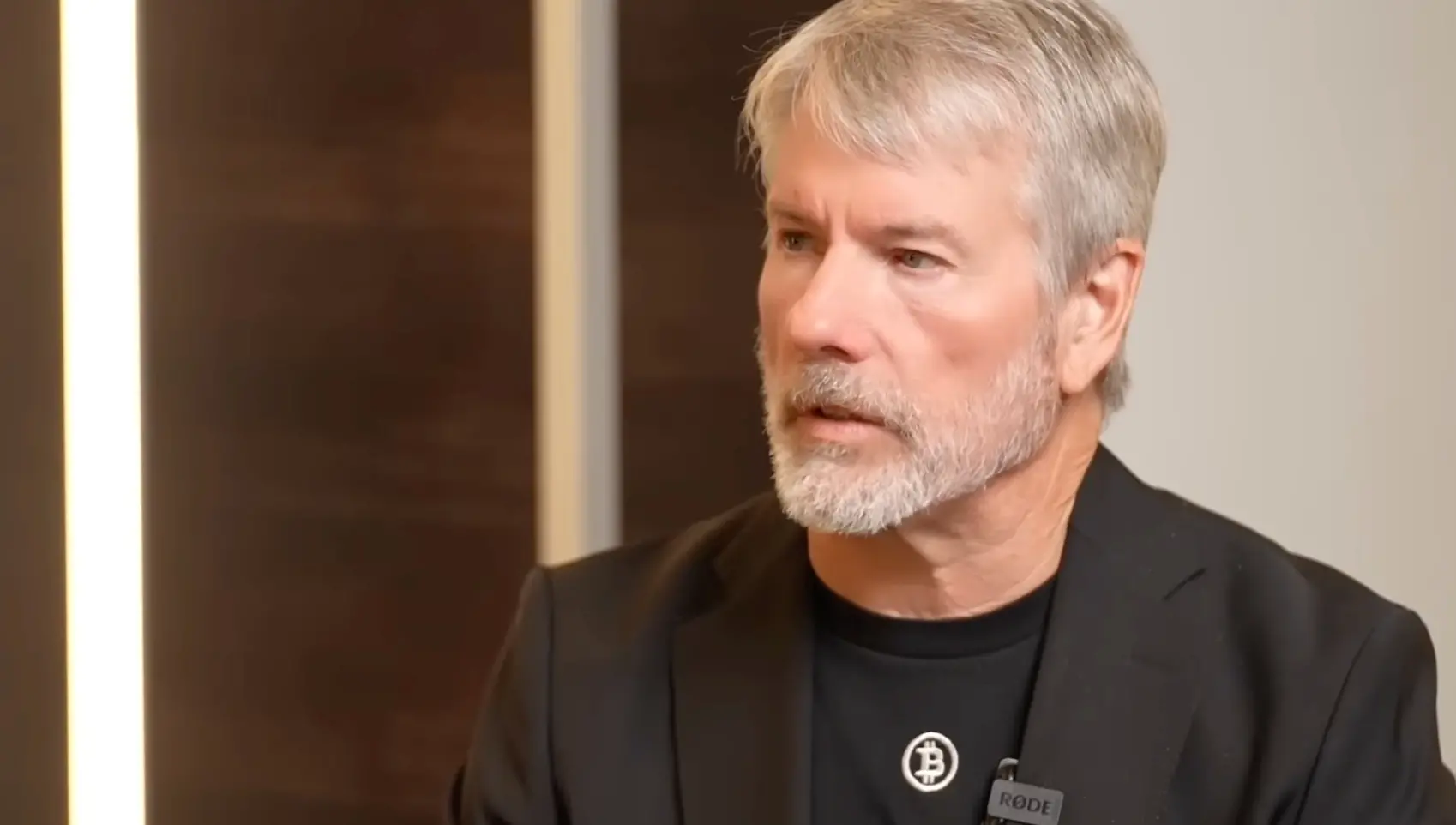
Interview with Michael Saylor: I Did Say I Would Sell Bitcoin, But Never a Net Sale

Interview with Michael Saylor: I Said We'd Sell Bitcoin, But Never Be a Net Seller In a recent podcast, MicroStrategy Executive Chairman Michael Saylor clarified the company's stance on potentially selling Bitcoin. Following MicroStrategy's earnings call statement about being prepared to sell BTC to fund dividends for its STRC (Strategic) credit product, Saylor emphasized the distinction between selling and being a "net seller." Saylor explained the core business model: MicroStrategy sells credit instruments like STRC and uses the proceeds to buy Bitcoin, which is viewed as "digital capital" expected to appreciate around 30-40% annually. A portion of these capital gains can then be used to pay the dividends on the credit products. He stressed that even if the company sells some Bitcoin for dividends, it simultaneously buys much more with new credit issuance. For example, after raising $3.2 billion from STRC sales in April, the dividend obligation was only $80-90 million, making the company a net buyer. The clarification aims to counter market narratives questioning the value of Bitcoin on MicroStrategy's balance sheet if it were never sold, and to dismiss claims of a "Ponzi scheme." Saylor reiterated his personal philosophy for investors: "Don't be a net seller of bitcoin" and ensure your Bitcoin holdings increase each year. Saylor also discussed Bitcoin's role as the foundation for "digital credit," noting that STRC has become the largest and most liquid preferred stock issue in the U.S., offering high risk-adjusted returns (Sharpe ratio). He highlighted Bitcoin's deep liquidity, stating that even large purchases by MicroStrategy do not move the market significantly, which is driven by macro factors, geopolitical tensions, and capital flows from ETFs and credit products. Finally, Saylor reflected on his early inspiration from sci-fi books, which motivated his path to MIT, and maintained his fundamental thesis on Bitcoin remains unchanged: it is superior digital capital enabling superior digital credit.

链捕手30 мин. назад

Interview with Michael Saylor: I Did Say I Would Sell Bitcoin, But Never a Net Sale

链捕手30 мин. назад

Beaten SK Hynix Employees in China: Year-end Bonus Less Than 5% of Korean Staff's

"SK Hynix Chinese Staff Hit Hard: Bonuses Less Than 5% of Korean Counterparts" Driven by the AI boom, South Korea's SK Hynix is experiencing record performance, with media reports predicting massive year-end bonuses for its employees, making them highly desirable in the matchmaking market. However, this prosperity starkly contrasts with the situation for the company's Chinese employees. According to reports, SK Hynix operates under a rule allocating 10% of operating profit for employee bonuses. While projections suggest Korean employees could receive bonuses reaching millions of RMB, a Chinese employee with over a decade of technical experience revealed the disparity: "If they get 3 million, Chinese staff get less than 5% of that." After adjustments based on KPI ratings, this employee's highest bonus was slightly over 100,000 RMB. Bonuses are paid annually in Korea but semi-annually in China. During the industry downturn in 2023-2024, Chinese employees received no bonus at all. The gap extends beyond bonuses. Recruitment posts for SK Hynix's Chinese factories (in Wuxi, Dalian, Chongqing) show engineer monthly salaries ranging from 10,000 to 35,000 RMB, with a 13th-month salary promised. Chinese employees also receive standard benefits like annual leave but lack stock incentives, which are reportedly unavailable to them. Furthermore, management positions in China are predominantly held by Korean personnel, though industry observers note a gradual increase in local middle managers over time. SK Hynix has confirmed the 10% bonus rule but cautioned that specific future bonus amounts remain unpredictable. The company forecasts strong demand for HBM and other high-value enterprise products for the next 2-3 years, driven by AI infrastructure investment. This focus on business-to-business markets may continue to constrain supply for consumer products, potentially prolonging price increases for components like memory.

链捕手44 мин. назад

Beaten SK Hynix Employees in China: Year-end Bonus Less Than 5% of Korean Staff's

链捕手44 мин. назад

Торговля

Спот
Фьючерсы
活动图片