Kalshi, Crypto.com rally industry giants to form prediction markets coalition – Details

ambcryptoОпубликовано 2025-12-13Обновлено 2025-12-13

Введение

In a significant move for the prediction markets industry, Kalshi and Crypto.com have formed the Coalition for Prediction Markets (CPM), uniting major players like Coinbase, Robinhood, and Underdog. The coalition aims to advocate for federal oversight, establish nationwide integrity standards, and counter state-level restrictions that treat prediction markets as gambling. Supporters argue these platforms are valuable forecasting tools, while critics label them as online gambling. The CPM is pushing for regulated growth, emphasizing consumer protection and transparency. A recent court ruling temporarily halting enforcement against Kalshi has bolstered the argument that these are financial markets, not gambling operations.

In a surprising episode of cross-sector unity, the fast-growing predictions market industry has come together to form a national alliance to defend its regulatory future.

Kalshi X Crypto.com

Crypto exchange Kalshi and platform Crypto.com have launched the Coalition for Prediction Markets (CPM), an aggressive advocacy group. It brings together members ranging from crypto giants like Coinbase to retail trading powerhouse Robinhood and sports gaming operator Underdog.

With the market now moving billions, the CPM is pushing to solidify federal oversight.

According to Nick Jones, founder of crypto firm Zumo, the coalition aims to further legitimize the sector by “strengthening operating rules and setting a higher bar for integrity standards.”

The coalition also seeks to stop states from restricting the industry, which uses collective intelligence to predict everything from Fed rates to elections, by treating it as mere gambling.

What are critics so worried about?

This news has fueled debate, as supporters argue that these platforms serve as valuable crowdsourced forecasting tools.

For instance, Matt David, Executive Board member of CPM, noted,

“The U.S. is the biggest frontier for prediction markets, and the momentum we’re seeing makes a unified industry voice not just important, but necessary.”

Critics, however, claim the platforms are “nothing more than online gambling,” a charge the CPM is now prepared to fight with a unified, federally focused position.

Despite the criticism though, investors continue to show strong confidence in the sector. Both Kalshi and its peer Polymarket are expanding rapidly in 2025 too.

Immediate action and more

Therefore, the coalition is taking a proactive and not merely a defensive approach.

It plans to strengthen the federal framework for prediction markets, set nationwide integrity standards to curb insider trading, and vigorously push back against state-level overreach.

This commitment to regulated growth defines the industry’s narrative.

According to Sara Slane, Head of Corporate Development at Kalshi and executive member of the coalition,

“We spent years working with the CFTC because prediction markets must operate with strong federal safeguards that prevent insider trading, protect consumers, and ensure these markets remain transparent and corruption-free.”

For new mega-valuation players, CFTC oversight provides the foundation they need for legitimacy and continued institutional investment.

At the same time, a federal judge in Connecticut granted Kalshi a temporary halt on state enforcement actions, blocking a cease-and-desist order until key hearings in early 2026.

This ruling has strengthened the industry’s argument that prediction markets function as federally regulated financial markets, not gambling.


Final Thoughts

  • The creation of the CPM shows the prediction market industry is no longer acting alone.
  • With trading volumes growing and valuations soaring, the sector is pushing hard for clear federal rules.

Похожее

Topping GitHub's Trending, the Essential Guide for Claude Code Users

The CLAUDE.md file, trending on GitHub, is a project-level guide for Claude Code designed to dramatically improve its accuracy and efficiency. It addresses key issues like repetitive context explanations, unauthorized code changes, and forgotten decisions across sessions. By placing this plain-text file in a project root, Claude Code reads it automatically at the start of each session. The guide includes rules to eliminate redundant explanations, enforce strict behavioral constraints (e.g., no modifications outside the requested scope without confirmation), and establish a "memory" system using companion files like MEMORY.md and ERRORS.md to log past decisions and failures. It also locks in the project's specific tech stack to prevent inappropriate tool recommendations. Highlighted are four foundational rules from Andrej Karpathy that reportedly increased coding accuracy from 65% to 94%: always ask for clarity first, implement the simplest solution, never touch unrelated code, and explicitly flag uncertainties. The article quantifies significant weekly cost savings for developers and teams by eliminating wasted time on re-explaining context, rolling back unauthorized edits, and re-evaluating previously rejected solutions. The core message is that a small, upfront investment in creating a CLAUDE.md file leads to a more predictable, controlled, and cost-effective AI programming assistant.

marsbit10 мин. назад

Topping GitHub's Trending, the Essential Guide for Claude Code Users

marsbit10 мин. назад

When Computing Power Becomes Commoditized, How Long Until a GPU Futures Market Emerges?

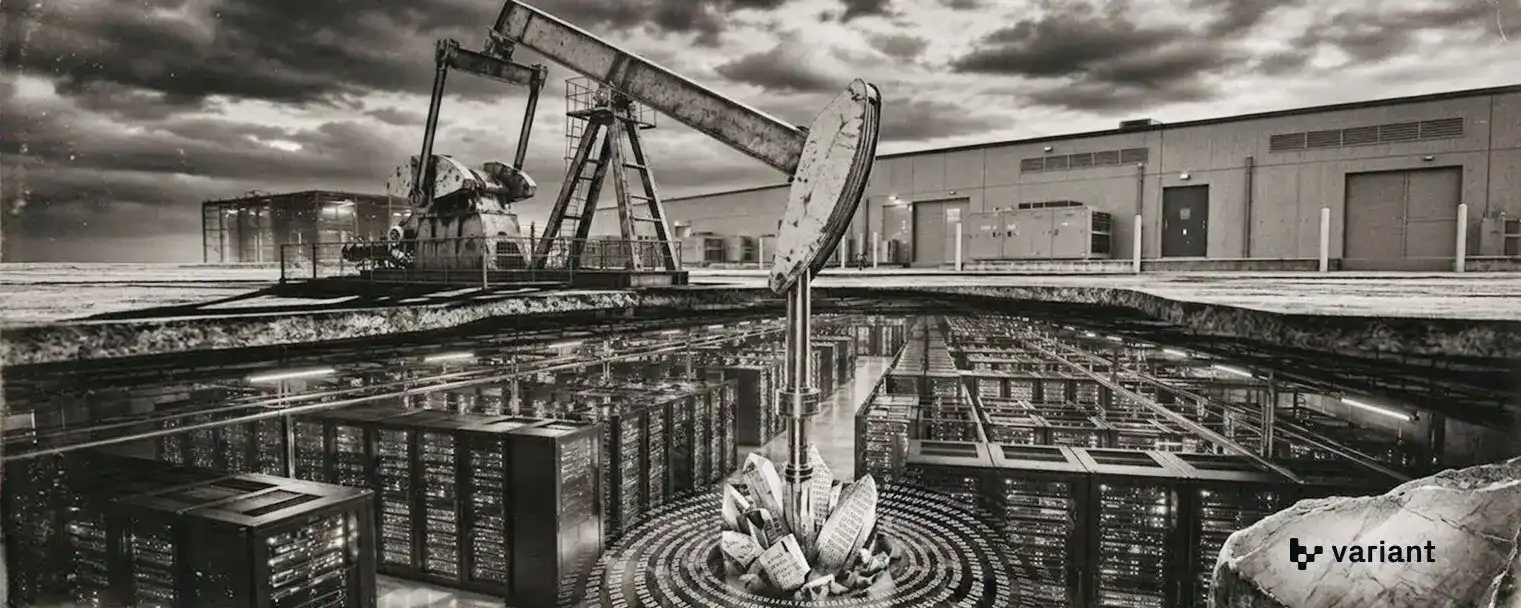
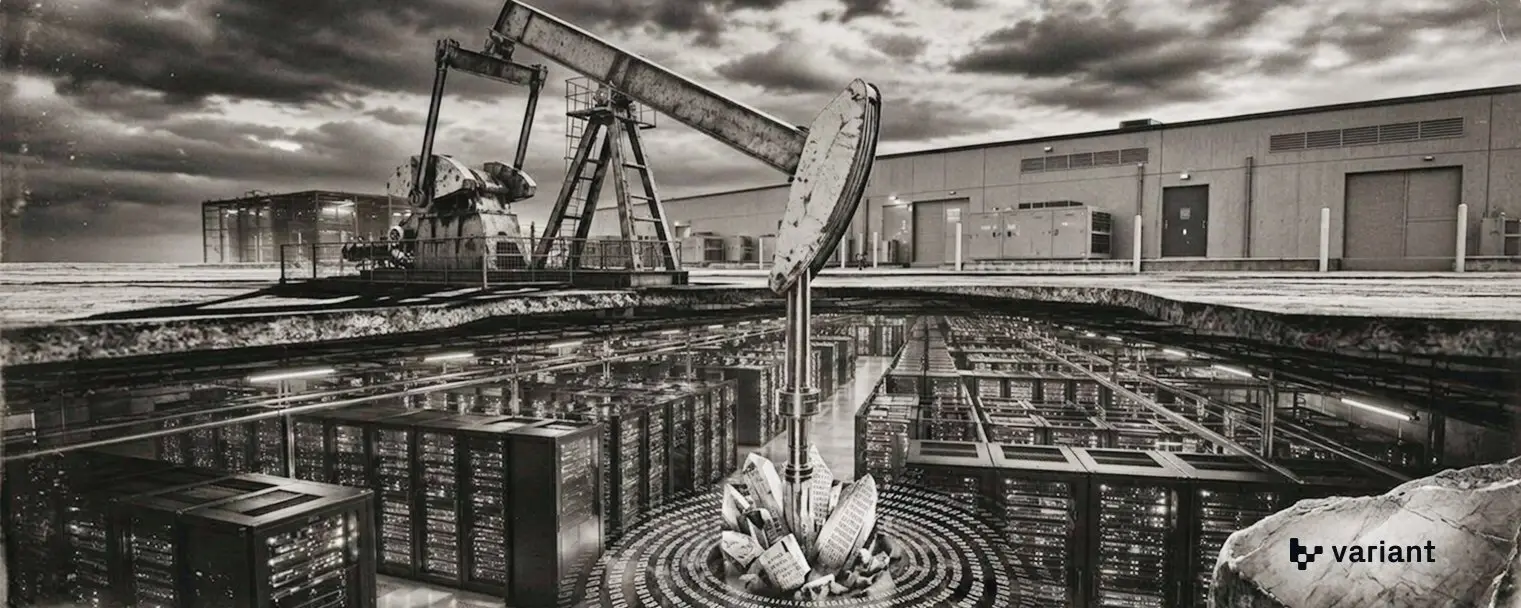
"When Will GPU Futures Arrive? A Framework for Assessing Compute as a Commodity" The article explores the potential for a robust futures market for compute power (GPUs), arguing that such a market is not yet mature but may emerge. It analyzes the landscape using a five-part framework developed for new commodity futures markets. The analysis scores the current state: * **Fragmented Supply (Red)**: Supply is highly concentrated among hyperscale cloud providers (AWS, Azure, GCP, Oracle), limiting the need for price discovery. * **Price Volatility (Green)**: GPU pricing is already highly volatile due to uncertain supply and surging demand. * **Physical Settlement Infrastructure (Green)**: Early infrastructure exists via OTC brokers and price indices (e.g., Ornn, Silicon Data) standardizing contracts. * **Standardized Unit (Red)**: A lack of standardized, tradable units hinders markets; a GPU instance hour varies by region, configuration, and contract terms. * **Lack of Alternatives (Yellow)**: Large players hedge internally via vertical integration, while smaller players bear spot market risk. Overall, the market shows promise (volatility, early infrastructure) but lacks the fragmented supply and standardization needed for large-scale futures trading. Most activity remains OTC. Key open questions and hypotheses: 1. Supply is expected to fragment moderately in 1-2 years, driven by new cloud providers, cheap power locations, and demand from non-frontier labs and AI startups using open-source models. 2. Standardization is most likely to emerge around inference workloads (forecast to be >65% of AI compute demand by 2029), which have simpler, more homogeneous hardware needs than training. Widespread adoption of open-source model weights could accelerate this by democratizing inference and creating demand for optimized, standardized infrastructure. 3. The primary traded unit will likely be the **"chip instance hour"** (akin to electricity, traded regionally), not the physical chip or the downstream AI output (tokens).

marsbit38 мин. назад

When Computing Power Becomes Commoditized, How Long Until a GPU Futures Market Emerges?

marsbit38 мин. назад

When Computing Power Becomes Commoditized, How Long Until a GPU Futures Market?

When Compute is Commoditized: How Far Away is a GPU Futures Market? The article explores the potential emergence of a futures market for computing power ("compute"), akin to markets for commodities like oil or electricity. It uses a five-dimension framework to assess the market's maturity for sustaining robust futures trading. **Current Market Assessment (Scorecard):** * **Supply Fragmentation:** 🔴 **Red.** Supply is highly concentrated, dominated by a few hyperscale cloud providers. * **Price Volatility:** 🟢 **Green.** GPU pricing is already highly volatile. * **Physical Settlement Infrastructure:** 🟢 **Green.** Early infrastructure exists at the OTC/broker level. * **Standardization:** 🔴 **Red.** Compute lacks a standardized, tradable unit (e.g., an H100 hour is not uniform). * **Lack of Substitutes:** 🟡 **Yellow.** Vertically integrated players can hedge internally, while others are forced to be long. **Conclusion:** The overall scorecard suggests a robust futures market is premature. The market has volatility and early settlement infrastructure but lacks the necessary supply fragmentation and standardization for large-scale price discovery. Most activity remains OTC. **Key Unanswered Questions & Hypotheses:** The article posits that the market could evolve in the next 1-2 years: 1. **Supply:** May become *moderately more fragmented* due to new cloud providers, cheaper power locations, and demand from long-tail users (e.g., startups running open-source model inference). 2. **Standardization:** Could emerge from the growing **inference** workload (expected to be >65% of AI compute demand by 2029), which has more homogeneous hardware requirements than custom training workloads. Widespread adoption of **open-source model weights** is seen as a key catalyst for democratizing inference and driving infrastructure standardization. 3. **Traded Unit:** The most viable layer for trading is likely the **"chip-instance-hour"** (powered, usable compute time), traded similarly to electricity in regional contracts with spot/futures overlays. Trading at the upstream "chip" layer is unlikely due to supply concentration, while the downstream "token" layer faces challenges due to lack of uniformity across AI models.

链捕手44 мин. назад

When Computing Power Becomes Commoditized, How Long Until a GPU Futures Market?

链捕手44 мин. назад

Торговля

Спот
Фьючерсы

Популярные статьи

Как купить HPP

Добро пожаловать на HTX.com! Мы сделали приобретение House Party Protocol (HPP) простым и удобным. Следуйте нашему пошаговому руководству и отправляйтесь в свое крипто-путешествие.Шаг 1: Создайте аккаунт на HTXИспользуйте свой адрес электронной почты или номер телефона, чтобы зарегистрироваться и бесплатно создать аккаунт на HTX. Пройдите удобную регистрацию и откройте для себя весь функционал.Создать аккаунтШаг 2: Перейдите в Купить криптовалюту и выберите свой способ оплатыКредитная/Дебетовая Карта: Используйте свою карту Visa или Mastercard для мгновенной покупки House Party Protocol (HPP).Баланс: Используйте средства с баланса вашего аккаунта HTX для простой торговли.Третьи Лица: Мы добавили популярные способы оплаты, такие как Google Pay и Apple Pay, для повышения удобства.P2P: Торгуйте напрямую с другими пользователями на HTX.Внебиржевая Торговля (OTC): Мы предлагаем индивидуальные услуги и конкурентоспособные обменные курсы для трейдеров.Шаг 3: Хранение House Party Protocol (HPP)После приобретения вами House Party Protocol (HPP) храните их в своем аккаунте на HTX. В качестве альтернативы вы можете отправить их куда-либо с помощью перевода в блокчейне или использовать для торговли с другими криптовалютами.Шаг 4: Торговля House Party Protocol (HPP)С легкостью торгуйте House Party Protocol (HPP) на спотовом рынке HTX. Просто зайдите в свой аккаунт, выберите торговую пару, совершайте сделки и следите за ними в режиме реального времени. Мы предлагаем удобный интерфейс как для начинающих, так и для опытных трейдеров.

164 просмотров всегоОпубликовано 2026.04.29Обновлено 2026.04.29

Как купить HPP

Что такое GENIUS

I. Введение в проект1. Что такое Genius?Genius (GENIUS) позиционируется как «конечный терминал на блокчейне», децентрализованная торговая платформа, ориентированная на конфиденциальность и скорость. Интегрируя технологии конфиденциальности высшего уровня, она стремится создать инфраструктуру торговли с конфиденциальностью нового поколения на таких сетях, как BNB Chain, позволяя пользователям взаимодействовать на блокчейне с бесшовным опытом, сопоставимым с централизованными биржами.2. Как работает Genius?Основная техническая архитектура Genius структурирована следующим образом:(1) Невидимость для цепочки: Пользователям не нужно вручную обрабатывать многоступенчатые одобрения для кросс-цепочных операций, упаковки активов или сложного управления газом.(2) Торговля без подписи: Благодаря интеграциям, таким как Turnkey, Genius позволяет мгновенно торговать без всплывающих подтверждений или авторизации на каждую транзакцию.(3) Аггрегатор аггрегаторов: Genius работает на основе лучшего в своем классе стека агрегации, интегрированного с более чем 150 DEX, утверждая о превосходной эффективности котировок по сравнению с конкурентными продуктами.(4) Управление аккаунтом: Платформа использует некастодиальную архитектуру и использует Turnkey и Lit Protocol для управления ключами, позволяя пользователям безопасно получать доступ к своим аккаунтам через пасскоды.3. Кто создал Genius?Согласно официальным Условиям обслуживания, Genius был разработан компанией Shuttle Labs, Inc. На основе официального аккаунта проекта в X, Райан Майер является одним из ключевых участников, способствующих итерации продукта, включая разработки, такие как внедрение протокола Ghost, а также более широкое вовлечение сообщества.Основатель Binance CZ официально присоединился к проекту в качестве советника с целью помочь команде создать более быструю и конфиденциальную торговлю на блокчейне.Кроме того, проект получил сильную поддержку от YZi Labs, которая инвестировала в Genius и работает вместе с Фондом Genius, ответственным за поддержание основного Протокола Моста Genius (GBP).4. Токеномика GeniusGENIUS — это родной токен экосистемы Genius. На данный момент проект не выпустил полный документ по токеномике.Согласно последним официальным раскрытиям, Genius включает дефляционный механизм, и 4,6% от общего объема токенов уже было сожжено в ходе ранней фазы запуска.Система Genius Points (GP):(1) Торговля за вознаграждение: Платформа создала пул вознаграждений в 200 миллионов Genius Points, и пользователи зарабатывают GP за каждую сделку, выполненную через терминал.(2) Уровни и значки: Genius предлагает систему значков на основе прогрессии от Умного до Бога, с более высокими уровнями, открывающими дополнительные привилегии и преимущества.(3) Родной доход: Пользователи, держащие определенные активы, такие как usdGG на панели управления, могут зарабатывать родной доход напрямую, не проходя через сложное стекинг.(4) Реферальные стимулы: Рефереры могут зарабатывать возвраты комиссии более 45%, выплачиваемые в USDC, а также дополнительные GP.5. Хронология и ключевые вехиМарт 2020: Официальный аккаунт проекта в X был создан, что ознаменовало начало его ранней подготовительной фазы.13 января 2026: Genius объявил о многомиллионной инвестиции от YZi Labs и одновременно подтвердил CZ в качестве советника для ускорения создания своей инфраструктуры торговли с конфиденциальностью.18 апреля 2026: Проект объявил, что протокол конфиденциальности Ghost будет запущен в ближайшее время.29 апреля 2026: Протокол Ghost официально открылся для первых 50 тестеров, что ознаменовало начало новой эры для торговли с конфиденциальностью на BNB Chain. В то же время команда подтвердила, что 4,6% токенов были сожжены.​II. Информация о токенах1) Основная информацияНазвание токена: GENIUS (Genius)III. Связанные ссылкиВебсайт: https://www.tradegenius.com/homeЭксплореры: https://bscscan.com/address/0x1f12b85aac097e43aa1555b2881e98a51090e9a6Социальные сети: https://x.com/GeniusTerminalПримечание: Введение в проект основано на материалах, опубликованных или предоставленных официальной командой проекта, и предназначено только для справки и не является инвестиционной рекомендацией. HTX не несет ответственности за любые прямые или косвенные убытки, возникшие в результате этого.

275 просмотров всегоОпубликовано 2026.04.29Обновлено 2026.05.12

Что такое GENIUS

Как купить GENIUS

Добро пожаловать на HTX.com! Мы сделали приобретение Genius (GENIUS) простым и удобным. Следуйте нашему пошаговому руководству и отправляйтесь в свое крипто-путешествие.Шаг 1: Создайте аккаунт на HTXИспользуйте свой адрес электронной почты или номер телефона, чтобы зарегистрироваться и бесплатно создать аккаунт на HTX. Пройдите удобную регистрацию и откройте для себя весь функционал.Создать аккаунтШаг 2: Перейдите в Купить криптовалюту и выберите свой способ оплатыКредитная/Дебетовая Карта: Используйте свою карту Visa или Mastercard для мгновенной покупки Genius (GENIUS).Баланс: Используйте средства с баланса вашего аккаунта HTX для простой торговли.Третьи Лица: Мы добавили популярные способы оплаты, такие как Google Pay и Apple Pay, для повышения удобства.P2P: Торгуйте напрямую с другими пользователями на HTX.Внебиржевая Торговля (OTC): Мы предлагаем индивидуальные услуги и конкурентоспособные обменные курсы для трейдеров.Шаг 3: Хранение Genius (GENIUS)После приобретения вами Genius (GENIUS) храните их в своем аккаунте на HTX. В качестве альтернативы вы можете отправить их куда-либо с помощью перевода в блокчейне или использовать для торговли с другими криптовалютами.Шаг 4: Торговля Genius (GENIUS)С легкостью торгуйте Genius (GENIUS) на спотовом рынке HTX. Просто зайдите в свой аккаунт, выберите торговую пару, совершайте сделки и следите за ними в режиме реального времени. Мы предлагаем удобный интерфейс как для начинающих, так и для опытных трейдеров.

216 просмотров всегоОпубликовано 2026.04.29Обновлено 2026.05.12

Как купить GENIUS

Обсуждения

Добро пожаловать в Сообщество HTX. Здесь вы сможете быть в курсе последних новостей о развитии платформы и получить доступ к профессиональной аналитической информации о рынке. Мнения пользователей о цене на A (A) представлены ниже.

活动图片