Just Now, Ilya Drops Another Mind-Blowing Image ‘The Thinker’: What’s on His Mind in the Ocean of AI Chips?

marsbitОпубликовано 2026-05-25Обновлено 2026-05-25

Введение

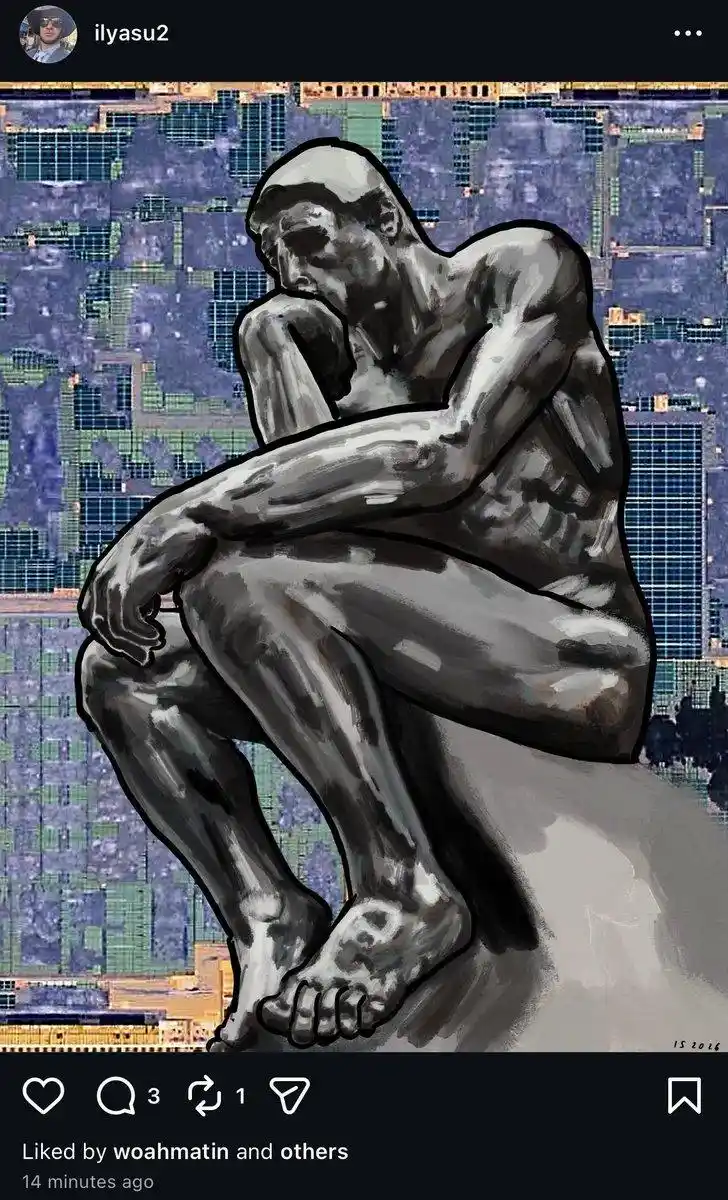
Shortly after going quiet, Ilya Sutskever, AI's enigmatic spiritual leader, posted a mysterious sketch titled "The Thinker" on Instagram. The drawing depicts Rodin's iconic sculpture perched on a cliff, contemplating a vast, purple microscopic universe made of transistors and digital circuits—a chip die shot—signed "IS 2026." This cryptic image, saying "nothing yet everything," ignited widespread speculation in Silicon Valley. Some see it as a search for sacred meaning in silicon, others as a silent critique of brute-force compute scaling. It echoes Ilya's past influence, like the original OpenAI logo he once doodled on a wall. The post coincided with a triple announcement from OpenAI, intensifying the frenzy. First, an internal reasoning model discovered new geometric constructions, challenging a long-standing conjecture and impressing Fields Medalist Tim Gowers. Second, Codex for Mac introduced "Appshots," allowing it to access application windows—even text outside the view—and gained features like Goal Mode, a built-in browser, and plugin capabilities, evolving from a coding assistant into a persistent "resident engineer." Third, reports surfaced that OpenAI is preparing for a confidential IPO filing with banks like Goldman Sachs and Morgan Stanley, potentially eyeing a fall public listing. Together, these moves signal that AGI (Artificial General Intelligence) is not a distant slogan but an active force reshaping science, software engineering, and capital markets. Ilya...

[Introduction] "Saying nothing, yet saying everything." Ilya ignited the internet with a depiction of "The Thinker" on a Die Shot.

Just now, Ilya, the most enigmatic spiritual leader in the AI community, posted a painting on Instagram.

In the image, Rodin's "The Thinker" stands on the edge of a cliff, gazing down at a microscopic universe woven from purple transistors and digital circuits.

That ocean is technically known as a Die Shot – the microscopic cross-section of a chip, a pure jungle of silicon transistors.

In the bottom right corner, a black signature reads: IS 2026.

And just like that, Silicon Valley exploded.

Saying Nothing, Yet Saying Everything

He had vanished for a long time.

This time, people began frantically interpreting the painting.

Does "IS" stand for his initials Ilya Sutskever, or does it imply something else? Is the figure contemplating on the chip suggesting he's holding something?

This kind of silent detonation is not Ilya's first time.

Many don't know that OpenAI's long-standing three-flower logo originated from a casual doodle he sketched on a hallway wall.

That unremarkable draft later became the face of the AI company with the highest valuation.

Now, in the same manner, he has forcefully pressed an ancient symbol of human philosophy onto the cold, hard substrate of a semiconductor.

Some say he's seeking a sense of the sacred.

Others say it's his silent mockery of the old path that "intelligence can be stacked by stacking computing power."

At the Same Time, OpenAI Insiders Can't Sit Still

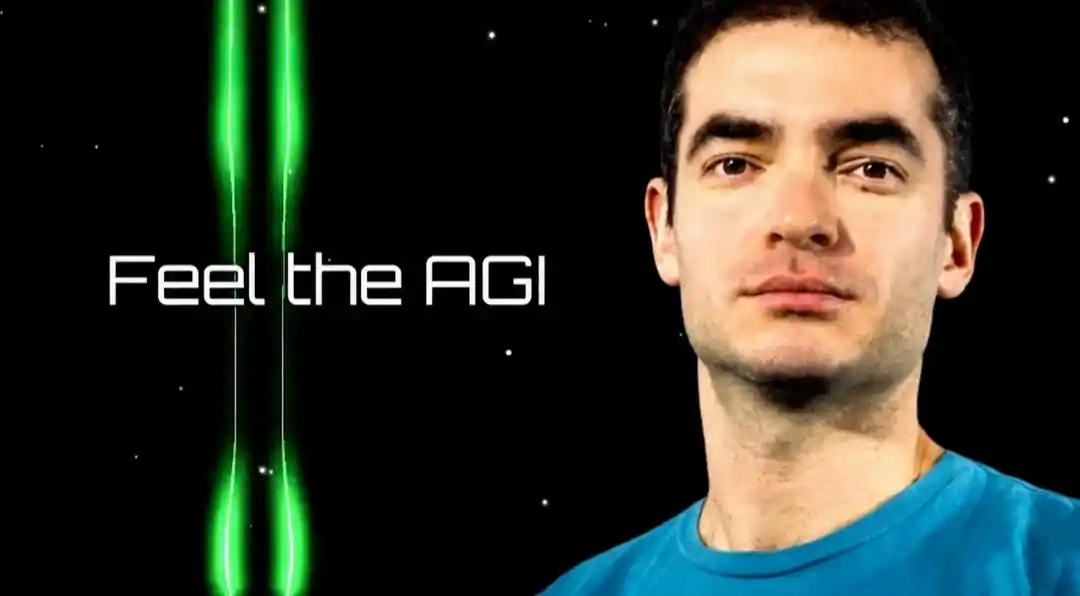
This time, the frenzy isn't just employees lining up on X to shout "Feel the AGI."

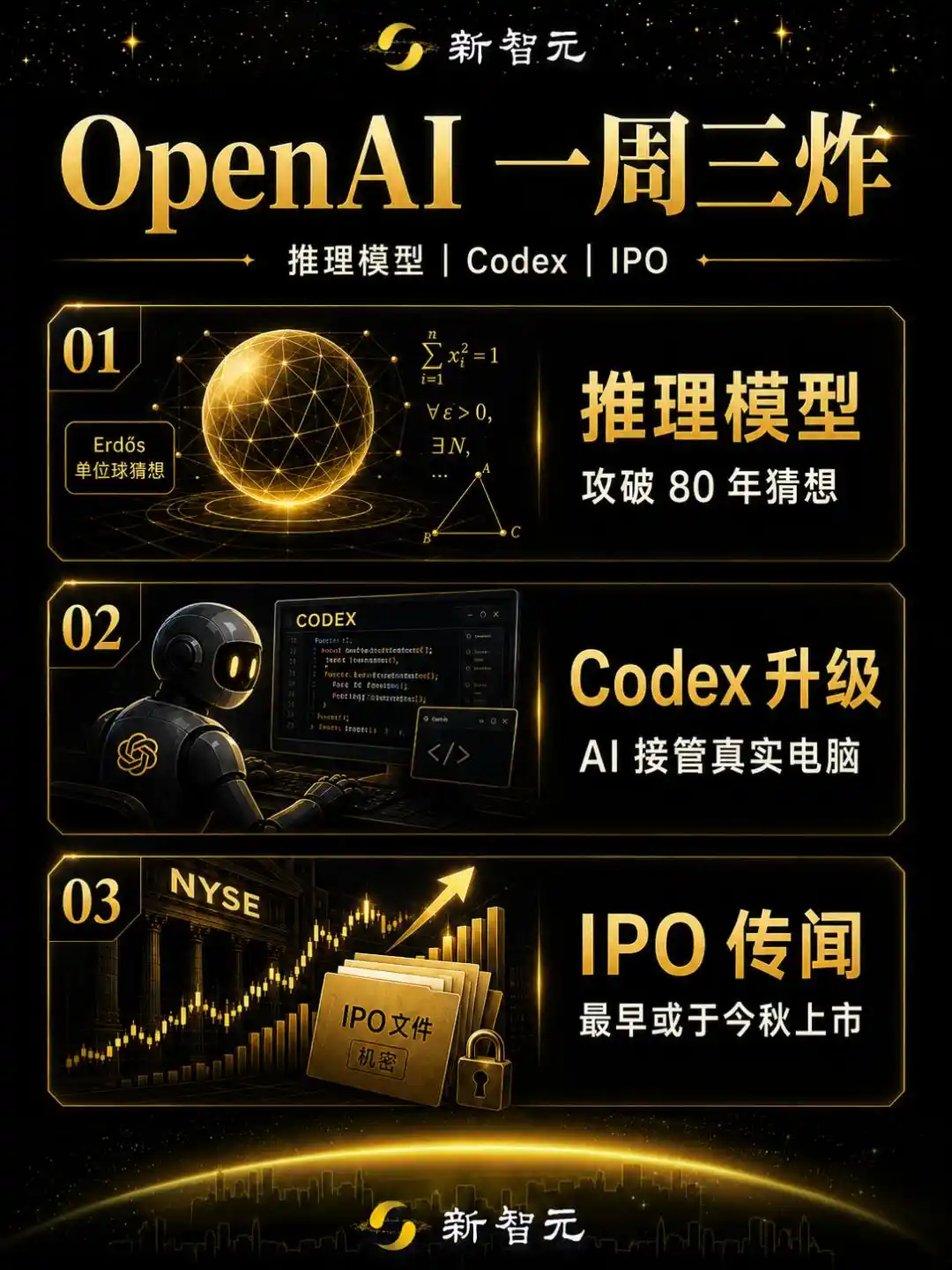
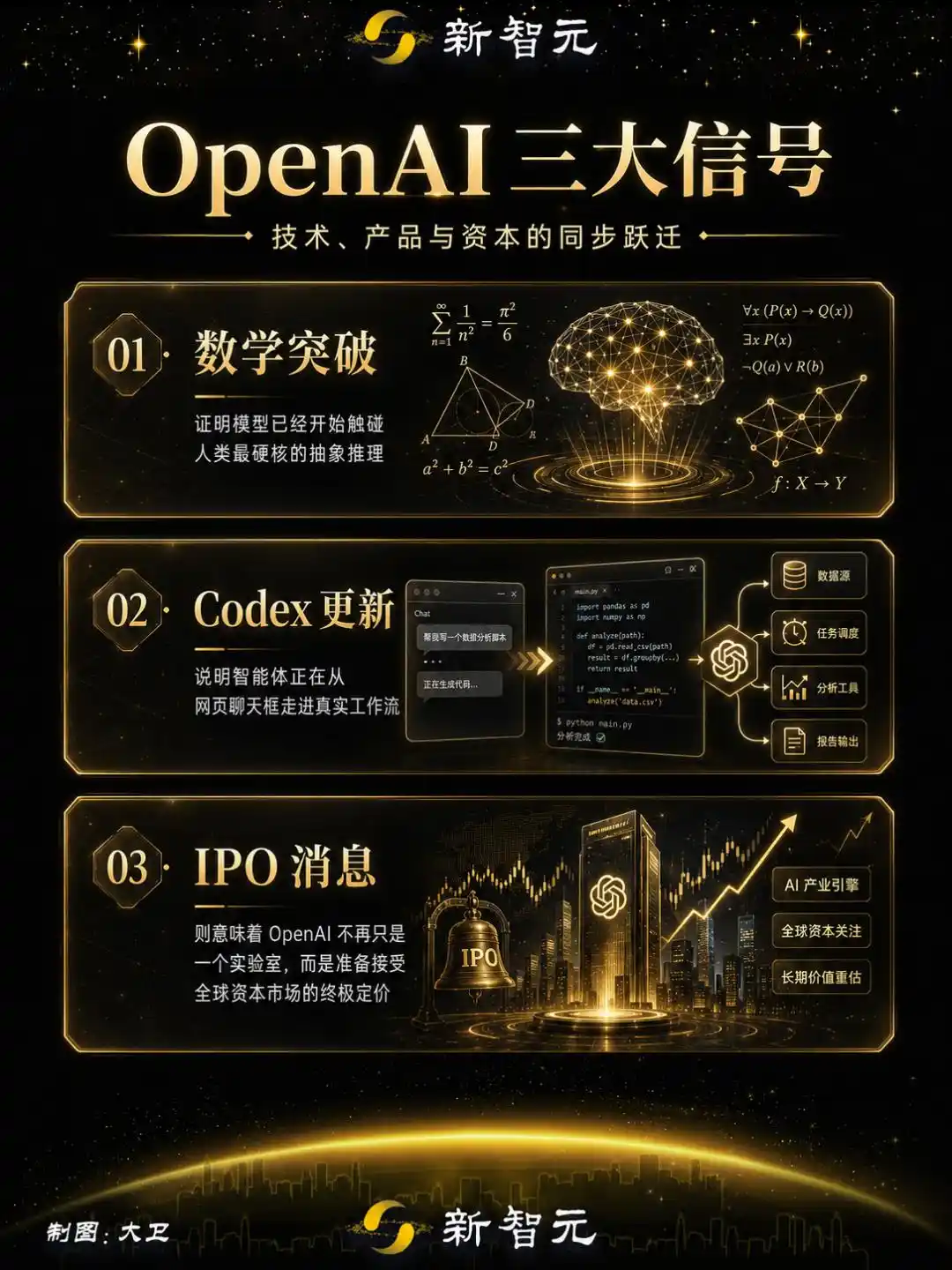
Almost within the same week, OpenAI dropped three bombshells in succession:

First, mathematics.

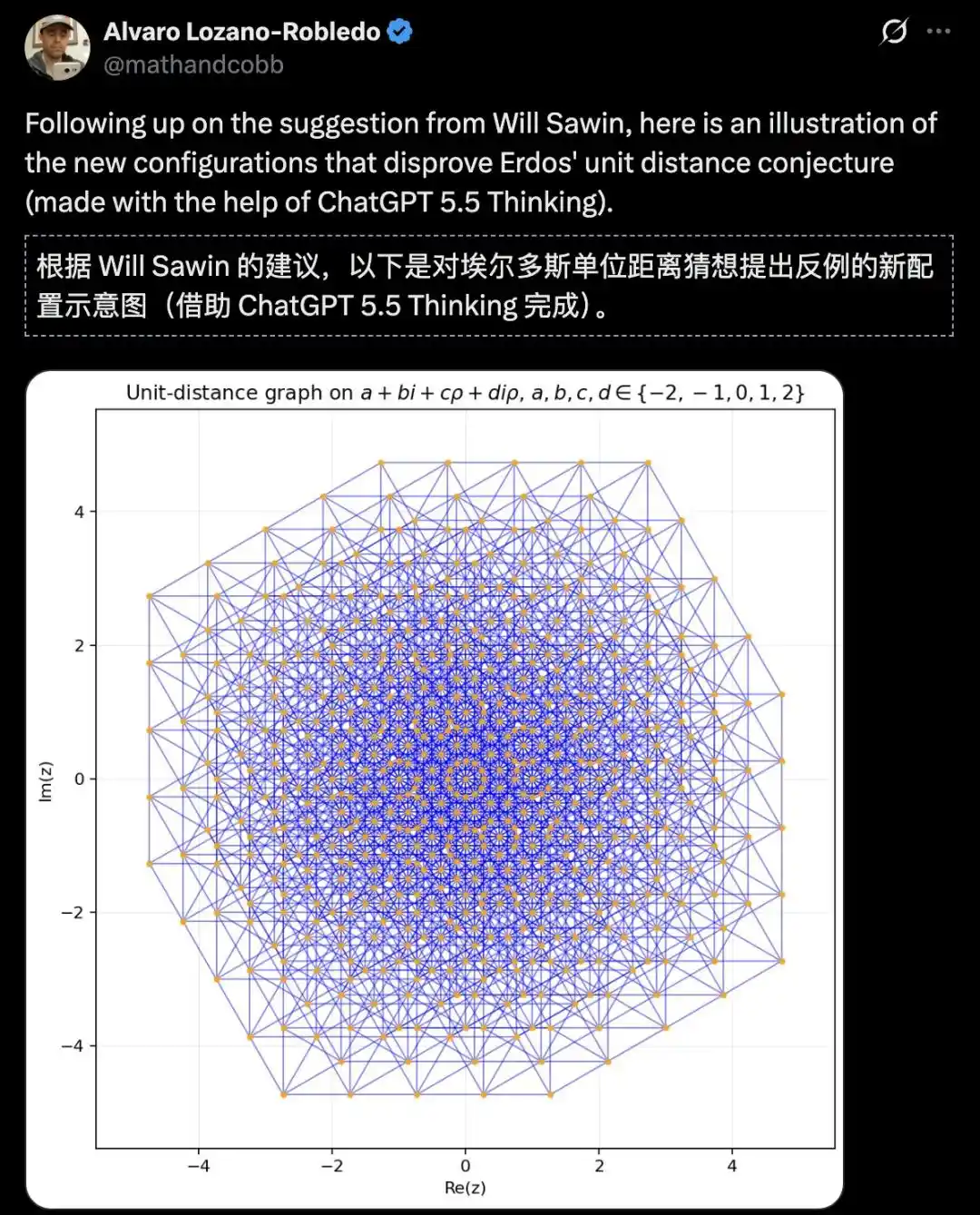
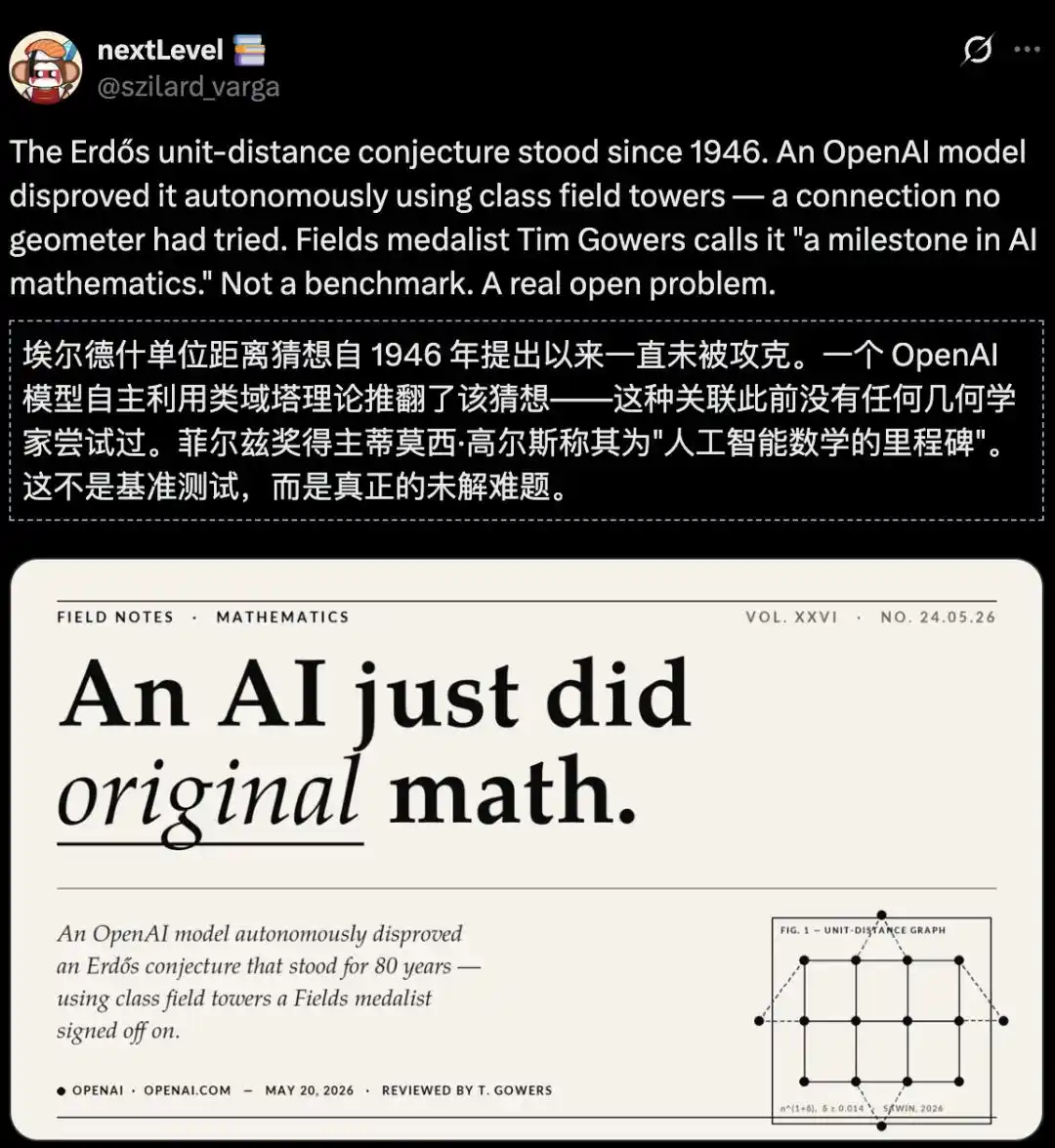
OpenAI announced that one of its internal general-purpose reasoning models discovered a whole new family of geometric constructions, overturning a long-standing conjecture regarding the "planar unit distance problem."

OpenAI stated that its proof has been checked by external mathematicians, refreshing the understanding of AI held by Fields Medalist Tim Gowers.

Next, came Codex.

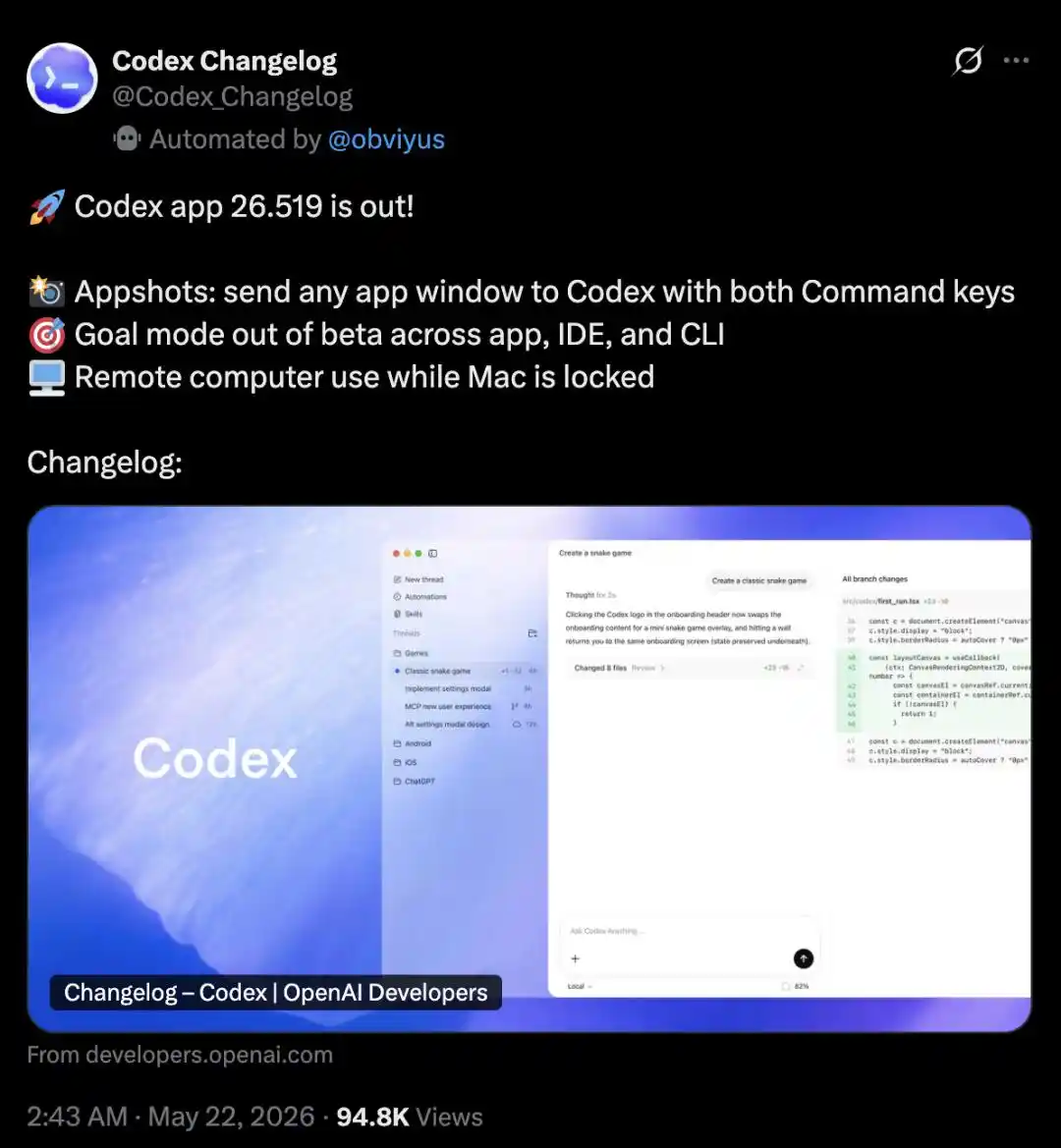
The Mac version of Codex introduced Appshots. Just press Command-Command, and the current application window can be directly handed over to a Codex thread.

It receives not just a screenshot, but also the text within the window, even content not visible off-screen.

Simultaneously, Codex upgraded its Goal Mode, built-in browser, and plugin capabilities.

More radically, the media noted:

Codex can now continue to call applications even when the Mac is locked, truly evolving from a "coding assistant" to an "on-site engineer."

What most excites Silicon Valley, however, is the IPO.

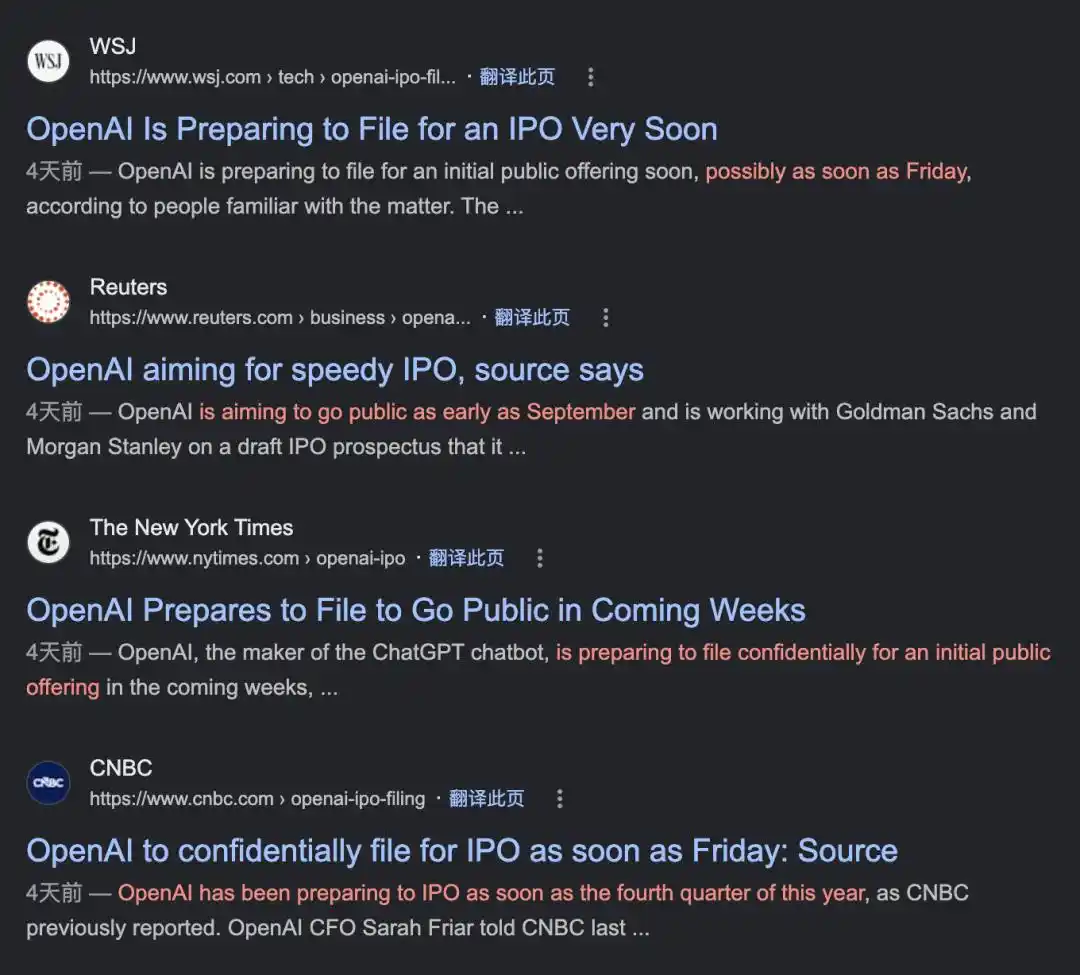
According to multiple media reports, OpenAI is collaborating with investment banks like Goldman Sachs and Morgan Stanley to prepare a confidential submission of IPO filing documents.

Relevant documents could be filed soon, coinciding with SpaceX's listing timeline.

Bloomberg, citing informed sources, reported that OpenAI aims to go public this fall, though the specific timing may still change.

When these three events are placed together, the implication is entirely different.

This is the core of the latest round of OpenAI-style frenzy: tearing open new frontiers in mathematics, having AI take over programmers' computers, and propelling itself towards what could be the most significant IPO window in AI history.

This is OpenAI signaling to the outside world: AGI is not a distant slogan, but a real variable that is simultaneously rewriting science, software, and capital markets.

Conclusion

Three events combined point to the same question: Is that door truly about to open?

Behind a casually drawn sketch lies the silent transistor base within the Die Shot – the boundary between human intelligence and the silicon-based world is becoming increasingly blurred.

Ilya is betting not on a feature, but on a paradigm shift.

And the internal OpenAI phrase "Feel the AGI" is the most genuine signal from the research frontlines – not marketing, but an inability to hold back any longer.

Our generation will most likely witness the answer with our own eyes.

References:

https://www.instagram.com/ilyasu2/

https://x.com/ns123abc/status/2058687603285586245?s=20

This article is from WeChat official account "New Zhiyuan", author: ASI Revelation

Связанные с этим вопросы

QWho is Ilya and what is the significance of the 'Thinker' image he posted?

AIlya is a mysterious spiritual leader in the AI community, often associated with OpenAI. The 'Thinker' image he posted, which depicts the famous sculpture standing over a chip die shot, is significant because it ignited widespread discussion and interpretation. It's seen as a symbolic gesture, potentially hinting at deep contemplation about the relationship between human intellect and silicon-based AI, or a critique of the belief that brute-force computing alone can lead to intelligence.

QWhat are the three major announcements or developments from OpenAI mentioned in the article?

AThe article mentions three key developments from OpenAI: 1) An internal general reasoning model discovered a new family of geometric constructions, overturning a long-standing conjecture about the 'plane unit distance problem'. 2) Codex for Mac received significant upgrades, including Appshots for capturing application windows, Goal Mode, a built-in browser, and plugin capabilities, evolving it from a code assistant to a 'resident engineer'. 3) OpenAI is reportedly preparing for a secret IPO filing with banks like Goldman Sachs and Morgan Stanley, aiming for a potential public listing in the fall.

QWhat is a 'Die Shot' as described in the context of Ilya's image?

AIn the context of Ilya's image, a 'Die Shot' refers to a microscopic cross-sectional view or image of a computer chip. It reveals the intricate landscape of transistors and digital circuits etched onto the silicon wafer, described in the article as a 'purple transistor and digital circuit woven microscopic universe' or a 'transistor jungle'.

QAccording to the article, what does the collective timing of OpenAI's announcements and Ilya's post suggest?

AThe article suggests that the collective timing of OpenAI's announcements (mathematical discovery, Codex upgrades, IPO preparations) and Ilya's symbolic post sends a powerful signal. It indicates that AGI (Artificial General Intelligence) is not a distant slogan but a real variable currently reshaping science, software development, and capital markets simultaneously. It points to a potential paradigm shift.

QWhat is the origin of OpenAI's three-flower logo according to the article?

AAccording to the article, OpenAI's iconic three-flower logo originated from a casual doodle that Ilya sketched on a corridor wall. This simple draft later became the official face of what is now one of the highest-valued AI companies.

Похожее

Near Returns to the AI Stage: Transformation into a Public Chain Due to 'Payroll Difficulties,' Agent and Privacy Emerge as New Growth Narratives

NEAR Returns to AI Origins: From Payroll Struggles to Blockchain, Now Focusing on AI Agents and Privacy NEAR Protocol's journey began not with grand blockchain ambitions, but from a practical hurdle: its AI startup founders, including Transformer paper co-author Illia Polosukhin, couldn't efficiently pay international developers in 2017. This led them to pivot and build a high-performance, scalable blockchain. After years navigating various crypto narratives like sharding and cross-chain interoperability, NEAR is now leveraging its AI roots to re-enter the AI arena. A key driver is its "NEAR Intents" layer, which abstracts complex cross-chain transactions. Users simply state their goal (e.g., swap BTC for ETH), and a solver network finds the optimal route. This system has processed over $20B in cross-chain volume, generating significant fee revenue. A major growth area is private transactions via "Confidential Intents/Swaps," which hide trade details until settlement to protect against MEV and front-running. Remarkably, private swaps recently accounted for over 40% of NEAR's transaction volume, highlighting strong demand but also potential regulatory scrutiny. With its AI-founder pedigree, NEAR is positioning itself at the intersection of blockchain, AI agents, and privacy, aiming to become infrastructure for the emerging agent economy while navigating the challenges of its rapid adoption.

marsbit48 мин. назад

Near Returns to the AI Stage: Transformation into a Public Chain Due to 'Payroll Difficulties,' Agent and Privacy Emerge as New Growth Narratives

marsbit48 мин. назад

From Ethereum to AI's 'CROPS': What Exactly is This Set of 'Slow Variables' That Vitalik Repeatedly Emphasizes?

In recent discussions, Vitalik Buterin has frequently emphasized the concept of "CROPS," a framework defining core values for Ethereum's development. CROPS stands for Censorship Resistance, Capture Resistance, Open Source, Privacy, and Security. Initially outlined in the Ethereum Foundation's "EF Mandate," it represents a commitment to user sovereignty, ensuring that the network resists external control, remains open, protects privacy, and prioritizes security. The relevance of CROPS extends beyond Ethereum's foundational principles, becoming crucial in the context of AI integration. As AI agents begin handling wallet operations and automated transactions, the risk increases that users may cede control over their digital assets, privacy, and intentions to centralized AI service providers. A "CROPS AI" would therefore emphasize local execution where possible, privacy-preserving remote model calls (e.g., using zero-knowledge proofs), and transparent, verifiable processes to maintain user agency. Vitalik highlights a significant convergence between "CROPS Ethereum access layer" and "CROPS AI." Both address the same fundamental challenge: how users can access powerful services—be it blockchain data via RPCs or AI models—without exposing sensitive information or relinquishing ultimate control. This intersection points toward a future digital entry point that is more private, secure, and user-controlled. Ultimately, CROPS is not merely an abstract ideal but a practical guidepost. It steers development—from protocol resilience and wallet design to AI agent safety—towards a future where users retain self-sovereignty even as digital systems grow more complex and powerful. In an era of accelerating AI adoption, these "slow variables" of censorship resistance, openness, privacy, and security may define Ethereum's enduring value.

marsbit59 мин. назад

From Ethereum to AI's 'CROPS': What Exactly is This Set of 'Slow Variables' That Vitalik Repeatedly Emphasizes?

marsbit59 мин. назад

Silicon Valley 'Startup Guru' Steve Hoffman: Web3 + AI Could Be a Trap

Silicon Valley investor and "Godfather of Startups" Steve Hoffman warns that combining Web3 with AI is likely a trap, not a promising venture. In an interview, Hoffman argues that while AI is a foundational technology touching all industries, Web3 adds complexity, friction, and regulatory risk without solving mainstream consumer or business needs. He advises founders to focus on deep, specialized applications where startups can out-iterate giants, rather than on generic features easily replicated by large tech companies. Hoffman observes that Silicon Valley will lead foundational AI research, while China excels at rapid, large-scale application and commercialization, particularly in robotics. He stresses that AI-driven autonomous agents capable of collaborative, multi-step tasks are 2-4 years away, which will cause significant job displacement. The solution is not to slow AI but to redesign business models around human-AI collaboration and reform social systems like education and retraining. For startups, Hoffman recommends focusing on vertical, expertise-heavy domains to build defensibility. He sees major opportunities in AI fraud detection and cybersecurity. Key founder mindsets include systemic thinking over feature-focus, relentless customer centricity, building adaptive teams, and deeply understanding AI's capabilities and limits. Hoffman is also leading a non-profit initiative to establish university centers aimed at training future leaders in responsible, human-value-aligned AI innovation.

marsbit2 ч. назад

Silicon Valley 'Startup Guru' Steve Hoffman: Web3 + AI Could Be a Trap

marsbit2 ч. назад

Token Inefficient, Economy Tokenless

The article "Tokens Aren't Economical, Economics Aren't Tokenized" analyzes a pivotal shift in the AI industry from a technology-driven narrative to one dominated by capital efficiency. It highlights two concurrent trends: a severe capital shortage due to the exorbitant and recurring costs of compute (e.g., OpenAI's high burn rate) and a wave of corporate spin-offs where major tech companies are separating their AI units (like Kuaishou's Kling and Baidu's Kunlunxin). The core argument is that AI's "anti-internet" business model, where user growth increases costs rather than profits, has created a disconnect between high valuations and actual cash flow. Spin-offs address this by allowing AI assets to be valued independently. Within a parent company, they are seen as cost centers, but as standalone entities, they are priced based on their growth potential and scarcity in the primary market, leading to massive valuation premiums (e.g., Kling's estimated value tripling post-spin-off). The industry is at an inflection point, moving from "model worship" to "value realization." The competition is evolving from a pure compute (GPU) race to a broader focus on systemic efficiency and full-stack engineering (involving CPUs and orchestration) to achieve viable commercialization. The year 2026 is framed as a critical moment where the industry must definitively answer how to economically translate AI capability into tangible business value, reshaping the sector's future power structure.

marsbit2 ч. назад

Token Inefficient, Economy Tokenless

marsbit2 ч. назад

Торговля

Спот
Фьючерсы

Популярные статьи

Как купить S

Добро пожаловать на HTX.com! Мы сделали приобретение Sonic (S) простым и удобным. Следуйте нашему пошаговому руководству и отправляйтесь в свое крипто-путешествие.Шаг 1: Создайте аккаунт на HTXИспользуйте свой адрес электронной почты или номер телефона, чтобы зарегистрироваться и бесплатно создать аккаунт на HTX. Пройдите удобную регистрацию и откройте для себя весь функционал.Создать аккаунтШаг 2: Перейдите в Купить криптовалюту и выберите свой способ оплатыКредитная/Дебетовая Карта: Используйте свою карту Visa или Mastercard для мгновенной покупки Sonic (S).Баланс: Используйте средства с баланса вашего аккаунта HTX для простой торговли.Третьи Лица: Мы добавили популярные способы оплаты, такие как Google Pay и Apple Pay, для повышения удобства.P2P: Торгуйте напрямую с другими пользователями на HTX.Внебиржевая Торговля (OTC): Мы предлагаем индивидуальные услуги и конкурентоспособные обменные курсы для трейдеров.Шаг 3: Хранение Sonic (S)После приобретения вами Sonic (S) храните их в своем аккаунте на HTX. В качестве альтернативы вы можете отправить их куда-либо с помощью перевода в блокчейне или использовать для торговли с другими криптовалютами.Шаг 4: Торговля Sonic (S)С легкостью торгуйте Sonic (S) на спотовом рынке HTX. Просто зайдите в свой аккаунт, выберите торговую пару, совершайте сделки и следите за ними в режиме реального времени. Мы предлагаем удобный интерфейс как для начинающих, так и для опытных трейдеров.

1.4k просмотров всегоОпубликовано 2025.01.15Обновлено 2026.06.02

Как купить S

Sonic: Обновления под руководством Андре Кронье – новая звезда Layer-1 на фоне спада рынка

Он решает проблемы масштабируемости, совместимости между блокчейнами и стимулов для разработчиков с помощью технологических инноваций.

2.3k просмотров всегоОпубликовано 2025.04.09Обновлено 2025.04.09

Sonic: Обновления под руководством Андре Кронье – новая звезда Layer-1 на фоне спада рынка

HTX Learn: Пройдите обучение по "Sonic" и разделите 1000 USDT

HTX Learn — ваш проводник в мир перспективных проектов, и мы запускаем специальное мероприятие "Учитесь и Зарабатывайте", посвящённое этим проектам. Наше новое направление .

1.8k просмотров всегоОпубликовано 2025.04.10Обновлено 2025.04.10

HTX Learn: Пройдите обучение по "Sonic" и разделите 1000 USDT

Обсуждения

Добро пожаловать в Сообщество HTX. Здесь вы сможете быть в курсе последних новостей о развитии платформы и получить доступ к профессиональной аналитической информации о рынке. Мнения пользователей о цене на S (S) представлены ниже.

活动图片