International Oil Prices Open Higher Then Turn Lower, WTI Falls Over 1% Intraday, South Korean Stocks Briefly Rise Over 1%, US Stock Futures Advance

华尔街日报Опубликовано 2026-03-16Обновлено 2026-03-16

Введение

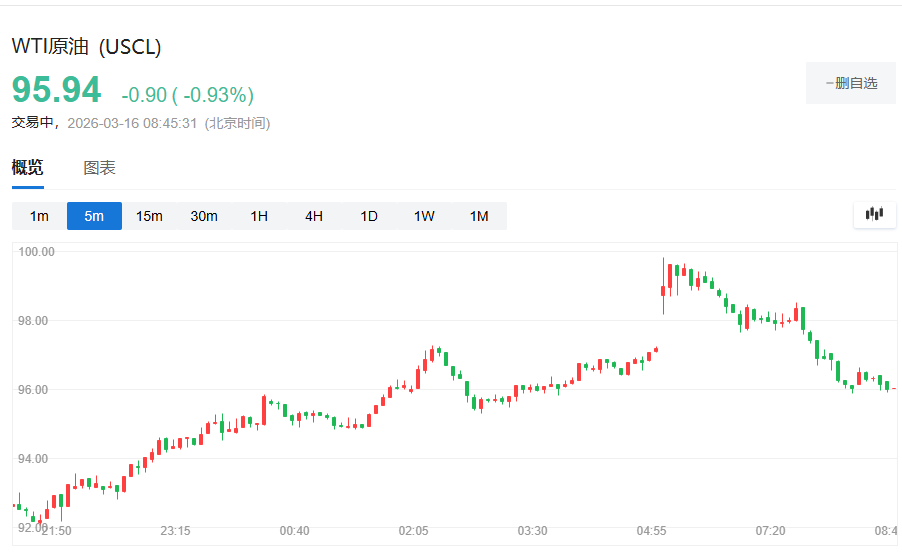
International oil prices opened higher but turned lower, with WTI crude falling over 1% to around $97.63 per barrel after initially surging more than 3%. Brent crude also retreated to near $103 after an early jump. Asian equities rose, with South Korea’s KOSPI gaining up to 1.4%, and U.S. stock futures advanced nearly 0.5%. The moves come amid easing Middle East tensions after two Indian-flagged vessels transited the Strait of Hormuz, and U.S. President Trump stated that Iran is ready to negotiate a ceasefire, though a deal has not yet been reached. U.S. Treasury yields remain elevated, with the 10-year near 4.26%, erasing earlier yearly gains. The market continues to monitor geopolitical risks and central bank policy decisions amid ongoing inflation concerns.

Monday, despite the US military's attack on military targets on Kharg Island last week, navigation signals appeared in the Strait of Hormuz, and Trump also indicated that negotiations with Iran are still ongoing. Crude oil futures opened higher but then fell, while US stock futures and Asian stock markets moved higher.

According to CCTV News, on Friday evening Eastern Time on the 13th, US President Trump posted on social media, stating that the US military had launched "heavy airstrikes" on military targets at Kharg Island, Iran's oil export hub. On the 14th, two liquefied petroleum gas tankers flying the Indian flag and belonging to an Indian shipping company successfully transited the Strait of Hormuz.

According to Xinhua News Agency, Trump said in a telephone interview with NBC on the 14th that Iran is ready to negotiate a ceasefire, but he is not yet ready to make a deal "because the terms are not good enough."

Specifically, in terms of market movements, WTI crude oil futures fell by more than $1, to $97.63 per barrel, after earlier rising over 3%. Brent crude oil retreated to around $103 per barrel after an initial jump at the open.
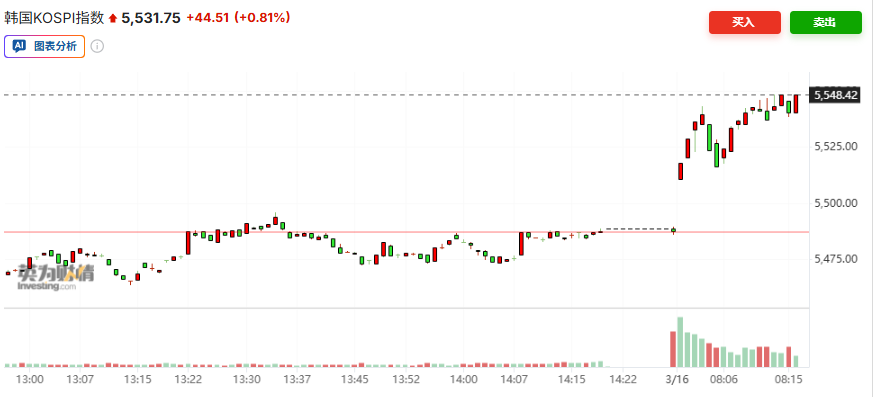
Asian stocks rose, with the MSCI Asia Pacific Index moving higher. South Korea's Seoul Composite Index saw its intraday gain widen to 1.4% at one point.
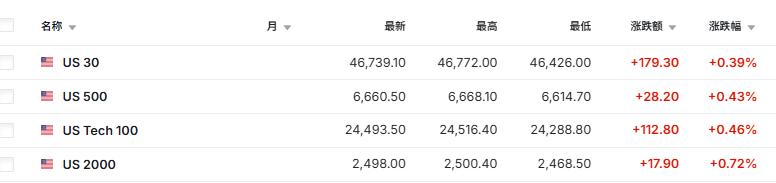
S&P 500 and Nasdaq 100 index futures rose nearly 0.5%, following three consecutive weeks of declines for the S&P 500 index.
US Treasuries erased their year-to-date returns. The 10-year Treasury yield surged more than 30 basis points in March, recently edging down slightly to 4.26%, while the 2-year yield rose to its highest level since last September.

Since the outbreak of the conflict, Brent crude has cumulatively risen 40%, global stocks have fallen over 5%, the year-to-date gains in US Treasuries have been completely wiped out, and market stress indicators are approaching the peak levels seen during the tariff shock last April. The International Energy Agency has stated it will immediately release strategic reserves to Asia to ease supply disruption pressures in the Middle East.

Inflation risks will be the core topic for markets this week. Eight of the world's ten major central banks are scheduled to announce interest rate decisions this week, as各方 need to judge the policy path against the backdrop of ongoing uncertain geopolitical developments.

Continually updating

Связанные с этим вопросы

QWhat was the initial market reaction to the U.S. military strike on Iran's Kharg Island, and how did it change?

ACrude oil futures initially opened higher but then reversed course and turned lower. WTI crude oil futures fell by more than $1 to $97.63 per barrel, after having been up more than 3% earlier.

QWhich key shipping route showed signs of resumed traffic, and what was the significance of this development?

AThe Strait of Hormuz showed signals of resumed navigation. This is significant as it is a critical oil export chokepoint, and the passage of two Indian-flagged LPG tankers through it helped ease supply disruption concerns, contributing to the pullback in oil prices.

QWhat was the stated position of former U.S. President Trump regarding negotiations with Iran at the time?

AFormer President Trump stated that Iran was ready to negotiate a ceasefire, but he was not yet prepared to make a deal because the terms were 'not good enough'.

QHow did major Asian equity markets, specifically South Korea's, perform following the news?

AAsian stocks rose, with the MSCI Asia Pacific index moving higher. South Korea's Seoul Composite Index saw its intraday gains widen to 1.4%.

QWhat is the primary focus for financial markets this week, as mentioned in the article?

AThe primary focus for financial markets this week is inflation risk, as eight of the world's ten major central banks are set to announce interest rate decisions and judge their policy paths against the backdrop of ongoing uncertain geopolitical conditions.

Похожее

Торговля

Спот
Фьючерсы
活动图片