Institutional Adoption of Prediction Markets Stuck at the Third Stage

marsbitОпубликовано 2026-04-17Обновлено 2026-04-17

Введение

Prediction markets are transitioning from niche platforms focused on elections and sports to mainstream financial tools, as highlighted at Kalshi Research's inaugural conference. While sports still dominate trading volume (around 80%), non-sports categories like macroeconomics, politics, and entertainment are growing faster, signaling a shift from entertainment-based trading to information and risk management tools. Institutions, including Wall Street firms, are increasingly using prediction markets for data reference (Stage 1 adoption), with some progressing to system integration (Stage 2). However, full-scale trading (Stage 3) is limited due to the lack of margin trading, requiring full collateral for positions—a barrier for leverage-dependent entities. Kalshi is working with regulators to introduce margin mechanisms. Key insights from participants like Goldman Sachs and CNBC emphasize the value of real-time pricing for events (e.g., Fed decisions, tariffs), providing benchmarks previously unavailable. The path to maturity mirrors historical financial instruments like options, with expectations that prediction markets will become institutional staples within five years. Political leaders, including Trump and Schumer, now cite Kalshi odds, underscoring its growing influence. The platform rewards domain expertise over traditional finance backgrounds, attracting diverse participants from fields like music and poker. Ultimately, prediction markets are evolving into critical i...

Original Title:Prediction Markets: They Grow Up So Fast, Author: Alex Immerman(@aleximm)

Compiled | Odaily Planet Daily(@OdailyChina); Translator | Asher(@Asher_ 0210)

Editor's Note: At the end of March this year, prediction markets, once considered a niche area, reached a critical moment. Kalshi Research, the research arm of Kalshi, hosted its inaugural research conference in New York, bringing together academics, Wall Street executives, former politicians, and frontline traders. The composition of attendees sent a clear signal—prediction markets are moving from the fringe to the mainstream.

The conference opened with a dialogue between Kalshi co-founders Tarek Mansour and Luana Lopes Lara, moderated by Bloomberg reporter Katherine Doherty. This article excerpts and summarizes key insights from the conference.

Prediction Markets Are More Than Just Elections and Sports

For a long time, prediction markets have been defined by certain "highlight moments"—U.S. elections, the Super Bowl, March Madness. These events dominate news cycles and naturally consume most of the trading volume, leading outsiders to mistakenly believe that prediction markets' value stops there.
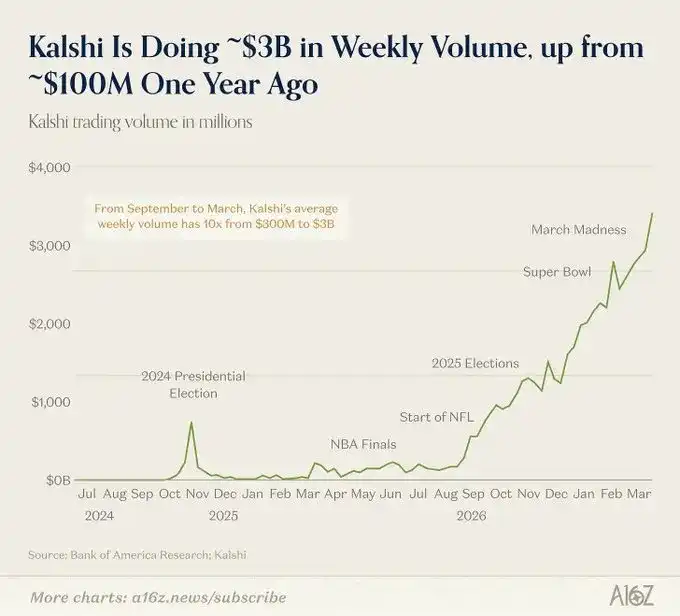
But this impression is being shattered. Just as the conference was held, weekly trading volume for sports predictions had nearly reached $3 billion, accounting for about 80% of Kalshi's total trading volume. While this seems dominant, it hides a more critical trend: sports' share is actually at a historical low.

In other words, all other categories are growing faster. Entertainment, crypto, politics, culture, and other areas are driving stronger user growth and more stable retention. Sports act more like an entry product—they are intuitive, emotionally driven, and have clear rhythms, making them suitable for attracting mass participation. Meanwhile, long-tail markets, which account for over 20% of total trading volume, are growing rapidly. These markets will play an important role in institutional hedging and information pricing in the future.
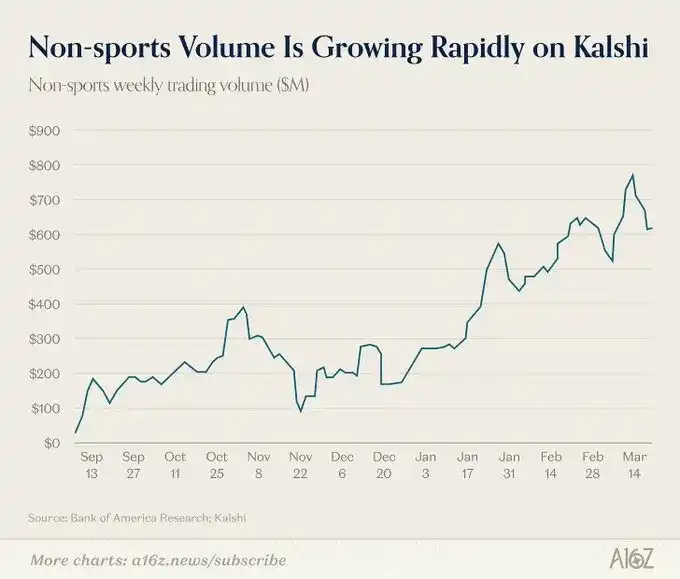
This is also confirmed on the institutional side. Cyril Goddeeris, Global Co-Head of Equity Business at Goldman Sachs, stated that predictions related to macro events and CPI are the categories Wall Street is most focused on currently; Sally Shin, Head of Growth Platforms at CNBC, mentioned that she already uses predictions related to the Fed Chair and non-farm payroll data as narrative tools; Troy Dixon, Global Co-Head of Markets at Tradeweb, envisioned a future where large investment banks will establish dedicated prediction market trading desks, with financial contracts as core products.

Prediction markets are shifting from "recreational trading" to "information and risk tools."

Why Kalshi Has Attracted Wall Street's Attention

Traditional financial markets operate efficiently largely because various assets have recognized benchmarks—the S&P 500 represents the average performance of 500 stocks, and crude oil has the ICE benchmark price. But for political and economic events (such as who will win an election, whether a certain tariff will pass, or the outcome of a Supreme Court case), there was almost no widely accepted, dynamically updated "benchmark" before.

Prediction markets change this. Now, almost any future event can have a real-time, liquid price benchmark. When the market can provide credible pricing for "the probability of a 30% tariff passing," institutions can trade around this price or hedge other risks in their portfolios. This makes the event itself a directly tradable object.

As Tradeweb's Troy Dixon said: "If you go back to when Trump was first elected, many people were hedging in the stock market, such as shorting the S&P, because they thought his election would cause the market to fall. But this was the wrong trade. The question is, how should these events be priced? Where is the benchmark?"

Tarek also mentioned that one motivation for founding Kalshi came from his previous work at Goldman Sachs, where he provided trading advice around the 2024 election and Brexit. Without prediction markets, when institutions hedge political or macro events through related assets, they actually need to make two layers of judgment—they must judge both the outcome of the event itself and the relationship between the event and the traded asset, with the latter carrying a separate risk of failure.

When the event itself has a direct price benchmark, the originally dispersed dual risks are merged into a single judgment. As Tarek said, the market has already begun pricing various events.

The Three Stages Toward Institutional Adoption

It is still too early to say that Wall Street institutions are participating in Kalshi trading on a large scale. Currently, most institutions use it primarily for data reference rather than actual trading.

However, Luana pointed out that the path to institutional adoption is already clear and can be divided into three stages:

  • The first stage is data access: Integrating prediction market prices into institutions' daily workflows, such as having Goldman Sachs investment managers view Kalshi odds like they view the VIX index. This stage has already been achieved to some extent. Jonathan Wright, a professor at Johns Hopkins University and former Fed official, stated that for Fed decisions, unemployment rates, and GDP, Kalshi is almost the only reference source;
  • The second stage is system integration: Including compliance approval, legal confirmation, technical access, and internal education, i.e., incorporating prediction markets into the usable financial tool system;
  • The third stage is actual trading: Institutions begin hedging risks on the platform, trading volume and liquidity gradually accumulate, forming a positive feedback loop. More hedgers attract more speculators, tighter spreads attract more hedgers, and benchmark prices continuously strengthen.

Currently, most institutions are still in the first stage, some have entered the second stage, and only a few have reached the third stage.

A major obstacle preventing institutions from entering the third stage is that current prediction market trading requires full margin—a $100 position requires depositing $100. This is acceptable for retail investors but is a significant limitation for hedge funds or banks that rely on leverage and capital efficiency. As Tarek said, if you want to hedge $100, you must put in $100, which is too costly for institutions; firms like Citadel or Millennium won't adopt this method. Kalshi has already received permission from the National Futures Association and is working with the Commodity Futures Trading Commission to introduce margin trading mechanisms.

What Happens Next?

Michael McDonough, Head of Market Innovation at Bloomberg, gave the most direct judgment: The sign of success is when these things become boring. He compared prediction markets to the options market in the 1970s, which also faced controversies over manipulation and regulatory uncertainty, but these issues were eventually resolved, evolving into an almost taken-for-granted infrastructure.

Toby Moskowitz, Partner at AQR, stated that he is willing to bet on the development of prediction markets. Within five years, or even sooner, it will become a viable tool at the institutional level.

Garrett Herren of Vote Hub described the final form: The question is no longer whether to use prediction markets, but how to use them. Once the discussion shifts to this level, it means they have become indispensable. In fact, although prediction markets are still relatively small, the hedging market itself is extremely large.
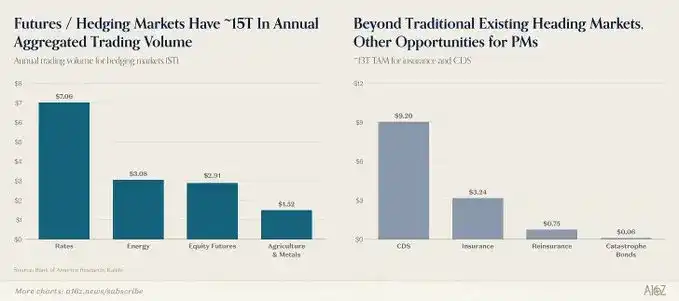
The normalization of prediction markets is already happening.

In discussions of political issues, former Congressman Mondaire Jones mentioned that senior figures from both parties, including Trump, House Minority Leader Jeffries, and Senate Minority Leader Schumer, have begun publicly citing Kalshi odds. Scott Tranter of DDHQ also confirmed that prediction market data has now become an important input for intra-party decision-making. Meanwhile, Vote Hub announced that it has directly integrated Kalshi data into its midterm election prediction model.

All of this barely existed two years ago. Back then, the most successful traders on Kalshi were still seen as amateurs. But now, the situation has changed, and it's even hard to define them with that term anymore.

In a roundtable, four traders shared their paths—one spent eleven years studying the Billboard charts, another has been participating in prediction markets since 2006—when it was still a cashless, somewhat geeky interest area. They did not come from the finance industry but from backgrounds in music, politics, and poker. But they agreed that the platform truly rewards deep domain knowledge, not resumes.

Summary

Prediction markets have come a long way. They were once seen as academic experiments, later became brief highlights during election cycles, and were also viewed as an extension of sports betting.

The message from this conference is clear: Prediction markets are gradually evolving into an infrastructure for pricing uncertainty, serving a wide range of participants from retail investors to large institutions and diverse application scenarios.


Связанные с этим вопросы

QWhat are the three stages of institutional adoption of prediction markets as described in the article?

AThe three stages are: 1) Data Access - integrating prediction market prices into daily workflows; 2) System Integration - involving compliance approval, legal confirmation, technical access, and internal education; 3) Actual Trading - where institutions begin hedging risk on the platform, with trading volume and liquidity building up.

QWhat is identified as a major barrier preventing institutions from reaching the third stage of adoption on Kalshi?

AThe requirement for full margin trading, where a $100 position requires depositing $100, is a major barrier. This is cost-prohibitive and inefficient for hedge funds and banks that rely on leverage.

QAccording to the article, what significant shift is occurring in the perception of prediction markets' primary value?

APrediction markets are shifting from being seen as 'entertainment trading' towards becoming 'information and risk tools' for institutions, moving beyond just elections and sports.

QHow did the composition of the attendees at Kalshi Research's conference signal a change for prediction markets?

AThe presence of academia, Wall Street executives, former politicians, and frontline traders signaled that prediction markets are moving from a niche interest into the mainstream.

QWhat historical financial market does Michael McDonough compare the current state of prediction markets to, and what does he say is the marker of success?

AHe compares it to the options market of the 1970s. He states that the marker of success is when these tools become 'boring' and evolve into a fundamental, taken-for-granted infrastructure.

Похожее

«Летняя пила» продолжается: пробой $67 000 станет началом роста биткоина

Цена биткоина продолжает консолидироваться в диапазоне $58 000–$67 000 с начала июня. 1 августа актив снизился до $62 217. Аналитики расходятся в краткосрочных прогнозах: некоторые, как Crypto Candy, ожидают тестирования уровня $60 000 или ниже, пока цена находится под $66 000. Другие, как Jelle, видят в боковом движении «летнюю пилу» и придерживаются стратегии усреднения. Ключевым для определения дальнейшего направления считается уровень $67 000. По мнению Daan Crypto Trades, его пробой необходим для выхода из затянувшейся паузы. Roman полагает, что уверенный пробой с объемом может быстро запустить рост к $70 000–$80 000 и выше. С долгосрочной точки зрения, макроаналитик Герт ван Лаген рассматривает текущую фазу как накопление в рамках масштабной формации «чаша с ручкой». Он отмечает, что долгосрочные держатели не спешат продавать актив, о чем говорит показатель NUPL. Таким образом, рынок находится в решающей фазе, где пробой либо поддержки $60 000, либо сопротивления $67 000 задаст тренд на ближайшее будущее.

cryptonews.ru14 мин. назад

«Летняя пила» продолжается: пробой $67 000 станет началом роста биткоина

cryptonews.ru14 мин. назад

На неделе с 3 по 9 августа стоит обратить внимание: Закон CLARITY, возможно, будет поставлен на голосование в Сенате; SpaceX и Circle опубликуют финансовые отчеты

**Важные события на следующей неделе (3–9 августа 2026 г.)** **Ключевые даты:** * **3 августа:** Публикация отчетов American Bitcoin за Q2. Полное закрытие сервисов DeFi-трекера Zapper и кошелька Ctrl Wallet. LayerZero прекратит поддержку ретрансляторов v1. Upbit прекратит торговлю токенами AQT и AERGO. * **4 августа:** Публикация финансовых отчетов SpaceX и Hut 8 за второй квартал 2026 года. * **5 августа:** Circle опубликует отчет за Q2. Начинается предварительное ценовое консультирование для IPO компании Unitree Tech (Ушу Цзишу) в Китае. * **6 августа:** Первая крупная разблокировка акций SpaceX — до 12% от общего капитала. * **7 августа:** Выход важных данных по рынку труда США (отчет о занятости за июль). Предельный срок для Сената США — получить 60 голосов в поддержку **Закона CLARITY** (билль о регулировании криптовалют и этике). Ожидается выпуск Grok 4.6 от xAI. * **8 августа:** Начало принудительной подачи сигналов в сети Bitcoin согласно предложению BIP-110. * **На неделе (дата уточняется):** Ожидается голосование полного состава Сената США по **Закону CLARITY**. Выход нового релиза XRP Ledger (v3.3.0) с новыми функциями, такими как конфиденциальные данные и пакетные транзакции. **Основные темы недели:** корпоративная отчетность (SpaceX, Circle), регулирование (CLARITY Act), рыночные события (разблокировка акций SpaceX, отчет по занятости в США) и обновления в технологиях блокчейна.

marsbit53 мин. назад

На неделе с 3 по 9 августа стоит обратить внимание: Закон CLARITY, возможно, будет поставлен на голосование в Сенате; SpaceX и Circle опубликуют финансовые отчеты

marsbit53 мин. назад

Акции упали сильнее, чем криптовалюты. Куда делись деньги?

Автор: Кэти,白话区块链 28-29 июля, Сеул. Индекс Kospi впервые в истории Южной Кореи два дня подряд срабатывал на приостановку торгов. Первый день: падение на 10.84%, второй день: -5.98%. SK Hynix, крупнейшая по весу акция, потеряла за два дня около 23%. Падение Nasdaq, глобальный обвал акций полупроводниковых компаний, массовые потери на кредитных ETF. За два дня откат Kospi от пика июня достиг 40%. Июль угрожает стать худшим месяцем в истории индекса. Все ранее перегретые сделки были перевернуты, как стол. Это не локальный негатив по одной акции, а глобальное принудительное снижение кредитного плеча. Самое парадоксальное: на этот раз больше всего на «криптовалютное» падение похожи именно акции. Спот: прибыль SK Hynix за второй квартал достигла рекордных 60.54 трлн вон, но из-за несоответствия прогнозу в 64.22 трлн акция подверглась жесткой распродаже. Хорошие новости не растут — это уже плохая новость. Производные инструменты пострадали еще сильнее. Кредитный ETF с плечом 2x на SK Hynix упал на 83% с пика, потеряв в стоимости более 1 трлн гонконгских долларов. Эмитент был вынужден изменить правила продукта. Неожиданно: Биткоин, известный высокой волатильностью, с 1 июля вырос почти на 15%, в то время как акции демонстрировали «криптовалютную» динамику. Это не паника всего рынка, а точечный сброс перегретых позиций. Триггеры: отчет SK Hynix и фактор Китая — крупнейшее IPO ChangXin Memory, направленное на расширение производства DRAM, создало конкуренцию для нарратива о дефиците памяти для ИИ. Дополнительное давление — нормализация политики Банка Японии и потенциальное сокращение кэрри-трейда в иенах. Эксперт Дэн Найлз считает, что это не крах логики ИИ, а «краткосрочное дно», вызванное принудительными ликвидациями мелких инвесторов и хедж-фондов. Промышленная логика не мертва — умерло кредитное плечо. Перетекли ли деньги из акций в Биткоин? Нет. «Устойчивость» Биткоина объясняется тем, что он уже прошел фазу распродаж раньше. В мае-июне американские спотовые BTC-ETF зафиксировали рекордный отток средств. К июлю продавать было уже нечего. Небольшой приток в июле — лишь частичное восстановление. Настоящие «защитные» деньги пошли в золото. Коэффициент корреляции между Биткоином и золотом упал до -0.88. Нарратив о «цифровом золоте» разбит: золото — для сохранения капитала, Биткоин — для роста. Деньги придут в криптоактивы при выполнении трех условий: смягчение глобального давления на ликвидность; снижение ставок ФРС без рецессии; принятие закона CLARITY, устраняющего регуляторные неопределенности. Пока Биткоин — не убежище, а актив, который раньше других прошел очистку. Но когда шторм утихнет и глобальный капитал снова начнет распределяться, Биткоин займет место в первых рядах очереди. Место уже зарезервировано.

marsbit53 мин. назад

Акции упали сильнее, чем криптовалюты. Куда делись деньги?

marsbit53 мин. назад

Диалог с Далио: Сейчас мы находимся в пузыре ИИ, 1% моего инвестиционного портфеля — это биткоин

Источник: интервью Рэя Далио, основателя Bridgewater Associates, для подкаста "The Diary Of A CEO". Далио, предсказавший кризис 2008 года, обсуждает "большой цикл" — концепцию, охватывающую долговые проблемы, растущее неравенство и геополитические сдвиги. Он указывает, что текущий ажиотаж вокруг ИИ демонстрирует классические признаки пузыря, который может лопнуть из-за высокой долговой нагрузки, роста процентных ставок и чрезмерной эмиссии акций, что способно привести к рецессии. Для защиты личного капитала в неопределенные времена Далио советует диверсификацию: вместо хранения наличных инвестировать в акции, золото, облигации. Сам он держит около 1% портфеля в биткоине, считая его "твердыми деньгами", но предпочитает физическое золото из-за его статуса резервного актива и независимости от технологических рисков. Говоря о влиянии ИИ, Далио отмечает, что технология заменяет не только физический труд, но и элементы мышления, что увеличит разрыв между капиталом и трудом. Ключевыми останутся человеческие качества — эмоции и интуиция, а успеха добьются те, кто научится работать в партнерстве с ИИ. На геополитической арене, по его мнению, мир движется к регионализации с центрами в виде США и Китая. Вовлечение США в конфликты, подобные иранскому, обнажает снижение их абсолютного влияния. Внутренние вызовы, такие как дебаты о налогах на богатство, риск капитального бегства и низкая производительность, также ставят под вопрос стабильность традиционных держав в текущей фазе цикла.

marsbit4 ч. назад

Диалог с Далио: Сейчас мы находимся в пузыре ИИ, 1% моего инвестиционного портфеля — это биткоин

marsbit4 ч. назад

7.2 трлн вон за один день: иностранные инвесторы установили рекорд чистых покупок в пятницу! Уолл-Стрит: встречный ветер в плане ликвидности на южнокорейском рынке уже утих

Капиталы возвращаются на южнокорейский рынок акций. 31 июля иностранные инвесторы осуществили чистые покупки акций KOSPI на рекордные 7,2 трлн вон за один день, что стало самым высоким показателем в истории. По данным Citigroup, эта цифра знаменует собой кардинальный разворот после месяцев масштабного оттока средств нерезидентов. В июле чистые продажи иностранными инвесторами значительно сократились до 9,8 трлн вон по сравнению с 48,4 трлн и 44,5 трлн вон в июне и мае соответственно. Одновременно внутренние пенсионные и инвестиционные фонды в июле вернулись к чистым покупкам на 1,0 трлн вон. Дополнительным фактором снижения волатильности стали новые правила Комиссии по финансовым услугам (FSC), ужесточившие с 31 июля доступ розничных инвесторов к ETF с плечом на отдельные акции. После введения норм торговый оборот таких инструментов упал примерно вдвое. Citigroup сохраняет целевую точку для KOSPI на уровне 10000 пунктов, отмечая ослабление давления со стороны движения капиталов. Аналитики видят поддержку рынку в устойчивости фундаментальных показателей сектора чипов памяти, низких оценках KOSPI, сильной экономике и благоприятной политике властей, включая возможные меры по поддержке ликвидности.

marsbit4 ч. назад

7.2 трлн вон за один день: иностранные инвесторы установили рекорд чистых покупок в пятницу! Уолл-Стрит: встречный ветер в плане ликвидности на южнокорейском рынке уже утих

marsbit4 ч. назад

Торговля

Спот
活动图片




