In Web3 Storytelling, You Don't Need Creativity

marsbitОпубликовано 2025-12-29Обновлено 2025-12-29

Введение

In the Web3 content space, many creators mistakenly believe they lack creativity, but the real issue is the absence of contrast in their narratives. Contrast refers to a shift or change—such as moving from "before" to "after," "expectation" to "reality," or "belief" to "realization"—that makes content engaging and memorable. Without this transformation, content remains flat and forgettable, merely presenting information like features, data, or promises straightforwardly. The human mind is activated by unexpected changes, not linear facts. For example, instead of stating "Solana is fast and cheap," a contrast-driven approach would describe the surprise of a transaction completing instantly. This creates a relatable moment. Embracing contrast often involves acknowledging past mistakes, doubts, or uncertainties, which fosters authenticity and connection with audiences. To incorporate contrast, ask: "What changed here?" Include elements like a mistaken assumption, a moment of hesitation, or an unexpected outcome. In Web3’s noisy environment, contrast helps content stand out without needing exaggerated creativity—just genuine, relatable shifts.

Author:Noir

Compiled by: Deep Tide TechFlow

Most Web3 content creators think they're not good at storytelling because they feel they "lack creativity."

But friend, that's usually not the real issue.

Actually, the real problem is:

— Your content lacks contrast.

Hey, either the content:

Sounds the same,

Feels flat,

Or has no variation.

And when nothing changes, there's no story to tell.

What is Contrast?

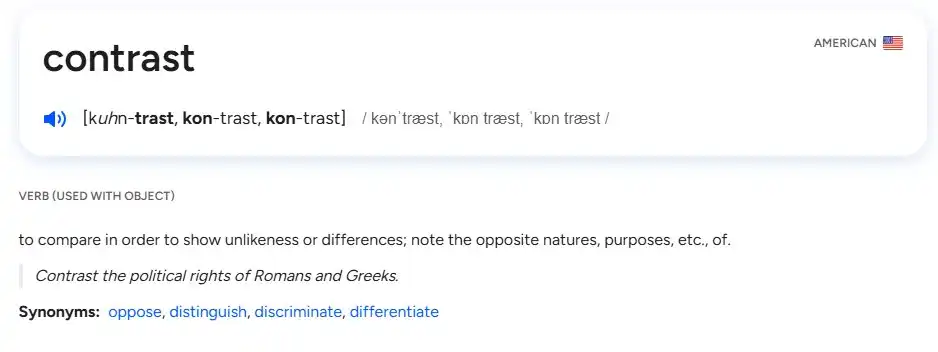
Contrast simply means something is different from what came before.

Yes, it's that simple.

It doesn't require:

Flowery language,

Unexpected plot twists,

Or background music.

At its core, contrast is a transformation, such as:

From "before" to "after"

From "expectation" to "reality"

From "belief" to "realization"

Without this transformation, your content is just information.

Yes, it might be useful, but memorable? Hmm... unlikely.

Why does a lack of contrast make content weak?

The Web3 world is full of:

Features, data, promises, roadmaps......

But most content is presented too straightforwardly:

"This is what it does."

"These are its benefits."

"This is why you should care."

However, the brain isn't interested in this linear information.

It wakes up when something unexpected happens.

Why Content Loses Appeal Without Contrast

The Web3 world is flooded with:

Features, data, promises, roadmaps......

But most content is presented too directly:

"This is its function."

"Why it's good."

"Why you need to care about it."

Yet, the brain isn't activated by this linear information.

It only wakes up when something unexpected occurs.

A Simple Example of "Contrast"

(You've definitely seen this countless times)

Expression without contrast:

Solana has fast transactions and low costs.

Your brain responds: Okay... and?

Expression with contrast:

I clicked send, switched tabs, and only then realized the transaction was already complete.

The same idea, but with a completely different impact.

The second expression creates a "moment." Get it?

Why Does "Contrast" Feel Uncomfortable?

(And why this matters)

Contrast often requires you to admit:

You were wrong, you were confused, you underestimated something.

That's why most people avoid it.

But this discomfort is precisely what makes content feel authentic.

People don't like flawless things.

They connect more easily with relatability and vulnerability.

When someone thinks: "Wait... I've felt that way too."

Congratulations, you've succeeded.

How to Add "Contrast" to Your Content?

Before publishing, ask yourself one question:

"What changed here?"

If you can't answer, try adding one of the following:

  • A mistaken assumption you once had

  • A moment of hesitation

  • An unexpected result

  • A "small decision" you almost didn't make

It really doesn't need a dramatic plot.

You just need a bit of relatable change.

Weirdo's Summary

Don't get me wrong, creativity does play an important role in storytelling.

But not everyone is born creative. This article is specifically for those who genuinely want to learn storytelling techniques.

Its core is: being sincere enough to show "transformation."

In the complex and noisy world of Web3,

"Contrast" is how you stand out without having to shout :)

Remember to follow me, or else you'll... (Content here does not comply with Mainland China norms, suggested deletion).

Связанные с этим вопросы

QAccording to the article, what is the main reason most Web3 content creators struggle with storytelling?

AThe main reason is not a lack of creativity, but that their content lacks contrast.

QWhat is the article's definition of 'contrast' in the context of storytelling?

AContrast is defined as something that is different from what came before it, representing a transformation such as from 'before' to 'after' or from 'expectation' to 'reality'.

QWhy does the brain find content without contrast unengaging?

AThe brain is not activated by straightforward, linear information; it is awakened when something unexpected happens.

QWhat is one reason that using contrast in content can feel uncomfortable for the creator?

AIt often requires admitting that you were wrong, confused, or that you underestimated something.

QWhat is a simple question the article suggests creators ask themselves to add contrast to their content?

AAsk: 'What changed here?' and if you can't answer, add elements like a past mistaken assumption, a moment of hesitation, or an unexpected result.

Похожее

"Agents' Last Exam", Claude Fable 5 Actually Loses to GPT 5.5

Surprisingly, in the newly released "Agents' Last Exam" (ALE) benchmark from UC Berkeley, GPT-5.5 has outperformed the recently launched and highly-regarded Claude Fable 5. ALE tests AI agents on their ability to perform real-world tasks across 55 professional domains—such as 3D modeling in Siemens NX, creating game scenes in Unreal Engine, and visual effects work in Adobe After Effects—by granting them full GUI and command-line access. In the core task completion rate ranking, GPT-5.5 configurations secured the top two spots (24.0% and 23.0%), while Claude Fable 5 with Claude Code came in third (22.0%). Notably, the highest pass rate was only 24%, and the most difficult "Last-Exam" tier saw most top models, including GPT-5.5 and Fable 5, scoring zero. The benchmark also revealed significant cost and efficiency gaps: Fable 5 spent over four times more money than GPT-5.5's most expensive configuration for a slightly lower score, and was much slower. ALE differs from previous knowledge-based benchmarks by evaluating practical "ability to do" rather than static knowledge retrieval. Its tasks are derived from real expert projects, automatically scored, and designed to prevent cheating through a rotating pool of private challenges. The results suggest that high performance on traditional benchmarks does not necessarily translate to proficiency in complex, open-ended real-world work. The study also notes that agents often fail by prematurely declaring tasks complete without proper verification, and that no single model excels uniformly across all diverse domains.

marsbit3 мин. назад

"Agents' Last Exam", Claude Fable 5 Actually Loses to GPT 5.5

marsbit3 мин. назад

Retail Ecology Dwindles, ZKsync Bets on Bank Pilots for a Breakthrough

Amidst declining retail activity, ZKsync is pivoting to target institutional banking as its primary growth strategy. The article explores this shift, contrasting it with the competitive "survival of the fittest" narrative by highlighting a cooperative model inspired by naturalist Peter Kropotkin. ZKsync is developing infrastructure like its private, permissioned Prividium suite for banks (e.g., Deutsche Bank's use case via Memento), enabling private transactions with public verifiability via zero-knowledge proofs. This appeals to institutions needing privacy, compliance, and Ethereum-based settlement security, unlike fully private chains (e.g., JPMorgan's Kinaxis) or consortium models (e.g., R3 Corda). However, this strategic focus has coincided with a steep decline in its public DeFi ecosystem, evidenced by plunging TVL and the departure of major protocols like Aave due to low fees. The network's future now hinges on banking adoption, with upcoming pilots like the Cari Network involving regional banks holding over $600 billion in deposits. A significant challenge is balancing this institutional focus with ZKsync's decentralized governance. Banks must operate on a network where rules and fees (denominated in the volatile ZK token) can be changed via community vote, and where a Security Council holds emergency control—a stark contrast to the predictable, contract-bound environments of traditional finance. The coming 18 months will test whether ZKsync can successfully onboard traditional banks onto a dynamically governed public chain or if institutions will ultimately revert to proprietary solutions.

Foresight News45 мин. назад

Retail Ecology Dwindles, ZKsync Bets on Bank Pilots for a Breakthrough

Foresight News45 мин. назад

The Recursive AI Anthropic Warned About: Tian Yuandong's New Company Has Just Taken the "First Step"

Anthropic recently highlighted the rapid progress toward "recursive self-improvement," where AI systems autonomously design and train their successors. In response, Recursive Superintelligence, a new company co-founded by former Meta researcher Tian Yuan Dong, has publicly demonstrated its first step toward automating AI research. The company released a system designed to autonomously execute the full AI research cycle: generating ideas, implementing code, running experiments, and learning from results. It validated this approach by achieving state-of-the-art results on three diverse benchmarks: 1. **NanoChat Autoresearch:** Optimizing a small language model's validation loss under a fixed 5-minute GPU budget, improving upon the community's best result. 2. **NanoGPT Speedrun:** Reducing the time to train a GPT model to a specific loss on 8 H100 GPUs from 79.7 seconds to 77.5 seconds, beating a highly optimized, human-driven community effort. 3. **SOL-ExecBench:** Improving the overall score on NVIDIA's suite of 235 GPU kernel optimization tasks by 18%, closing the gap to the hardware limit. The system discovered novel optimizations in this highly specialized domain without direct human expertise. Recursive's system operates as a general framework, capable of parallel exploration and cross-task knowledge transfer while incorporating safeguards against reward hacking. The company, backed by $650M in funding and a star-studded team including Richard Socher and Alexey Dosovitskiy, aims to create AI that recursively enhances its own research capabilities. This development represents an early but concrete move toward a new paradigm where AI accelerates its own advancement. It occurs alongside Anthropic's warnings about the need for industry coordination and potential pauses when recursive self-improvement thresholds are reached, highlighting the dual trajectory of rapid technical progress and growing calls for careful stewardship.

marsbit52 мин. назад

The Recursive AI Anthropic Warned About: Tian Yuandong's New Company Has Just Taken the "First Step"

marsbit52 мин. назад

Торговля

Спот
Фьючерсы

Популярные статьи

Как купить T

Добро пожаловать на HTX.com! Мы сделали приобретение Threshold Network Token (T) простым и удобным. Следуйте нашему пошаговому руководству и отправляйтесь в свое крипто-путешествие.Шаг 1: Создайте аккаунт на HTXИспользуйте свой адрес электронной почты или номер телефона, чтобы зарегистрироваться и бесплатно создать аккаунт на HTX. Пройдите удобную регистрацию и откройте для себя весь функционал.Создать аккаунтШаг 2: Перейдите в Купить криптовалюту и выберите свой способ оплатыКредитная/Дебетовая Карта: Используйте свою карту Visa или Mastercard для мгновенной покупки Threshold Network Token (T).Баланс: Используйте средства с баланса вашего аккаунта HTX для простой торговли.Третьи Лица: Мы добавили популярные способы оплаты, такие как Google Pay и Apple Pay, для повышения удобства.P2P: Торгуйте напрямую с другими пользователями на HTX.Внебиржевая Торговля (OTC): Мы предлагаем индивидуальные услуги и конкурентоспособные обменные курсы для трейдеров.Шаг 3: Хранение Threshold Network Token (T)После приобретения вами Threshold Network Token (T) храните их в своем аккаунте на HTX. В качестве альтернативы вы можете отправить их куда-либо с помощью перевода в блокчейне или использовать для торговли с другими криптовалютами.Шаг 4: Торговля Threshold Network Token (T)С легкостью торгуйте Threshold Network Token (T) на спотовом рынке HTX. Просто зайдите в свой аккаунт, выберите торговую пару, совершайте сделки и следите за ними в режиме реального времени. Мы предлагаем удобный интерфейс как для начинающих, так и для опытных трейдеров.

853 просмотров всегоОпубликовано 2024.03.29Обновлено 2026.06.02

Как купить T

Обсуждения

Добро пожаловать в Сообщество HTX. Здесь вы сможете быть в курсе последних новостей о развитии платформы и получить доступ к профессиональной аналитической информации о рынке. Мнения пользователей о цене на T (T) представлены ниже.

活动图片