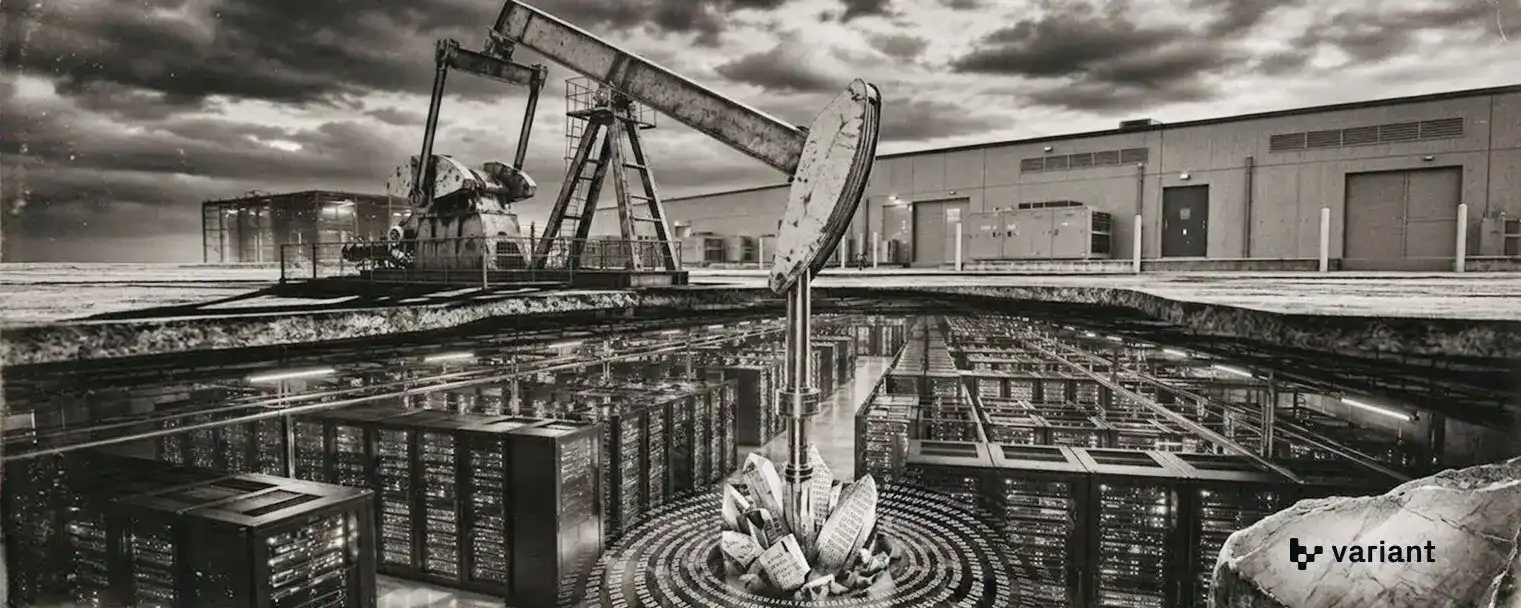
How Russia’s banned exchange rebuilt a $34mln crypto pipeline

ambcryptoОпубликовано 2025-12-13Обновлено 2025-12-13

Введение

A Russian crypto exchange, Garantex, which was previously blacklisted for facilitating illegal finance, has resumed operations and rebuilt a sophisticated payout system. According to a new investigation, Garantex accumulated over $34 million in new Bitcoin and Ethereum wallets, despite earlier server seizures and asset freezes. At least $25 million has already been paid out to former users, while a significant portion of the Ethereum reserve remains untouched, indicating long-term operational planning. The exchange continues to use mainstream centralized exchanges for on- and off-ramping funds, posing challenges for regulatory detection. This activity reflects Russia’s broader strategy of using cryptocurrency for sanctions evasion and building a sovereign, non-USD financial system. Rather than adopting Western crypto models, Russia appears to be weaponizing the technology to create a state-aligned shadow financial infrastructure resistant to external pressure.

In a surprising turn of events, Russian crypto exchange Garantex, blacklisted for enabling illicit finance, has quietly resumed moving funds.

Garantex’s quiet comeback

A new investigation by blockchain analytics firm Global Ledger showed that Garantex has rebuilt a sophisticated payout system, proving that Russian operators have restored the exchange’s financial activity despite server seizures, asset freezes, and other shutdown attempts.

This finding exposes that high-risk exchanges are continually adjusting their on-chain methods, often outpacing regulators.

The analysis confirmed that despite the seizure of servers and the freezing of millions in assets in early 2025, Garantex was successfully accumulating substantial funds in new wallets.

Garantex’s Bitcoin and Ethereum wallets

Global Ledger identified new Bitcoin [BTC] and Ethereum wallets controlled by Garantex that had collectively amassed over $34 million in crypto.

The stash was not meant for exchange operations. Instead, it was reserved for customer payouts.

That decision showed a deliberate effort to preserve liquidity. It also aimed to maintain goodwill among core users.

At least $25 million in crypto has already been paid out to former Garantex users. That development raised fresh concerns for regulators.

Additionally, over 88% of the accumulated Ethereum [ETH] reserve remained untouched, indicating a significant war chest for future operations.

Notably, a key finding is the direct exposure of these reserve and payout wallets to Centralized Exchanges (CEXs) ranked in the top 10 on CoinMarketCap.

This linkage revealed that the network was still using mainstream financial on- and off-ramps, introducing a vulnerability for compliant exchanges and a challenge for regulatory enforcement to detect these indirect flows.

Russia vs the U.S.

All this raises a question: Is Russia copying U.S. financial innovation to subvert it, or pursuing a unique strategy of its own?

While the U.S. led blockchain development, Russia used the technology for sanctions evasion at a state-aligned, systemic scale.

Researchers identified parallel efforts through successor entities, including Grinex and the ruble-backed crypto-clearing network A7A5.

These developments signaled a long-term strategy to build sovereign, non-USD payment rails challenging Western financial dominance.

At the same time, the Garantex network evolved into a decentralized sanctions-evasion-as-a-service model using Telegram workflows and agency contracts.

In short, Russia was not adopting Western crypto tools but weaponizing them to build a shadow financial system resilient to pressure.

Russia’s take on crypto

This coincided with Russia’s paradoxical regulatory strategy.

A recent order from Russia’s Central Bank showed that the nation was not abandoning digital assets – instead, it has been co-opting them for state-aligned objectives.


Final Thoughts

  • The untouched Ethereum reserve signals long-term operational planning, not opportunistic activity.
  • Russia’s contrasting crypto rules show a push to centralize control, not encourage open adoption.

Похожее

Topping GitHub's Trending, the Essential Guide for Claude Code Users

The CLAUDE.md file, trending on GitHub, is a project-level guide for Claude Code designed to dramatically improve its accuracy and efficiency. It addresses key issues like repetitive context explanations, unauthorized code changes, and forgotten decisions across sessions. By placing this plain-text file in a project root, Claude Code reads it automatically at the start of each session. The guide includes rules to eliminate redundant explanations, enforce strict behavioral constraints (e.g., no modifications outside the requested scope without confirmation), and establish a "memory" system using companion files like MEMORY.md and ERRORS.md to log past decisions and failures. It also locks in the project's specific tech stack to prevent inappropriate tool recommendations. Highlighted are four foundational rules from Andrej Karpathy that reportedly increased coding accuracy from 65% to 94%: always ask for clarity first, implement the simplest solution, never touch unrelated code, and explicitly flag uncertainties. The article quantifies significant weekly cost savings for developers and teams by eliminating wasted time on re-explaining context, rolling back unauthorized edits, and re-evaluating previously rejected solutions. The core message is that a small, upfront investment in creating a CLAUDE.md file leads to a more predictable, controlled, and cost-effective AI programming assistant.

marsbit9 мин. назад

Topping GitHub's Trending, the Essential Guide for Claude Code Users

marsbit9 мин. назад

When Computing Power Becomes Commoditized, How Long Until a GPU Futures Market Emerges?

"When Will GPU Futures Arrive? A Framework for Assessing Compute as a Commodity" The article explores the potential for a robust futures market for compute power (GPUs), arguing that such a market is not yet mature but may emerge. It analyzes the landscape using a five-part framework developed for new commodity futures markets. The analysis scores the current state: * **Fragmented Supply (Red)**: Supply is highly concentrated among hyperscale cloud providers (AWS, Azure, GCP, Oracle), limiting the need for price discovery. * **Price Volatility (Green)**: GPU pricing is already highly volatile due to uncertain supply and surging demand. * **Physical Settlement Infrastructure (Green)**: Early infrastructure exists via OTC brokers and price indices (e.g., Ornn, Silicon Data) standardizing contracts. * **Standardized Unit (Red)**: A lack of standardized, tradable units hinders markets; a GPU instance hour varies by region, configuration, and contract terms. * **Lack of Alternatives (Yellow)**: Large players hedge internally via vertical integration, while smaller players bear spot market risk. Overall, the market shows promise (volatility, early infrastructure) but lacks the fragmented supply and standardization needed for large-scale futures trading. Most activity remains OTC. Key open questions and hypotheses: 1. Supply is expected to fragment moderately in 1-2 years, driven by new cloud providers, cheap power locations, and demand from non-frontier labs and AI startups using open-source models. 2. Standardization is most likely to emerge around inference workloads (forecast to be >65% of AI compute demand by 2029), which have simpler, more homogeneous hardware needs than training. Widespread adoption of open-source model weights could accelerate this by democratizing inference and creating demand for optimized, standardized infrastructure. 3. The primary traded unit will likely be the **"chip instance hour"** (akin to electricity, traded regionally), not the physical chip or the downstream AI output (tokens).

marsbit37 мин. назад

When Computing Power Becomes Commoditized, How Long Until a GPU Futures Market Emerges?

marsbit37 мин. назад

When Computing Power Becomes Commoditized, How Long Until a GPU Futures Market?

When Compute is Commoditized: How Far Away is a GPU Futures Market? The article explores the potential emergence of a futures market for computing power ("compute"), akin to markets for commodities like oil or electricity. It uses a five-dimension framework to assess the market's maturity for sustaining robust futures trading. **Current Market Assessment (Scorecard):** * **Supply Fragmentation:** 🔴 **Red.** Supply is highly concentrated, dominated by a few hyperscale cloud providers. * **Price Volatility:** 🟢 **Green.** GPU pricing is already highly volatile. * **Physical Settlement Infrastructure:** 🟢 **Green.** Early infrastructure exists at the OTC/broker level. * **Standardization:** 🔴 **Red.** Compute lacks a standardized, tradable unit (e.g., an H100 hour is not uniform). * **Lack of Substitutes:** 🟡 **Yellow.** Vertically integrated players can hedge internally, while others are forced to be long. **Conclusion:** The overall scorecard suggests a robust futures market is premature. The market has volatility and early settlement infrastructure but lacks the necessary supply fragmentation and standardization for large-scale price discovery. Most activity remains OTC. **Key Unanswered Questions & Hypotheses:** The article posits that the market could evolve in the next 1-2 years: 1. **Supply:** May become *moderately more fragmented* due to new cloud providers, cheaper power locations, and demand from long-tail users (e.g., startups running open-source model inference). 2. **Standardization:** Could emerge from the growing **inference** workload (expected to be >65% of AI compute demand by 2029), which has more homogeneous hardware requirements than custom training workloads. Widespread adoption of **open-source model weights** is seen as a key catalyst for democratizing inference and driving infrastructure standardization. 3. **Traded Unit:** The most viable layer for trading is likely the **"chip-instance-hour"** (powered, usable compute time), traded similarly to electricity in regional contracts with spot/futures overlays. Trading at the upstream "chip" layer is unlikely due to supply concentration, while the downstream "token" layer faces challenges due to lack of uniformity across AI models.

链捕手43 мин. назад

When Computing Power Becomes Commoditized, How Long Until a GPU Futures Market?

链捕手43 мин. назад

Торговля

Спот
Фьючерсы

Популярные статьи

Как купить S

Добро пожаловать на HTX.com! Мы сделали приобретение Sonic (S) простым и удобным. Следуйте нашему пошаговому руководству и отправляйтесь в свое крипто-путешествие.Шаг 1: Создайте аккаунт на HTXИспользуйте свой адрес электронной почты или номер телефона, чтобы зарегистрироваться и бесплатно создать аккаунт на HTX. Пройдите удобную регистрацию и откройте для себя весь функционал.Создать аккаунтШаг 2: Перейдите в Купить криптовалюту и выберите свой способ оплатыКредитная/Дебетовая Карта: Используйте свою карту Visa или Mastercard для мгновенной покупки Sonic (S).Баланс: Используйте средства с баланса вашего аккаунта HTX для простой торговли.Третьи Лица: Мы добавили популярные способы оплаты, такие как Google Pay и Apple Pay, для повышения удобства.P2P: Торгуйте напрямую с другими пользователями на HTX.Внебиржевая Торговля (OTC): Мы предлагаем индивидуальные услуги и конкурентоспособные обменные курсы для трейдеров.Шаг 3: Хранение Sonic (S)После приобретения вами Sonic (S) храните их в своем аккаунте на HTX. В качестве альтернативы вы можете отправить их куда-либо с помощью перевода в блокчейне или использовать для торговли с другими криптовалютами.Шаг 4: Торговля Sonic (S)С легкостью торгуйте Sonic (S) на спотовом рынке HTX. Просто зайдите в свой аккаунт, выберите торговую пару, совершайте сделки и следите за ними в режиме реального времени. Мы предлагаем удобный интерфейс как для начинающих, так и для опытных трейдеров.

1.3k просмотров всегоОпубликовано 2025.01.15Обновлено 2025.03.21

Как купить S

Sonic: Обновления под руководством Андре Кронье – новая звезда Layer-1 на фоне спада рынка

Он решает проблемы масштабируемости, совместимости между блокчейнами и стимулов для разработчиков с помощью технологических инноваций.

2.2k просмотров всегоОпубликовано 2025.04.09Обновлено 2025.04.09

Sonic: Обновления под руководством Андре Кронье – новая звезда Layer-1 на фоне спада рынка

HTX Learn: Пройдите обучение по "Sonic" и разделите 1000 USDT

HTX Learn — ваш проводник в мир перспективных проектов, и мы запускаем специальное мероприятие "Учитесь и Зарабатывайте", посвящённое этим проектам. Наше новое направление .

1.8k просмотров всегоОпубликовано 2025.04.10Обновлено 2025.04.10

HTX Learn: Пройдите обучение по "Sonic" и разделите 1000 USDT

Обсуждения

Добро пожаловать в Сообщество HTX. Здесь вы сможете быть в курсе последних новостей о развитии платформы и получить доступ к профессиональной аналитической информации о рынке. Мнения пользователей о цене на S (S) представлены ниже.

活动图片