How Did the Idealism of Western Founders Get 'Taken Over' by Chinese Buyers?

比推Опубликовано 2026-01-22Обновлено 2026-01-22

Введение

Over the course of two days, two major decentralized social protocols, Lens Protocol and Farcaster, were acquired—by Mask Network and Neynar, respectively. Combined, these protocols had raised over $200 million, with Farcaster recently valued at $1 billion. This follows the earlier acquisition of Steem by Tron in 2020, meaning two out of three prominent decentralized social protocols are now been taken over by Chinese-led teams. The author explores why Chinese buyers are stepping in. One reason may be pricing: these acquisitions often target once-prominent projects now in decline. For instance, Farcaster’s monthly revenue has dropped over 95%, and Lens has only 50,000 monthly active users. Another factor is cultural: while Western founders often approach decentralized social with idealism—emphasizing user-owned data and censorship resistance—Chinese acquirers tend to view it as a business opportunity, prioritizing usability and growth over ideology. Suji Yan, founder of Mask Network, explicitly aims to move “decentralized social from the lab to daily life.” However, past acquisitions like Steem—which led to a community fork—highlight risks when new ownership clashes with original values. The piece questions whether true decentralization is possible when protocols can be sold, suggesting that technical decentralization doesn’t prevent centralized commercial control. Ultimately, the piece argues that the vision for a better social infrastructure remains, but the builders a...

Author: David, Deep Tide TechFlow

Original Title: Web3 Social, Still Dominated by the Chinese


Within two days, two decentralized social protocols changed hands.

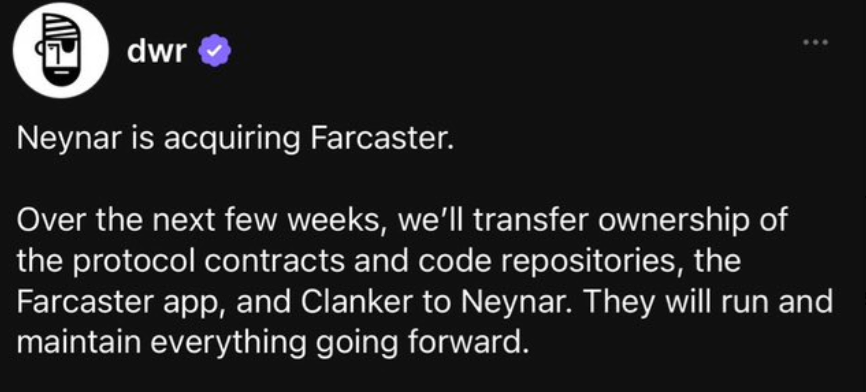
On January 20th, Lens Protocol announced it was being taken over by Mask Network. On January 21st, Farcaster announced it was acquired by Neynar, one of its clients.

These two protocols raised over $200 million combined. Farcaster was valued at $1 billion last year, with investors including a16z and Paradigm. Lens is backed by DeFi giant Aave.

Now, the founders have "stepped back from daily operations to work on new projects."
Including Steem, another well-known project acquired by Tron in 2020, two out of these three phenomenal decentralized social protocols have now been taken over by Chinese teams.

You might have forgotten about Steem. It was the pioneer of "writing to earn" launched in 2016, a benchmark project for the entire Web3 social track at its peak. After being acquired by Justin Sun, the community forked and left, which we'll discuss later.

The founder of Mask Network, which took over Lens, is Suji Yan. Chinese, dropped out of UIUC at 20 to start a business, previously wrote articles for Caixin and Jiemian.

Founded Mask in 2017, focusing on overlaying Web3 features on traditional social platforms like Twitter.

Mask has been on an acquisition spree: acquired two large Japanese instances of Mastodon in 2022, bought Orb, the most active client on Lens, last year, and now has taken over Lens itself.

Suji Yan positions himself as the "Tencent of Web3".

On the Farcaster side, the two founders of Neynar, which took it over, are of Indian descent, both former Coinbase employees. But the reality that two out of three protocols were taken over by Chinese teams still holds.

Why the Chinese?

One possible explanation is capability endowment. The two most successful countries globally in making social products are the United States and China. WeChat, Douyin (TikTok), Xiaohongshu (Little Red Book) – Chinese teams have proven they can scale social products to billions of users.

But this explanation has a problem. Building products and acquiring protocols are not the same thing. Protocols are infrastructure, not directly facing users. You can build products on them, but the protocol itself doesn't generate the user experience.

Another reasonable explanation is price.

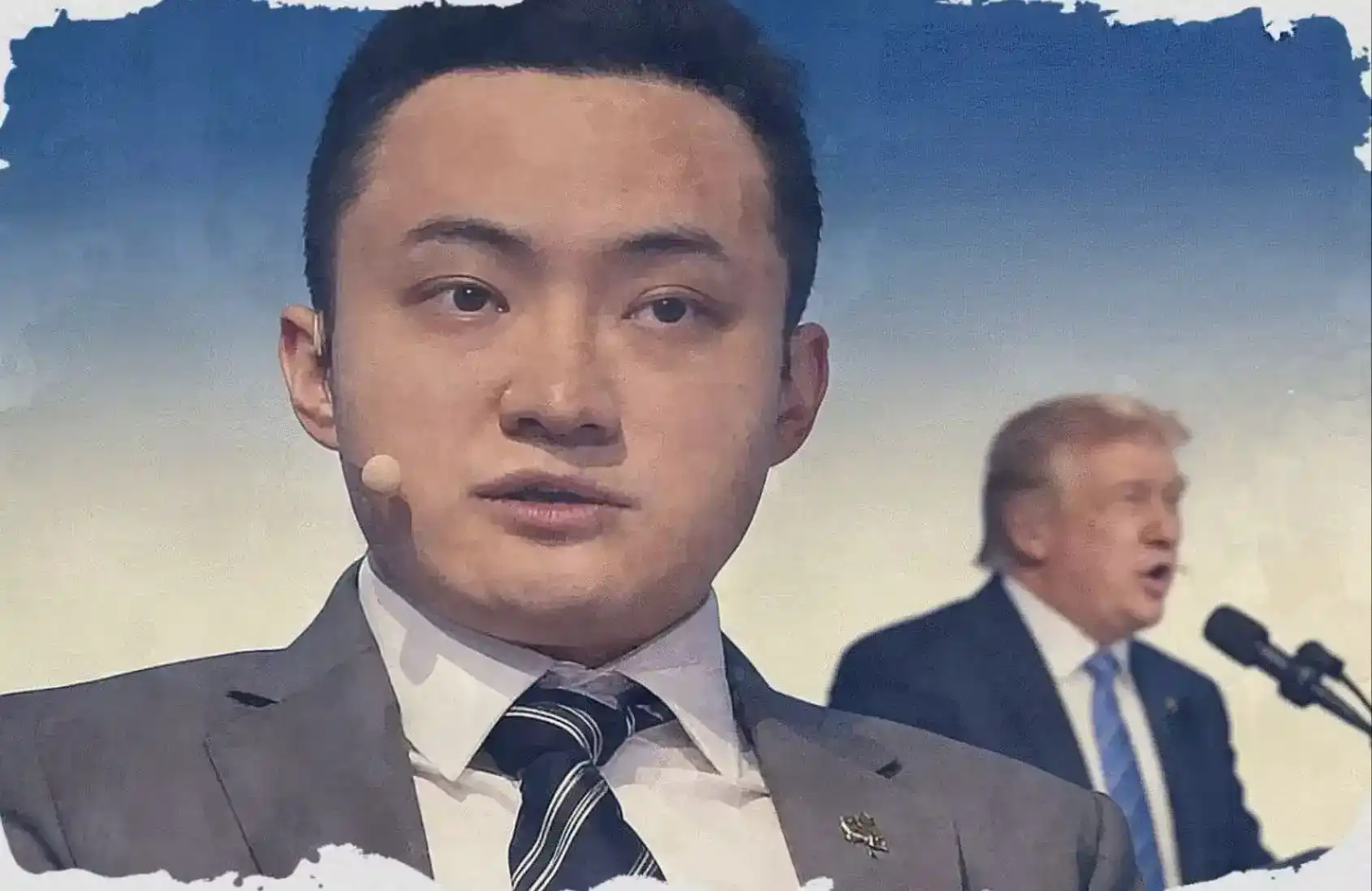
Looking at Brother Sun's (Justin Sun) acquisition list: bought BitTorrent for $140 million in 2018, Poloniex in 2019, Steemit in 2020, and HTX (formerly Huobi) in 2022.

These targets have a common trait:

They were all once glorious but are on a downward trend. BitTorrent was the pioneer of P2P downloading, Poloniex was once a top US exchange, HTX was once one of China's top three exchanges.

Justin Sun isn't buying the best; he's buying the cheapest good stuff.

Now Farcaster is valued at $1 billion but its monthly revenue has dropped to $10,000, down over 95% year-over-year. Founder Dan Romero admitted last month in a post that "after 4.5 years of trying the social-first approach, it didn't work";

Lens has only 50,000 monthly active users, and the Aave team wants to offload it to focus on its DeFi core business.

The most valuable time for these protocols has passed, but the technical foundation and brand remain. In A-share market terms, this is called:

Fallen out of value (Undervalued).

There's a more subtle line of thought: decentralized social is a belief in the West, but a business in China.

Western founders in this space often carry a degree of idealism. Users should own their data, social graphs should be portable, platforms shouldn't have censorship power... Farcaster's slogan is "sufficiently decentralized", Lens's is "user-owned social".

But after five years, users don't care.

Ordinary people don't care who owns the data, or whether the social graph can be taken away. They care if there are people to chat with, if there is interesting content, if there are associated assets that can skyrocket.

Chinese buyers taking over is, in a way, taking this business from the idealists and handing it to the pragmatists.

Suji Yan says what Mask wants to do is "bring decentralized social from the lab into daily life". Translating that:

Stop talking about ideals, first make people willing to use it.

Of course, the last time a Chinese entity acquired a decentralized social protocol, the outcome wasn't pretty.

In 2020, Justin Sun bought Steem. After the acquisition, he collaborated with exchanges to take control of Steem's network governance. The original community's reaction was a collective fork to create a new chain, Hive, using code to exclude Justin Sun's wallet.
A fork is the most extreme form of protest in the blockchain world – we're not playing with you anymore, we'll copy everything and leave on our own.

Steemit is still running, but more active users have long since moved to Hive.

So the question is, will it be different this time?

Regarding Mask taking over Lens, the official term is "stewardship", not the word "acquisition". The founders will continue as advisors, and the protocol remains open.

But the fact that a "decentralized protocol" can be acquired itself already says something. Contracts can be transferred, codebases can be transferred, Apps can be transferred. So where is the "decentralization"?

After the disillusionment, decentralization is just a technical architecture, not a business model. Technically decentralized does not prevent someone from having the final say commercially.

After Lens changed leadership, Vitalik posted. He said every post he made in 2026 was through Firefly, which is precisely the multi-platform client under Mask Network.

He also said: "If we want a better society, we need better tools for mass communication."

This is true. But who builds this tool, who operates it, who decides what it looks like – decentralization doesn't answer these questions.

The answer now might be: the Chinese will build it.


Twitter:https://twitter.com/BitpushNewsCN

Bitpush TG Discussion Group:https://t.me/BitPushCommunity

Bitpush TG Subscription: https://t.me/bitpush

Original link:https://www.bitpush.news/articles/7605174

Связанные с этим вопросы

QWhat are the two decentralized social protocols that recently changed ownership, and who acquired them?

ALens Protocol was acquired by Mask Network, and Farcaster was acquired by Neynar, one of its clients.

QWhy are Chinese buyers particularly interested in acquiring these Western-founded decentralized social protocols?

AChinese buyers see these protocols as undervalued assets with strong technical foundations and brand recognition, and they approach them from a pragmatic, business-oriented perspective rather than idealistic beliefs in decentralization.

QWhat was the outcome of the previous acquisition of a decentralized social platform by a Chinese buyer, specifically Tron's acquisition of Steem?

AAfter Tron acquired Steem, the original community forked the chain to create Hive, effectively excluding Tron's wallets and moving most active users away from Steemit.

QHow does the acquisition of decentralized protocols like Lens and Farcaster challenge the notion of 'decentralization'?

AThe ability to acquire these protocols highlights that decentralization is primarily a technical architecture rather than a governance model, as ownership and control can still be centralized in the hands of a few entities.

QWhat is Mask Network's stated goal for Lens Protocol, as mentioned in the article?

AMask Network aims to move decentralized social protocols 'from the laboratory into daily life,' focusing on practicality and user adoption rather than idealistic principles.

Похожее

KOL's Perspective: Why Is SOL Set to Rise from This Point?

**Summary: Why SOL is Positioned for Growth at This Level** The article argues that SOL is poised for an upward move from its current price point, citing several key factors. Primarily, SOL has just broken out of a 4-month consolidation phase. This breakout signals a return of risk appetite to the broader crypto market, as SOL is seen as a key indicator of overall crypto health. The token's ownership has reportedly shifted from short-term traders and tourists to long-term accumulators, leading to low volume. Any meaningful increase in trading activity could thus trigger significant upward momentum. Fundamental strengths include strong institutional adoption, integration with DeFi and RWAs (Real-World Assets), and the potential benefits from the Clarity Act. Despite its high volatility—having dropped 70% from its all-time high but still up 12x from its bear market low—SOL is highlighted as one of the few tokens from the last cycle to reach new highs. It boasts a robust ecosystem of applications, users, and protocols. Future catalysts include the expected influx of AI developers following the Miami Accelerate conference, which focused on AI on Solana. Furthermore, Solana is positioned as the premier chain for memecoin activity, a trend expected to continue and drive network usage and fees. The article concludes that recent price action reflects a healthy transfer to long-term holders, setting the stage for growth.

marsbit37 мин. назад

KOL's Perspective: Why Is SOL Set to Rise from This Point?

marsbit37 мин. назад

Those Pre-Bitcoin PoW Protocols Have Recently Been Reimplemented

This article details a recent surge in replicating pre-Bitcoin Proof-of-Work (PoW) protocols, specifically focusing on Hal Finney's 2004 RPOW (Reusable Proofs of Work). Within five days in May 2026, multiple independent builders in the Bitcoin/cypherpunk community launched projects inspired by this early electronic cash proposal. The initiative began with Fred Krueger's `rpow2.com`, a centralized but auditable system that replaced RPOW's original IBM 4758 hardware with Ed25519 signatures. Initially a faithful replica, it later adopted Bitcoin-like features (21M supply cap, difficulty adjustment) and a controversial 5.24% founder allocation. This sparked rapid forks, including `rpow4.com` which incorporated full Bitcoin parameters, a prediction market (`rpowmarket.com`), and a DEX (`rpow2swap.com`). Concurrently, Mike In Space created a prototype of Wei Dai's 1998 b-money proposal (`b-money.replit.app`), pushing the historical exploration even further back. The article contrasts these centralized, server-dependent experiments with Bitcoin's core innovation of decentralized, trustless consensus. It also highlights a parallel development: the `HASH` project on Ethereum, which uses smart contract hooks to enable a purely fair-launch, browser-mineable PoW token with 0% allocations to team or VCs. The collective activity is framed as a meme-driven, educational exploration of cypherpunk history rather than a serious financial movement, with all projects heavily disclaiming any investment value.

marsbit41 мин. назад

Those Pre-Bitcoin PoW Protocols Have Recently Been Reimplemented

marsbit41 мин. назад

South Korean Exchanges 'Battle' Regulators, Challenging the Boundaries of Enforcement and Legislation

South Korea's cryptocurrency industry is engaged in a rare, direct confrontation with regulators. The Financial Intelligence Unit (FIU), the primary anti-money laundering (AML) watchdog, has recently imposed heavy penalties on major exchanges like Upbit and Bithumb for alleged violations involving unregistered overseas VASPs and AML procedures. However, exchanges are now actively challenging these actions in court and through industry associations. In a significant shift, the Seoul Administrative Court ruled in favor of Upbit's operator, Dunamu, overturning part of an FIU-ordered business suspension. The court found the FIU's penalty criteria and justification insufficiently clear. Similarly, the court suspended the enforcement of a six-month business suspension against Bithumb pending a final ruling, citing potential irreversible harm to the exchange. Beyond legal battles, the industry is contesting proposed legislative amendments. The Digital Asset eXchange Alliance (DAXA) strongly opposes a draft rule that would mandate Suspicious Transaction Reports (STRs) for all crypto transfers over 10 million KRW (~$6,800). DAXA argues this "poison pill" clause violates legal principles and would overwhelm the STR system, increasing reports from 63,000 to an estimated 5.45 million annually for major exchanges, thereby crippling effective AML monitoring. This conflict highlights a structural tension in South Korea's crypto governance: comprehensive digital asset laws are still developing, while regulators rely heavily on AML enforcement. The industry's move from passive compliance to active legal and legislative challenges signifies a new phase, pressing for clearer rules and more proportionate enforcement. While short-term disputes may intensify, this clash could ultimately lead to a more mature and sustainable regulatory framework for South Korea's vibrant crypto market.

marsbit1 ч. назад

South Korean Exchanges 'Battle' Regulators, Challenging the Boundaries of Enforcement and Legislation

marsbit1 ч. назад

After 50x Storage Surge, Justin Sun Always Looks to the Next Decade

Sun Yuchen, known for his controversial stunts like a $30 million lunch with Warren Buffett (canceled due to a kidney stone) and eating a $6.2 million duct-taped banana, is often overshadowed by a significant fact: his decade-long track record of spotting major investment trends. In 2016, he famously advised young people to invest in Bitcoin, Nvidia, Tesla, and Tencent instead of buying property. A hypothetical $20,000 investment in Nvidia and Tesla from that list would now be worth over 50 million RMB. His latest major call was on November 6, 2025, predicting a "50x storage opportunity" tied to the AI boom, which materialized with Sandisk's stock surging nearly 50-fold by 2026. Looking ahead, Sun now focuses on the next frontier: Physical AI. He identifies four key areas: 1. **Embodied AI/Robotics**: He sees this reaching its "iPhone moment," with companies like UBTech and Galaxy General leading in commercialization. 2. **Drones**: Viewed as the first commercially viable form of Physical AI, revolutionizing sectors from warfare (e.g., AeroVironment's Switchblade) to logistics. 3. **Spatial Computing**: Beyond VR, it's about AI understanding physical space, a foundational technology for robotics and autonomous systems, exemplified by Apple's Vision Pro. 4. **Space Exploration**: After a 2025 suborbital flight with Blue Origin, Sun advocates for space as the ultimate frontier, discussing blockchain's potential role in space asset management and data transactions. His investment philosophy involves betting on entire, inevitable trends rather than single companies. For robotics, he sees Tesla (the body/manufacturer) and Nvidia (the brain/AI platform) as complementary plays. In defense drones, he highlights companies making tanks obsolete (AeroVironment) and those augmenting fighter jets (Kratos). For space, he participated in Blue Origin's flight and anticipates SpaceX's potential IPO to redefine the sector's valuation. Sun Yuchen's vision frames the next two decades not as a revolution in information flow (like the internet), but in the fundamental operation of the physical world through AI-powered robots, autonomous systems, and spatial intelligence, ultimately extending human and AI activity into space. While many still focus on conventional assets, he continues to look toward the next technological horizon.

marsbit2 ч. назад

After 50x Storage Surge, Justin Sun Always Looks to the Next Decade

marsbit2 ч. назад

Торговля

Спот
Фьючерсы
活动图片