Gate Releases Q4 2025 Report: Trading Business Grows Steadily, On-Chain and Compliance Expansion Accelerates

marsbitОпубликовано 2026-01-22Обновлено 2026-01-22

Введение

Gate Releases Q4 2025 Report: Trading Business Grows Steadily, On-Chain and Compliance Expansion Accelerates Gate, a leading global cryptocurrency exchange, has released its Q4 2025 report, highlighting robust growth in its core trading operations and significant progress in Web3 ecosystem development and global compliance. Key performance indicators showed strong results. Both spot and derivatives trading volumes remained high, with the platform's global market share increasing to 11% in derivatives, one of the highest growth rates in the industry. User registrations approached 50 million, with support for over 4,300 crypto assets. The platform's product ecosystem, including Launchpool, Launchpad, HODLer Airdrop, and CandyDrop, saw substantial activity. Launchpool listed 28 projects with airdrops exceeding $4.8 million, while Launchpad's oversubscription rate surpassed 2,500%. The newly launched Perp DEX exceeded $10 billion in cumulative trading volume in its first full quarter. In asset management, the "Earn" products saw subscriptions exceed $11 billion. The platform's Proof of Reserves showed a total reserve ratio of 124%, covering nearly 500 user assets. A major compliance milestone was achieved as Gate Technology Ltd, part of Gate Group, obtained a MiCA license from the Maltese MFSA, marking a key step into the European Union. The exchange also launched its Australian platform, further expanding its global regulated footprint. The quarter also saw enhanced brand ...

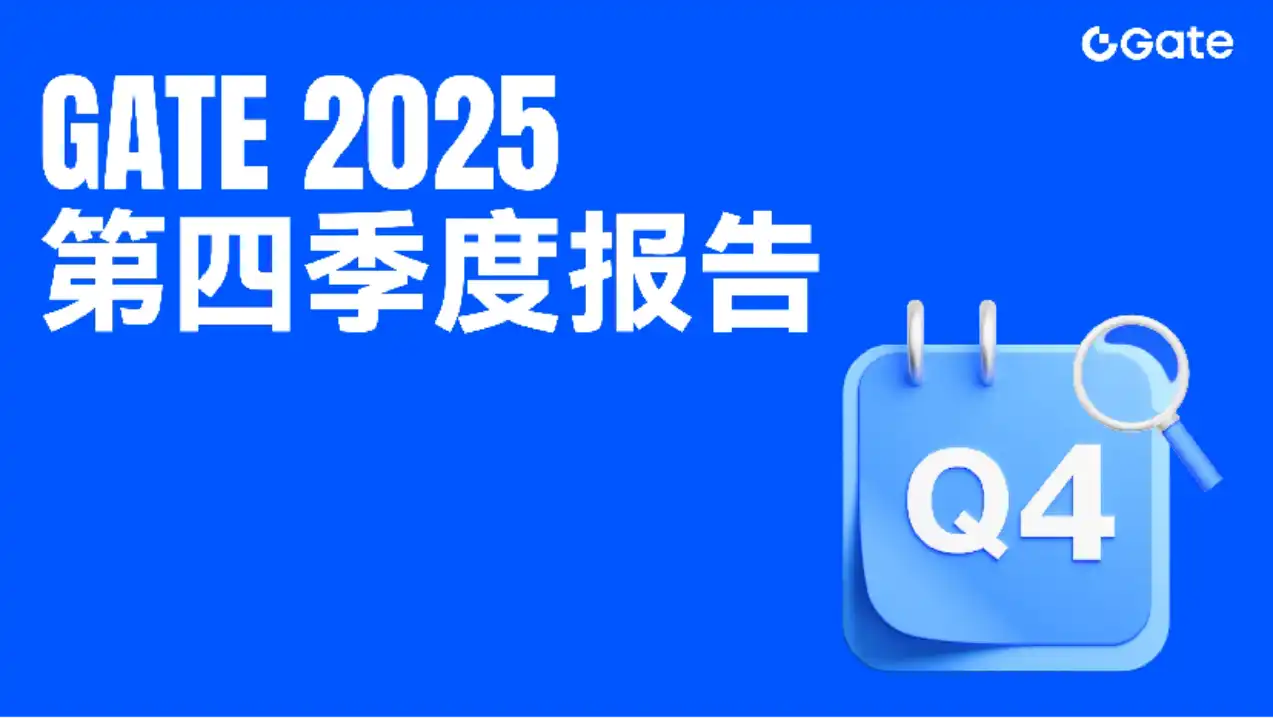
Gate, a leading global cryptocurrency trading platform, has released its Q4 2025 Report. The report indicates that the platform has made continuous progress in its core trading business, Web3 ecosystem development, and global compliance efforts, with multiple key metrics achieving significant improvements. During the quarter, Gate made positive strides in spot and derivatives trading volume, product system enhancement, and on-chain ecosystem synergy, further solidifying its position as a top-tier platform in the global crypto industry.

In Q4 2025, Gate continued its strong growth momentum throughout the year, with both spot and derivatives businesses operating at high levels. Trading depth, liquidity, and user activity consistently ranked among the industry's best. According to the latest data from CoinDesk, Gate's global market share growth in spot trading remained in the top three, while its derivatives market share increased to 11%, making it the exchange with the highest growth rate during the same period. This demonstrates the platform's system stability and operational resilience in complex market conditions.

By the end of the quarter, the platform's registered user base approached 50 million, supporting over 4,300 cryptocurrencies. Additionally, Gate completed the upgrade to App v8.0 in December, optimizing international visual design, interaction efficiency, and system performance to enhance the multi-scenario trading and asset management experience.

In terms of products and ecosystem, Gate continued to operate mechanisms such as Launchpool, Launchpad, HODLer Airdrop, and CandyDrop. Specifically, Launchpool listed 28 projects in a single quarter, with a total airdrop value exceeding $4.8 million; Launchpad saw an oversubscription rate of over 2,500%, with a cumulative oversubscription amount of $149 million; HODLer Airdrop launched 23 free airdrop projects within the quarter, with a total airdrop value of over $590,000; CandyDrop's cumulative contract trading volume surpassed $51 billion. On the on-chain trading front, Gate Perp DEX officially entered the scaled trading phase, with its first full quarter's cumulative trading volume exceeding $10 billion, supporting hundreds of perpetual contract trading pairs.

In asset management, the subscription amount for Gate's Flexible Savings product exceeded $11 billion within the quarter, with daily active users surpassing 430,000; the scale of on-chain earn products steadily increased, with GUSD minting volume exceeding $200 million again in December; ETF business quarterly trading volume exceeded 13.9 billion USDT, supporting over 310 ETF trading pairs; quantitative fund users and trading volume grew simultaneously, with new users increasing by 98% quarter-on-quarter.

Regarding security and transparency, as of October 28, 2025, Gate's total reserve value reached $11.676 billion, with a total reserve ratio of 124%, covering nearly 500 user assets; the on-chain burn mechanism for GateToken (GT) continued, with the cumulative burn ratio increasing to 61.61%. On the compliance front, Gate Technology Ltd, a subsidiary of Gate Group, obtained a MiCA license from the Malta Financial Services Authority (MFSA) and initiated the process for EU passporting rights; Gate Australia officially launched, marking the further expansion of Gate Group's global compliance footprint. To date, multiple entities under Gate have obtained or completed relevant regulatory registrations, license applications, authorizations, or approvals in jurisdictions including Malta, The Bahamas, Japan, Australia, and Dubai.

While continuously advancing trading and Web3 infrastructure development, Gate has further increased its investment in community ecosystem and brand building. The number of certified creators on Gate Square has exceeded 1,000, continuously building a Web3 community centered on user participation. In brand building, Gate sponsored the Token of Love music festival in Singapore and hosted high-profile brand events and VVIP dinners during key moments such as TOKEN2049 and the F1 Singapore Grand Prix, gathering global partners, institutional clients, and industry leaders to continuously strengthen Gate's brand recognition and ecosystem appeal on the international stage.

In Q4 2025, Gate demonstrated robust operational resilience in trading volume, product innovation, on-chain ecosystem, and global expansion, with multiple business lines advancing steadily. By solidifying the foundation of core trading businesses like spot and derivatives, accelerating the synergistic implementation of Web3 ecosystems and on-chain applications, and simultaneously advancing security, compliance, and brand building, Gate is steadily completing its strategic upgrade from a traditional trading platform to an integrated Web3 infrastructure. Looking ahead, with the continuous improvement of the product system and the release of ecosystem synergies, Gate is expected to further consolidate its comprehensive competitiveness in the global digital asset market, injecting sustainable growth momentum into the industry's long-term development.

Details link: https://www.gate.com/announcements/article/49409

About Gate

Founded in 2013 by Dr. Han, its Founder and CEO, Gate is one of the world's leading cryptocurrency trading platforms. The platform serves over 48 million users and supports trading for more than 4,300 crypto assets. As an industry benchmark, Gate was among the first to achieve 100% Proof of Reserves. Its ecosystem encompasses diverse services including Gate Wallet and Gate Ventures.

To learn more, visit: Website| X| Telegram| LinkedIn| Instagram| YouTube

Disclaimer:

This content does not constitute any offer, solicitation, or recommendation. You should always seek independent professional advice before making any investment decisions. Please note that Gate may restrict or prohibit all or part of its services from restricted regions. Please read the User Agreement for more information, link: https://www.gate.com/zh/user-agreement.

Связанные с этим вопросы

QWhat were the key highlights of Gate's performance in Q4 2025, according to the report?

AThe report highlighted robust growth in Gate's core trading business, with both spot and derivatives market share increasing. The platform's global spot market share growth ranked in the top three, and its derivatives market share rose to 11%, the highest increase among trading platforms during the period. User growth continued, nearing 50 million registered users.

QWhich new regulatory license did Gate Group obtain and in which jurisdiction?

AGate Technology Ltd, a subsidiary of Gate Group, obtained a MiCA license from the Malta Financial Services Authority (MFSA) and initiated the process for an EU passporting right.

QWhat significant milestone did Gate's Perp DEX achieve in its first full quarter of operation?

AGate's Perp DEX entered the large-scale trading phase, with its cumulative trading volume exceeding $10 billion in its first complete quarter, supporting hundreds of perpetual contract trading pairs.

QHow did Gate's product mechanisms like Launchpool and Launchpad perform in Q4 2025?

ALaunchpool listed 28 projects in a single quarter with a total airdrop value exceeding $4.8 million. Launchpad saw an oversubscription rate of over 2,500%, with a total oversubscription amount reaching $149 million.

QWhat is the total value of Gate's Proof of Reserves and what is the reserve ratio as of the report?

AAs of October 28, 2025, the total value of Gate's reserves was $11.676 billion, with a total reserve ratio of 124%, covering nearly 500 user assets.

Похожее

Gensyn AI: Don't Let AI Repeat the Mistakes of the Internet

In recent months, the rapid growth of the AI industry has attracted significant talent from the crypto sector. A persistent question among researchers intersecting both fields is whether blockchain can become a foundational part of AI infrastructure. While many previous AI and Crypto projects focused on application layers (like AI Agents, on-chain reasoning, data markets, and compute rentals), few achieved viable commercial models. Gensyn differentiates itself by targeting the most critical and expensive layer of AI: model training. Gensyn aims to organize globally distributed GPU resources into an open AI training network. Developers can submit training tasks, nodes provide computational power, and the network verifies results while distributing incentives. The core issue addressed is not decentralization for its own sake, but the increasing centralization of compute power among tech giants. In the era of large models, access to GPUs (like the H100) has become a decisive bottleneck, dictating the pace of AI development. Major AI companies are heavily dependent on large cloud providers for compute resources. Gensyn's approach is significant for several reasons: 1) It operates at the core infrastructure layer (model training), the most resource-intensive and technically demanding part of the AI value chain. 2) It proposes a more open, collaborative model for compute, potentially increasing resource utilization by dynamically pooling idle GPUs, similar to early cloud computing logic. 3) Its technical moat lies in solving complex challenges like verifying training results, ensuring node honesty, and maintaining reliability in a distributed environment—making it more of a deep-tech infrastructure company. 4) It targets a validated, high-growth market with genuine demand, rather than pursuing blockchain integration without purpose. Ultimately, the boundaries between Crypto and AI are blurring. AI requires global resource coordination, incentive mechanisms, and collaborative systems—areas where crypto-native solutions excel. Gensyn represents a step toward making advanced training capabilities more accessible and collaborative, moving beyond a niche controlled by a few giants. If successful, it could evolve into a fundamental piece of AI infrastructure, where the most enduring value in the AI era is often created.

marsbit7 ч. назад

Gensyn AI: Don't Let AI Repeat the Mistakes of the Internet

marsbit7 ч. назад

Why is China's AI Developing So Fast? The Answer Lies Inside the Labs

A US researcher's visit to China's top AI labs reveals distinct cultural and organizational factors driving China's rapid AI development. While talent, data, and compute are similar to the West, Chinese labs excel through a pragmatic, execution-focused culture: less emphasis on individual stardom and conceptual debate, and more on teamwork, engineering optimization, and mastering the full tech stack. A key advantage is the integration of young students and researchers who approach model-building with fresh perspectives and low ego, prioritizing collective progress over personal credit. This contrasts with the US culture of self-promotion and "star scientist" narratives. Chinese labs also exhibit a strong "build, don't buy" mentality, preferring to develop core capabilities—like data pipelines and environments—in-house rather than relying on external services. The ecosystem feels more collaborative than tribal, with mutual respect among labs. While government support exists, its scale is unclear, and technical decisions appear driven by labs, not state mandates. Chinese companies across sectors, from platforms to consumer tech, are building their own foundational models to control their tech destiny, reflecting a broader cultural drive for technological sovereignty. Demand for AI is emerging, with spending patterns potentially mirroring cloud infrastructure more than traditional SaaS. Despite challenges like a less mature data industry and GPU shortages, Chinese labs are propelled by vast talent, rapid iteration, and deep integration with the open-source community. The competition is evolving beyond a pure model race into a contest of organizational execution, developer ecosystems, and industrial pragmatism.

marsbit9 ч. назад

Why is China's AI Developing So Fast? The Answer Lies Inside the Labs

marsbit9 ч. назад

3 Years, 5 Times: The Rebirth of a Century-Old Glass Factory

Corning, a 175-year-old glass company, is experiencing a dramatic revival as a key player in AI infrastructure, driven by surging demand for high-performance optical fiber in data centers. AI data centers require vastly more fiber than traditional ones—5 to 10 times as much per rack—to handle high-speed data transmission between GPUs. This structural demand shift, coupled with supply constraints from the lengthy expansion cycle for fiber preforms, has created a significant supply-demand gap. Nvidia has invested in Corning, along with Lumentum and Coherent, in a $4.5 billion total commitment to secure the optical supply chain for AI. Corning's competitive edge lies in its expertise in producing ultra-low-loss, high-density, and bend-resistant specialty fiber, which is critical for 800G+ and future 1.6T data rates. Its deep involvement in co-packaged optics (CPO) with partners like Nvidia further solidifies its position. While not the largest fiber manufacturer globally, Corning's revenue from enterprise/data center clients now exceeds 40% of its optical communications sales, and it has secured multi-year supply agreements with major hyperscalers including Meta and Nvidia. Financially, Corning's optical communications revenue has surged, doubling from $1.3 billion in 2023 to over $3 billion in 2025. Its stock price has risen nearly 6-fold since late 2023. Key future catalysts include the rollout of Nvidia's CPO products and the scale of undisclosed customer agreements. However, risks include high current valuations and potential disruption from next-generation technologies like hollow-core fiber. The company's long-term bet on light over electricity, maintained even through the telecom bubble crash, is now being validated by the AI boom.

marsbit9 ч. назад

3 Years, 5 Times: The Rebirth of a Century-Old Glass Factory

marsbit9 ч. назад

Торговля

Спот
Фьючерсы
活动图片