FT Column: Bitcoin's 'La Haine' Moment - The Fall Doesn't Matter, the Landing Does

marsbitОпубликовано 2026-02-09Обновлено 2026-02-09

Введение

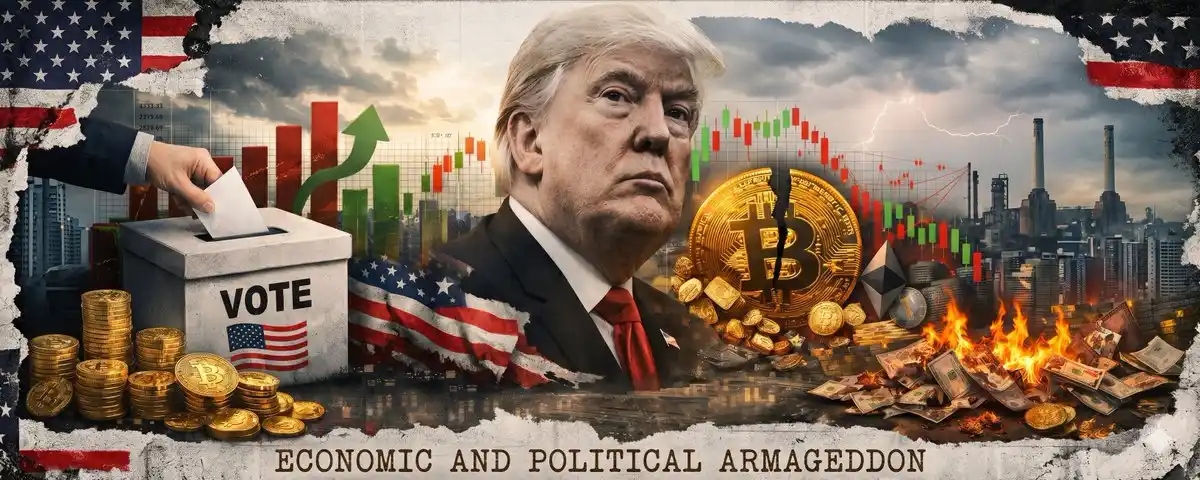
Bitcoin is experiencing its worst crash since 2022, plummeting toward $60,000 and erasing all gains made since Donald Trump’s re-election. The crypto community, known for its resilience and “cope” mentality, remains outwardly confident despite massive liquidations—over $1.25 billion in a single 24-hour period. Influential figures like Balaji Srinivasan and Michael Saylor continue to evangelize, citing political support and long-term optimism. However, the author argues that such faith is misplaced. Even with a pro-Bitcoin U.S. president and favorable policies, the sell-off persists, revealing the fragility of a market built purely on speculation and the “greater fool” theory. The piece draws a parallel to the film *La Haine*, using the metaphor of a falling man repeating “so far, so good” to illustrate the denial preceding an inevitable crash. The core question remains: when the faith vanishes and the fools run out, how will Bitcoin land?

Author: Jemima Kelly

Compiled by: Deep Tide TechFlow

Deep Tide Guide: Bitcoin recently suffered its worst plunge since 2022, not only wiping out all gains made after Trump's election victory but also revealing the fragility behind the political红利. Author Jemima Kelly, borrowing a classic line from the film "La Haine," sharply讽刺 the crypto community's "spiritual victory" mentality during the crisis. Even with the U.S. having an unprecedented "Bitcoin President" who even listed it as a national strategic reserve, it still couldn't stop the selling wave.

The author believes that when this bubble, built entirely on "faith in others," begins to burst, and when the "greater fools" no longer appear, Bitcoin's fall will ultimately meet a brutal landing.

Full Text Below:

"This is the story of a man falling from a 50-story building. On his way down, passing each floor, he reassures himself by repeating: 'Jusqu’ici tout va bien (So far, so good), so far, so good, so far, so good.'"

This is the stunning opening of the 1995 French cult classic film "La Haine."

This text, this imagery, has for some reason been deeply imprinted on my consciousness, lasting a lifetime. Whenever I feel anxious or experience "imposter syndrome worries," they always comfort me. They suggest: since I haven't had any harm so far, maybe I can keep being this lucky.

And "so far," the salesmen and shamans of the Bitcoin world have also been fine.

Of course, Bitcoin has indeed experienced dozens of major crashes, hundreds or thousands of crypto companies may have gone bankrupt, countless people may have lost their life savings, but every time Bitcoin falls, it always rebounds.

Those who could afford to lose managed to hold on (those who couldn't afford to lose were washed out), and the cognitive muscle memory they gained from each rebound made them believe their sacred cryptocurrency would live forever.

Allow me to sensitively point out: it won't.

The excessive confidence of Bitcoin believers—or more accurately, the confidence they display that is necessary to keep the entire system running—has always been unfounded, irresponsible, and reckless. Since its birth, Bitcoin has embarked on a journey destined to end in "shattering on the ground."

This week, that "ground" is rapidly and clearly coming into view. Bitcoin suffered its worst crash since 2022, falling to near $60,000 on Friday, erasing all gains since Donald Trump's re-election in 2024, and falling more than half from its all-time high of over $127,000 last October.

According to Coinglass data, in just 24 hours from Thursday to Friday, about $1.25 billion worth of Bitcoin positions were liquidated.

This sense of desperation and so-called "Cope" (crypto slang, implying someone is delusional, struggling to accept a painful reality) is clearly visible. "I have never been more bullish on crypto than I am right now," Coinbase's former CTO and famous crypto evangelist Balaji Srinivasan posted on X on Thursday, "because rule-based order is breaking down, and code-based order is rising. So short-term price doesn't matter." Of course he would say that.

Some have opted for self-deprecating nonsense.

Michael Saylor, the man who turned his company MicroStrategy into a tool for betting big on Bitcoin (the company holds over 713,000 BTC, about 3.4% of the total circulating supply), posted on Wednesday: "If you want to give me a birthday present, please buy some Bitcoin for yourself." Poor "birthday billionaire."

The next day, on the Q4 2025 earnings call—when the worst of the crash hadn't yet happened, but MicroStrategy still recorded a staggering $12.4 billion loss—Saylor tried a different persuasion tactic. He insisted: "I think the importance of gaining support for the industry and digital capital at the highest levels of the political structure cannot be underestimated." He noted that the U.S. now has a "Bitcoin President" committed to making America the "crypto capital of the world."

But this is what makes the crypto world very awkward. Because Saylor is right—the U.S. does indeed have the closest thing to a "Bitcoin President" in history, and this president's family has vested crypto interests. However, despite establishing a "strategic Bitcoin reserve," pardoning a number of convicted crypto criminals, allowing Americans to deposit cryptocurrencies into 401(k) retirement accounts, and claiming to have ended former President Biden's "war on crypto" within his first 200 days in office, Trump's presence in the White House still couldn't hold back the wave of selling. If Bitcoin cannot thrive in such an environment, when can it?

We may not have truly reached Bitcoin's final "death spiral"; I don't claim to know when that will happen. Trying to predict the end date of a speculative frenzy based purely on faith—or more specifically, based on "faith in others' faith"—is a daunting task. Bitcoin might have a few more final hurrahs (at the time of writing, it had rebounded to around $69,000).

But this faith is beginning to fade. This week's situation tells us that the supply of "greater fools" that Bitcoin relies on for survival is drying up. The fairy tales that keep cryptocurrency afloat are revealing their illusory nature. People are beginning to realize that for something built entirely on nothing, there is no floor to its value.

Ask yourself: Will this thing still exist in 100 years? Remember the line: "What matters isn't the fall, it's the landing."

So far, so good, so far, so good, so far...

Связанные с этим вопросы

QWhat is the main argument made by the author regarding Bitcoin's recent crash?

AThe author argues that Bitcoin's recent crash reveals the fragility of its political hype and that the asset, built entirely on faith and speculation, is destined for a hard landing as the supply of 'greater fools' dries up.

QHow does the author use the film 'La Haine' to frame the situation with Bitcoin?

AThe author uses the film's opening metaphor of a man falling from a building while repeating 'so far, so good' to illustrate the false confidence and denial within the Bitcoin community as its value plummets.

QAccording to the article, why was the recent crash particularly significant for Bitcoin proponents?

AIt was significant because it occurred despite having a pro-Bitcoin U.S. president and favorable political policies, showing that even strong political support cannot prevent a collapse when faith in the asset diminishes.

QWhat does the term 'greater fools' refer to in the context of this article?

AIt refers to the theory that Bitcoin's value relies on a continuous influx of new buyers (the 'greater fools') who are willing to pay a higher price, and the article suggests this supply is now dwindling.

QWhat is the author's view on the long-term survival of Bitcoin?

AThe author is highly skeptical, suggesting Bitcoin is built on nothing substantial and implying it will not survive in the long term, ultimately meeting a disastrous 'landing'.

Похожее

Will the Fed Still Cut Interest Rates? Tonight's Data Is Crucial

The core debate surrounding the Federal Reserve's potential interest rate cuts is intensifying amid geopolitical conflict and rebounding inflation. The key question is whether high energy prices will cause persistent inflation or weaken consumer demand enough to force the Fed to cut rates. Citigroup presents a bullish case for cuts, arguing that oil supply disruptions from the Strait of Hormuz are temporary and will not lead to lasting inflationary pressure. They point to receding bond yields and oil prices as evidence the market is pricing in a short-lived shock. Citi's data also shows tightening financial conditions, a stabilizing labor market, and healthy tax returns, supporting their view that the path to lower rates remains open. Conversely, Deutsche Bank offers a starkly contrasting, more hawkish outlook. They argue the Fed's current policy is already neutral and expect rates to remain unchanged indefinitely. Their view is based on stalled disinflation progress and a shift toward more hawkish rhetoric from key Fed officials like Waller, who cited risks from prolonged Middle East conflict and tariffs. Other officials, including Williams and Hammack, signaled rates would likely stay on hold for a "considerable time." The market pricing has shifted dramatically, now forecasting zero cuts in 2026. The imminent release of the March retail sales "control group" data is highlighted as a critical test. This metric, which excludes gas station sales, will reveal if high gasoline prices are eroding consumer spending in other areas. A weak reading could support the case for imminent rate cuts, while a strong one would bolster the argument for the Fed to hold steady. This data is pivotal for determining the near-term policy path.

marsbit13 мин. назад

Will the Fed Still Cut Interest Rates? Tonight's Data Is Crucial

marsbit13 мин. назад

The Second Half of Macro Influencer Fu Peng's Career

Fu Peng, a prominent Chinese macroeconomist and former chief economist of Northeast Securities, has joined Hong Kong-based digital asset management firm Bitfire Group (formerly New Huo Group) as its chief economist. This move, announced in April 2026, triggered an 11% surge in Bitfire's stock price. Fu, known for his accessible macroeconomic commentary and large social media following, will focus on integrating digital assets into global asset allocation frameworks, particularly combining FICC (fixed income, currencies, and commodities) with cryptocurrencies for institutional clients. His career includes roles at Lehman Brothers and Solomon International, with significant influence gained through public communication. However, in late 2024, Fu faced temporary social media bans after a controversial private speech at HSBC on China's economic challenges, though he denied regulatory sanctions. He later left Northeast Securities citing health reasons. Bitfire, a licensed virtual asset manager serving high-net-worth clients, seeks to build trust and attract traditional capital through Fu’s expertise and credibility. The partnership represents a strategic shift for both: Fu enters the crypto sector after a traditional finance peak, while Bitfire aims to leverage his macro framework for institutional adoption. Outcomes remain uncertain regarding capital inflows and compatibility within corporate structure.

marsbit1 ч. назад

The Second Half of Macro Influencer Fu Peng's Career

marsbit1 ч. назад

Торговля

Спот
Фьючерсы

Популярные статьи

Как купить S

Добро пожаловать на HTX.com! Мы сделали приобретение Sonic (S) простым и удобным. Следуйте нашему пошаговому руководству и отправляйтесь в свое крипто-путешествие.Шаг 1: Создайте аккаунт на HTXИспользуйте свой адрес электронной почты или номер телефона, чтобы зарегистрироваться и бесплатно создать аккаунт на HTX. Пройдите удобную регистрацию и откройте для себя весь функционал.Создать аккаунтШаг 2: Перейдите в Купить криптовалюту и выберите свой способ оплатыКредитная/Дебетовая Карта: Используйте свою карту Visa или Mastercard для мгновенной покупки Sonic (S).Баланс: Используйте средства с баланса вашего аккаунта HTX для простой торговли.Третьи Лица: Мы добавили популярные способы оплаты, такие как Google Pay и Apple Pay, для повышения удобства.P2P: Торгуйте напрямую с другими пользователями на HTX.Внебиржевая Торговля (OTC): Мы предлагаем индивидуальные услуги и конкурентоспособные обменные курсы для трейдеров.Шаг 3: Хранение Sonic (S)После приобретения вами Sonic (S) храните их в своем аккаунте на HTX. В качестве альтернативы вы можете отправить их куда-либо с помощью перевода в блокчейне или использовать для торговли с другими криптовалютами.Шаг 4: Торговля Sonic (S)С легкостью торгуйте Sonic (S) на спотовом рынке HTX. Просто зайдите в свой аккаунт, выберите торговую пару, совершайте сделки и следите за ними в режиме реального времени. Мы предлагаем удобный интерфейс как для начинающих, так и для опытных трейдеров.

1.1k просмотров всегоОпубликовано 2025.01.15Обновлено 2025.03.21

Как купить S

Sonic: Обновления под руководством Андре Кронье – новая звезда Layer-1 на фоне спада рынка

Он решает проблемы масштабируемости, совместимости между блокчейнами и стимулов для разработчиков с помощью технологических инноваций.

2.2k просмотров всегоОпубликовано 2025.04.09Обновлено 2025.04.09

Sonic: Обновления под руководством Андре Кронье – новая звезда Layer-1 на фоне спада рынка

HTX Learn: Пройдите обучение по "Sonic" и разделите 1000 USDT

HTX Learn — ваш проводник в мир перспективных проектов, и мы запускаем специальное мероприятие "Учитесь и Зарабатывайте", посвящённое этим проектам. Наше новое направление .

1.8k просмотров всегоОпубликовано 2025.04.10Обновлено 2025.04.10

HTX Learn: Пройдите обучение по "Sonic" и разделите 1000 USDT

Обсуждения

Добро пожаловать в Сообщество HTX. Здесь вы сможете быть в курсе последних новостей о развитии платформы и получить доступ к профессиональной аналитической информации о рынке. Мнения пользователей о цене на S (S) представлены ниже.

活动图片