15 декабря 2025 года по североамериканскому времени Nasdaq официально подала в SEC форму 19b-4 с просьбой продлить время торговли акциями и биржевыми продуктами до 23/5 (23 часа в день, 5 дней в неделю).
Однако заявленное Nasdaq время торговли — не просто продление, а изменение на два официальных торговых периода:
Дневной торговый период (по восточному времени США 4:00-20:00) и ночной торговый период (по восточному времени США 21:00-4:00 следующего дня). При этом с 20:00 до 21:00 торговля приостанавливается, и все неисполненные ордера в это время отменяются.
Многие читатели, увидев новость, обрадовались, подумав, не готовится ли США к круглосуточной токенизированной торговле акциями? Но, внимательно изучив документ, Crypto Salad хочет сказать всем: не спешите с выводами, потому что Nasdaq указала в документе, что многие традиционные правила торговли ценными бумагами и сложные ордера не применимы к ночному торговому периоду, некоторые функции также будут ограничены.
Мы всегда очень внимательно следили за токенизацией акций США, это один из важнейших объектов токенизации активов реального мира, особенно различные официальные действия американской SEC (Комиссии по ценным бумагам и биржам), которые в последнее время также появляются одна за другой.
Это заявление вновь вызвало ожидания относительно токенизации акций США, потому что США хотят сделать большой шаг к сближению времени торговли ценными бумагами с круглосуточным рынком цифровых активов. Однако, если посмотреть внимательно:
В этом документе Nasdaq вообще не упоминается ничего о токенизации, это лишь институциональная реформа традиционных ценных бумаг.
Если вы хотите глубже понять действия Nasdaq, Crypto Salad может написать отдельную статью с подробным объяснением. Но сегодня мы всё же хотим поговорить о новостях, непосредственно связанных с токенизацией акций США —
SEC официально «разрешила» гиганту-кастодиану ценных бумаг США экспериментировать с предоставлением услуг токенизации.
------【Разделительная линия】------
11 декабря 2025 года по североамериканскому времени сотрудники Отдела торговли и рынков SEC направили DTCC «Письмо о непринятии мер (No-Action Letter, NAL)», которое впоследствии было опубликовано на официальном сайте SEC. В письме чётко указано, что при соблюдении определённых условий SEC не будет принимать принудительные меры в отношении DTC за предоставление услуг токенизации, связанных с его кастодиальными ценными бумагами.
На первый взгляд, многие читатели подумали, что SEC официально «освободила» от использования технологии токенизации на акциях. Но при внимательном рассмотрении реальная ситуация сильно отличается.
Итак, что же именно написано в этом письме? До какого этапа дошло последнее развитие токенизации акций США? Давайте начнём с главного героя письма:
1. Кто такие DTCC и DTC?
DTCC, полное название Depository Trust & Clearing Corporation, — это американская групповая компания, в которую входят различные учреждения, отвечающие за хранение, клиринг акций и клиринг облигаций.
DTC, полное название Depository Trust Company, — это дочерняя компания DTCC, а также крупнейшее в США учреждение по централизованному хранению ценных бумаг, отвечающее за единое хранение акций, облигаций и других ценных бумаг, а также за расчеты и перевод прав собственности. В настоящее время объем хранения и учёта активов ценных бумаг превышает 100 триллионов долларов, можно понять DTC как администратора бухгалтерской книги всего рынка акций США.
2. Какое отношение DTC имеет к токенизации акций США?
Помните новость в начале сентября 2025 года, когда Nasdaq подала заявку в SEC на выпуск акций в токенизированной форме? В той заявке уже фигурировал DTC.
Nasdaq заявила, что единственное отличие токенизированных акций от традиционных заключается в клиринге и расчетах ордеров в DTC.
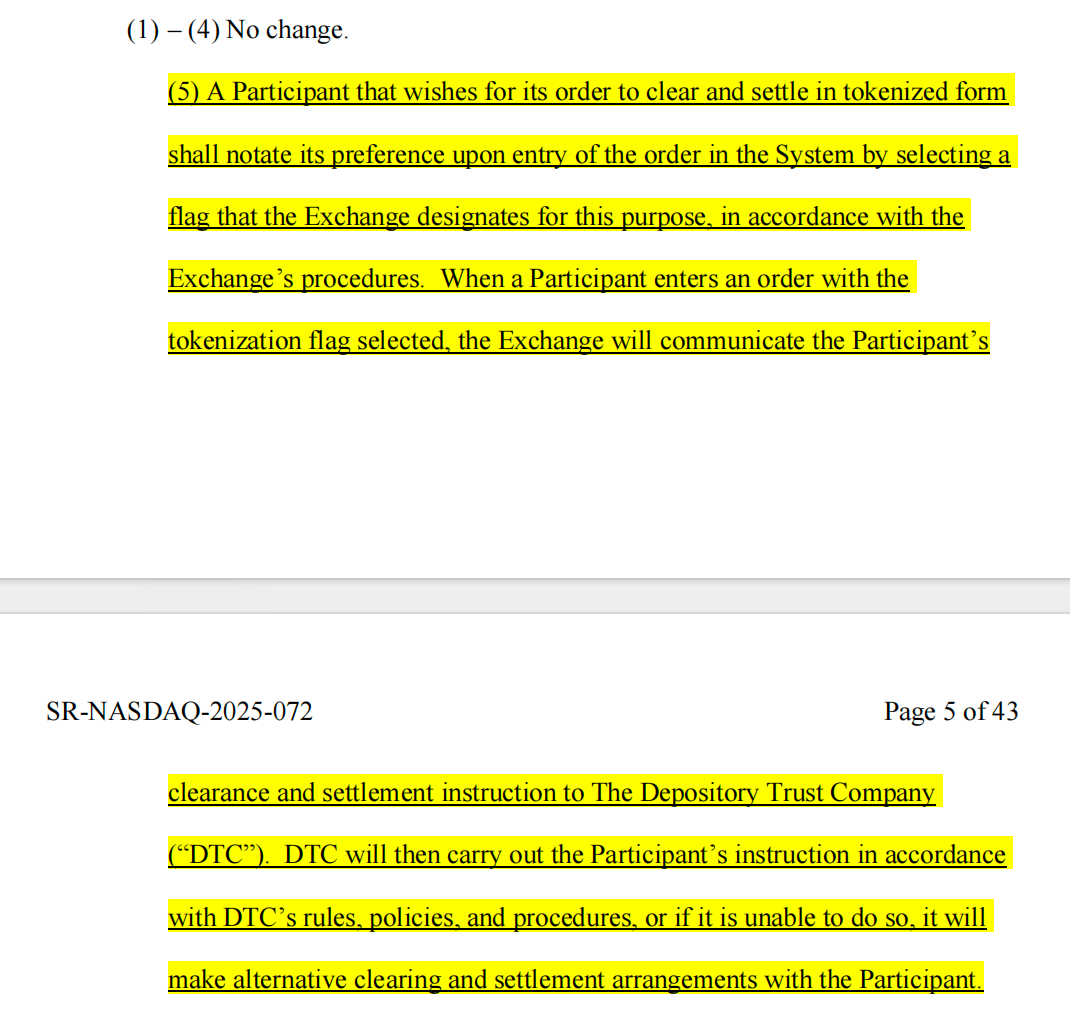
(Выше скриншот из заявки Nasdaq)
Чтобы сделать это более понятным, мы нарисовали блок-схему, синяя часть — это то, что Nasdaq хотела изменить в своём предложении в сентябре этого года. Можно чётко увидеть, что DTC является ключевым реализующим и практическим учреждением токенизации акций США.
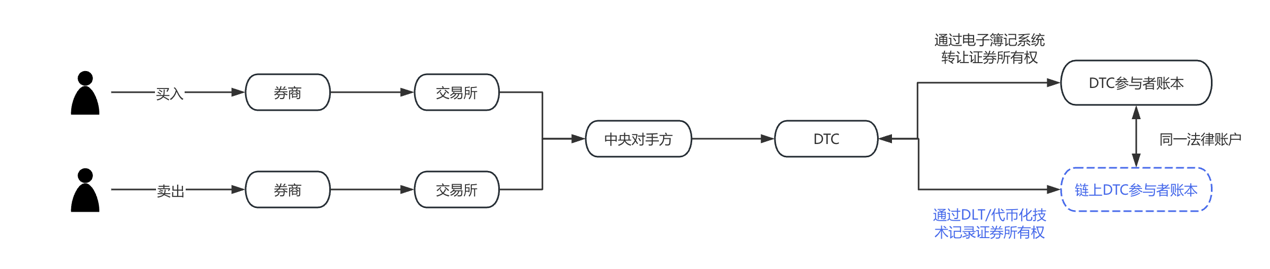
3. О чём говорится в новом «Письме о непринятии мер»?
Многие напрямую приравнивают этот документ к тому, что SEC согласилась с использованием DTC блокчейна для учёта акций США, но это не совсем точно. Чтобы правильно понять это, мы должны познакомиться с одним пунктом в американском «Законе о ценных бумагах и биржах»:
Статья 19(b) «Закона о ценных бумагах и биржах 1934 года» (Securities Exchange Act of 1934) предусматривает, что любая саморегулируемая организация (включая клиринговые учреждения) при изменении правил или существенных деловых договоренностей должна подать заявку на изменение правил в SEC и получить одобрение.
Оба предложения Nasdaq были поданы на основании этого положения.
Однако процесс подачи заявок на правила обычно длительный, может затянуться на месяцы, до 240 дней. Тогда, если каждое изменение требует подачи заявки и одобрения, затраты времени будут слишком велики. Поэтому, чтобы обеспечить беспрепятственное проведение своей пилотной деятельности по токенизации ценных бумаг, DTC попросила освободить её от обязанности полностью соблюдать процесс подачи заявок 19b в течение пилотного периода, на что SEC дала согласие.
То есть, SEC лишь временно освободила DTC от части процессуальных обязанностей по подаче заявок, а не существенно разрешила применение технологии токенизации на рынке ценных бумаг.
---【Разделительная линия】---
Как же тогда будет развиваться токенизация акций США? Нам нужно разобраться со следующими двумя вопросами:
(1) Какую пилотную деятельность DTC может проводить без подачи заявки?
В настоящее время кастодиальный учёт акций США работает по такой модели: предположим, у брокера есть счёт в DTC, DTC будет использовать централизованную систему для записи каждой купленной и проданной акции и доли. На этот раз DTC предложила: можем ли мы предоставить брокерам выбор, чтобы записать эти записины акций ещё раз с помощью токенов блокчейна?
Практически, сначала участники регистрируют квалифицированный, одобренный DTC кошелёк (Registered Wallet). Когда участник отправляет в DTC инструкцию по токенизации, DTC сделает три вещи:
a) Переместит эти акции с исходного счёта в общий пул;
b) Выпустит (отчеканит) токен в блокчейне;
c) Переведёт токен на кошелёк этого участника, что будет означать право этого участника на эти ценные бумаги.
После этого эти токены могут напрямую передаваться между этими брокерами без необходимости каждый раз проходить через централизованный реестр DTC. Однако все передачи токенов будут отслеживаться и записываться DTC в режиме реального времени через систему вне цепи под названием LedgerScan, и записи LedgerScan будут составлять официальную бухгалтерскую книгу DTC. Если участник захочет выйти из состояния токенизации, он может в любое время отправить в DTC инструкцию «детокенизации», DTC уничтожит токен и вернёт право на ценные бумаги обратно на традиционный счёт.
В NAL также подробно описаны технические и риск-ограничения, включая: токены могут передаваться только между одобренными DTC кошельками, поэтому DTC даже имеет право при определённых обстоятельствах принудительно transferить или уничтожать токены в кошельке, система токенов строго изолирована от основной клиринговой системы DTC и т.д.
(2) В чём значение этого письма?
С юридической точки зрения, Crypto Salad хочет подчеркнуть, что NAL не эквивалентно юридическому разрешению или изменению правил, оно не имеет общеобязательной юридической силы, а лишь отражает позицию сотрудников SEC в отношении правоприменения при определённых фактах и условиях.
В системе американского права о ценных бумагах не существует отдельного положения «запрещающего использование блокчейна для учёта». Регулирование больше сосредоточено на том, остаются ли удовлетворёнными существующие рыночная структура, кастодиальные обязанности, управление рисками и обязанности по подаче заявок после внедрения новых технологий.
Кроме того, в американской системе регулирования ценных бумаг такие письма, как NAL, долгое время рассматривались как важный индикатор регуляторной позиции, особенно когда объектом являются системно значимые финансовые учреждения, такие как DTC, их символическое значение фактически больше, чем сам бизнес.
------【Разделительная линия】------
Судя по раскрытому содержанию, предпосылка освобождения SEC на этот раз очень ясна: DTC выпускает или торгует ценными бумагами не напрямую в цепи, а представляет в токенизированной форме права на существующие ценные бумаги в своей кастодиальной системе.
Этот токен фактически является «отображением прав» или «выражением в реестре», используемым для повышения эффективности бэк-офисной обработки, а не для изменения юридических атрибутов ценных бумаг или структуры собственности. Соответствующие услуги работают в контролируемой среде и на разрешённом блокчейне, участники, scope применения и техническая архитектура строго ограничены.
Crypto Salad считает, что такая регуляторная позиция очень разумна. Легче всего в активах в цепи возникают отмывание денег, незаконное привлечение средств и другие финансовые преступления, технология токенизации — это новая технология, но она не должна быть пособником преступлений. Регуляторам необходимо, признавая потенциал применения блокчейна в инфраструктуре ценных бумаг, придерживаться границ существующего закона о ценных бумагах и кастодиальной системы.
4. Последний прогресс в развитии токенизации акций США
Обсуждение токенизации акций США начало постепенно переходить от «соответствует ли нормам» к «как реализовать». Если разобрать текущую практику на рынке, можно увидеть, что формируются как минимум два параллельных, но логически разных пути:
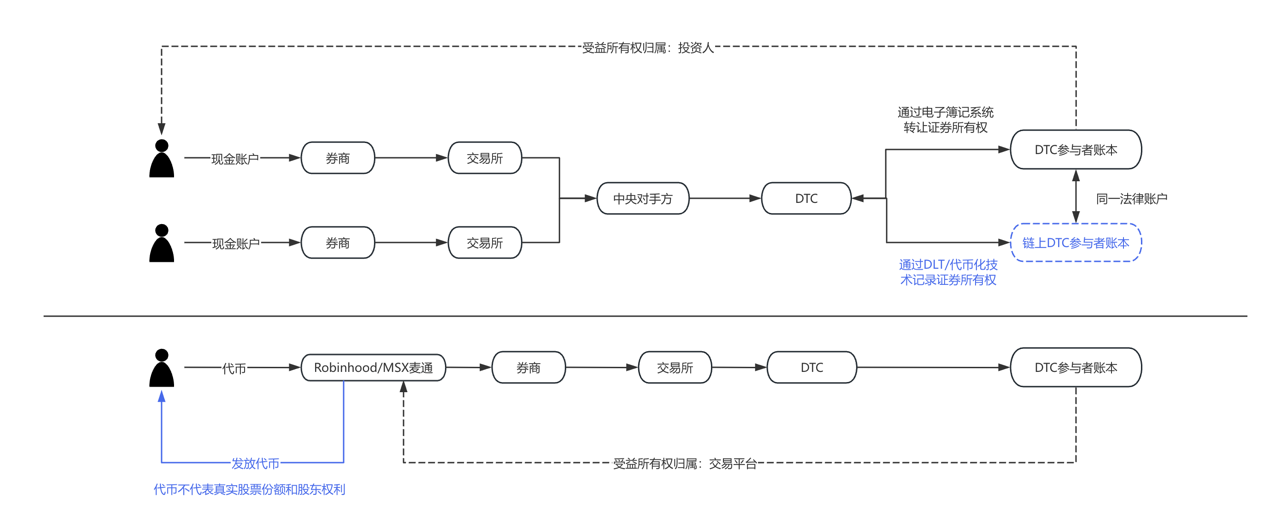
· Представленные DTCC и DTC, это путь токенизации,主导官方主导 (ведущий официальный), его основная цель — повысить эффективность расчетов, сверки и оборота активов, обслуживая в основном институциональных и оптовых участников рынка. В этой модели токенизация практически «невидима», для конечного инвестора акции остаются акциями, лишь бэк-офисная система технически обновляется.
· В противовес этому — возможная роль брокеров и торговых платформ на переднем плане. Такие компании, как Robinhood, MSX Maiton, в последние годы продолжают исследовать продукты в области криптоактивов, фрагментированной торговли акциями и продления времени торговли. Если токенизация акций США постепенно созреет с точки зрения соответствия, такие платформы天然 обладают преимуществом стать пользовательским входом. Для них токенизация не означает перестройку бизнес-модели, а скорее может быть техническим расширением существующего инвестиционного опыта, например, более приближенные к реальному времени расчеты, более гибкое дробление активов и интеграция кросс-рыночных продуктовых форм. Конечно,前提这一切 — постепенное прояснение регуляторных рамок. Такие исследования обычно идут near границам регулирования, сосуществуя риск и инновация, их ценность заключается не в краткосрочном масштабе, а в проверке формы рынка ценных бумаг следующего поколения. С практической точки зрения, они更像是 предоставление образцов для институциональной эволюции, а не прямая замена существующего рынка акций США.
Чтобы было более наглядно, посмотрите на следующую сравнительную диаграмму:
5. Мнение Crypto Salad
С более макроскопической точки зрения, реальная проблема, которую пытается решить токенизация акций США, — не «превратить» акции в «монеты», а как повысить эффективность оборота активов, снизить операционные costs и预留预留接口 для будущей межрыночной synergy при сохранении юридической определенности и системной безопасности. В этом процессе соответствие, технологии и рыночная структура будут долго параллельно博弈, путь evolution обязательно будет постепенным, а не激进.
Можно ожидать, что токенизация акций США не fundamentally изменит способ работы Уолл-стрит в краткосрочной перспективе, но она уже является важным项目 в议程 американской финансовой инфраструктуры. Это взаимодействие SEC и DTCC больше похоже на «пробы» на институциональном уровне, очерчивающие初步 границы для последующих более широких исследований. Для участников рынка это, возможно, не конечная точка, а отправная точка, за которой стоит持续观察.





















