From Wuhan to Silicon Valley, Manus Took Nine Months

深潮Опубликовано 2025-12-30Обновлено 2025-12-30

Введение

From Wuhan to Silicon Valley: Manus Acquired by Meta in Nine Months Manus, an AI startup, was acquired by Meta for billions of dollars, marking Meta’s third-largest acquisition after WhatsApp and Scale AI. The deal was finalized just nine months after Manus launched its product in March. Founded by Xiao Hong, a graduate of Huazhong University of Science and Technology, Manus began in Wuhan. Xiao had previously sold two tools: a WeChat public account editor and a CRM tool for enterprise WeChat. Manus, initially criticized as a "shell" product for building on existing models rather than developing its own AI, used models like Claude and Qwen. In July, Manus relocated from China to Singapore, reducing its team from 120 to 40 core members. This move was crucial to facilitate the acquisition by a U.S. company amid regulatory challenges. The negotiation with Meta took only ten days, driven by Meta’s urgent need for a proven AI application—Manus had achieved $125 million in annualized revenue through a global subscription model within eight months. Investors including Sequoia China, Tencent, and ZhenFund saw returns of dozens of times on their investments. Following the acquisition, Xiao Hong became a VP at Meta. While ZhenFund’s partner Liu Yuan declared it the era for young Chinese entrepreneurs, the path to success involved moving the company out of China.

Author: Wawa, Deep Tide TechFlow
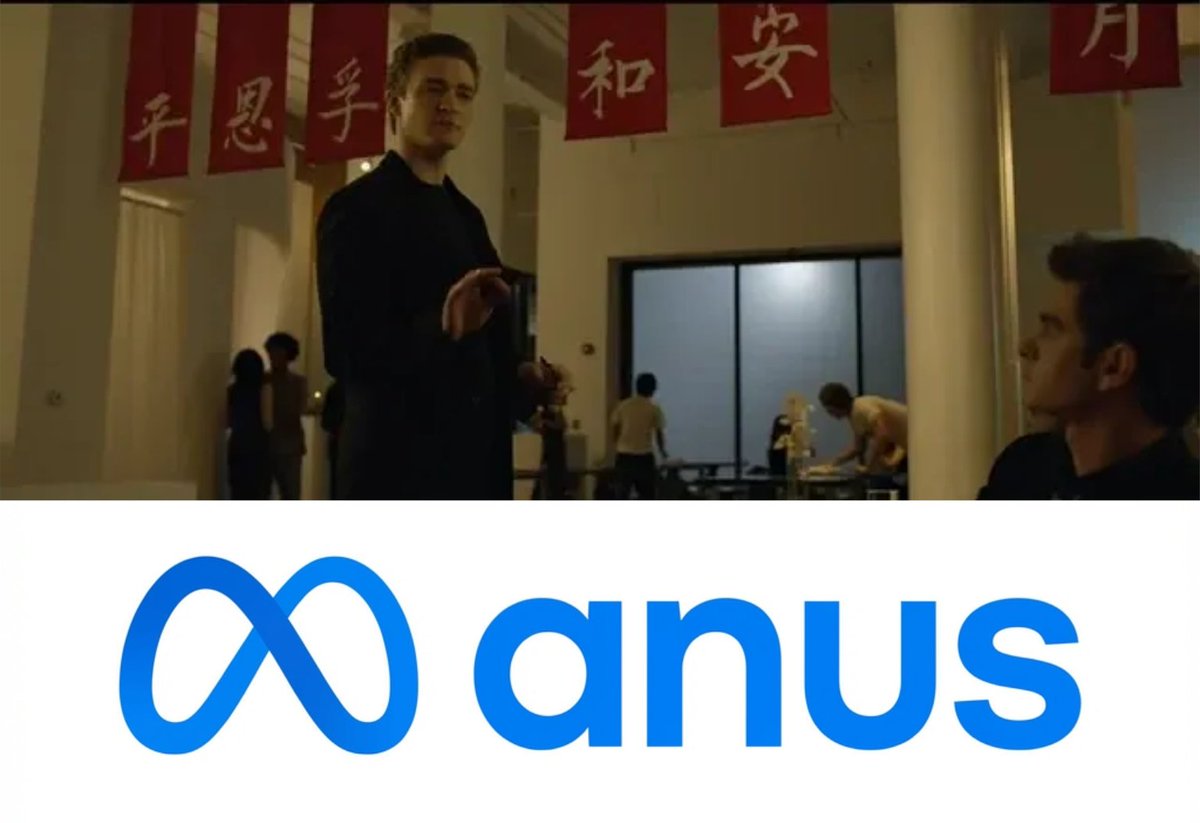
Image source: @accuratetlm13

Today's biggest news in the AI circle: Meta acquires Manus for billions of dollars.

This is Meta's third-largest acquisition in history, second only to WhatsApp and Scale AI, and even more expensive than the acquisition of Instagram back in the day.

Looking at Manus's timeline, the product was only launched in March this year and was acquired in December. From release to sale, it took just 9 months.

Founder Xiao Hong, from Ji'an, Jiangxi, graduated from Huazhong University of Science and Technology and started his entrepreneurial journey in Wuhan. His first product was the WeChat public account formatting tool Yiban, which was sold. The second product was the enterprise WeChat CRM tool Weiban, which was also sold. The third product was the browser AI plugin Monica, which wasn't sold but was criticized.

Criticized for what? For being a shell.

At that time, the industry consensus was that only companies building large models had a future, and those building applications on top of others' models were just shells with no technical substance.

When Manus first gained popularity in March this year, co-founder Ji Yichao responded to a netizen's question on social media: "We've used Claude and also fine-tuned different versions of Qwen."

That is, they used others' large models and built the application layer themselves.

So what?

Now it's worth billions of dollars.

Last year, ByteDance executives flew to Hong Kong specifically to meet Xiao Hong, offering $30 million to acquire the company. Xiao Hong didn't sell.

Looking back now, the difference between $30 million and billions isn't just a year's time—it's:

A product that was successfully built.

Additionally, we think the most interesting part of this story isn't the ending, but the process.

In July this year, Manus made a decision: to move the company from China to Singapore. Out of a 120-person team, only 40 core technical staff were retained to move together, and the rest were all laid off. The Beijing office was closed, and the Wuhan office was also closed.

At the time, many people criticized them for "running away."

Now, it seems this step was necessary. It's almost impossible for a Chinese company to be acquired by a U.S. tech giant under the current environment and get approval. Changing the registration location removed the obstacle.

The negotiation took only 10 days.

ZhenFund partner Liu Yuan said it was so fast that they initially doubted whether it was a fake offer.

10 days to close a deal worth billions of dollars—how desperate was Meta?

Looking at the background: This year, Meta's capital expenditure on AI exceeded $70 billion, but most of it was spent on infrastructure, with few products ready for use. OpenAI has ChatGPT, Google has Gemini—what does Meta have?

Llama is open-source; anyone can use it. Meta needed a competitive application-layer product, and Manus happened to be ready-made.

Annualized revenue of $125 million, built from zero in 8 months, global users, subscription-based, and proven viable.

This isn't just acquiring a team; it's acquiring a:

Validated business model.

Interestingly, Manus's investor list includes Sequoia China, Tencent, and ZhenFund. When this money was invested, the valuation was tens of millions of dollars. Now, upon exit, the return is dozens of times.

So, you see, Chinese VCs invested in a Chinese company, the company moved to Singapore, was acquired by a U.S. company, and Chinese VCs made money from the U.S. company.

This chain is even more Agent than Manus's product.

After the acquisition, Xiao Hong will serve as Vice President of Meta. An entrepreneur who started in Wuhan with a WeChat public account formatting tool is now going to Silicon Valley to report to Zuckerberg.

ZhenFund's Liu Yuan said: "The era for this generation of young Chinese entrepreneurs has arrived."

This statement might only be half right.

The era has indeed arrived, but the way it arrived was by moving the company away.

Связанные с этим вопросы

QWhat is the significance of Meta's acquisition of Manus in terms of its scale and history?

AThe acquisition of Manus by Meta is valued at several billion dollars, making it Meta's third-largest acquisition in history, only behind WhatsApp and Scale AI, and even more expensive than the acquisition of Instagram.

QWho is the founder of Manus and what was his background prior to this success?

AThe founder of Manus is Xiao Hong, from Ji'an, Jiangxi, a graduate of Huazhong University of Science and Technology. He started his entrepreneurial journey in Wuhan. His first product was a WeChat public account formatting tool called Yiban, which he sold. His second product was a WeChat Work CRM tool called Weiban, which he also sold. His third product was a browser AI plugin called Monica, which he did not sell but faced criticism for being a 'shell' product.

QWhy did Manus decide to relocate its company from China to Singapore in July, and what was the outcome of this move?

AManus relocated from China to Singapore to facilitate its acquisition by a U.S. tech giant like Meta, as it would have been nearly impossible to get approval for such an acquisition for a China-based company under the current geopolitical environment. This move was crucial and ultimately allowed the acquisition by Meta to proceed smoothly, with the negotiation completed in just 10 days.

QWhat was the business performance of Manus that made it an attractive acquisition target for Meta?

AManus had an annualized revenue of $125 million, achieved from zero in just 8 months, with a global user base and a subscription-based business model that was proven and scalable. This provided Meta with a validated business model in the application layer of AI.

QWhich major investors were involved in Manus, and what was the financial return from this acquisition?

AManus had investors including Sequoia China, Tencent, and ZhenFund. These investments were made at a valuation of tens of millions of dollars, and the exit through Meta's acquisition provided returns of dozens of times the initial investment.

Похожее

Understanding CPO (Co-Packaged Optics) in One Article: Why Nvidia Is Willing to Spend $3.2 Billion on a Fiber?

NVIDIA and Corning announced a multi-year strategic partnership on May 6, 2026, with NVIDIA committing up to $3.2 billion to support Corning's U.S. expansion. This investment will triple Corning's manufacturing plants and significantly boost its optical fiber and communications production capacity. The core driver behind this massive investment is the fundamental shift from copper to optical interconnect technology within AI data centers. As GPU clusters scale, copper wires face critical limitations: severe signal attenuation over distance, high energy consumption for signal integrity, and excessive heat generation. Optical fiber, transmitting light instead of electrical signals, solves these issues with minimal loss, near-light speed, and lower power needs. The article outlines a three-stage evolution of data center interconnect: 1. **Traditional Copper Interconnects:** The mainstream solution of the 2010s, now being phased out due to scaling bottlenecks. 2. **Pluggable Optical Modules:** The current mainstream, where modules convert electrical signals to light externally. This process still introduces energy loss and latency. 3. **CPO (Co-Packaged Optics):** The next-generation technology where the optical engine is integrated directly with the GPU chip package. This drastically reduces the electrical signal travel distance to mere millimeters, slashing power consumption and latency while boosting data density. NVIDIA CEO Jensen Huang has identified CPO as an essential core technology for AI infrastructure. NVIDIA's investment signifies a strategic shift from being a buyer to actively controlling its supply chain for critical components. With demand for specialized optical fiber far outstripping supply—evidenced by soaring prices—securing long-term manufacturing capacity has become a competitive necessity. While Corning's expansion may pressure some suppliers, a projected global fiber supply gap of 5-15% over the next few years creates a significant opportunity window, particularly for Chinese manufacturers competitive in optical preforms, chips, and modules. Ultimately, NVIDIA's move is not about chasing a trend but an engineering imperative. The transition to light-based interconnects like CPO is driven by the physical limits of copper, marking a definitive step in the ongoing AI computing revolution.

marsbit12 мин. назад

Understanding CPO (Co-Packaged Optics) in One Article: Why Nvidia Is Willing to Spend $3.2 Billion on a Fiber?

marsbit12 мин. назад

KOL's Perspective: Why Is SOL Set to Rise from This Point?

**Summary: Why SOL is Positioned for Growth at This Level** The article argues that SOL is poised for an upward move from its current price point, citing several key factors. Primarily, SOL has just broken out of a 4-month consolidation phase. This breakout signals a return of risk appetite to the broader crypto market, as SOL is seen as a key indicator of overall crypto health. The token's ownership has reportedly shifted from short-term traders and tourists to long-term accumulators, leading to low volume. Any meaningful increase in trading activity could thus trigger significant upward momentum. Fundamental strengths include strong institutional adoption, integration with DeFi and RWAs (Real-World Assets), and the potential benefits from the Clarity Act. Despite its high volatility—having dropped 70% from its all-time high but still up 12x from its bear market low—SOL is highlighted as one of the few tokens from the last cycle to reach new highs. It boasts a robust ecosystem of applications, users, and protocols. Future catalysts include the expected influx of AI developers following the Miami Accelerate conference, which focused on AI on Solana. Furthermore, Solana is positioned as the premier chain for memecoin activity, a trend expected to continue and drive network usage and fees. The article concludes that recent price action reflects a healthy transfer to long-term holders, setting the stage for growth.

marsbit1 ч. назад

KOL's Perspective: Why Is SOL Set to Rise from This Point?

marsbit1 ч. назад

Those Pre-Bitcoin PoW Protocols Have Recently Been Reimplemented

This article details a recent surge in replicating pre-Bitcoin Proof-of-Work (PoW) protocols, specifically focusing on Hal Finney's 2004 RPOW (Reusable Proofs of Work). Within five days in May 2026, multiple independent builders in the Bitcoin/cypherpunk community launched projects inspired by this early electronic cash proposal. The initiative began with Fred Krueger's `rpow2.com`, a centralized but auditable system that replaced RPOW's original IBM 4758 hardware with Ed25519 signatures. Initially a faithful replica, it later adopted Bitcoin-like features (21M supply cap, difficulty adjustment) and a controversial 5.24% founder allocation. This sparked rapid forks, including `rpow4.com` which incorporated full Bitcoin parameters, a prediction market (`rpowmarket.com`), and a DEX (`rpow2swap.com`). Concurrently, Mike In Space created a prototype of Wei Dai's 1998 b-money proposal (`b-money.replit.app`), pushing the historical exploration even further back. The article contrasts these centralized, server-dependent experiments with Bitcoin's core innovation of decentralized, trustless consensus. It also highlights a parallel development: the `HASH` project on Ethereum, which uses smart contract hooks to enable a purely fair-launch, browser-mineable PoW token with 0% allocations to team or VCs. The collective activity is framed as a meme-driven, educational exploration of cypherpunk history rather than a serious financial movement, with all projects heavily disclaiming any investment value.

marsbit1 ч. назад

Those Pre-Bitcoin PoW Protocols Have Recently Been Reimplemented

marsbit1 ч. назад

South Korean Exchanges 'Battle' Regulators, Challenging the Boundaries of Enforcement and Legislation

South Korea's cryptocurrency industry is engaged in a rare, direct confrontation with regulators. The Financial Intelligence Unit (FIU), the primary anti-money laundering (AML) watchdog, has recently imposed heavy penalties on major exchanges like Upbit and Bithumb for alleged violations involving unregistered overseas VASPs and AML procedures. However, exchanges are now actively challenging these actions in court and through industry associations. In a significant shift, the Seoul Administrative Court ruled in favor of Upbit's operator, Dunamu, overturning part of an FIU-ordered business suspension. The court found the FIU's penalty criteria and justification insufficiently clear. Similarly, the court suspended the enforcement of a six-month business suspension against Bithumb pending a final ruling, citing potential irreversible harm to the exchange. Beyond legal battles, the industry is contesting proposed legislative amendments. The Digital Asset eXchange Alliance (DAXA) strongly opposes a draft rule that would mandate Suspicious Transaction Reports (STRs) for all crypto transfers over 10 million KRW (~$6,800). DAXA argues this "poison pill" clause violates legal principles and would overwhelm the STR system, increasing reports from 63,000 to an estimated 5.45 million annually for major exchanges, thereby crippling effective AML monitoring. This conflict highlights a structural tension in South Korea's crypto governance: comprehensive digital asset laws are still developing, while regulators rely heavily on AML enforcement. The industry's move from passive compliance to active legal and legislative challenges signifies a new phase, pressing for clearer rules and more proportionate enforcement. While short-term disputes may intensify, this clash could ultimately lead to a more mature and sustainable regulatory framework for South Korea's vibrant crypto market.

marsbit1 ч. назад

South Korean Exchanges 'Battle' Regulators, Challenging the Boundaries of Enforcement and Legislation

marsbit1 ч. назад

Торговля

Спот
Фьючерсы

Популярные статьи

Как купить S

Добро пожаловать на HTX.com! Мы сделали приобретение Sonic (S) простым и удобным. Следуйте нашему пошаговому руководству и отправляйтесь в свое крипто-путешествие.Шаг 1: Создайте аккаунт на HTXИспользуйте свой адрес электронной почты или номер телефона, чтобы зарегистрироваться и бесплатно создать аккаунт на HTX. Пройдите удобную регистрацию и откройте для себя весь функционал.Создать аккаунтШаг 2: Перейдите в Купить криптовалюту и выберите свой способ оплатыКредитная/Дебетовая Карта: Используйте свою карту Visa или Mastercard для мгновенной покупки Sonic (S).Баланс: Используйте средства с баланса вашего аккаунта HTX для простой торговли.Третьи Лица: Мы добавили популярные способы оплаты, такие как Google Pay и Apple Pay, для повышения удобства.P2P: Торгуйте напрямую с другими пользователями на HTX.Внебиржевая Торговля (OTC): Мы предлагаем индивидуальные услуги и конкурентоспособные обменные курсы для трейдеров.Шаг 3: Хранение Sonic (S)После приобретения вами Sonic (S) храните их в своем аккаунте на HTX. В качестве альтернативы вы можете отправить их куда-либо с помощью перевода в блокчейне или использовать для торговли с другими криптовалютами.Шаг 4: Торговля Sonic (S)С легкостью торгуйте Sonic (S) на спотовом рынке HTX. Просто зайдите в свой аккаунт, выберите торговую пару, совершайте сделки и следите за ними в режиме реального времени. Мы предлагаем удобный интерфейс как для начинающих, так и для опытных трейдеров.

1.3k просмотров всегоОпубликовано 2025.01.15Обновлено 2025.03.21

Как купить S

Sonic: Обновления под руководством Андре Кронье – новая звезда Layer-1 на фоне спада рынка

Он решает проблемы масштабируемости, совместимости между блокчейнами и стимулов для разработчиков с помощью технологических инноваций.

2.2k просмотров всегоОпубликовано 2025.04.09Обновлено 2025.04.09

Sonic: Обновления под руководством Андре Кронье – новая звезда Layer-1 на фоне спада рынка

HTX Learn: Пройдите обучение по "Sonic" и разделите 1000 USDT

HTX Learn — ваш проводник в мир перспективных проектов, и мы запускаем специальное мероприятие "Учитесь и Зарабатывайте", посвящённое этим проектам. Наше новое направление .

1.8k просмотров всегоОпубликовано 2025.04.10Обновлено 2025.04.10

HTX Learn: Пройдите обучение по "Sonic" и разделите 1000 USDT

Обсуждения

Добро пожаловать в Сообщество HTX. Здесь вы сможете быть в курсе последних новостей о развитии платформы и получить доступ к профессиональной аналитической информации о рынке. Мнения пользователей о цене на S (S) представлены ниже.

活动图片