From Changing Rules to Betraying the Community: Trove, a Failed ICO Stress Test

比推Опубликовано 2026-01-21Обновлено 2026-01-21

Введение

The article analyzes two recent ICOs, Trove and Ranger, as case studies for the evolving state of initial coin offerings. Trove's ICO, which raised over $11.5 million, promised to build on the Hyperliquid ecosystem but abruptly pivoted to Solana after fundraising concluded. This retroactive change, coupled with questionable fund management and a lack of transparency, led to a 75% token price crash and a severe loss of investor trust. In contrast, Ranger’s ICO on the MetaDAO platform was structured with pre-defined, unchangeable rules. Its framework included vesting schedules, governance controls, and treasury restrictions that limited team discretion and aligned incentives with long-term performance. The piece concludes that while modern ICOs use more structure to mitigate risks, the fundamental issue remains trust. The Trove incident underscores that changing core plans post-fundraising is a breach of contributor trust and highlights the need for robust mechanisms to protect investors, suggesting a full refund and a new sale under revised terms would be the ideal corrective action.

Author: Prathik Desai

Original Title: The New ICO Test

Compiled and Edited by: BitpushNews


The new year kicked off with a series of major events. The rekindled tariff war between the United States and the European Union has once again brought uncertainty to the forefront. Following closely was a wave of high-volume liquidations in the crypto market within a week.

However, tariffs were not the only "discordant note" at the start of this year. Several Initial Coin Offering (ICO) events that occurred over the past week have given us ample reason to revisit this topic that the crypto community was once obsessed with nearly a decade ago.

Those who remember history might think that the crypto world has long moved beyond the ICO era of 2017. Although many aspects of ICOs have changed since then, the two ICO events last week still raised many key questions—some are old issues, while others are new.

Both the Trove and Ranger ICOs were oversubscribed, albeit without the frenzied aura of Telegram-style countdowns from 2017. However, the evolution of these events still serves as a reminder that the fairness of the community allocation process is crucial.

In today's article, I will delve into what the TROVE and RNGR issuance events tell us about how ICOs are evolving and the trust mechanisms for investors in the allocation process.

The Story Begins:

The more recent of the two, Trove's ICO, ran from January 8 to January 11, raising over $11.5 million upon conclusion. This exceeded the initial $2.5 million target by 4.5 times. The oversubscription clearly indicated investor support and belief in the project, which was positioned as a perpetual contract exchange.

Trove had promised to build on Hyperliquid, leveraging the ecosystem's perpetual contract infrastructure and community.

However, just days after raising funds and before the token generation event, Trove suddenly pivoted, announcing it would launch on Solana instead of the initially promised Hyperliquid. Participants who had invested based on trust in Hyperliquid instantly felt betrayed.

This pivot not only shook investor confidence but also caused widespread confusion. Chaos further escalated when another detail was dug up by investors: Trove stated it would retain approximately $9.4 million of the raised funds for the redesigned plan, refunding only the remaining few million. This undoubtedly raised another red flag.

Ultimately, Trove had to respond.

"We are not taking the money and running," it said in a statement on platform X.
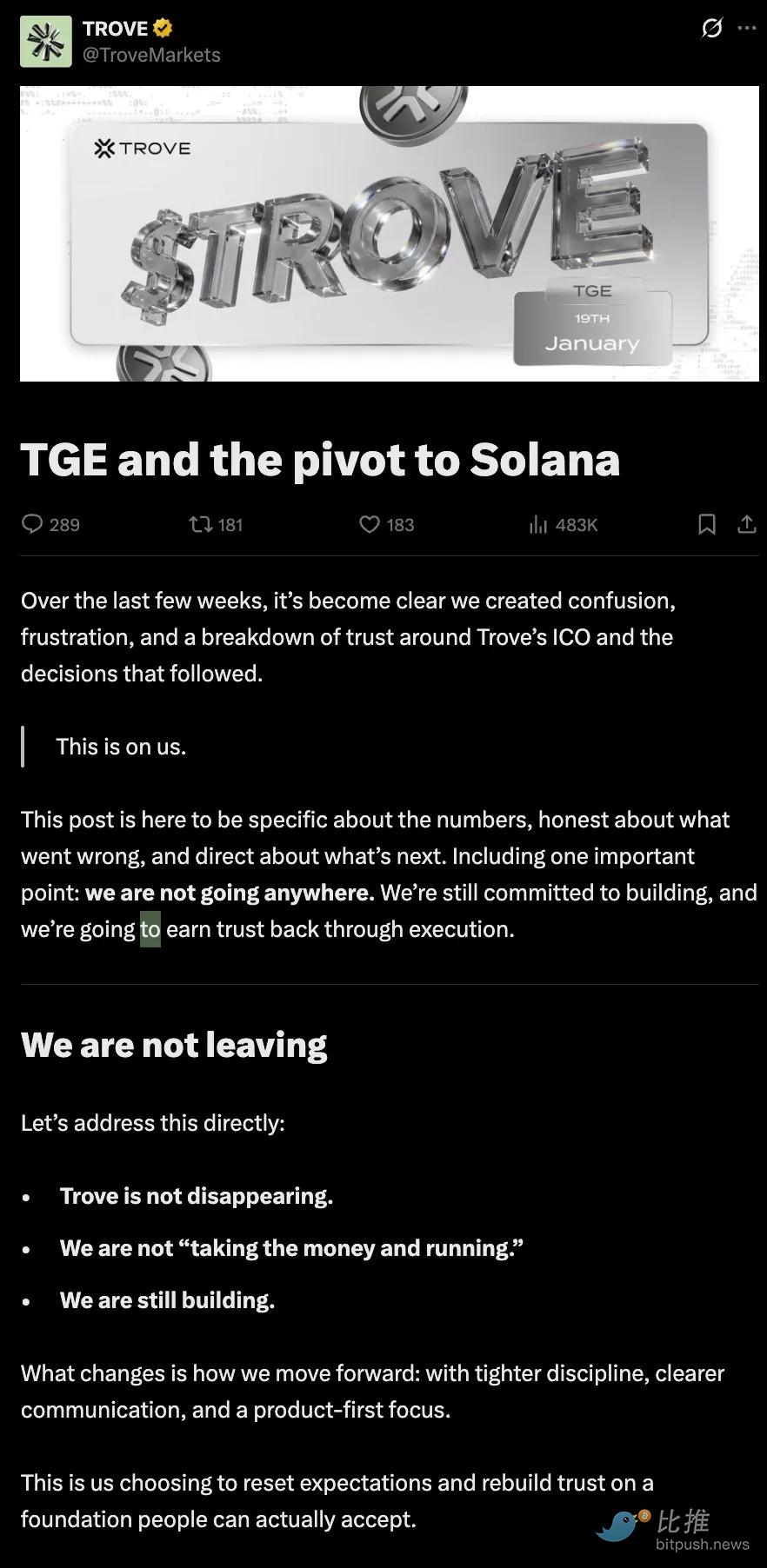
The team insisted that the project remained focused on building, albeit with a changed approach.

Even without making any assumptions, one thing is crystal clear: it is hard to imagine that they were not framed in an unfair, retroactive manner. The funds were initially committed based on one ecosystem, one technical path, and one set of implied risk profiles. The modified plan now requires them to accept another set of assumptions without reopening the participation terms.

It is like changing the rules for one player alone after a game has started.

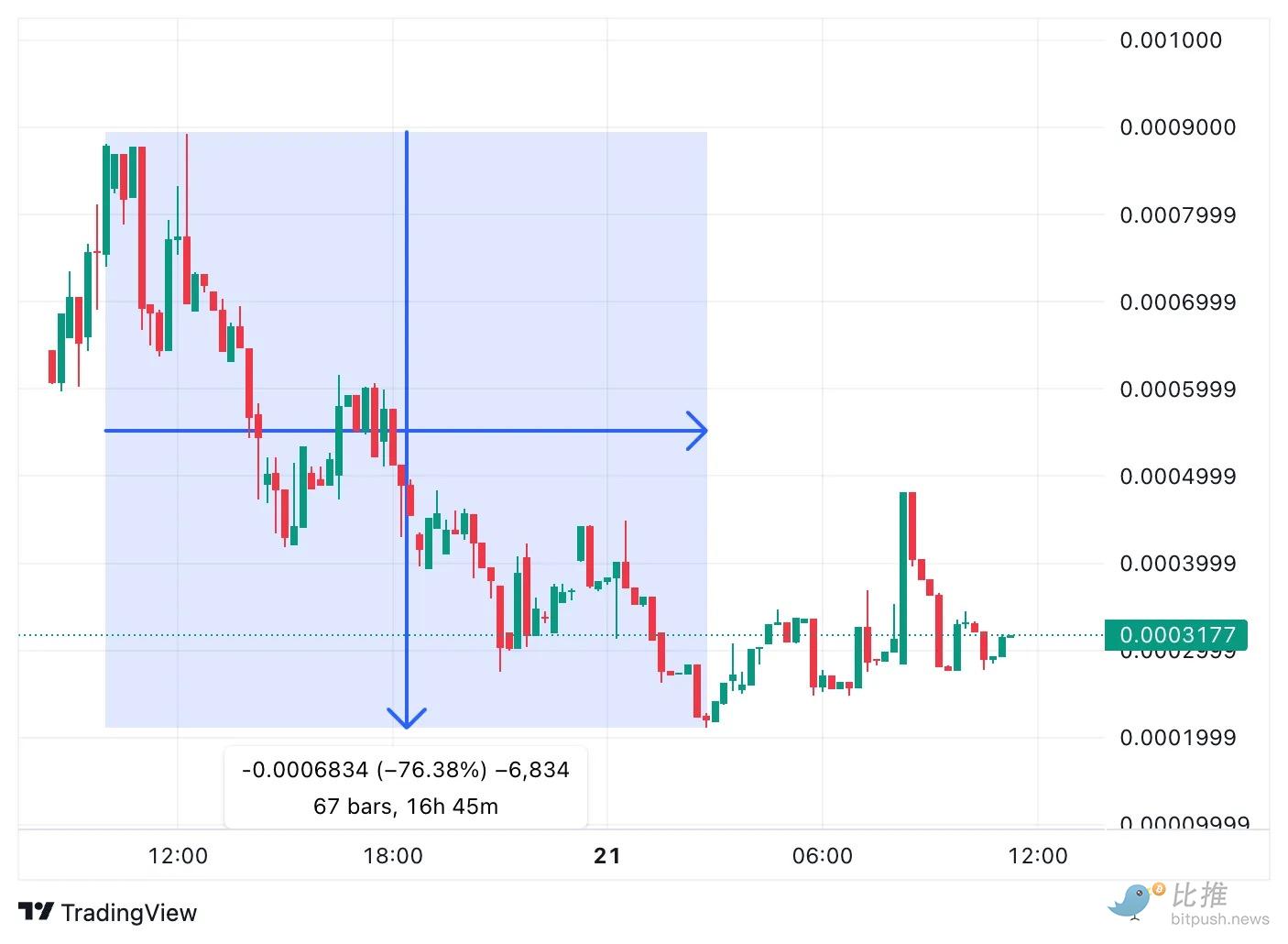
But by then, the damage was done, and the market voted with its feet, punishing this collapse of trust. The TROVE token plummeted over 75% within 24 hours of its listing, with its market capitalization expectations nearly zeroed out.
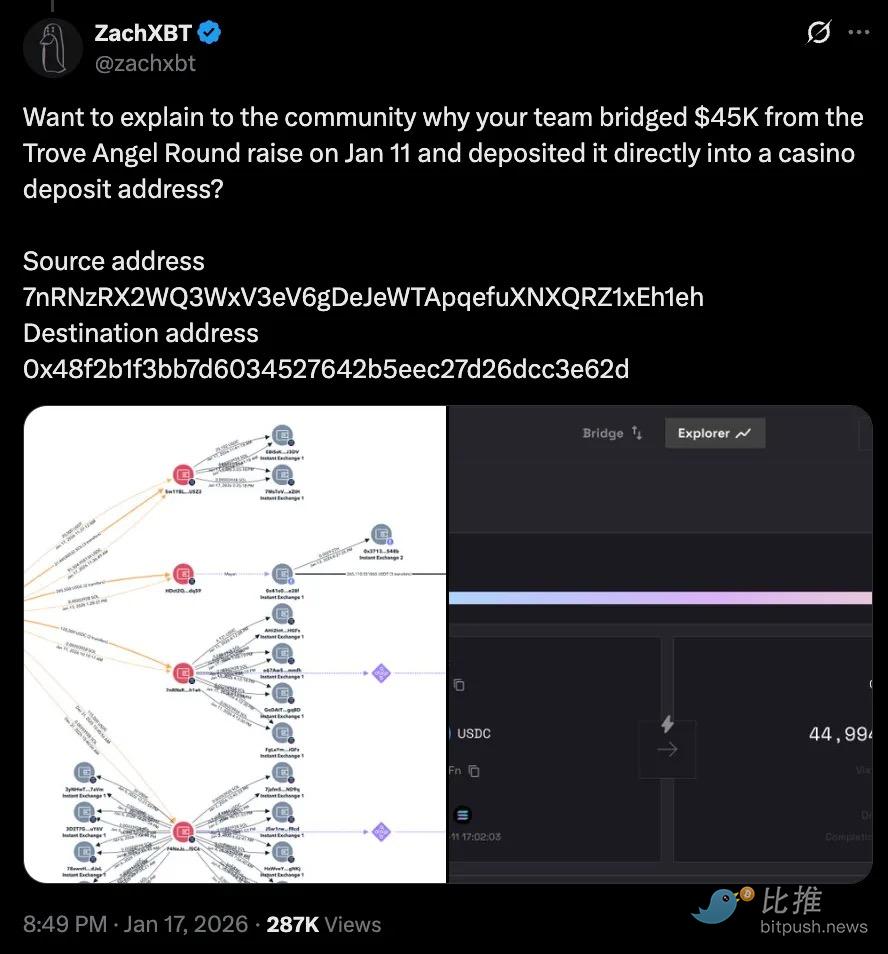
In the community, some moved beyond gut feelings and delved into on-chain fund movements. Crypto detective ZachXBT pointed out several suspicious transactions: approximately $45,000 in USDC from angel round funds eventually flowed into a prediction market platform and even to an address associated with a casino.
Whether this was a careless accounting error, poor fund management, or a genuine red flag remains debatable. Many users criticized the refund process, noting that only a few deserving refund recipients received their payments promptly.

Amid all this, Trove's statements failed to reassure investors who felt betrayed. Although it emphasized that the project would continue—a perpetual exchange on Solana—it did not adequately address the economic concerns arising from the pivot. It provided no detailed breakdown of the modified fund deployment and governance plan, nor did it offer more clarity on the refund roadmap.

Although there is no conclusive evidence linking this pivot to team misconduct, the incident shows that once trust in the fundraising process erodes, every data point is more likely to be viewed with suspicion.

What made this turmoil even more unstable was the way the team handled its discretion after the fundraising concluded.

Oversubscription effectively handed control of both capital and voice to the project team. Once the team changed direction, supporters had little recourse beyond selling on the secondary market or exerting public pressure.

To some extent, Trove's ICO still shares similarities with many projects from past cycles. Although the mechanisms are more standardized and the infrastructure more mature today, the core issue spanning both old and new cycles remains trust—investors still have to rely on the team's judgment rather than a clear set of rules as a backbone.

The Ranger ICO, conducted a few days earlier, provides an important contrast.

Ranger's token sale took place from January 6 to 10 on the MetaDAO platform, which requires teams to predefine key fundraising and allocation rules before the sale begins. Once started, these rules cannot be modified by the team.

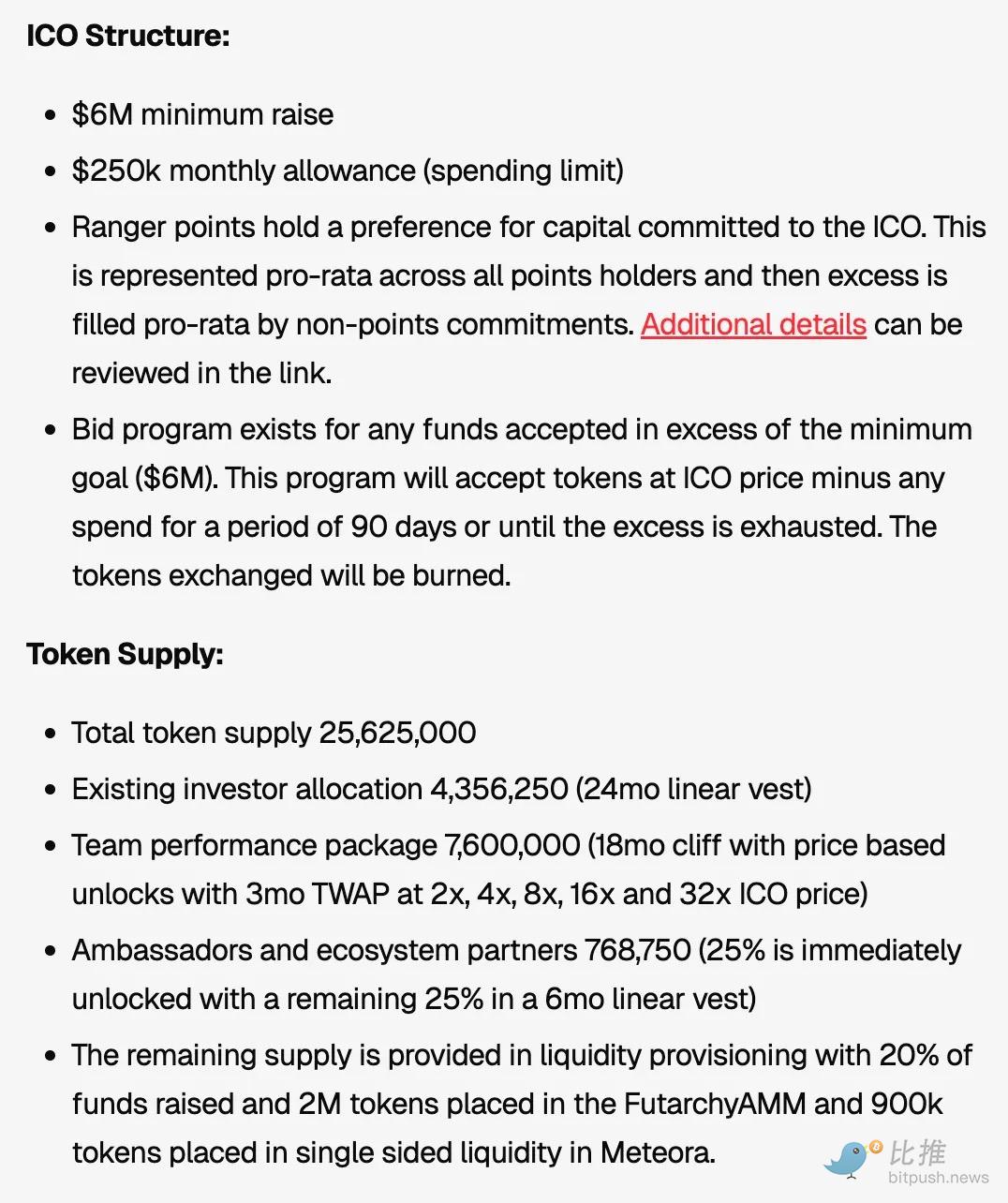
Ranger sought a minimum fundraising target of $6 million and sold approximately 39% of its total token supply through the public sale. Similar to Trove, its sale was oversubscribed. But MetaDAO's constraints meant the team had anticipated the possibility of oversubscription and made arrangements from the outset, unlike Trove's situation.

When the sale was oversubscribed, the proceeds were deposited into a treasury governed by token holders. MetaDAO's rules also restricted the team's access to the treasury to a fixed monthly allowance of $250,000.

Even the allocation structure was defined more clearly. Public sale participants received full liquidity at the token generation event, while presale investors faced a 24-month linear unlock period. The majority of tokens allocated to the team would only unlock upon reaching specific price milestones for the RNGR token. These milestones, such as reaching 2x, 4x, 8x, 16x, and 32x of the ICO price, would be measured using a three-month time-weighted average price, with at least an 18-month lock-up period before any unlocking occurs.

These measures show that the team embedded constraints into the fundraising structure itself, rather than expecting contributors to rely on post-fundraising discretion. Control over capital was partially ceded to governance rules, and any team gains were tied to long-term market performance, protecting contributors from the risk of a "rug pull" on launch day.
Nevertheless, concerns about fairness persist.

Like many modern ICOs, Ranger used a pro-rata allocation model to distribute tokens in its oversubscribed sale. In theory, this means everyone should receive tokens in proportion to their capital commitment. However, Blockworks Research pointed out that this model often favors participants who can over-commit capital. Smaller contributors typically receive disproportionately small allocations.
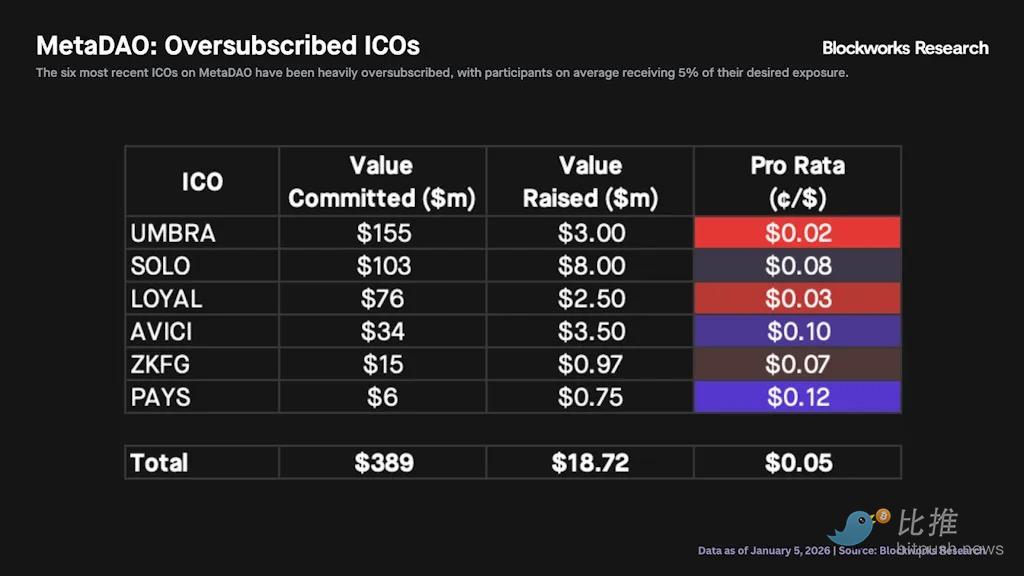
However, there is no simple solution to this problem.

Ranger attempted to address this by reserving separate token allocation pools specifically for users who had participated in the ecosystem before the public sale. While this practice alleviated some矛盾, it did not completely resolve a fundamental dilemma: how to balance allowing more people to obtain tokens with ensuring participants receive substantial shares.

Conclusion

The Trove and Ranger events show that nearly a decade after the initial explosion of ICOs, they are still subject to many constraints. The old ICO model heavily relied on Telegram announcements, narratives, and momentum.

The new model relies on structure—including unlock schedules, governance frameworks, treasury rules, and allocation formulas—to demonstrate restraint. These tools, often mandated by platforms like MetaDAO, help limit the discretionary power of launch teams. However, these tools can only reduce risks, not eliminate them entirely.

These events raise critical questions that every future ICO team needs to answer: "Who decides when a team can change plans?" "Who controls the funds after the fundraising is complete?" "What mechanisms do contributors have when expectations are not met?"

In any case, the issues that occurred in the Trove incident need to be corrected. Changing the chain on which a project launches cannot be a spur-of-the-moment decision. Here, the best way to remedy the damage is for Trove to treat its contributors properly. In this case, that might mean fully refunding the funds and re-conducting the sale under revised assumptions.

Although this is the most ideal path forward at the moment, it is not easy for Trove to actually achieve this. Funds may have already been deployed, operational costs may have been incurred, and partial refunds may have already been executed. Reversing course at this point could trigger multiple legal, procedural, and reputational complexities. But this is the price that must be paid to clean up the current mess.

How Trove chooses to proceed may set a precedent for ICOs in the year to come. Project launches now face a more cautious market environment—participants no longer equate oversubscription simply with consensus, nor do they confuse "being involved" with "being protected." Only a truly robust system can provide a fundraising experience that, while not foolproof, is trustworthy enough.


Twitter: https://twitter.com/BitpushNewsCN

Bitpush TG Discussion Group: https://t.me/BitPushCommunity

Bitpush TG Subscription: https://t.me/bitpush

Original link: https://www.bitpush.news/articles/7604888

Связанные с этим вопросы

QWhat was the main reason Trove's ICO caused a loss of investor trust?

ATrove abruptly changed its plan to launch on Solana instead of the originally promised Hyperliquid ecosystem after fundraising, without reopening participation terms or properly addressing economic concerns.

QHow did the market react to Trove's token after its launch?

AThe TROVE token plummeted over 75% within 24 hours of its launch, with its market capitalization expectations nearly collapsing to zero.

QWhat key difference in structure did Ranger's ICO have compared to Trove's?

ARanger's ICO used the MetaDAO platform, which enforced predefined fundraising and allocation rules that could not be modified by the team after the sale began, including governance-controlled treasury access and milestone-based token unlocks.

QWhat suspicious activity did crypto investigator ZachXBT uncover related to Trove's funds?

AZachXBT identified suspicious transactions where approximately $45,000 USDC from angel round funds flowed into a prediction market platform and even to a casino-linked address.

QWhat fundamental issue do modern ICOs still face despite improved infrastructure and mechanisms?

AModern ICOs still fundamentally rely on trust in the team's judgment rather than solely on clear, enforceable rules, and they struggle with balancing broad token distribution against meaningful allocations for participants.

Похожее

После трёх кварталов падения: получится ли у крипторынка стабилизироваться в третьем квартале?

Криптовалютный рынок пережил худший квартал с 2022 года, общая капитализация упала на 12,6% до $2,1 трлн, а дневные объемы торгов снизились на 20,9%. Впервые за три года сократилась и капитализация стейблкоинов. Основные факторы спада — отток средств из биткоин-ETF, распродажа биткоинов корпоративным казначейством Strategy и ужесточение монетарной политики ФРС. Второй квартал завершился чистым оттоком $46,7 млрд из ETF, при этом в июне отток достиг рекордных $45 млрд. Ключевым событием третьего квартала станет заседание ФРС 28–29 июля. Мягкий сигнал может поддержать биткоин в диапазоне $68 000–84 000 и вернуть приток в ETF, тогда как жесткая риторика способна сместить торговый диапазон к $50 000–56 000. Законодательная неопределенность также давит на рынок: прогресс по закону CLARITY Act, определяющему регуляторные границы, замедлился, и вероятность его принятия в 2026 году упала до 40–45%. Несмотря на общий спад, два сегмента показали рост: объемы на рынках предсказаний выросли на 48,7%, а торговля токенизированными коллекционными предметами увеличилась на 143%. Сектор RWA продолжает стабильно развиваться, достигнув $28,1 млрд. Рынок, вероятно, миновал фазу острой распродажи, но для устойчивого восстановления необходимы ясность от ФРС и регуляторный прогресс.

marsbit30 мин. назад

После трёх кварталов падения: получится ли у крипторынка стабилизироваться в третьем квартале?

marsbit30 мин. назад

BIT Торговые часы: BTC по-прежнему под давлением 200 EMA на недельном графике, после отскока возможен перезапуск нисходящего движения; секторы хранения данных и полупроводников, выросшие ночью, начали падение в вечерней сессии

**Краткий обзор рынка: BTC под давлением, коррекция на рынке акций, внимание к данным и событиям** Рынок криптовалют демонстрирует осторожное восстановление. Bitcoin торгуется около $66 000, сталкиваясь со значительным сопротивлением в районе $68 000, где сосредоточены объемные "застрявшие" позиции. Ключевые технические уровни — 200-недельная скользящая средняя (~$63 333) и 200-недельная EMA (~$68 328). Аналитики отмечают низкую ликвидность, характерную для летнего периода. На фондовом рынке после сильного роста во вторник наблюдается коррекция. Фьючерсы на основные индексы США снижаются. Акции полупроводниковой и памяти, которые резко выросли накануне, падают в ночных торгах. Исключением стал SMCI, который вырос более чем на 15% после оптимистичного прогноза. На общий настрой негативно влияют рост цен на нефть (более $91 за баррель Brent) и доходности государственных облигаций США (10-летние — около 4,64%), что возрождает инфляционные опасения. Азиатские рынки показали нестабильную динамику. Индекс KOSPI в Корее вырос на 0,74%, а японский Nikkei 225 снизился на 0,18%. Основной риск для региона — ослабление японской иены до минимумов с 1986 года, что повышает вероятность вмешательства властей. **Ключевые события для наблюдения:** * **24 июля:** Финансовые отчеты Alphabet (Google), Tesla, IBM. Событие AMD, посвященное ИИ. * **25 июля:** Решение по процентной ставке ЕЦБ и пресс-конференция Кристин Лагард. Финансовые отчеты Intel, American Airlines, Honeywell и других. Данные по числу первичных заявок на пособие по безработице в США.

marsbit37 мин. назад

BIT Торговые часы: BTC по-прежнему под давлением 200 EMA на недельном графике, после отскока возможен перезапуск нисходящего движения; секторы хранения данных и полупроводников, выросшие ночью, начали падение в вечерней сессии

marsbit37 мин. назад

Бывший глава CFTC и президент Circle Тарберт: призывает к долгосрочной стратегии, но сам выводит $30 млн

Бывший председатель CFTC и президент Circle Хит Тарберт, публично пропагандируя долгосрочное видение компании для инвесторов на фоне падения акций на 70% с пиковых значений, сам активно распродавал свои акции CRCL. С момента IPO Circle он по плану 10b5-1 продал более 360 тысяч акций, выручив около 30 миллионов долларов, и при этом ни разу не докупал акции на открытом рынке. Эта разница между его публичными заявлениями и личными действиями вызвала критику. Карьера Тарберта демонстрирует классическое использование «вращающейся двери» между регулирующими органами и частным сектором. Уйдя с поста председателя CFTC в 2021 году, через 27 дней он занял должность главного юрисконсульта в маркет-мейкере Citadel Securities, который в тот момент находился под пристальным вниманием из-за скандала с акциями GameStop. Позже, уже работая в Citadel, Тарберт выступал за расширение полномочий CFTC на крипторынок, в то время как его работодатель планировал выход на этот рынок. В 2023 году Тарберт присоединился к Circle, где его опыт и связи сыграли ключевую роль в успешном проведении IPO компании в 2025 году. Однако его последующие массовые продажи акций, совпавшие с падением котировок и его же призывами к долгосрочным инвестициям, ставят под сомнение искренность его уверенности в будущем компании. Критики видят в его карьере образец превращения регуляторного опыта и политических связей в личную выгоду, в то время как риски несут обычные инвесторы, верящие его нарративам.

marsbit1 ч. назад

Бывший глава CFTC и президент Circle Тарберт: призывает к долгосрочной стратегии, но сам выводит $30 млн

marsbit1 ч. назад

Gate Research: Взлет «уолл-стритизации» криптофинансовых продуктов — это конкуренция или интеграция?

**Аналитический обзор Gate Research Institute: Волна "уолл-стритизации" криптофинансовых продуктов — конкуренция или интеграция?** Создание биткоина в 2009 году было ответом на финансовый кризис и стремлением построить децентрализованную систему без доверенных посредников. Однако к 2026 году значительная часть биткоинов (около 7,14%) хранится через ETF таких гигантов, как BlackRock. Это символизирует глубокую интеграцию традиционных финансов (TradFi) и крипторынка. С появлением биткоин-ETF, фьючерсов, RWA (токенизированных реальных активов) и государственных облигаций на блокчейне, традиционные институты получают всё больше влияния на выпуск, ценообразование, кастодию и дистрибуцию криптоактивов. Однако это не одностороннее поглощение, а взаимодополняющая конвергенция. Криптосфера приносит TradFi глобальную 24/7 ликвидность и программируемость, а TradFi предоставляет криптосфере регулируемые каналы, институциональное доверие и массовый доступ. Яркий пример — две противоположные, но ведущие к одной цели траектории: * **Путь А:** Криптобиржи, такие как Gate, начинают с токенизированных акций и CFD, а затем напрямую подключаются к инфраструктуре традиционных брокеров, предлагая реальную торговлю акциями США, Гонконга и Кореи за стейблкоины. * **Путь Б:** Традиционные брокеры, такие как Robinhood, интегрируют криптоактивы, а затем создают собственные Layer 2 для токенизации своих акций, стремясь к круглосуточной торговле. Обе стратегии нацелены на создание **универсального финансового аккаунта будущего** — единой точки доступа к акциям, криптовалютам, ETF, токенизированным облигациям и другим активам. Ключевой конкурентной борьбой становится не между CEX и брокерами, а между этими "супераккаунтами". Параллельно, слой RWA и токенизированных гособлигаций растёт даже на медвежьем рынке, становясь "прослойкой" для объединения капиталов. Хотя этот рынок (около $150 млрд токенизированных казначейских облигаций) ещё мал по сравнению с традиционным ($30 трлн), он демонстрирует устойчивый структурный тренд, привлекающий крупнейшие финансовые институты (JPMorgan, DTCC и др.). **Вывод:** "Уолл-стритизация" — это не поражение идеалов децентрализации, а формирование новой гибридной модели. Децентрализованные протоколы продолжают работать на базовом уровне, в то время как на уровне приложений и пользовательского опыта формируется более эффективный, глобальный и свободный объединённый рынок капитала, где активы TradFi и DeFi торгуются бок о бок в одном интерфейсе. Уолл-стрит не завоевала криптосферу, а криптосфера не обошла Уолл-стрит — они совместно строят новые финансовые рельсы.

marsbit1 ч. назад

Gate Research: Взлет «уолл-стритизации» криптофинансовых продуктов — это конкуренция или интеграция?

marsbit1 ч. назад

S&P Dow Jones и Pantera выпускают криптоиндекс, биткоин оставлен за бортом из-за «отсутствия прибыли»

Стандард энд Пурс (S&P Dow Jones Indices) совместно с Pantera Capital запускает индекс S&P Pantera Digital Asset Index. Новый индекс включает 18 токенов, но исключает биткоин, XRP и мем-токены. Критерием отбора послужила «финансовая жизнеспособность», по аналогии с S&P 500: протокол должен демонстрировать положительный доход в течение нескольких кварталов и распределять стоимость среди держателей токенов. Это первое применение фундаментального подхода к оценке криптоактивов со стороны крупнейшего в мире провайдера индексов. В первую пятерку активов вошли Ethereum (ETH), BNB, Solana (SOL), TRON (TRX) и Hyperliquid (HYPE). Pantera отмечает, что совокупный годовой доход всех протоколов индекса превышает $30 млрд. Биткоин был исключен по трем причинам: он рассматривается как монетарный актив, доступный через отдельные ETF; он не генерирует доход протокола; а смешивание его в индексе с доходными активами затрудняет фундаментальный анализ для институциональных инвесторов. Пока индекс является эталонным, но Pantera ведет переговоры о создании на его основе ETF и других инвестиционных продуктов. Компания также отмечает значительный разрыв на рынке: многие институциональные инвесторы готовы к аллокации в криптоактивы, но им не хватает структурированных продуктов, фокусирующихся на активах с реальной экономической деятельностью.

marsbit1 ч. назад

S&P Dow Jones и Pantera выпускают криптоиндекс, биткоин оставлен за бортом из-за «отсутствия прибыли»

marsbit1 ч. назад

Торговля

Спот
活动图片





