From Boom To Goodbye: NFT Marketplace Nifty Gateway To End Operations

bitcoinistОпубликовано 2026-01-25Обновлено 2026-01-25

Введение

Nifty Gateway, a prominent NFT marketplace, has announced it will cease operations on February 23, 2026, and has entered a withdrawal-only mode as of the announcement. Users must withdraw all funds and NFTs from the platform before the shutdown date. Withdrawal tools are currently available, allowing users to be transferred via linked Gemini Exchange accounts or through Stripe to bank accounts. The closure is part of a strategic decision by parent company Gemini to reallocate resources toward developing a larger, consolidated app. Nifty Gateway, launched in 2020, played a significant role in popularizing NFT art by enabling easy purchases via credit cards and hosting major drops. Its closure signals a cooling in the NFT market and marks the end of an important chapter for early NFT marketplaces. Users are urged to follow emailed instructions and move their tokens and balances promptly.

Nifty Gateway, the marketplace that once helped bring NFT drops to a wider audience, will stop running its marketplace on February 23, 2026. The company put the site into a withdrawal-only mode the same day it made the announcement, and users were told they must move any remaining funds and NFTs off the platform before that date.

Withdrawal Window Opens

According to the company, withdrawal tools are available now. Reports note users can pull USD or ETH balances through a linked Gemini Exchange account or send funds to their bank via Stripe.

Emails with step-by-step instructions will be sent to account holders, and a shutdown notice already appears on the Nifty Gateway homepage. The aim, as described by the owner, is to let people retrieve what they own before the platform goes dark.

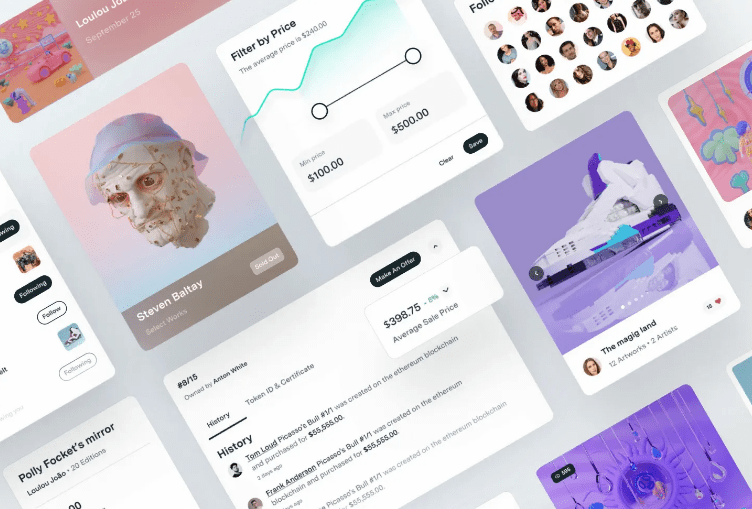
Nifty is pulling the plug on its NFT business. Image: Dribbble

A Decision To Reassign Resources

Based on reports from Gemini, the closure is meant to let the parent firm concentrate on building one bigger app for customers. The move highlights how interest and trading activity in many NFT markets have cooled from the highs seen in earlier years.

Some collectors and artists are left scrambling to rehome items they once sold or stored on Nifty Gateway.

End Of An Early Player

Nifty Gateway helped make buying NFTs easier for people who preferred credit cards and familiar checkout flows. It launched as a high-profile marketplace and hosted major drops from well-known creators.

The platform supported hundreds of millions in sales at its peak and played a clear part in bringing NFT art into mainstream headlines. Its exit marks the end of an important chapter for that wave of marketplaces.

BTCUSD now trading at $88,473. Chart: TradingView

What Owners Must Do Now

Owners should check their inboxes for the official instructions, confirm where their tokens are stored, and move assets before the deadline. If NFTs are stored in custodial wallets on the site, they will need to be transferred out.

USD and ETH balances should be withdrawn or moved into a connected Gemini account if that option suits the owner. Waiting past the closure date will reduce options.

A Quiet Turning Point

For many collectors, this will feel like another sign that the early boom years have passed. For creators, the change raises questions about where drops and secondary sales will happen next.

Gemini says it will keep supporting NFTs through its other products, including the Gemini Wallet, but the specific ways that creators and buyers reconnect with those audiences will depend on new tools and services that arrive in the next months.

Featured image from Unsplash, chart from TradingView

Связанные с этим вопросы

QWhen will Nifty Gateway officially stop running its marketplace?

ANifty Gateway will officially stop running its marketplace on February 23, 2026.

QWhat mode did Nifty Gateway enter on the day of the announcement?

ANifty Gateway entered a withdrawal-only mode on the day of the announcement.

QAccording to the article, what is the primary reason for Nifty Gateway's closure?

AThe closure is meant to allow the parent company to reassign its resources and concentrate on building one bigger app for customers.

QHow can users withdraw their USD or ETH balances from Nifty Gateway?

AUsers can pull USD or ETH balances through a linked Gemini Exchange account or send funds to their bank via Stripe.

QWhat does the article suggest the closure of Nifty Gateway signifies for the NFT market?

AThe closure marks the end of an important chapter for that wave of marketplaces and is a sign that the early boom years for NFTs have passed.

Похожее

The Essence of AI Layoffs: Why More AI Adoption Leads to More Corporate Anxiety?

The author, awaiting potential inclusion on an 8000-person layoff list, analyzes the true nature of recent "AI-driven" layoffs. They argue that while AI use, particularly tools like Claude for code generation, has skyrocketed and boosted developer output (e.g., 2-5x more code commits), this has not translated into proportional business growth or revenue. The core issue is a misalignment between increased "Input" (code) and tangible "Outcomes" (user value, revenue). AI acts as a costly B2B SaaS, inflating operational expenses without guaranteed returns. Two key problems emerge: 1) The friction that once filtered out bad ideas is gone, as AI allows cheap pursuit of even weak concepts. 2) Organizational "alignment tax"—the difficulty of coordinating across teams—becomes crippling when development velocity outpaces consensus-building. Thus, layoffs serve two immediate purposes: 1) To offset ballooning AI costs (Token consumption) and maintain cash flow, as rising input costs without outcome growth destroys unit economics. 2) To reduce organizational bloat and alignment friction by simply removing teams, thereby speeding up execution in the short term. Therefore, these layoffs are fundamentally caused by AI, even if AI doesn't directly replace roles. They represent a painful correction until companies learn to convert AI-driven productivity into real business outcomes and streamline organizational coordination to match the new pace of work. The cycle will continue until this learning curve is mastered.

marsbit1 ч. назад

The Essence of AI Layoffs: Why More AI Adoption Leads to More Corporate Anxiety?

marsbit1 ч. назад

Can the Solana Foundation and Google's Collaboration on Pay.sh Bridge the Payment Link Between Web2 and Web3 in the Agent Economy?

Solana Foundation, in collaboration with Google Cloud, has launched Pay.sh, a payment gateway designed to bridge the gap between AI agents and enterprise-grade service infrastructure. The initiative aims to solve a key bottleneck in the "agent economy": existing payment systems are ill-suited for autonomous AI agents. Traditional methods like credit cards require human verification, while newer on-chain protocols like x402 and MPP create a separate, Web3-native system that raises barriers for service providers. Pay.sh functions as a universal payment layer. It allows users to fund a Solana wallet via credit card or stablecoin, which then acts as an identity and payment proxy for AI agents. When an agent needs to access a paid API service (e.g., Google Cloud, Alibaba Cloud), Pay.sh handles the transaction seamlessly. It leverages the HTTP 402 status code ("Payment Required") to initiate payments, intelligently choosing between one-time transfers (x402-style) or session-based authorizations (MPC-style) based on the service's billing model. This spares agents from manual account registration and API key management. A key feature for service providers is low integration effort. They can adopt Pay.sh by providing a declarative configuration file, enabling features like tiered pricing, free tiers, and automatic revenue splitting to multiple addresses (e.g., for royalties, cloud costs). Providers can also list their APIs in a central Pay Skill Registry for agent discovery. The collaboration with Google Cloud provides crucial infrastructure for API proxying, traffic routing, and compliance logging, aiming to keep agent activities within regulated boundaries. By connecting Web2 services with Web3 payment rails, Pay.sh positions the Solana wallet as a foundational identity and payment tool for AI agents, potentially driving more transaction volume to the Solana ecosystem. However, the report notes challenges. The service registry currently lacks robust vetting, risking exposure to unauthorized or malicious third-party APIs. Pay.sh also inherits security and compatibility risks from its underlying payment protocols (x402, MPC). Furthermore, adoption may be hindered by varying regional data privacy and payment compliance regulations among API providers. Despite these hurdles, Pay.sh represents a significant step towards integrating Web2 and Web3 for autonomous agent commerce.

marsbit1 ч. назад

Can the Solana Foundation and Google's Collaboration on Pay.sh Bridge the Payment Link Between Web2 and Web3 in the Agent Economy?

marsbit1 ч. назад

Торговля

Спот
Фьючерсы
活动图片