From $5 Billion Market Cap to the Brink of Delisting: Canan, the 'Blockchain Stock', Can No Longer Sell Its 'Shovels'?

marsbitОпубликовано 2026-01-28Обновлено 2026-01-28

Введение

JiaNan Technology, once hailed as the "first blockchain stock," faces potential delisting from Nasdaq after receiving a notice on January 14, 2026, due to its stock trading below $1 for 30 consecutive days. The company has 180 days to regain compliance, possibly through a reverse stock split. This marks the second such warning in a year. As a major Bitcoin mining machine manufacturer, JiaNan’s market position has weakened amid intense competition, with its share dropping to 10-15% as MicroBT gained traction. From 2021 to 2024, its net profit plummeted from over $300 million to a loss of nearly $250 million, driven by inventory devaluation, high R&D costs, and shrinking demand. Despite an early move into AI chips—launching its first model in 2018—JiaNan struggled to compete with giants like NVIDIA, generating only $900,000 in AI revenue in 2024. The company shut down its non-core AI division in mid-2025 after failing to find a buyer. While JiaNan secured a large mining equipment order and $72 million in funding in late 2025, the broader market shift from cryptocurrency to AI investment continues to challenge its business model. The company’s story reflects wider struggles in the crypto hardware sector, where stagnant growth and fierce competition have led to declining valuations.

On January 16, 2026, Canan Technology announced that it had received a notice from the Nasdaq exchange on January 14. The notice indicated that Canan's stock price had been below $1 for the past 30 consecutive trading days, resulting in a warning. According to Nasdaq listing rules, if Canan cannot bring its stock price back to $1 or above within 180 days (by July 13, 2026), it may face delisting.

Canan Technology stated that, if necessary, the company will implement a reverse stock split to meet the requirement. A reverse stock split is an operation that reduces the total number of outstanding shares by consolidating existing shares, thereby increasing the price per share. The author contacted Canan Technology regarding the warning, but had not received a response by the time of publication.

This is the second delisting warning Canan has received in the past year. The first was in May 2025, after which the stock price rose above $1 due to an increase in Bitcoin's price, temporarily averting the crisis. However, the overall downturn in the cryptocurrency market in recent months has caused Canan's stock price to fall nearly 30% over the past 30 trading days.

On December 13, 2025, Bitcoin treasury company Kindly MD received a warning for the same reason, while BNB treasury company Windtree Therapeutics was delisted in August 2025. Unlike cryptocurrency treasury companies, as one of the leading players in the Bitcoin mining machine manufacturing sector, Canan's current situation is somewhat lamentable.

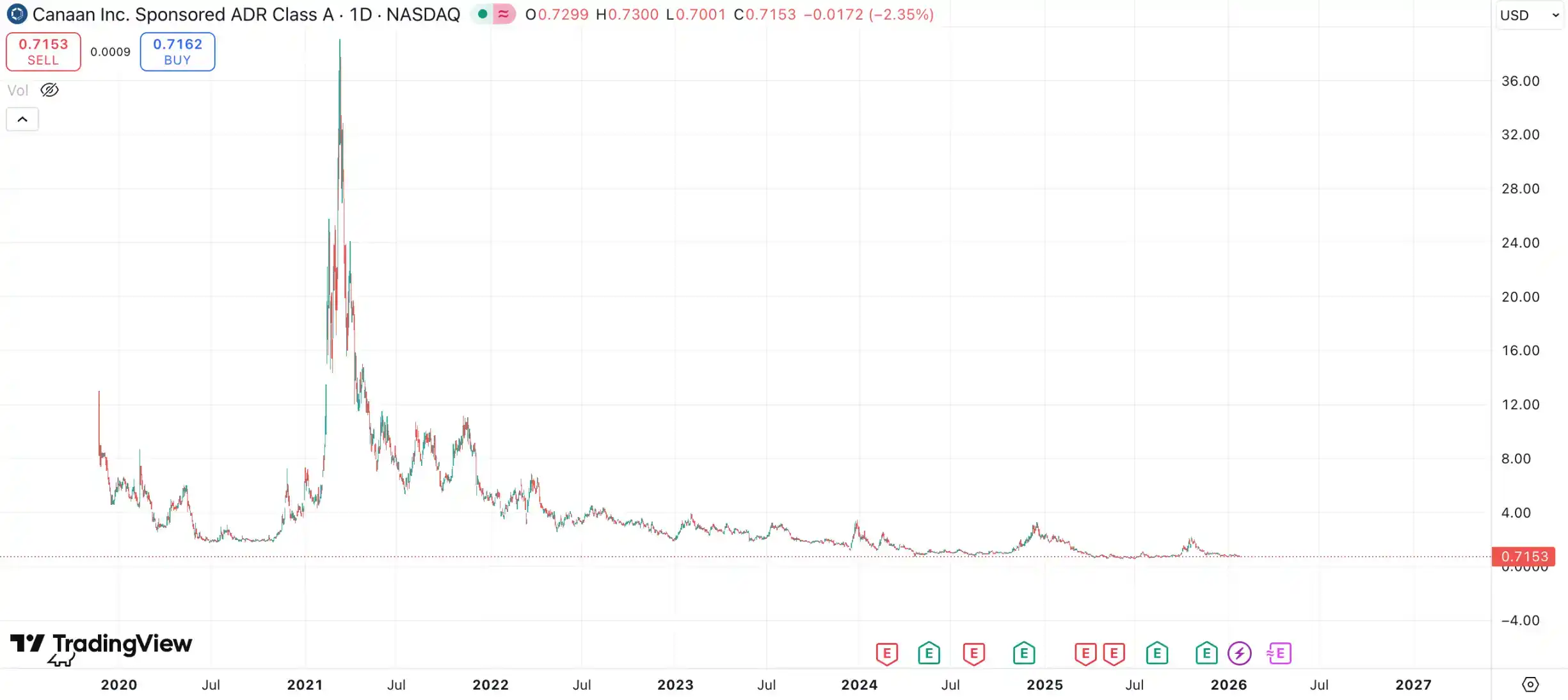
Canan Technology went public on the Nasdaq in November 2019, becoming the world's first pure blockchain concept company to complete an IPO. After listing, Canan's stock price remained below its IPO price for over a year. However, with the arrival of the cryptocurrency bull market, its stock price began to recover steadily from the end of 2020, reaching a historical high of nearly $40 in March 2021, with a market capitalization exceeding $5 billion.

The good times did not last long. With the issuance of China's mining ban and the bear market that persisted throughout 2022, Canan's stock price continued to decline, returning to pre-bull market levels. In the current cycle, although Bitcoin's price reached new highs, even nearly double its 2021 peak at one point, Canan's stock price did not rise but instead fell, dropping below $1 for the first time in April 2024.

Aside from objective market conditions, the industry and Canan itself are also contributing factors to its poor performance in the capital markets.

In the Bitcoin mining machine market, Bitmain is the absolute leader. Canan consistently held the second position until 2021, when MicroBT rapidly rose to prominence with higher power efficiency, pushing Canan to third place. According to a report released by Intel Market Research in December 2025, MicroBT holds a market share of 15% to 20%, while Canan holds 10% to 15%.

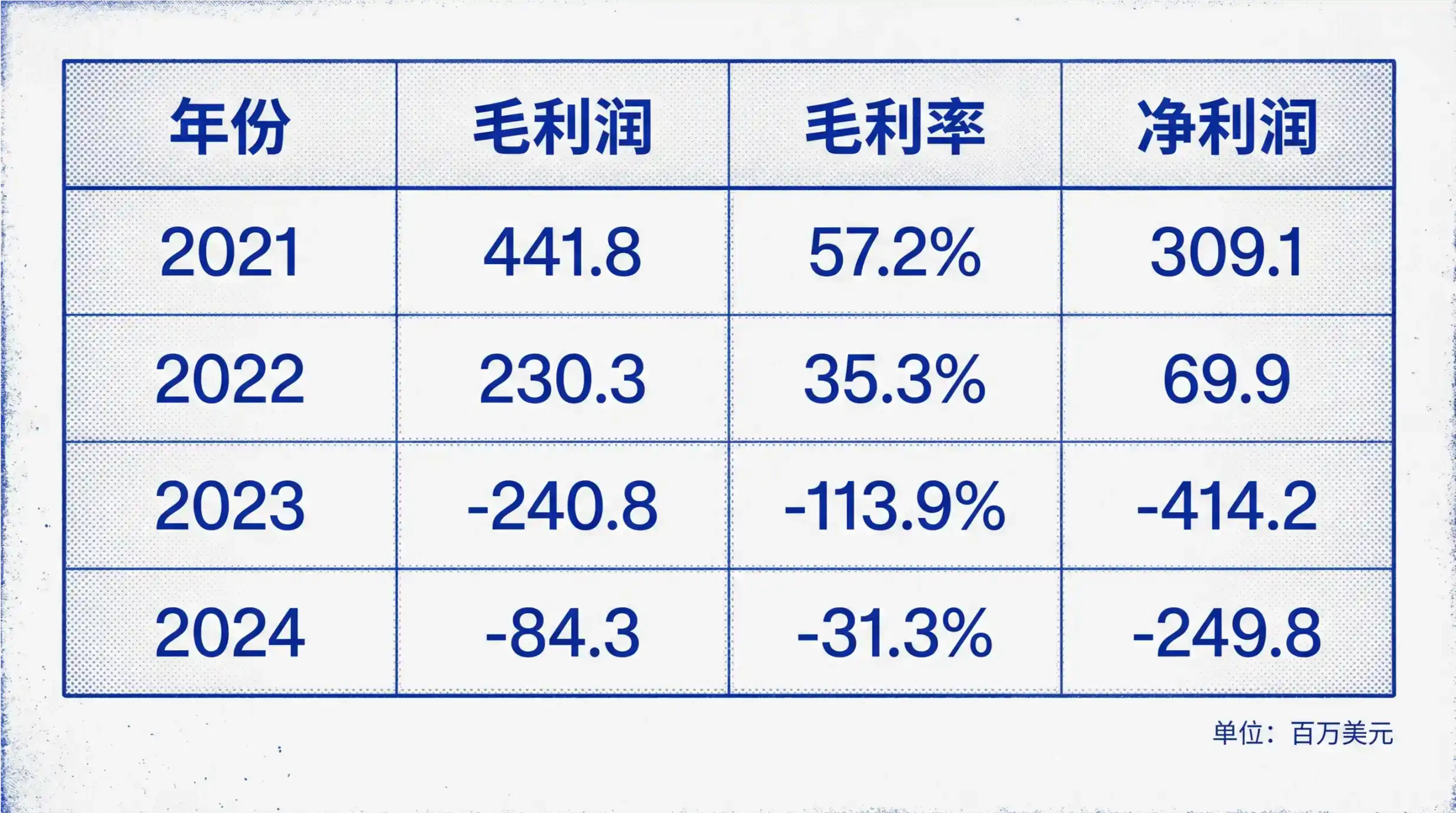
Canan's annual reports from 2021 to 2024 show a continuous decline in net profit over the four years, from earning over $300 million in 2021 to a loss of nearly $250 million in 2024. The reasons include inventory write-downs due to the 2022 bear market, which impacted profits, and fierce competition that kept R&D expenses and operating costs high without effectively increasing market share.

Amid these multiple challenges, a sharp drop in demand became the final straw. According to analysis by MSX researcher Frank, the overhyped expectations of Bitcoin mining narratives and visibly intensifying competition have led many Bitcoin mining companies to transition to AI computing infrastructure. Although "selling shovels" has always been a solid business model, in the current capital market, the Bitcoin story clearly lacks the certainty of AI, and capital has naturally voted with its feet, shifting toward AI-related companies.

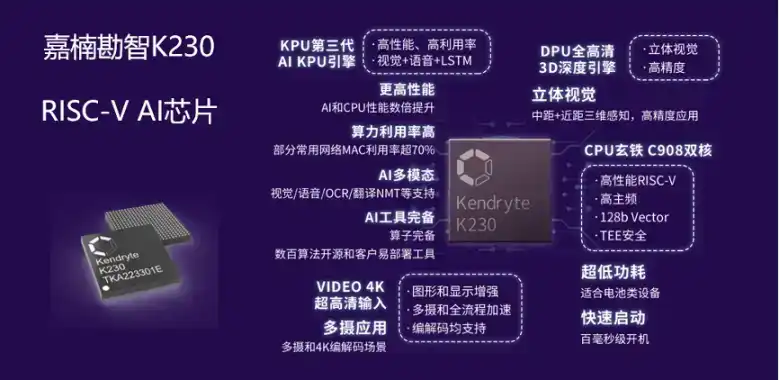
In fact, Canan began developing AI chips nearly a decade ago. In 2018, it launched its first commercial edge AI chip based on the RISC-V architecture, the Kendryte K210, designed for edge computing and supporting AI vision and audio processing. Over the next six years, Canan released three more chips, each with significant innovations built on the previous generation.

Although Canan's chips had technical highlights and an early start, they lacked the ecosystem support and large-scale demand compared to giants like NVIDIA and Intel. In 2024, its AI-related business revenue was only about $900,000, while operating expenses accounted for 15% of the entire company. In June 2025, Canan announced it would discontinue non-core AI semiconductor operations and shut down its AI chip division. The related announcement stated that the company had been exploring the sale of its AI business since March 2022 but failed to find a buyer, ultimately deciding to abandon it to focus on crypto mining machines and the North American market.

Canan Technology is a microcosm of the实体业务 (physical business) in the Web3 industry. Another listed Bitcoin mining machine manufacturer, Ebang International, has seen its stock price fall from nearly $450 at its 2020 peak to around $3, a drop of over 99%. For hardware manufacturers, there is a mature and fixed valuation model. If the industry they are in shows no clear growth prospects, it is easy to fall into a vicious cycle.

On a positive note, in late 2025, Canan first signed a large order for 4.5 MV in October, followed by completing a $72 million financing round in November. Clearly, there are still those in the market who believe that the former "Pumpkin Zhang" can overcome its difficulties. But to break free from its predicament, Canan Technology may need a new story.

Связанные с этим вопросы

QWhy did Canaan Creative receive a delisting warning from Nasdaq in January 2026?

ACanaan Creative received a delisting warning because its stock price had been below $1 for 30 consecutive trading days, violating Nasdaq's listing rules.

QWhat was Canaan Creative's peak market capitalization, and how does it compare to its current situation?

ACanaan Creative's market capitalization peaked at over $5 billion in March 2021 when its stock price reached nearly $40. Currently, it faces potential delisting due to its stock trading below $1.

QWhat are the main reasons for Canaan Creative's financial decline from 2021 to 2024?

ACanaan's financial decline was due to the 2022 bear market causing inventory write-downs, intense competition leading to high R&D and operational costs without market share growth, and a sharp drop in demand.

QWhy did Canaan Creative decide to shut down its AI chip business in 2025?

ACanaan shut down its non-core AI semiconductor business due to a lack of ecosystem support, insufficient large-scale demand (only $900,000 in AI revenue in 2024), and high operational costs, after failing to find a buyer for the division.

QWhat recent developments indicate that some investors still have faith in Canaan Creative's future?

AIn late 2025, Canaan secured a large order for 4.5 megavolts of mining equipment and completed a $72 million financing round, showing that some investors believe the company can overcome its challenges.

Похожее

Gensyn AI: Don't Let AI Repeat the Mistakes of the Internet

In recent months, the rapid growth of the AI industry has attracted significant talent from the crypto sector. A persistent question among researchers intersecting both fields is whether blockchain can become a foundational part of AI infrastructure. While many previous AI and Crypto projects focused on application layers (like AI Agents, on-chain reasoning, data markets, and compute rentals), few achieved viable commercial models. Gensyn differentiates itself by targeting the most critical and expensive layer of AI: model training. Gensyn aims to organize globally distributed GPU resources into an open AI training network. Developers can submit training tasks, nodes provide computational power, and the network verifies results while distributing incentives. The core issue addressed is not decentralization for its own sake, but the increasing centralization of compute power among tech giants. In the era of large models, access to GPUs (like the H100) has become a decisive bottleneck, dictating the pace of AI development. Major AI companies are heavily dependent on large cloud providers for compute resources. Gensyn's approach is significant for several reasons: 1) It operates at the core infrastructure layer (model training), the most resource-intensive and technically demanding part of the AI value chain. 2) It proposes a more open, collaborative model for compute, potentially increasing resource utilization by dynamically pooling idle GPUs, similar to early cloud computing logic. 3) Its technical moat lies in solving complex challenges like verifying training results, ensuring node honesty, and maintaining reliability in a distributed environment—making it more of a deep-tech infrastructure company. 4) It targets a validated, high-growth market with genuine demand, rather than pursuing blockchain integration without purpose. Ultimately, the boundaries between Crypto and AI are blurring. AI requires global resource coordination, incentive mechanisms, and collaborative systems—areas where crypto-native solutions excel. Gensyn represents a step toward making advanced training capabilities more accessible and collaborative, moving beyond a niche controlled by a few giants. If successful, it could evolve into a fundamental piece of AI infrastructure, where the most enduring value in the AI era is often created.

marsbit10 ч. назад

Gensyn AI: Don't Let AI Repeat the Mistakes of the Internet

marsbit10 ч. назад

Why is China's AI Developing So Fast? The Answer Lies Inside the Labs

A US researcher's visit to China's top AI labs reveals distinct cultural and organizational factors driving China's rapid AI development. While talent, data, and compute are similar to the West, Chinese labs excel through a pragmatic, execution-focused culture: less emphasis on individual stardom and conceptual debate, and more on teamwork, engineering optimization, and mastering the full tech stack. A key advantage is the integration of young students and researchers who approach model-building with fresh perspectives and low ego, prioritizing collective progress over personal credit. This contrasts with the US culture of self-promotion and "star scientist" narratives. Chinese labs also exhibit a strong "build, don't buy" mentality, preferring to develop core capabilities—like data pipelines and environments—in-house rather than relying on external services. The ecosystem feels more collaborative than tribal, with mutual respect among labs. While government support exists, its scale is unclear, and technical decisions appear driven by labs, not state mandates. Chinese companies across sectors, from platforms to consumer tech, are building their own foundational models to control their tech destiny, reflecting a broader cultural drive for technological sovereignty. Demand for AI is emerging, with spending patterns potentially mirroring cloud infrastructure more than traditional SaaS. Despite challenges like a less mature data industry and GPU shortages, Chinese labs are propelled by vast talent, rapid iteration, and deep integration with the open-source community. The competition is evolving beyond a pure model race into a contest of organizational execution, developer ecosystems, and industrial pragmatism.

marsbit12 ч. назад

Why is China's AI Developing So Fast? The Answer Lies Inside the Labs

marsbit12 ч. назад

3 Years, 5 Times: The Rebirth of a Century-Old Glass Factory

Corning, a 175-year-old glass company, is experiencing a dramatic revival as a key player in AI infrastructure, driven by surging demand for high-performance optical fiber in data centers. AI data centers require vastly more fiber than traditional ones—5 to 10 times as much per rack—to handle high-speed data transmission between GPUs. This structural demand shift, coupled with supply constraints from the lengthy expansion cycle for fiber preforms, has created a significant supply-demand gap. Nvidia has invested in Corning, along with Lumentum and Coherent, in a $4.5 billion total commitment to secure the optical supply chain for AI. Corning's competitive edge lies in its expertise in producing ultra-low-loss, high-density, and bend-resistant specialty fiber, which is critical for 800G+ and future 1.6T data rates. Its deep involvement in co-packaged optics (CPO) with partners like Nvidia further solidifies its position. While not the largest fiber manufacturer globally, Corning's revenue from enterprise/data center clients now exceeds 40% of its optical communications sales, and it has secured multi-year supply agreements with major hyperscalers including Meta and Nvidia. Financially, Corning's optical communications revenue has surged, doubling from $1.3 billion in 2023 to over $3 billion in 2025. Its stock price has risen nearly 6-fold since late 2023. Key future catalysts include the rollout of Nvidia's CPO products and the scale of undisclosed customer agreements. However, risks include high current valuations and potential disruption from next-generation technologies like hollow-core fiber. The company's long-term bet on light over electricity, maintained even through the telecom bubble crash, is now being validated by the AI boom.

marsbit12 ч. назад

3 Years, 5 Times: The Rebirth of a Century-Old Glass Factory

marsbit12 ч. назад

Торговля

Спот
Фьючерсы
活动图片