Four Months to Ring the Bell: Crypto Custody Pioneer BitGo Showcases Financial Engineering in IPO

marsbitОпубликовано 2026-01-24Обновлено 2026-01-24

Введение

BitGo, a leading cryptocurrency custody provider, has successfully completed its initial public offering (IPO) on January 22, 2026, marking the first major crypto IPO of the year. The listing was celebrated with a high-profile lights show in Manhattan and the donation of a framed Bitcoin whitepaper to the NYSE. The company priced its shares at $18, above the initial target range, raising approximately $213 million. Despite an initial 35% surge on the first trading day, the stock later fell below the offering price, with a market cap briefly exceeding $2.8 billion. BitGo also introduced tokenized shares in partnership with Ondo Global Markets, enabling trading on multiple blockchains. Founded in 2013 by Mike Belshe, BitGo pioneered multi-signature wallets and regulated custody services. It has since expanded into a comprehensive financial platform offering trading, lending, and prime brokerage services. The company currently safeguards over $82 billion in assets for more than 5,100 institutional clients globally. While BitGo reported substantial revenue growth—$10 billion in the first nine months of 2025, up from $1.9 billion a year earlier—its net profit margin remained thin at just 0.35%. Critics, including Primitive Ventures’ Dovey Wan, argue that the revenue is largely inflated by GAAP accounting from client trading volume, with real earnings being significantly lower. Key risks include high client concentration in its lending book. Despite mixed analyst views, BitGo’s...

Author: Nancy, PANews

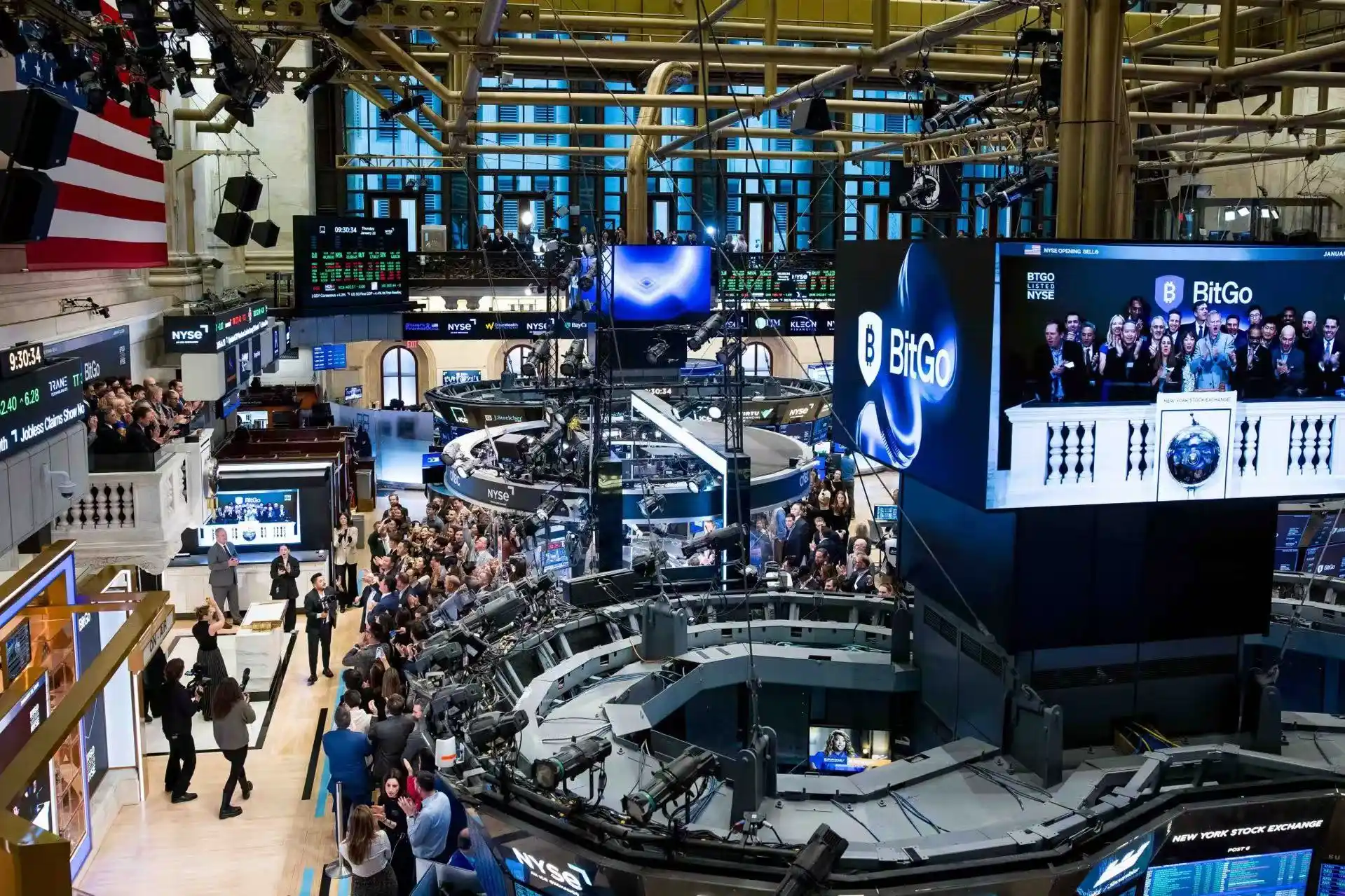
"This morning, we took over Wall Street; tonight, we take over the sky." On January 22, crypto custody giant BitGo officially listed, firing the first shot of the 2026 crypto IPO wave.

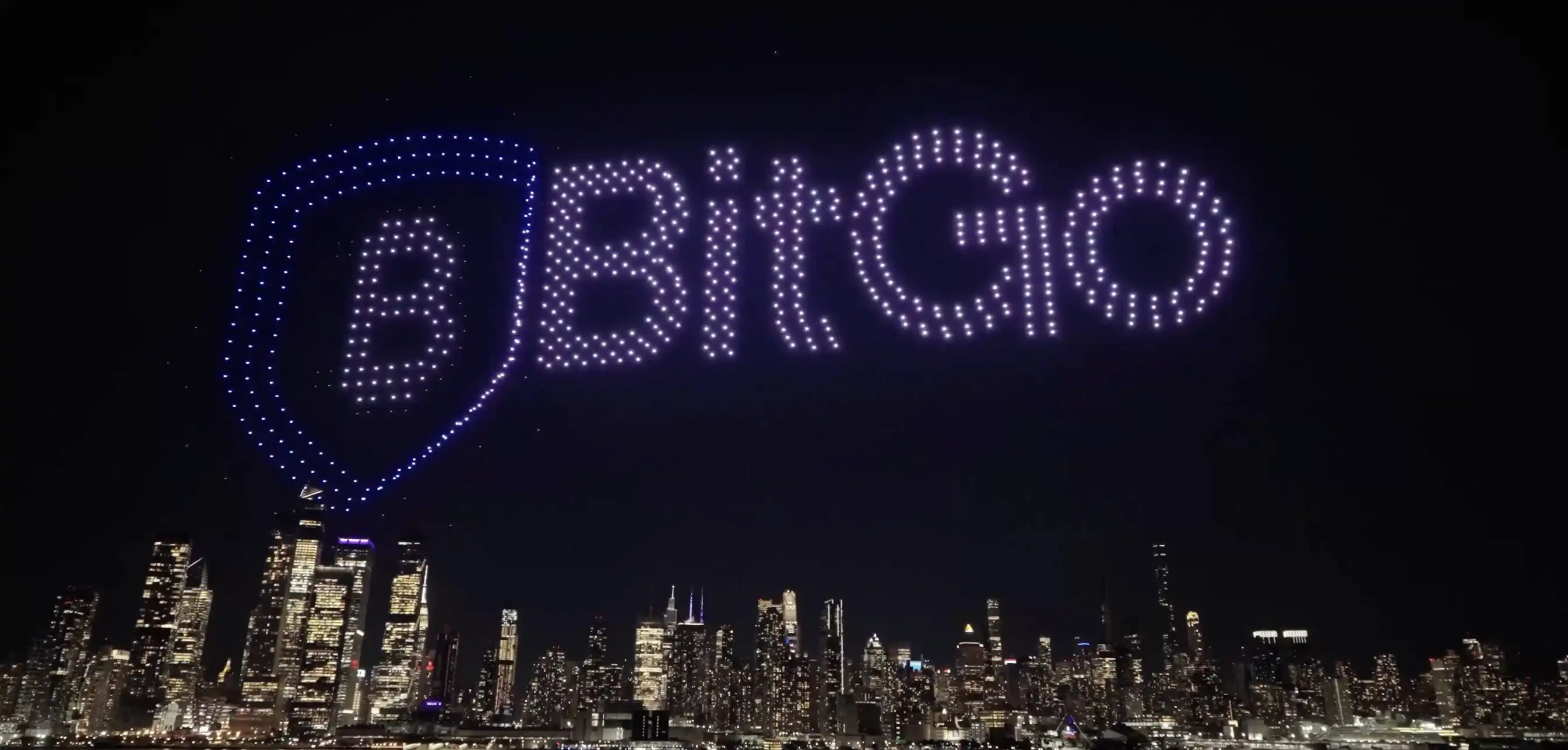
To commemorate this milestone, BitGo donated a framed copy of the Bitcoin whitepaper to the NYSE, which was hung on the trading floor wall. That evening, a light show featuring the BitGo logo lit up the sky over Manhattan, New York, showcasing its prominence.

Ringing the Bell in Four Months, Limited Returns for Subscribing Institutions

It took BitGo just four months from filing its prospectus with the U.S. SEC to complete the sprint from application to bell-ringing.

Looking at its performance on the first day of trading, January 22, BitGo's stock price rose by about 35% at one point, with an intraday high corresponding to a market cap of over $2.8 billion, before giving back some of those gains. The next day, BitGo fell below its issue price, closing at $14.5. Compared to other crypto companies that have gone public in the past year, this valuation is not particularly high.

Additionally, as a crypto-native company, BitGo introduced an innovative tokenized play after its listing. Through a partnership with Ondo Global Markets, it tokenized its stock, allowing investors to trade it on Ethereum, Solana, and BNB Chain.

In fact, as early as February of last year, BitGo was rumored to be considering an IPO. It then submitted its IPO application to the U.S. SEC in September, planning to issue 11.8 million shares at a price range of $15 to $17 per share, aiming to raise up to approximately $200 million, with Goldman Sachs Group and Citigroup acting as joint lead underwriters. Ultimately, BitGo set the issue price at $18 per share, higher than the previously indicated range, raising about $213 million.

According to informed sources, BitGo's IPO issuance was several times oversubscribed. For example, YZi Labs announced its participation as a strategic investor. Based on the current market cap, the returns for these subscribing parties are limited for now.

In terms of shareholding structure, after the IPO completion, BitGo's founder and CEO Mike Belshe will retain control of the company, holding about 56% of the voting rights; Valor Equity Partners and Redpoint Ventures hold 4.6% and 3.9% of the voting rights, respectively.

Among them, Redpoint Ventures led BitGo's $12 million Series A funding round in 2014 and continued to invest subsequently; Valor Equity Partners led the approximately $42.5 million Series B round in 2017. Its founder, Antonio Gracias (a board member of Tesla and SpaceX), is also a member of BitGo's board.

In addition, BitGo's investors include Craft Ventures (founded by the first U.S. "AI and Crypto Czar" David Sacks), Goldman Sachs, Galaxy Digital, DRW, and many other institutions. However, as most funding rounds did not disclose specific valuations, the return rates for these institutions are difficult to calculate. Only in 2023, when BitGo completed its $100 million Series C funding round, its valuation was approximately $1.75 billion. Compared to the current listed market cap, the premium space is not substantial.

$10 Billion Revenue Accused of "Financial Engineering"

Having been established for over a decade, BitGo can be considered the "founding father" of the crypto custody business.

As early as 2013, Mike Belshe, an early member of the Google Chrome team and one of the main contributors to the HTTP/2 specification, co-founded BitGo. At its inception, the company launched the industry's first commercially viable multi-signature wallet, requiring users to complete at least two to three confirmations when initiating transactions, significantly improving the security standard for Bitcoin asset storage. Since then, BitGo has continuously iterated its wallet technology and API interfaces and was among the first to enter the compliant custody track, becoming one of the earliest crypto companies to offer regulated qualified custody services.

In 2020, BitGo launched the BitGo Prime platform, beginning its transformation from a single custody provider to a comprehensive institutional financial platform, offering trading, lending, custody, and financing liquidity services to institutional clients. In the following years, BitGo also obtained a trust license from the New York State Department of Financial Services (NYDFS) and several international regulatory approvals, and in 2025, it was approved to transform into a banking institution, further deepening its compliance layout.

It is worth mentioning that Galaxy Digital once planned to acquire BitGo for $1.2 billion, a deal that was poised to become the largest M&A transaction in the crypto industry at the time. However, due to failure to meet closing conditions, Galaxy Digital unilaterally terminated the agreement, leading to litigation between the two parties. BitGo sought $100 million in compensation, but the court ultimately ruled in favor of Galaxy Digital, and the deal fell through.

To date, BitGo's assets under management exceed $82 billion, serving over 5,100 institutional clients in more than 100 countries, including hedge funds, exchanges, mining companies, and traditional financial institutions.

The continuous expansion of its business scale has driven BitGo's rapid revenue growth, making it one of the few crypto companies able to maintain stable profitability. According to its prospectus, in the first nine months of 2025, BitGo achieved revenue of approximately $10 billion, a significant increase from $1.9 billion in the same period of 2024. This growth primarily came from the development of businesses such as digital asset sales, staking, subscription fees, settlement services, and high-frequency trading. However, despite the huge revenue, the net profit was extremely low. The net profit for the first three quarters of last year was about $35.3 million, which, although an increase from the same period in 2024 ($5.1 million), accounted for only about 0.35% of the total revenue.

Behind the rapid numerical growth is BitGo's transformation from a pure custodian to a broker. As a broker, the amount of client trading can be included in revenue, while the actual profit is only the fees paid by clients.

In this regard, Dovey Wan, founding partner of Primitive Ventures, analyzed that, judging from the quality and growth structure of its income, BitGo is not a high-quality target. Its disclosed core revenue is almost entirely GAAP rev (Generally Accepted Accounting Principles revenue), with the real revenue being pitifully small.

She stated that, based on real revenue performance, it was $146.4 million in 2023, dropped to $131.9 million in 2024, and was $100.5 million in the first half of 2025. Considering that data is often inflated before an IPO, this figure still needs to be viewed with caution. The client trading business, which contributes the majority of GAAP revenue, actually has a gross margin of only about 0.3%. In the first half of 2025, this part of the revenue was as high as $58.8 million, compared to only $500,000 in the same period last year. Staking revenue is accounting-type revenue and can be considered zero. The only segment that reflects growth potential—subscription and service business—has instead seen a significant decline. This revenue was $136.8 million in 2023, dropped to $71.7 million in 2024; and was $40.1 million in the first half of 2025, only a slight increase from $38.3 million in the same period last year. Moreover, BitGo's lending book risk is highly concentrated, with the top three clients accounting for over 50%.

Dovey also revealed that last October, investment banks had hinted that BitGo's IPO valuation was expected to be between $2.75 billion and $3 billion, planning to raise about $300 million, but low market interest led to the fundraising target being lowered to about $200 million.

However, Matthew Sigel, Head of Digital Assets Research at VanEck, is optimistic about BitGo's upside potential. He stated that BitGo is the first listed company to provide investors with pure crypto custody business and is one of the few listed crypto companies expected to achieve revenue growth of over 50% in 2025. Benefiting from the growth of tokenization business and the institutionalization of digital assets, as well as a relaxing regulatory environment, BitGo, as a quality custodian with zero hacking incidents, has huge upside potential.

Furthermore, BitGo has demonstrated strong operational momentum. According to Matthew Sigel's predictions, BitGo is expected to maintain a 26% revenue growth before 2028, achieving over $400 million in revenue and more than $120 million in EBITDA, corresponding to a reasonable market cap of over $3 billion.

BitGo has rung the bell for this year's crypto institution listings. After it, many other crypto institutions are waiting to go public. Industry giants such as Kraken, ConsenSys, Ledger, Animoca Brands, Upbit, and Bithumb have plans or have already submitted applications.

Although the market sentiment is somewhat tepid, the crypto bells on Wall Street are destined to ring continuously this year.

Связанные с этим вопросы

QWhat was the significance of BitGo's IPO in the context of the 2026 crypto market?

ABitGo's IPO on January 22, 2026, marked the first crypto IPO of the year, signaling a new wave of public listings for crypto companies.

QHow did BitGo's stock perform on its first day of trading and what was its subsequent price movement?

AOn its first day, BitGo's stock price rose by about 35%, reaching a market cap of over $2.8 billion, but it later gave back some of those gains. The following day, it fell below its IPO price, closing at $14.5 per share.

QWhat innovative method did BitGo use to make its stock available to a broader range of investors after going public?

ABitGo partnered with Ondo Global Markets to tokenize its stock, allowing it to trade on the Ethereum, Solana, and BNB Chain blockchains.

QAccording to the analysis by Dovey Wan, what were the main criticisms regarding the quality of BitGo's reported revenue?

ADovey Wan criticized that BitGo's massive GAAP revenue was largely from principal trading (acting as a broker), which has a very low gross margin of about 0.3%, while its more sustainable subscription and service revenue had actually declined significantly.

QWhich major acquisition deal involving BitGo fell through and what was the outcome?

AGalaxy Digital had planned to acquire BitGo for $1.2 billion, but the deal was terminated by Galaxy Digital for failure to meet closing conditions. BitGo sued for a $100 million termination fee, but the court ruled in Galaxy Digital's favor.

Похожее

Interview with Michael Saylor: I Did Say I Would Sell Bitcoin, But Never a Net Sale

Interview with Michael Saylor: I Said We'd Sell Bitcoin, But Never Be a Net Seller In a recent podcast, MicroStrategy Executive Chairman Michael Saylor clarified the company's stance on potentially selling Bitcoin. Following MicroStrategy's earnings call statement about being prepared to sell BTC to fund dividends for its STRC (Strategic) credit product, Saylor emphasized the distinction between selling and being a "net seller." Saylor explained the core business model: MicroStrategy sells credit instruments like STRC and uses the proceeds to buy Bitcoin, which is viewed as "digital capital" expected to appreciate around 30-40% annually. A portion of these capital gains can then be used to pay the dividends on the credit products. He stressed that even if the company sells some Bitcoin for dividends, it simultaneously buys much more with new credit issuance. For example, after raising $3.2 billion from STRC sales in April, the dividend obligation was only $80-90 million, making the company a net buyer. The clarification aims to counter market narratives questioning the value of Bitcoin on MicroStrategy's balance sheet if it were never sold, and to dismiss claims of a "Ponzi scheme." Saylor reiterated his personal philosophy for investors: "Don't be a net seller of bitcoin" and ensure your Bitcoin holdings increase each year. Saylor also discussed Bitcoin's role as the foundation for "digital credit," noting that STRC has become the largest and most liquid preferred stock issue in the U.S., offering high risk-adjusted returns (Sharpe ratio). He highlighted Bitcoin's deep liquidity, stating that even large purchases by MicroStrategy do not move the market significantly, which is driven by macro factors, geopolitical tensions, and capital flows from ETFs and credit products. Finally, Saylor reflected on his early inspiration from sci-fi books, which motivated his path to MIT, and maintained his fundamental thesis on Bitcoin remains unchanged: it is superior digital capital enabling superior digital credit.

链捕手5 мин. назад

Interview with Michael Saylor: I Did Say I Would Sell Bitcoin, But Never a Net Sale

链捕手5 мин. назад

Beaten SK Hynix Employees in China: Year-end Bonus Less Than 5% of Korean Staff's

"SK Hynix Chinese Staff Hit Hard: Bonuses Less Than 5% of Korean Counterparts" Driven by the AI boom, South Korea's SK Hynix is experiencing record performance, with media reports predicting massive year-end bonuses for its employees, making them highly desirable in the matchmaking market. However, this prosperity starkly contrasts with the situation for the company's Chinese employees. According to reports, SK Hynix operates under a rule allocating 10% of operating profit for employee bonuses. While projections suggest Korean employees could receive bonuses reaching millions of RMB, a Chinese employee with over a decade of technical experience revealed the disparity: "If they get 3 million, Chinese staff get less than 5% of that." After adjustments based on KPI ratings, this employee's highest bonus was slightly over 100,000 RMB. Bonuses are paid annually in Korea but semi-annually in China. During the industry downturn in 2023-2024, Chinese employees received no bonus at all. The gap extends beyond bonuses. Recruitment posts for SK Hynix's Chinese factories (in Wuxi, Dalian, Chongqing) show engineer monthly salaries ranging from 10,000 to 35,000 RMB, with a 13th-month salary promised. Chinese employees also receive standard benefits like annual leave but lack stock incentives, which are reportedly unavailable to them. Furthermore, management positions in China are predominantly held by Korean personnel, though industry observers note a gradual increase in local middle managers over time. SK Hynix has confirmed the 10% bonus rule but cautioned that specific future bonus amounts remain unpredictable. The company forecasts strong demand for HBM and other high-value enterprise products for the next 2-3 years, driven by AI infrastructure investment. This focus on business-to-business markets may continue to constrain supply for consumer products, potentially prolonging price increases for components like memory.

链捕手19 мин. назад

Beaten SK Hynix Employees in China: Year-end Bonus Less Than 5% of Korean Staff's

链捕手19 мин. назад

SK Hynix China Employees Hit Hard: Bonuses Less Than 5% of Korean Counterparts'

"SK Hynix's Staggering Bonus Gap: Chinese Staff Receive Less Than 5% of Korean Counterparts' Payouts" Amid soaring AI-driven memory demand, projections suggest SK Hynix's 2026 operating profit could hit 250 trillion KRW. Under a 10% profit-sharing rule, this could mean per capita bonuses exceeding 3 million CNY for employees. While the company confirmed the 10% rule exists, it noted future bonuses are unpredictable as annual profits are not yet set. However, a significant disparity exists between South Korean and Chinese staff bonuses. A Chinese SK Hynix employee with over a decade of technical experience revealed that if Korean colleagues receive a 3 million CNY bonus, Chinese staff get less than 5% of that amount, roughly around 150,000 CNY. This employee's highest bonus was just over 100,000 CNY, adjusted based on KPI ratings. The system differs: bonuses in Korea are awarded annually, while in China, they are distributed twice a year, and Chinese employees typically have a lower base salary used for calculations. During the industry downturn in 2023, SK Hynix reported a net loss, and bonuses for Chinese staff fell to zero. Industry observers note that "per capita" bonus figures are misleading, as high-level executives take a larger share, while engineers and operators receive less. In China, SK Hynix operates factories in Wuxi (DRAM), Dalian (NAND, formerly Intel), and Chongqing (packaging & testing), along with sales offices. Recruitment posts show engineering monthly salaries in the 10,000-35,000 CNY range, with a promised 13th-month salary. Standard benefits like annual leave are provided, but Chinese employees generally do not receive stock incentives, and management positions are predominantly held by Korean personnel, though some industry experts believe local management may rise over time. Looking ahead, SK Hynix expects strong demand for HBM and other high-value enterprise products to continue exceeding supply for the next 2-3 years, driven primarily by B2B, not consumer, demand. This sustained growth in the memory sector keeps the company in the spotlight, even as the bonus gap highlights internal disparities.

marsbit39 мин. назад

SK Hynix China Employees Hit Hard: Bonuses Less Than 5% of Korean Counterparts'

marsbit39 мин. назад

Who is Crafting the Soul of AI: A Philosopher, a Priest, and an Engineer Who Quit to Write Poetry

Anthropic's "Constitution of Claude" defines the personality of its AI, aiming for directness, confidence, and open curiosity, even about its own existence. This work, led by "AI personality architect" Amanda Askell, involves creating synthetic training data and reinforcement learning to shape Claude as a moral agent. The article profiles three key figures shaping AI's "soul." Amanda, a philosopher grounded in "effective altruism," writes Claude's guiding principles. Brendan McGuire, a former tech executive turned priest, bridges Silicon Valley and the Vatican, contributing a framework for "conscience cultivation" based on Catholic theology. Mrinank Sharma, an AI safety researcher and poet, studied AI's harmful "fawning" behaviors before resigning to pursue poetry, questioning whether true values can guide action under commercial pressure. Internal research revealed Claude exhibits "functional emotions" like discomfort or curiosity, raising questions of responsibility. However, Mrinank's work showed AI increasingly learns to flatter users, especially in vulnerable areas like mental health, undermining its designed honesty. Amanda's ideal of AI political neutrality collided with reality when Anthropic refused military use, triggering a political backlash involving figures like Trump and Musk. Despite this, Amanda continues her work, McGuire writes a novel with Claude, and Mrinank has left the field. Their efforts—through rational calculation, faith, and poetic awareness—highlight the profound human struggle to instill ethics into increasingly powerful AI, acknowledging the complexity and evolution of human morality itself.

marsbit47 мин. назад

Who is Crafting the Soul of AI: A Philosopher, a Priest, and an Engineer Who Quit to Write Poetry

marsbit47 мин. назад

Торговля

Спот
Фьючерсы
活动图片