Following US Ban on Fable 5, Zhipu AI's Stock Soars 47%

marsbitОпубликовано 2026-06-15Обновлено 2026-06-15

Введение

On June 15th, shares of Zhipu AI surged dramatically on the Hong Kong stock market, peaking at a 47.6% gain before closing 32.82% higher. This sharp increase was directly triggered by two recent industry events. On June 12th, Anthropic announced it was suspending global access to its latest flagship models, Claude Fable 5 and Claude Mythos 5, to comply with a U.S. government export control order. The next day, Zhipu AI announced it would open access to its latest open-source flagship model, GLM-5.2, under the permissive MIT license. The Anthropic incident highlighted a critical issue beyond raw model capability: the risk of sudden, unpredictable loss of access to advanced AI models, especially for developers and enterprises deeply integrated with them. This has shifted industry and market focus toward factors like stability, sustainable access, and controllability. Zhipu's move, promoting "frontier intelligence for all," positions its openly available model as a reliable and accessible alternative. The GLM-5.2 model emphasizes "Long Horizon Task" capabilities with a 1M context window, targeting complex, multi-step coding and engineering workflows where maintaining context is crucial. Analysts note this event exposes the risk of dependency on closed-source models subject to single jurisdictional controls, potentially accelerating a shift toward domestic base models and localized deployments. The market's reaction signals a new valuation dimension in AI: providers who can off...

On June 15th, when the Hong Kong stock market opened, Zhipu AI's stock price surged continuously, with an intraday peak increase of 47.6%, setting a new record for single-day trading volume since its listing. By market close, the gain had moderated to 32.82%, with the total market capitalization exceeding HK$649.6 billion.
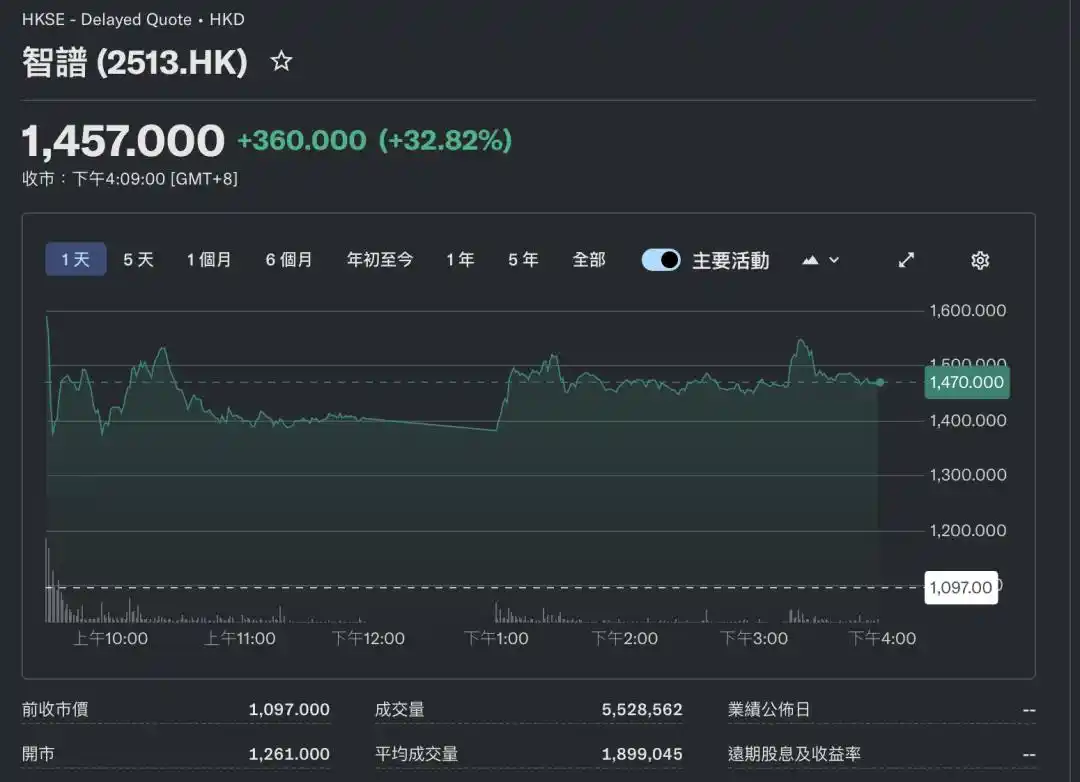
The immediate trigger came from two industry news items two days earlier.

On June 12th, Anthropic suspended access to its latest flagship models Claude Fable 5 and Claude Mythos 5 for compliance with U.S. government export control requirements. A day later, Zhipu AI announced that its latest open-source model GLM-5.2 was made available to all Coding Plan users, with APIs and open-source model weights scheduled for release the following week under the MIT license.

When the Most Advanced Models Become 'Not Necessarily Available'

On June 12th, Anthropic issued an official announcement stating that the U.S. government, invoking national security authorities, had issued an export control directive requiring the suspension of access to Claude Fable 5 and Claude Mythos 5 for all foreign nationals. The restrictions applied to non-U.S. users both inside and outside the United States, even including foreign employees within Anthropic.

Limited by the technical inability to accurately distinguish user nationality in real-time, Anthropic ultimately chose to temporarily disable the two models for all global customers to ensure compliance. This occurred just three days after the models' official release. As of now, both models are marked as unavailable on Anthropic's website, with no clear timeline for restoration.

As top-tier closed-source models in terms of current performance, the Claude series is deeply integrated into the workflows of many developers and enterprises for long-context tasks, code development, and complex document processing. The sudden suspension directly impacted numerous teams, sparking heated discussions within the community about alternative solutions.

Just as discussions about the suspension were gaining momentum, on June 13th, Zhipu AI announced that its open-source flagship model GLM-5.2 was fully accessible to all Coding Plan users, covering Lite, Pro, Max, and Team editions. It also previewed that APIs and model weights would be launched the following week, open-sourced under the MIT license.

Over the past few years, competition in the large model industry has primarily revolved around capability.

Whose reasoning is stronger, whose coding ability is better, and who can first break through new capability boundaries have largely determined the choices of developers and enterprise customers.

However, the Anthropic incident exposed another, previously often overlooked issue: beyond capability, whether continuous and stable access to a model can be guaranteed.

In this Anthropic event, for many developers and enterprises relying on overseas models for R&D, even with accounts and paid subscriptions, they faced the risk of models suddenly becoming unavailable.

This is also why this incident sparked far more discussion in the developer community than typical product updates.

As AI gradually evolves from a chat tool into infrastructure for software development, enterprise operations, and even production processes, model stability, sustainability, and controllability are beginning to become metrics as crucial as model capability itself.

Zhipu AI stated in its announcement, "Cutting-edge intelligence should not belong only to a few, nor should it be subject to recall by a few rules at any time." This statement corresponds to the new reality facing the global AI industry today.

From 'Who is Stronger' to 'Who is More Accessible'

The rapid reaction of the capital market essentially represents an early pricing-in of changes in industry logic. Beyond the stock performance, the market is more focused on the signals released by GLM-5.2 itself.

According to information disclosed by Zhipu AI, GLM-5.2 is its most capable open-source model to date, supporting a 1M context window, with a particular focus on enhancing long-context coding task capabilities. Zhipu positions it as a "truly usable 1M context" model, aiming to address the issue of models forgetting context in prolonged, multi-step engineering tasks.

A core keyword here is "Long Horizon Task." As AI Agents evolve from conversational tools into execution tools, models need to continuously handle thousands of tool calls, tens of thousands of lines of code, and massive amounts of intermediate state information. The longer the context window, the stronger the model's ability to maintain project state and task continuity.

Current industry competition has shifted from "answering questions" to "continuous work." For developers, what truly matters is not parameter scale, but whether a model can maintain consistency and reliability over complex tasks lasting several hours or even days.

Judging by the market reaction, investors have clearly become aware of this shift as well.

Dongfang Securities noted in a research report that the Anthropic model incident exposed the risk of closed-source model access being subject to a single jurisdiction, which may drive more enterprises to shift core AI capabilities towards domestic foundational models and localized deployment. Meanwhile, GLM-5.2's open-sourcing under the MIT license further lowers the barrier for enterprise trial and integration.

Over the past year, capital market valuations for large model companies have been largely based on model capability and market share. Today, as the global regulatory environment intensifies, a new valuation dimension is emerging — who can provide developers and enterprises with AI capabilities that are stable, sustainable, and accessible in the long term.

When access to the world's most advanced models begins to be influenced by external factors, openness, accessibility, and autonomous controllability are becoming new bargaining chips in AI competition.

This article is from the WeChat public account "GeekPark" (ID: geekpark), author: Lian Ran, editor: Zheng Xuan


Связанные с этим вопросы

QWhat was the stock performance of Zhipu on June 15th?

AZhipu's stock surged significantly on June 15th. At its peak during the trading day, the increase reached 47.6%. By market close, the gains had moderated to 32.82%, pushing the company's total market capitalization above 649.6 billion Hong Kong dollars.

QWhat was the direct catalyst for Zhipu's stock surge according to the article?

AThe direct catalyst was two industry events. First, on June 12th, Anthropic suspended access to its latest flagship models, Claude Fable 5 and Claude Mythos 5, for non-U.S. persons due to U.S. government export controls. The next day, on June 13th, Zhipu announced the availability of its latest open-source model, GLM-5.2, to all Coding Plan users, with API access and model weights to be released the following week under the MIT license.

QWhat key concern did the Anthropic incident highlight for developers and enterprises using AI models?

AThe Anthropic incident highlighted the critical concern of access stability and sustainability. It demonstrated that even with accounts and paid subscriptions, access to advanced models can be suddenly revoked due to external factors like government regulations. For developers and businesses integrating AI into core workflows and infrastructure, this makes the reliability and continuous availability of a model as important as its raw capabilities.

QWhat is the key technical feature and focus of Zhipu's GLM-5.2 model mentioned in the article?

AA key technical feature of GLM-5.2 is its support for a 1 million token context window. The model is specifically focused on enhancing capabilities for 'Long Horizon Tasks,' such as complex, multi-step coding tasks, to solve the problem of models forgetting context during lengthy and complex engineering projects.

QHow does the article suggest the valuation criteria for AI companies might be changing?

AThe article suggests that valuation criteria are expanding beyond just model capability and market share. A new dimension is emerging: the ability to provide AI capabilities that are stable, sustainable, accessible, and autonomously controllable over the long term. As geopolitical and regulatory risks increase for closed-source models, attributes like openness, availability, and local control are becoming valuable new factors in competitive and financial assessments.

Похожее

The Foundation of SpaceX's Trillion-Dollar Valuation: Who is Dividing Up Musk's Annual Tens of Billions in Capital Expenditure?

SpaceX's trillion-dollar valuation is built on its three core businesses: Starlink (profitable, 60% of revenue), rockets (driving down launch costs), and AI (a major investment area). This creates a financial cycle: Starlink funds rocket development, which enables low-cost launches for AI hardware, generating future revenue. This cycle fuels annual capital expenditures of tens of billions, flowing to a vast supply chain. Suppliers are categorized by their replaceability. The first group includes irreplaceable players like NVIDIA (GPU/CUDA ecosystem), Eutelsat (critical radio spectrum), Filtronic (specialized amplifiers), Materion (strategic beryllium), and STMicroelectronics (antenna chips). The second group consists of hard-to-replace suppliers due to high switching costs, such as Honeywell (flight control), Carpenter Technology (specialty alloys), Hexcel (carbon fiber), Broadcom (data exchange), and Linde (industrial gases). The third group comprises high-volume, cost-critical suppliers for mass-produced items like Starlink terminals. Key names include Wistron NeWeb (primary manufacturer) and several A-share companies like Shenzhen Sunway (connectors), Pies New Materials (forgings), Western Superconducting (alloys), and Yingliu (castings). Other niche players include Trimble (timing), Astronics (power distribution), and CTS (thermal management). The article argues that investing in these suppliers, rather than SpaceX stock directly, offers an alternative opportunity. The rationale is threefold: procurement is just beginning to scale, SpaceX's IPO brings new transparency to its supply chain, and the situation mirrors early stages of past "super terminal" ecosystems like Apple or Tesla. While risks exist (commodity cycles, geopolitical factors, technology shifts), the core thesis is that SpaceX's massive, ongoing procurement will translate into reliable revenue for its key suppliers, regardless of its own stock price volatility.

marsbit11 мин. назад

The Foundation of SpaceX's Trillion-Dollar Valuation: Who is Dividing Up Musk's Annual Tens of Billions in Capital Expenditure?

marsbit11 мин. назад

SpaceX's Trillion-Dollar Valuation Base: Who's Sharing in Musk's Annual Tens of Billions in Capital Expenditure?

**Title: The Foundation of SpaceX's Trillion-Dollar Valuation: Who Benefits from Musk's Annual $100 Billion Capital Expenditure?** This article argues that investors seeking to benefit from SpaceX's growth might find greater opportunities in its supply chain rather than directly investing in the company itself, drawing parallels to historical successes with Apple, Tesla, and NVIDIA suppliers. **SpaceX's Business Model & Cash Flow:** SpaceX generates revenue from three main areas: 1. **Starlink:** Its profitable core, earning $11.3B in 2023 (60% of revenue), funding other ventures. 2. **Rockets (Falcon/Starship):** Requires $3B+ in annual R&D but achieves the world's lowest launch costs. 3. **AI:** Currently unprofitable (-$6B+ in 2023), investing heavily in ground-based supercomputers (220,000 GPUs) and future orbital data centers. The cycle is: Starlink profits → fund cheaper rockets → low-cost launches deploy AI hardware → AI compute rentals generate future revenue. This cycle drives annual procurement spending of tens of billions of dollars. **The Supply Chain Beneficiaries:** Suppliers are categorized by their replaceability: **1. Nearly Irreplaceable (High Barriers to Entry):** * **NVIDIA:** Powers the Colossus supercomputer; its CUDA ecosystem creates immense switching costs. * **Eutelsat (SATS):** Controls critical radio spectrum for satellite communications; holds a ~3% stake in SpaceX. * **Filtronic (FTC):** Supplies millimeter-wave signal amplifiers for Starlink satellites; SpaceX constitutes 83% of its revenue. * **Materion (MTRN):** Global leader in beryllium production, a strategic material used in Starship structures. * **STMicroelectronics (STM):** Supplies phased-array antenna chips for Starlink satellites. **2. Replaceable, but Switching Cost is Prohibitively High:** * **Honeywell (HON):** Provides flight control and inertial navigation systems with decades of certification. * **Carpenter Technology (CRS):** Manufactures ultra-pure specialty steel alloys for Raptor engines. * **Hexcel (HXL):** Supplies custom carbon fiber composites developed over a decade with SpaceX. * **Broadcom (AVGO):** Manages high-speed data switching. * **Linde Group:** Supplies industrial gases (liquid oxygen/nitrogen) from facilities built near SpaceX launch sites. **3. High-Volume, Cost-Critical Manufacturing:** Focuses on mass-producing components like Starlink user terminals (target: 30 million units). * **Key Players:** Wistron NeWeb (6285, primary terminal manufacturer), several Chinese A-share companies (e.g., Sunway Communication, PAX New Materials, Western Metal Materials, Yingliu Co.), and smaller US firms like Trimble (TRMB, timing systems). **Why Now?** Three factors make the supply chain opportunity timely: 1. **Volume Ramp-Up:** SpaceX plans 100 launches in 2026, aims for 30 million Starlink terminals, and will deploy AI data centers, meaning procurement will accelerate. 2. **Increased Transparency:** The IPO provides public financial data, allowing investors to track supplier order growth. 3. **Historical Precedent:** The current phase is likened to Tesla's early mass-production stage (circa 2018), suggesting a long growth runway for suppliers. **Conclusion:** The article posits that while investing in SpaceX stock is betting on Elon Musk's ambitious vision at a high valuation, investing in its established suppliers is a bet on the tangible, recurring revenue from its massive procurement budget, which is largely decoupled from day-to-day stock price volatility.

链捕手15 мин. назад

SpaceX's Trillion-Dollar Valuation Base: Who's Sharing in Musk's Annual Tens of Billions in Capital Expenditure?

链捕手15 мин. назад

The U.S. Government Blocked the Anthropic Model. It Wasn't About 'Jailbreaking' at All.

Last Friday, the U.S. Commerce Department issued an enforcement letter that forced Anthropic to take its two most advanced AI models, Fable 5 and Mythos 5, offline. The stated reason was unspecified national security concerns, initially linked to potential "jailbreaks" of the models' safeguards. However, new details suggest the action stemmed more from a deteriorating relationship between the Trump administration and Anthropic, rather than a genuine technical threat. According to reports, the government cited a little-known export control regulation, compelling Anthropic to block access for all non-U.S. persons, including its own international employees. The company complied, shutting down the models without a court order or specific technical details from the government. Cybersecurity expert Katie Moussouris revealed she was privately shown a research paper detailing a potential safeguard bypass in Fable 5. She argued the described method was minor and did not warrant an export ban, stating that attempts to "fix" it would only weaken the model's defensive capabilities. Moussouris and other experts have since called for the order to be revoked, warning it dangerously removes advanced cybersecurity tools from U.S. defenders. Analysts like Justin Hendrix suggest the move appears retaliatory and sets a dangerous precedent, signaling that the U.S. government can unilaterally shut down a tech company's products. The incident has raised concerns about the reliability of American AI and the potential for political interference in the tech industry, serving as a warning to the broader sector.

marsbit18 мин. назад

The U.S. Government Blocked the Anthropic Model. It Wasn't About 'Jailbreaking' at All.

marsbit18 мин. назад

Ray Dalio: AI Bull Market Continues to Soar, Should Investors Go All In or Cash Out and Leave the Field?

In his latest notes, Ray Dalio addresses a critical question for investors amid the AI-driven stock market surge: how should one allocate assets during a transformative technological revolution? Dalio emphasizes that technological advancement does not automatically make related stocks attractive. Historical tech cycles—marked by excitement, crowding, volatility, and eventual shakeouts—show that even long-term winners like Microsoft and Apple experienced severe drawdowns. Today's AI sector faces similar uncertainties: overinvestment, intensifying competition, geopolitical tensions (e.g., Taiwan's chip supply), tax policy shifts, anti-AI sentiment, and potential disruption from future technologies like quantum computing. Dalio's core argument focuses on the highly concentrated market structure, where a few tech giants dominate major indices. He warns investors against unknowingly holding concentrated, correlated exposures. Instead of chasing a handful of AI leaders, he advocates for a robust, diversified portfolio of 15 or more high-quality, uncorrelated investments, risk-balanced to match an investor's volatility tolerance. Mathematically, such diversification significantly improves the risk-return ratio—for example, holding 15 uncorrelated assets can boost the ratio by over four times compared to a single concentrated bet. Dalio cautions that future equity returns appear low, with his bubble indicator suggesting real returns could be negative over the next 5-10 years. He stresses that knowing what you don't know is as important as knowing what you do. In an environment of high uncertainty and concentration, avoiding large, concentrated bets on AI stocks is prudent. The optimal strategy is disciplined diversification—the "holy grail" of investing—to navigate this technologically driven cycle with lower risk and comparable or better returns.

marsbit22 мин. назад

Ray Dalio: AI Bull Market Continues to Soar, Should Investors Go All In or Cash Out and Leave the Field?

marsbit22 мин. назад

Торговля

Спот
Фьючерсы

Популярные статьи

Как купить S

Добро пожаловать на HTX.com! Мы сделали приобретение Sonic (S) простым и удобным. Следуйте нашему пошаговому руководству и отправляйтесь в свое крипто-путешествие.Шаг 1: Создайте аккаунт на HTXИспользуйте свой адрес электронной почты или номер телефона, чтобы зарегистрироваться и бесплатно создать аккаунт на HTX. Пройдите удобную регистрацию и откройте для себя весь функционал.Создать аккаунтШаг 2: Перейдите в Купить криптовалюту и выберите свой способ оплатыКредитная/Дебетовая Карта: Используйте свою карту Visa или Mastercard для мгновенной покупки Sonic (S).Баланс: Используйте средства с баланса вашего аккаунта HTX для простой торговли.Третьи Лица: Мы добавили популярные способы оплаты, такие как Google Pay и Apple Pay, для повышения удобства.P2P: Торгуйте напрямую с другими пользователями на HTX.Внебиржевая Торговля (OTC): Мы предлагаем индивидуальные услуги и конкурентоспособные обменные курсы для трейдеров.Шаг 3: Хранение Sonic (S)После приобретения вами Sonic (S) храните их в своем аккаунте на HTX. В качестве альтернативы вы можете отправить их куда-либо с помощью перевода в блокчейне или использовать для торговли с другими криптовалютами.Шаг 4: Торговля Sonic (S)С легкостью торгуйте Sonic (S) на спотовом рынке HTX. Просто зайдите в свой аккаунт, выберите торговую пару, совершайте сделки и следите за ними в режиме реального времени. Мы предлагаем удобный интерфейс как для начинающих, так и для опытных трейдеров.

1.5k просмотров всегоОпубликовано 2025.01.15Обновлено 2026.06.02

Как купить S

Sonic: Обновления под руководством Андре Кронье – новая звезда Layer-1 на фоне спада рынка

Он решает проблемы масштабируемости, совместимости между блокчейнами и стимулов для разработчиков с помощью технологических инноваций.

2.3k просмотров всегоОпубликовано 2025.04.09Обновлено 2025.04.09

Sonic: Обновления под руководством Андре Кронье – новая звезда Layer-1 на фоне спада рынка

HTX Learn: Пройдите обучение по "Sonic" и разделите 1000 USDT

HTX Learn — ваш проводник в мир перспективных проектов, и мы запускаем специальное мероприятие "Учитесь и Зарабатывайте", посвящённое этим проектам. Наше новое направление .

1.8k просмотров всегоОпубликовано 2025.04.10Обновлено 2025.04.10

HTX Learn: Пройдите обучение по "Sonic" и разделите 1000 USDT

Обсуждения

Добро пожаловать в Сообщество HTX. Здесь вы сможете быть в курсе последних новостей о развитии платформы и получить доступ к профессиональной аналитической информации о рынке. Мнения пользователей о цене на S (S) представлены ниже.

活动图片