Fed Governor Calls For Strong Stablecoin Oversight As CLARITY Act’s Final Text Gets Delayed

bitcoinistОпубликовано 2026-04-02Обновлено 2026-04-02

Введение

In a speech, Federal Reserve Governor Michael Barr called for strong regulatory oversight of stablecoins, citing potential risks to financial stability. He acknowledged that the proposed GENIUS Act provides needed clarity but emphasized that implementation by regulators is crucial. Barr highlighted stablecoins' use cases in crypto trading, remittances, and treasury management but warned of risks like insufficient reserve safeguards and illicit finance. He urged measures including tight control of reserves, capital requirements, and anti-money laundering controls. This comes as the final text of the related CLARITY Act, a major crypto market structure bill, faces a delay. A compromise text is no longer expected this week, with a markup anticipated later in the month. The delay is attributed to concerns that early release could give opponents time to stall the bill. A key point of contention has been a proposed prohibition on offering yield on stablecoin balances, a measure aimed at addressing banking industry worries but facing strong opposition from crypto firms like Coinbase.

US Federal Reserve (Fed) Governor has warned about the potential risks that stablecoin may pose to financial stability and urged for strong oversight, as the industry awaits the final text of the highly anticipated crypto market structure bill.

Fed Governor Calls For Stablecoin Clarity

On Tuesday, Fed Governor Michael Barr discussed the importance of stablecoin regulations, noting that landmark legislation, the Guiding and Establishing Innovation for US Stablecoins (GENIUS) Act, provides “some needed clarity” to issuers about how they can fit into the regulatory framework.

During a Federalist Society event, Barr listed main use cases for tokens pegged to the US dollar, including facilitating crypto trading and as a store of value in some foreign jurisdictions. He also highlighted that they can be used to offer reduced remittance costs, expedite trade finance processing, and assist firms in managing their treasury functions.

However, the Fed Governor emphasized that “a great deal” of the clarity will “depend on how federal and state regulators implement the statute.” Therefore, regulators still need to address multiple risks, he warned, explaining that caution is warranted due to “a long and painful history of private money created with insufficient safeguards.”

Key issues include regulation of reserve assets, the potential for regulatory arbitrage, the scope of permissible activities for stablecoin issuers beyond issuance, appropriate capital and liquidity requirements, anti-money-laundering controls, and consumer protection requirements.

The federal regulator called for regulatory and technological measures to ensure that stablecoins are not used for illicit activity, affirming that “tight control over reserve assets, coupled with supervision, capital and liquidity requirements, and other measures, could enhance the stability of stablecoins and make them more viable payment instruments.”

His remarks come as the US Treasury Department seeks public feedback on the GENIUS Act Notice of Proposed Rulemaking (NPRM) concerning state-level regulatory regimes, issued on April 1.

Final Text On Yield Compromise Delayed

Barr’s warning also follows the clash between the crypto and banking industries over stablecoin-related language that is set to be included in the crypto market structure bill, also known as the CLARITY Act, which was expected to be released as soon as this week but might be delayed until later in the month.

In a shift from last week’s guidance, the bill’s final text of the compromise between industry stakeholders and the Senate Banking Committee is no longer expected to be published this week, a spokesperson for Senator Thom Tillis’s office told Crypto In America on Wednesday.

A source familiar with the matter stated that the delay reflects concerns that releasing the text ahead of a markup, now expected in the back half of the month, could give opponents an opening to slow the bill’s progress.

Notably, the two parties have been fighting over the potential prohibition of yield and rewards on stablecoin balances, stalling the crypto bill for over two months. Last week, the crypto industry got its first look at the latest version of the CLARITY Act, set to address the long-standing dispute.

As reported by Bitconinist, the proposal seemingly prohibited platforms from offering yield, directly or indirectly, for holding a stablecoin, or in a manner that resembles a bank deposit. This restriction would broadly apply to digital asset service providers, including exchanges and brokers, as well as their affiliates.

The text aimed to limit workarounds and prohibit any activity “economically or functionally equivalent” to interest, addressing concerns from the banking industry side, but facing renewed backlash from crypto players like Coinbase.

According to the Wednesday report, the update follows ongoing talks between crypto and banking groups due to dissatisfaction with the earlier draft agreed upon by Tillis, Senator Angela Alsobrooks, and the White House.
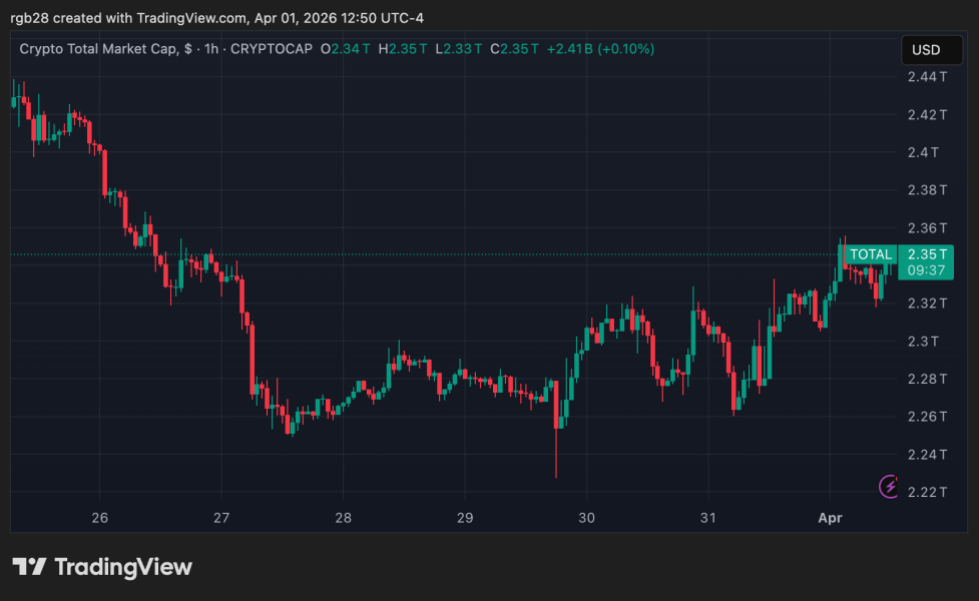
The total crypto market capitalization is at $2.35 trillion in the one-week chart. Source: TOTAL on TradingView


Связанные с этим вопросы

QWhat are the main risks associated with stablecoins that Fed Governor Michael Barr highlighted?

AFed Governor Michael Barr highlighted risks including the need for regulation of reserve assets, the potential for regulatory arbitrage, the scope of permissible activities for stablecoin issuers, appropriate capital and liquidity requirements, anti-money-laundering controls, and consumer protection requirements.

QWhat is the name of the landmark stablecoin legislation discussed in the article?

AThe landmark stablecoin legislation discussed is called the Guiding and Establishing Innovation for US Stablecoins (GENIUS) Act.

QWhy has the final text of the CLARITY Act been delayed according to the article?

AThe final text of the CLARITY Act has been delayed because releasing it ahead of a markup, now expected later in the month, could give opponents an opening to slow the bill's progress.

QWhat specific provision in the CLARITY Act proposal is causing a clash between the crypto and banking industries?

AThe clash is over the potential prohibition of yield and rewards on stablecoin balances, which would restrict platforms from offering anything economically or functionally equivalent to interest.

QWhat event did Fed Governor Michael Barr speak at when he called for stablecoin clarity?

AHe spoke at a Federalist Society event.

Похожее

You Bet on the News, the Pros Read the Rules: The True Cognitive Gap in Losing Money on Polymarket

The article explains that the key to profiting on Polymarket, a prediction market platform, lies not just predicting real-world events correctly, but in meticulously understanding the specific rules that govern how each market will be resolved. It illustrates this with examples, such as a market on Venezuela's 2026 leader, where the official rules defining "officially holds" the office overruled the intuitive answer of who was in practical control. Other examples include debates over the definition of a "token" or what constitutes an "agreement." The core argument is that a "reality vs. rules" gap creates pricing discrepancies that savvy traders ("车头" or "whales") exploit. The platform has a formal dispute resolution process managed by UMA token holders to settle ambiguous outcomes. This process involves proposal submission, a challenge window, a discussion period, and a final vote. However, the article highlights a critical flaw in this system compared to a traditional court: the lack of separation between the arbiters (UMA voters) and the interested parties (traders with financial stakes in the outcome). This conflict of interest undermines the discussion phase, leads to herd mentality, and results in opaque final decisions without explanatory rulings. Consequently, the system lacks a body of precedent, making it difficult for users to learn from past disputes. The ultimate takeaway is that success on Polymarket requires a lawyer-like scrutiny of the rules to identify and capitalize on the cognitive gap between how events appear and how they are contractually defined for settlement.

marsbit1 ч. назад

You Bet on the News, the Pros Read the Rules: The True Cognitive Gap in Losing Money on Polymarket

marsbit1 ч. назад

Торговля

Спот
Фьючерсы
活动图片