Former biotech company ETHZilla (ETHZ) is doubling down on its push into real-world asset markets, taking a 15% stake in digital housing lender Zippy to bring manufactured-home loans onchain. The deal marks the company’s second acquisition in a week.
According to Wednesday’s announcement, ETHZilla will pay $5 million in cash and $16.1 million in stock for a 15% stake in Zippy, a US-based lender founded in 2021 that originates manufactured-home loans through a digital platform.
The companies plan to link Zippy’s loan-origination and AI-powered systems with ETHZilla’s tokenization stack for onchain distribution of manufactured-home chattel loans, including potential forward-flow sales to institutional investors.
As part of the transaction, ETHZilla will gain a board seat at Zippy and secure a 36-month exclusivity period requiring Zippy to conduct all blockchain infrastructure, digital asset issuance and tokenization through ETHZilla’s platforms.
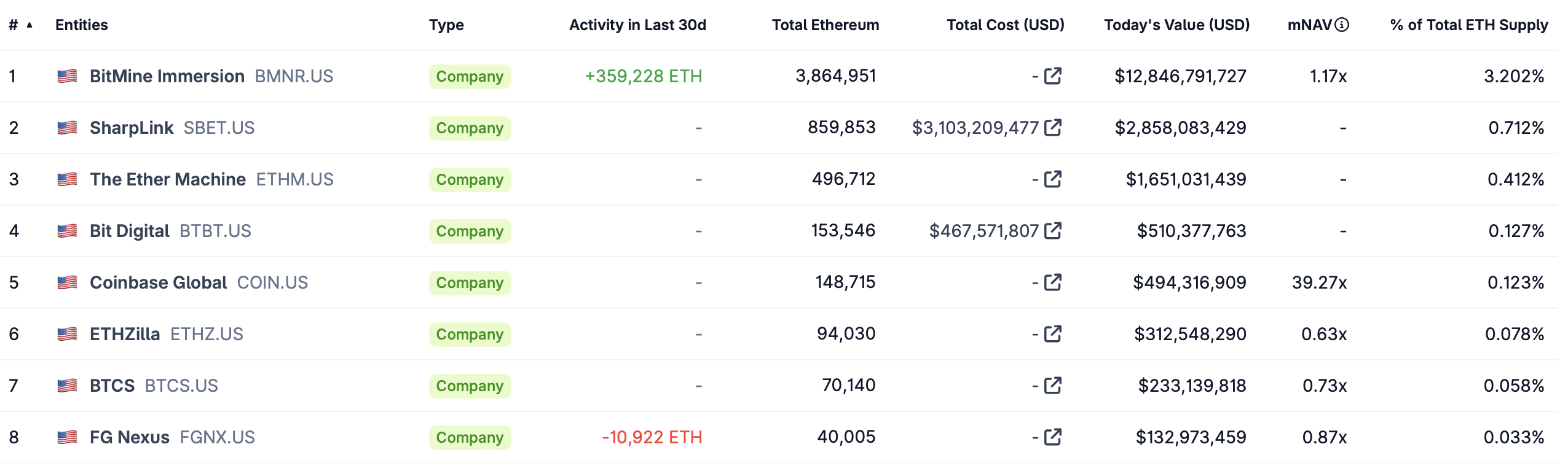
ETHZilla, the sixth-largest Ether (ETH) treasury company according to CoinGecko data, said the investment builds on its broader push into real-world asset (RWA) markets.
The announcement comes one week after ETHZilla acquired a 20% fully diluted stake in auto-finance startup Karus for $10 million in cash and stock.
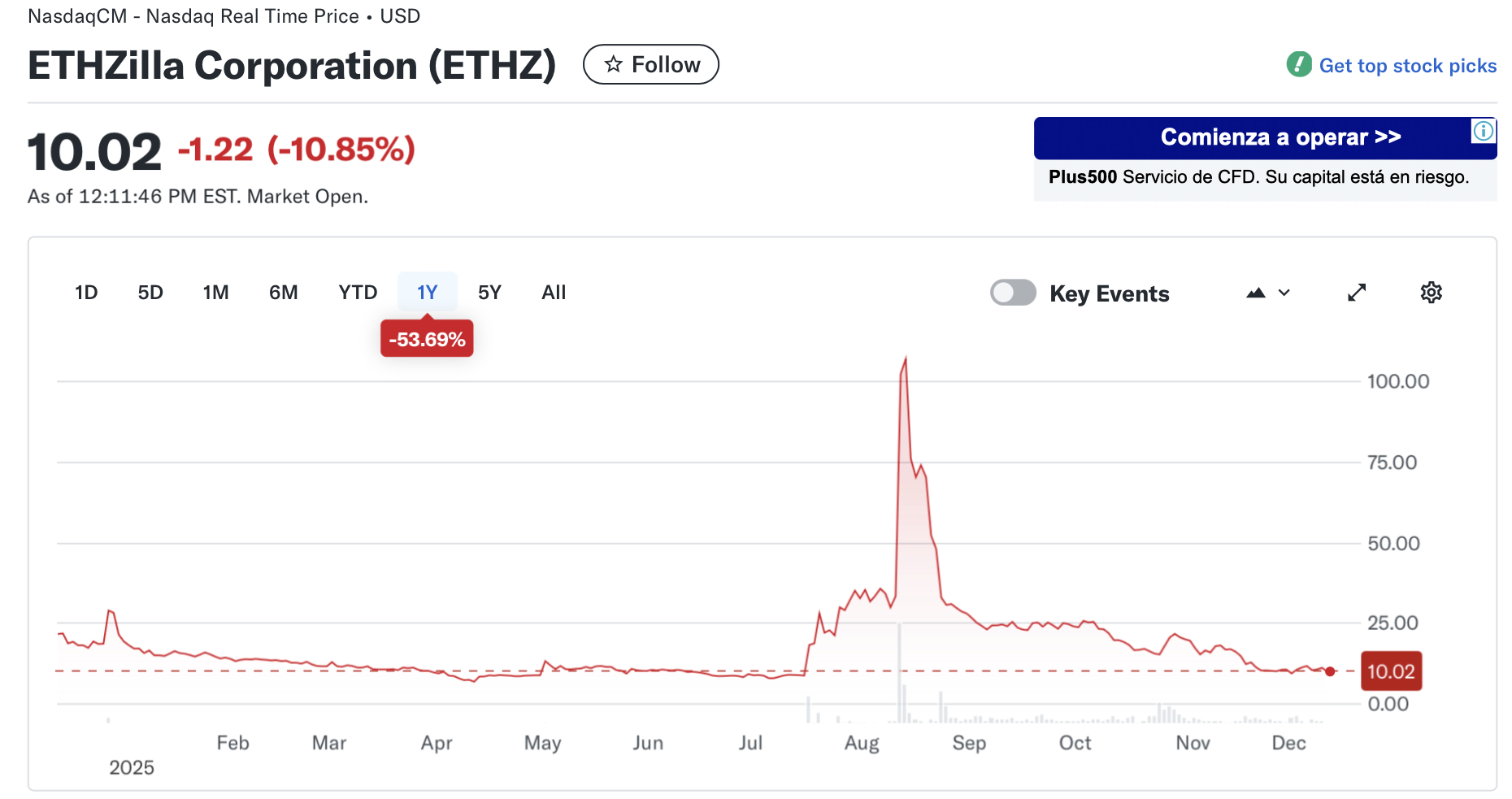
ETHZilla’s stock price was down around 10% at the time of writing, according to Yahoo Finance data.
Related: Ethereum rising to $3.3K proves bottom is in: Is 100% ETH rally next?
Ether treasury stocks face steep declines
Several public companies that adopted Ether as a balance-sheet asset this year have seen sharp share-price reversals as the token price has fallen from its peak, ETHZilla among them.
ETHZilla, formerly 180 Life Sciences Corp, announced its pivot to an Ether treasury company on July 29. Its stock climbed from a $45 open that day to a $107 close by Aug. 13. However, the stock has declined roughly 91% since then, trading around $10 at this writing.
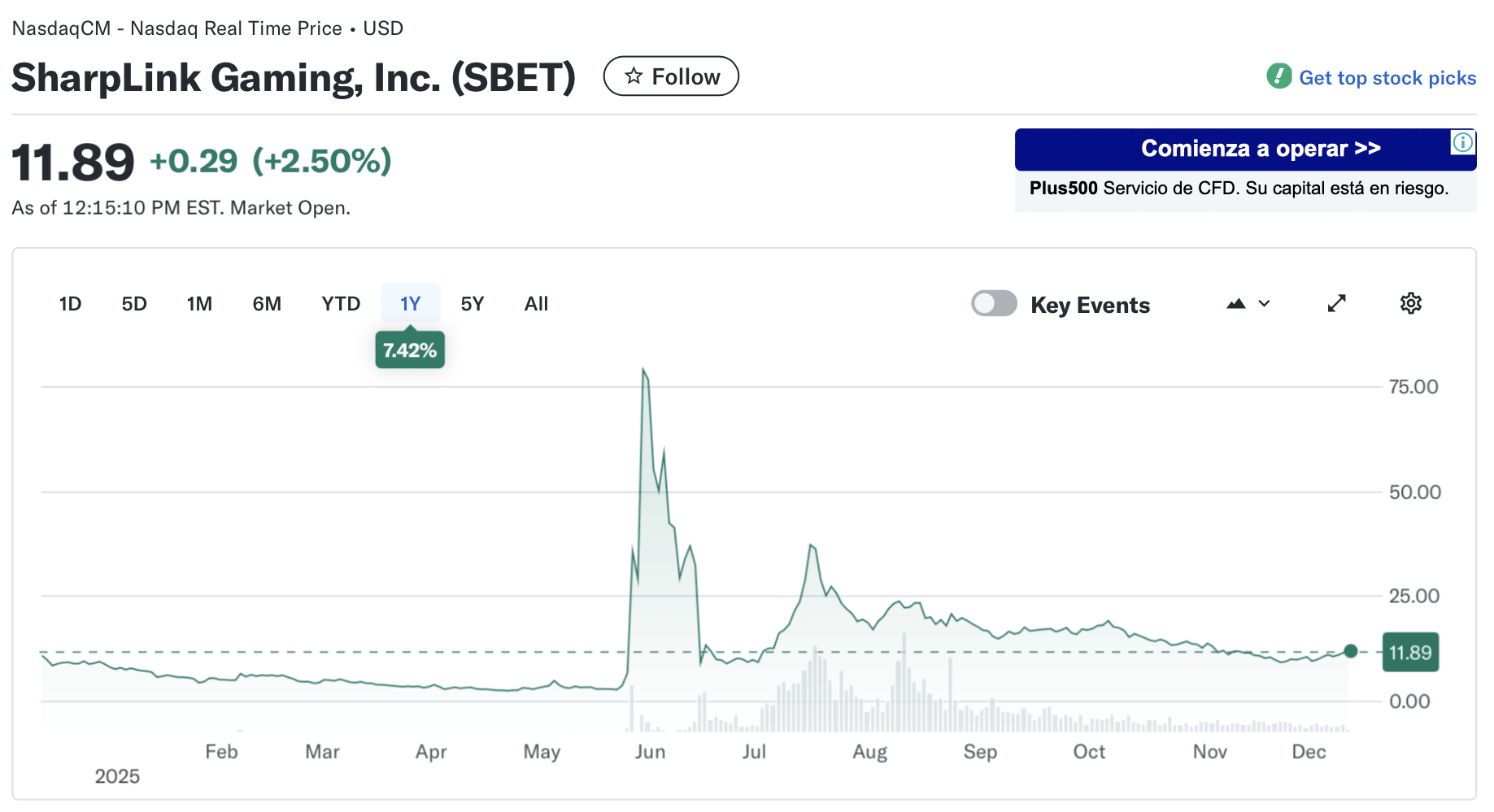
SharpLink Gaming launched an Ethereum treasury strategy in May, alongside a $425 million private placement that included Consensys as an investor and coincided with the nomination of Ethereum co-founder Joseph Lubin as chairman.
The company’s stock climbed more than 130% on the news to $79.21 on May 29, but has since dropped sharply to trade around $11.77 on Wednesday, according to Yahoo Finance data.
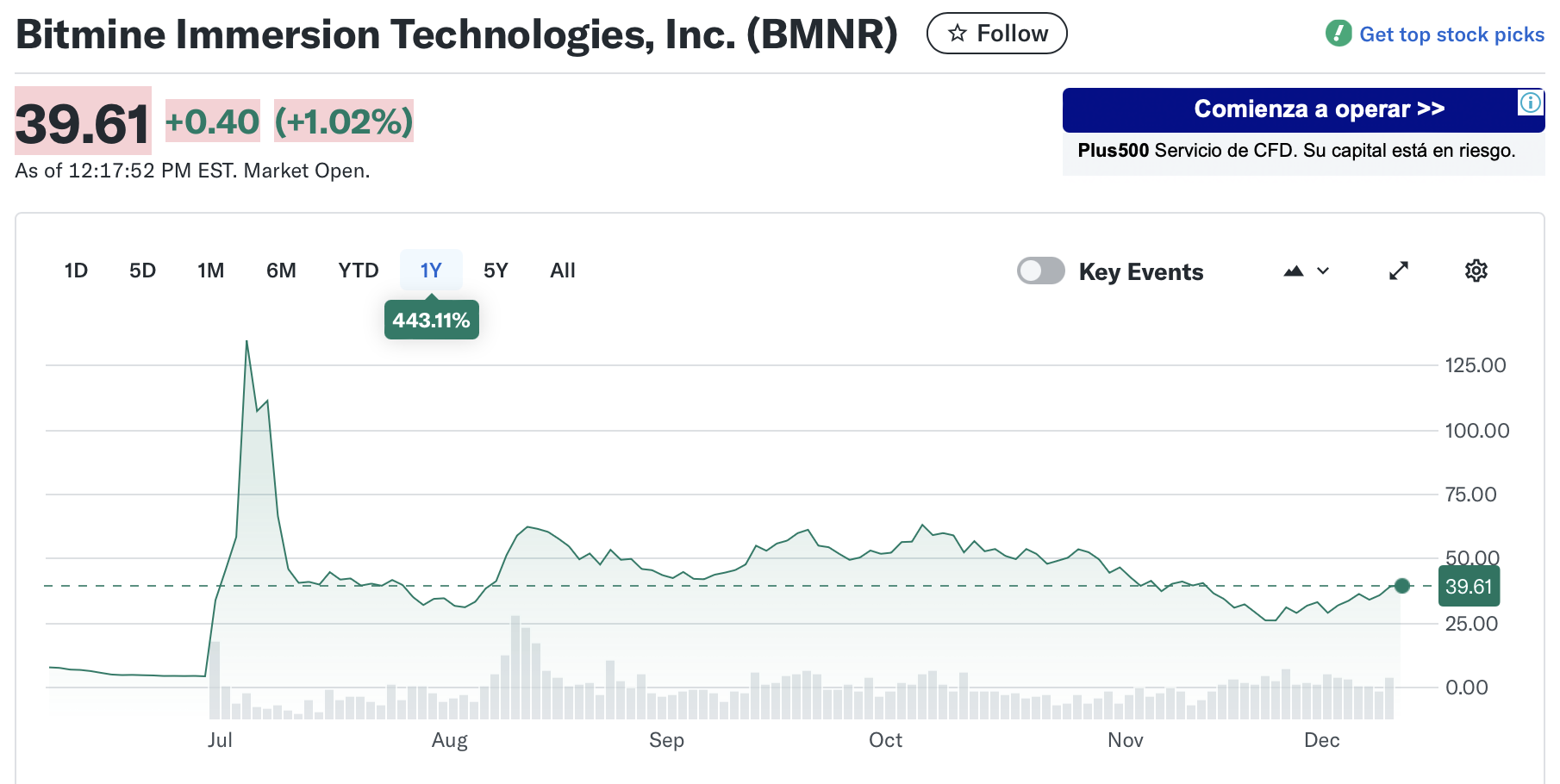
Bitmine Immersion, an Ether treasury company led by Fundstrat’s co-founder Tom Lee, has also struggled in recent months. Its stock hit an all-time high of $135 in July, but has since fallen to around $40 at this writing.
In August, Komodo Platform chief technology officer Kadan Stadelmann told Cointelegraph that companies adopting ETH treasury strategies face structural risks, and warned that a downturn in the market could force liquidations and amplify selling pressure on the token.
Ether has fallen since its all-time high of $4,946.05 on Aug. 24 and now trades at $3,365, according to CoinGecko data.
Magazine: Meet the onchain crypto detectives fighting crime better than the cops