Espresso Co-founder's Decade in Crypto: I Wanted to Disrupt Wall Street's Ills, But Witnessed a Casino-Fication Transformation

深潮Опубликовано 2025-12-08Обновлено 2025-12-08

Введение

Jill Gunter, co-founder of Espresso, reflects on her decade-long journey in crypto, which began with the aim of addressing systemic flaws she witnessed on Wall Street. She identified three core issues: monetary mismanagement (e.g., hyperinflation in Venezuela), financial exclusivity perpetuated by Wall Street’s privileged access to high-risk opportunities, and outdated, opaque financial infrastructure. She saw Bitcoin and blockchain as solutions: a decentralized alternative to state-controlled money, a tool for democratizing finance, and a transparent, efficient system to replace legacy databases. However, the industry evolved unpredictably, cycling through hype cycles, regulatory shifts, and catastrophic failures like FTX. While crypto did democratize speculation—making finance more accessible—it also amplified "casino-like" risk-taking. Despite disillusionment among some pioneers, Gunter argues meaningful progress has been made: Bitcoin offers a censorship-resistant store of value, retail investors gained access to early-stage assets, and traditional finance is adopting blockchain for settlements and payments. The revolution arrived, albeit in a form different from what many envisioned.

Written by: Jill Gunter, Co-founder of Espresso

Compiled by: Luffy, Foresight News

Ten years ago, I embarked on my career in the crypto industry because, in my view, it was the most suitable and fastest-acting tool to address the various problems I witnessed during my brief career on Wall Street.

I found that the current state of the financial system has given rise to three major social ills, and I firmly believed that crypto technology could overcome these challenges.

1) Mismanagement of Currency
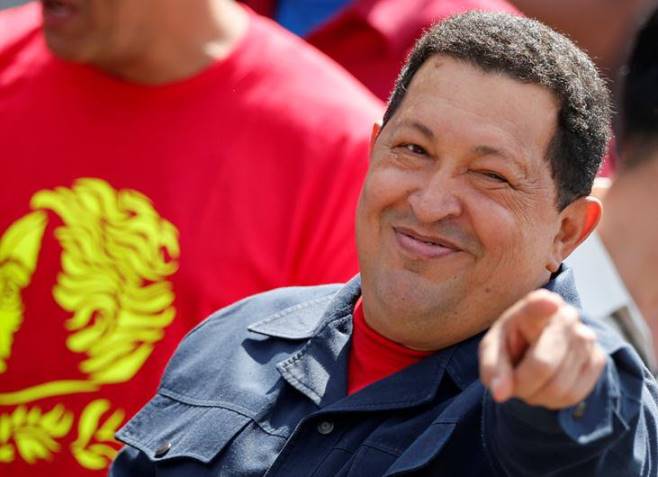
Hugo Chávez single-handedly caused Venezuela's inflation rate to soar to over 20,000%

My career began as a bond trader, handling Latin American sovereign debt, so I personally experienced hyperinflation and capital controls in countries like Venezuela and Argentina. The willful actions of heads of state deprived entire generations of their livelihoods and savings, causing sovereign bond spreads to widen dramatically and shutting the countries out of capital markets. The injustice this situation inflicted on individuals was, and still is, a tragedy.

Of course, Hugo Chávez and Cristina Fernández de Kirchner (former presidents of Venezuela and Argentina, respectively) were not the only "villains" in this tragedy.

2) Wall Street's Financial Barriers
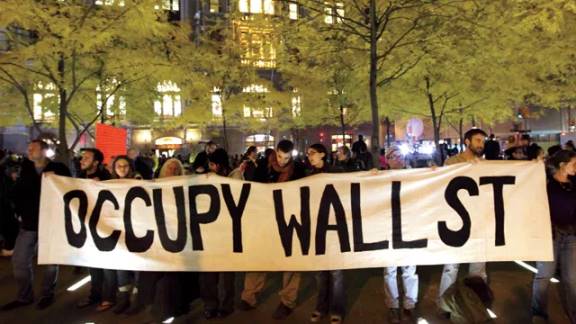
Remember the 2011 Occupy Wall Street protests at Zuccotti Park in Manhattan?

A few years after the 2008 financial crisis, I joined Wall Street. Before starting, I had read Michael Lewis's "Liar's Poker," and I believed the portrayal of the疯狂投机 culture of 80s Wall Street was an outdated stereotype. I also knew that the Dodd-Frank Act had been passed the year before I joined, and this congressional-level cleanup was supposed to彻底肃清 the speculative atmosphere at the trading desks in Lower Manhattan.

From an institutional perspective, rampant risk-taking speculation did indeed subside, and trading departments focused on directional bets were largely eliminated. But if you knew where to look, you'd find that speculation never really disappeared. Many of the leaders left after the 2008 industry purge were young traders who had taken over their superiors' risk positions at the market bottom and then made a fortune thanks to Ben Bernanke's quantitative easing policy. What kind of incentive orientation would this experience埋下 for these new trading "big shots"? Even after witnessing the severity of the crisis, this new generation was still灌输 with the notion that betting big with the company's balance sheet could still make a career.

During my first year on Wall Street, I passed by the "Occupy Wall Street" protesters every day on my way to and from work. The longer I stayed on Wall Street, the more I agreed with this street movement. They wanted to break Wall Street's privileges and end the现状 where it could gamble recklessly while ordinary people were left to foot the bill.

I agreed with the movement, but not its methods. The process of passing through the protesters was actually毫无戏剧性; their actions were not proactive. They held signs claiming to be the "99%," but in my view, they had no clear demands for what they wanted from the "1%."

In my eyes, the answer was obvious: the problem wasn't just that Wall Street was addicted to gambling, but that Wall Street had access to "casinos," investment opportunities, and industry information that ordinary people could never reach; and when Wall Street lost its bets, it was the common people who paid the bill.

This could never be solved by just adding a few more rules for Wall Street. The core was to create a level playing field for ordinary people.

3) Obscure and Outdated Financial Systems
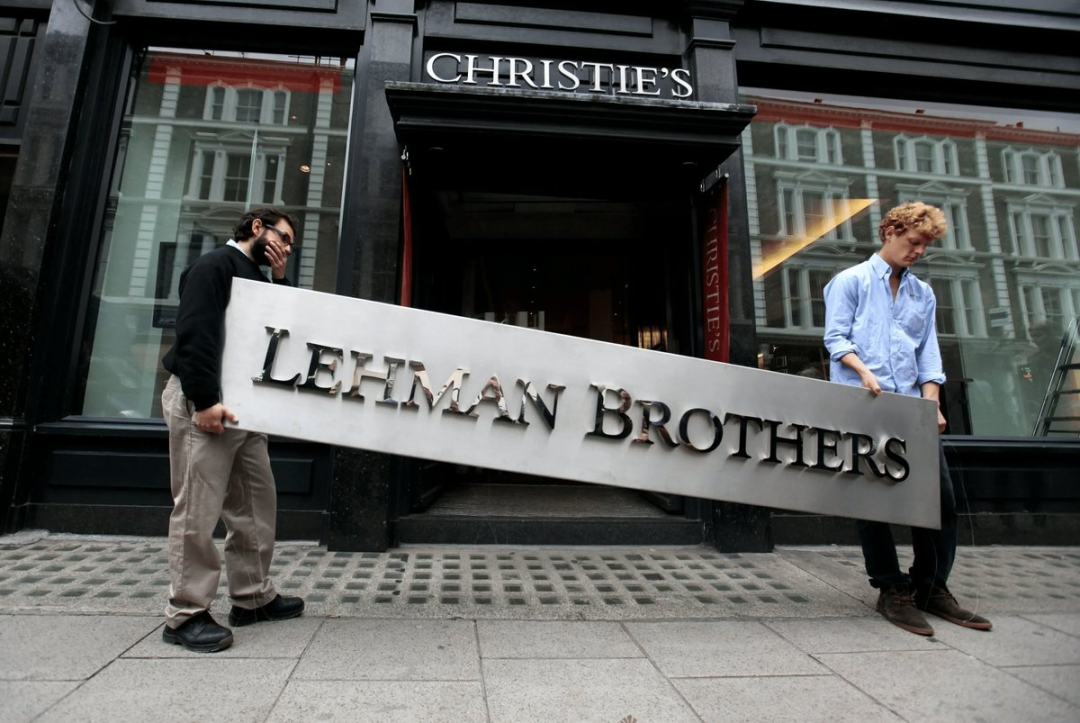
As early as 2012, I realized that to push the financial system towards a more open, fair, transparent, and inclusive direction, its underlying systems needed to be upgraded.

As a junior trader in the trading room, I spent hours on the phone with the back office after the market closed every day, tracking down bonds that should have arrived weeks ago, and confirming that all derivative positions had no "wrong-way risk."

How had these processes not been fully digitized yet!

Of course, on the surface, many steps were already digitized; we used computers and electronic databases. But all these databases required manual intervention to update. Keeping information consistent across parties was a massive, costly, and often opaque task.

I still remember one thing: even four years after Lehman Brothers' bankruptcy, Barclays Bank, which acquired its assets, still couldn't clarify Lehman Brothers' exact assets and liabilities. It sounds outrageous, but it makes sense when you think about those conflicting or incomplete database records.
Bitcoin: A Peer-to-Peer Electronic Cash System

Bitcoin is just so cool.

Like gold, it is an asset不受操控, independent of monetary policy; its issuance and circulation model gave ordinary people around the world a full decade to use it as an investment tool before institutions could介入 on a large scale; it also introduced a new type of database called blockchain, eliminating the need for clearing, settlement, or reconciliation processes, allowing anyone to run and update it directly.

Bitcoin was (and still is) an antidote to my disillusionment with Wall Street. Some use it to avoid inflation and capital controls; it allowed the "99%" to get ahead of Wall Street in investments; its underlying technology has the potential to completely replace the obscure and inefficient systems relied upon by banks, building a new digital, transparent system.

I had to drop everything and devote myself to this cause. But at the time, external skepticism was overwhelming, with the most common argument being "Isn't this just something drug dealers use?" In 2014, besides darknet markets like "Silk Road," Bitcoin had almost no other application scenarios. Refuting this skepticism was not easy; you had to use a lot of "脑补" to see its potential.

During those agonizing years, I once felt this technology might never truly take off... Then suddenly, the whole world started paying attention to it and projecting their own fantasies onto this technology.

The Peak of Fantasy

For years I had hoped people would see the potential of blockchain technology, but in 2017, I suddenly became a skeptic within the industry. It was a complex feeling.

On one hand, it was because I was in the Silicon Valley industry environment; on the other hand, it was the zeitgeist—everyone wanted to do a blockchain project. People pitched me创业点子 like "blockchain + journalism," and there were headlines like "Blockchain Enters the Dental Field." At times like these, I couldn't help but say, "No, that's not how it's used at all!"

However, most of these people weren't trying to run scams; they weren't creating vaporware projects, issuing tokens to rip off retail investors, or launching meme coins. They genuinely believed in the diverse potential of the technology, but this enthusiasm was both misleading and irrational.

2017 to 2018 was the phase where industry fantasy peaked.
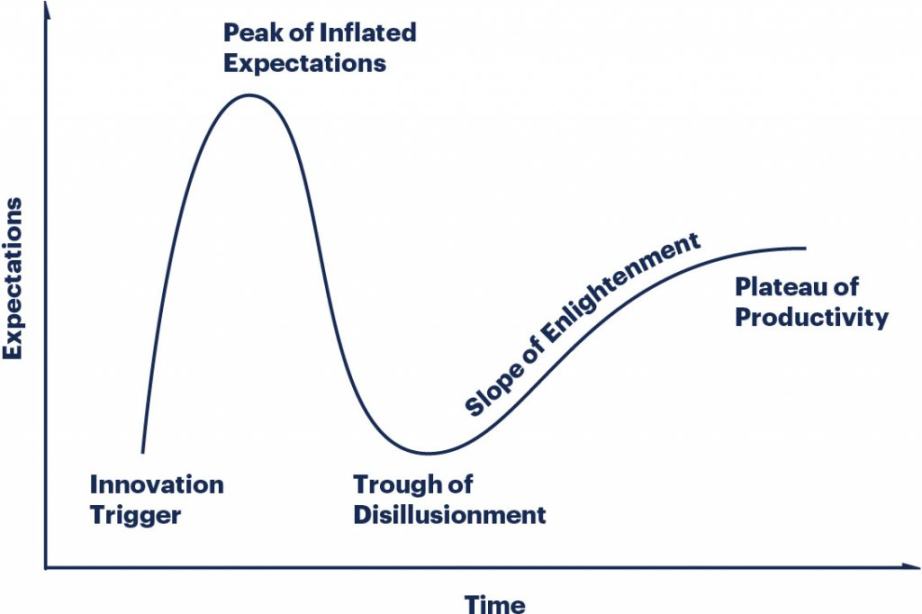
Gartner Hype Cycle

The cryptocurrency and blockchain industry did not follow the path promised by Gartner's classic "hype cycle" chart, climbing the slope of enlightenment. Instead, it oscillated between狂热 and幻灭 every 3 to 4 years.

To understand the reason behind this, one must recognize a fact: although blockchain is a technology, it is deeply tied to the asset class of crypto assets, and these crypto assets have an extremely high beta coefficient and are very risky, making them highly susceptible to macro market fluctuations. The past decade has seen剧烈起伏: during the zero-interest-rate era, risk appetite rose, and crypto assets experienced a boom; when trade wars hit, risk appetite fell, and crypto assets were pronounced "dead."

Making matters worse, the regulatory environment in this emerging field has also been extremely volatile. Coupled with catastrophic events that destroyed huge amounts of capital, like Terra/Luna and FTX, the industry's high volatility is not surprising.

Remember, We All Want to Change the World

Persisting in deep cultivation within the industry (whether building projects, investing, commenting, or other work) is an extremely difficult task in itself.

Everyone knows entrepreneurship is hard, but entrepreneurship in the crypto industry is even harder. Industry sentiment and funding environments are unpredictable, product-market fit is hard to define, legitimate entrepreneurs can be subpoenaed or even jailed, and you have to watch a president issue tokens for a scam, destroying the industry's remaining mainstream credibility... It's insane.

So I completely understand that someone, after深耕 the industry for 8 years, might feel their life has been wasted.
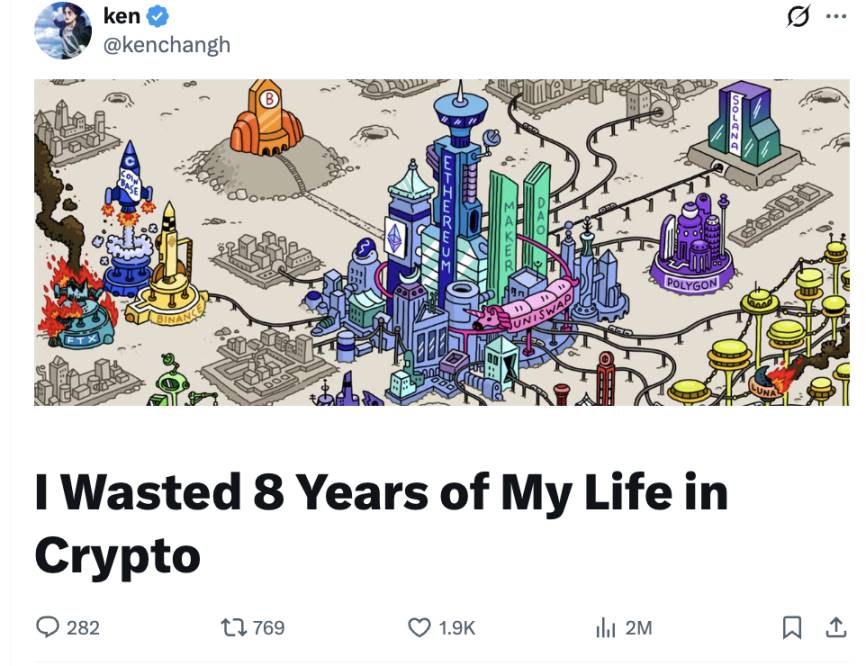
https://x.com/kenchangh/status/1994854381267947640

The author of this tweet坦言 that he thought he was joining a revolution, but in the end found he was just helping to build a giant casino. He expressed remorse for助推了 the "casino-fication" of the economy.

But it's important to know that no counter-traditional movement can be perfect; every revolution has its costs, and any transformation must go through growing pains.

Elizabeth Warren and the "Occupy Wall Street" movement tried to shut down the Wall Street casino, but phenomena like the meme stock frenzy, the crypto altcoin bull market, prediction markets, and decentralized exchanges for perpetual contracts have brought Wall Street's casino to the masses.

Is this a good thing? To be honest, I'm not sure. For most of my time in the crypto industry, I felt we were just rebuilding the consumer protection system from scratch. But many of the so-called consumer protection rules are either outdated or misleading, so I think pushing boundaries again might be a good thing. If my initial goal was to create a level playing field, then it must be said that we have indeed made progress.

This step is necessary to彻底改革 the financial system. If you want to fundamentally change who gets financial returns and how, it will inevitably make the economy more "casino-fied."

Report Card

It's easy to become disillusioned; it's hard to stay optimistic.

But if I review the current state of the industry against my goals when I entered, I'd say overall it's not bad.

Regarding currency mismanagement: We have Bitcoin, and other sufficiently decentralized cryptocurrencies that serve as practical alternatives to fiat, neither subject to seizure nor devaluation; enhanced by privacy coins, assets can even be untraceable. This is tangible progress in human freedom.

Regarding Wall Street's monopoly: Admittedly, the casino has been "democratized"—now it's not just Wall Street that can gamble recklessly on junk assets with high leverage and blow itself up! But seriously, I believe society is progressing towards less over-intervention in how and what risks ordinary people can take. After all, we've always allowed people to buy lottery tickets freely, while shutting them out of some of the best-performing stock investment opportunities of the past decade. The early retail investors in quality assets like Bitcoin and Ethereum have given us a glimpse of what a more balanced world should look like.

As for the problem of obscure and outdated database systems: The financial industry is finally正视更优的技术方案. Robinhood is already using blockchain as the underlying technology for stock trading products in the EU; Stripe is building a new global payment system based on crypto rails; stablecoins have become mainstream products.

If you joined for the revolution, take a closer look: everything you hoped for might already be here, it just doesn't look exactly how you imagined.


Трендовые криптовалюты

Связанные с этим вопросы

QWhat were the three major societal ills in the traditional financial system that the author believed crypto could solve?

AThe three societal ills were: 1) Monetary mismanagement (e.g., hyperinflation and capital controls in countries like Venezuela and Argentina), 2) Wall Street's financial barriers and privilege (where they could gamble with impunity while the public bore the cost), and 3) An opaque and antiquated financial system with inefficient, non-digital settlement processes.

QWhy did the author initially become disillusioned with the crypto space around 2017?

AThe author became a skeptic because the industry reached a 'peak of delusion' where blockchain was being proposed as a solution for everything, including news and dentistry, in a way that was misapplied and irrational, though often well-intentioned and not necessarily fraudulent.

QAccording to the author, what is the relationship between blockchain technology and the crypto asset class that causes such high volatility?

ABlockchain is deeply tied to the crypto asset class, which has an extremely high beta and is highly speculative. This makes it extremely susceptible to macro market swings in risk appetite, fluctuating regulatory environments, and catastrophic events like the collapses of Terra/Luna and FTX.

QHow does the author respond to the criticism that crypto has merely created a 'giant casino' and contributed to the 'gamification of the economy'?

AThe author acknowledges the sentiment but argues that this 'gamification' is a necessary step in fundamentally reforming the financial system. The goal was to create a level playing field and democratize access to financial opportunities, which inherently involves greater risk-taking by the public, moving beyond the old model where only Wall Street could gamble.

QWhat progress does the author cite as evidence that the original goals of the crypto revolution are being met?

AThe author points to: 1) Bitcoin and other decentralized cryptocurrencies as real alternatives to state-controlled fiat, 2) The democratization of financial access, allowing the public early access to assets like Bitcoin and Ethereum, and 3) The financial industry finally adopting better tech, with examples like Robinhood using blockchain for stock trading in the EU, Stripe building new payment systems on crypto rails, and the mainstream adoption of stablecoins.

Похожее

База утверждает, что «акции с обеспечением 1:1 гораздо лучше масштабируются», на фоне соперничества с Robinhood

Создатель Base Джесси Поллак признал преимущество Robinhood Chain в выпуске токенизированных акций в среде EVM, но выразил уверенность, что подход Base окажется более эффективным. Поллак заявил, что Base вскоре запустит токенизированные акции с обеспечением 1:1 при поддержке Coinbase, в отличие от производных продуктов Robinhood, что, по его мнению, обеспечит лучшее масштабирование, доверие и признание институциональными инвесторами. Несмотря на то, что Robinhood Chain, как новый Ethereum Layer 2, всего за три недели достиг сравнимых с Base показателей по количеству активных пользователей (около 1 млн в неделю) и даже обогнал по объему торгов на DEX и выручке, Поллак преуменьшает эту угрозу. Аналитики отмечают, что Robinhood, как брокер с 27 млн фондируемых счетов, имеет уникальное преимущество для распространения ончейн-решений. Таким образом, на рынке токенизированных активов формируется соперничество между моделью с полным обеспечением (Base) и моделью, основанной на деривативах и мощной дистрибуции (Robinhood Chain).

ambcrypto11 мин. назад

База утверждает, что «акции с обеспечением 1:1 гораздо лучше масштабируются», на фоне соперничества с Robinhood

ambcrypto11 мин. назад

Прогноз цены TON/GRAM – запуск кошелька Gram в Telegram поднял токен: Продолжится ли ралли?

Соучредитель Telegram Павел Дуров объявил о скором внедрении собственного некастодиального кошелька Gram во все приложения мессенджера. Это решение, которое Дуров назвал крупнейшим в истории развертыванием некастодиального криптокошелька, позволит более чем миллиарду пользователей Telegram проводить мгновенные криптовалютные транзакции без комиссий. Анонс сопровождается переименованием нативного токена TON в Gram, чтобы четче разделить блокчейн The Open Network и потребительскую цифровую валюту внутри экосистемы Telegram. Внедрение кошелька может значительно упростить использование криптовалют для широкой аудитории. На фоне этой новости цена TON/GRAM выросла более чем на 7%, достигнув примерно $1,53. Несмотря на восстановление от уровня поддержки $1,40, токен по-прежнему торгуется значительно ниже своего пика в $2,80, достигнутого в мае. Ближайшее сопротивление находится около $1,60. Успешный прорыв выше этого уровня может открыть путь к $1,80, в то время как потеря текущих позиций может привести к повторному тестированию поддержки $1,40.

ambcrypto37 мин. назад

Прогноз цены TON/GRAM – запуск кошелька Gram в Telegram поднял токен: Продолжится ли ралли?

ambcrypto37 мин. назад

Как 40,8 млн ETH, размещенных в стейкинге, могут усилить преимущество Ethereum над Bitcoin

Два ключевых фактора указывают на то, что превосходство Ethereum (ETH) над Bitcoin (BTC), вероятно, только начинается. Во-первых, крупные инвесторы (киты) активно накапливают ETH и немедленно блокируют 100% купленных средств через стейкинг, демонстрируя долгосрочную уверенность и сокращая ликвидное предложение. Общий объем ETH в стейкинге достиг рекордных 40,8 млн (33,5% от общего предложения), при этом очередь на вход валидаторов выросла, а на выход — нулевая. Во-вторых, активность в децентрализованных финансах (DeFi) Ethereum также растет: количество крупных транзакций WETH достигло максимума с мая 2021 года, а общая заблокированная стоимость (TVL) увеличилась на более чем $5 млрд менее чем за десять дней. Эти факторы — сжатие предложения из-за стейкинга и рост ликвидности в DeFi — начинают отражаться на динамике курса. ETH/BTC пробил уровень сопротивления 0.025 и приближается к ключевой зоне 0.03, показывая самый сильный недельный закрытие за одиннадцать недель, что создает предпосылки для дальнейшего роста ETH относительно BTC.

ambcrypto1 ч. назад

Как 40,8 млн ETH, размещенных в стейкинге, могут усилить преимущество Ethereum над Bitcoin

ambcrypto1 ч. назад

Точка бури на мировых фондовых рынках: делеверидж на южнокорейском рынке в основном завершен

Недавняя резкая волатильность на южнокорейском рынке, с пика 9385.6 пунктов индекса KOSPI 19 июня, привела к коррекции до 32%. Будучи центром глобального тренда ИИ, эта коррекция стала ключевым триггером для глобальных технологических акций. Основной причиной стало влияние высококонцентрированной структуры маржинального финансирования, а не фундаментальные изменения. Сейчас процесс вынужденного сокращения левериджа подходит к концу. Сокращение левериджных ETF достигло примерно 75%, их объем упал с пика около $500 млрд до $260 млрд. Регулятор ввел строгие меры с августа, чтобы ограничить приток новых средств. Хедж-фонды сократили леверидж более чем на 50%, снизив соотношение чистых длинных позиций с пиковых уровней. В то же время, финансирование розничных инвесторов (около $21 млрд, или 0.5% от капитализации рынка) не является основным системным риском. Таким образом, наиболее интенсивная фаза «цепной реакции продаж», вызванная высокой долей заемных средств, в основном завершена. Рынок переходит от падения, движимого ликвидностью, к ценообразованию, основанному на фундаментальных показателях. Пока фундаментальные показатели ИИ (спрос на вычислительные мощности, развитие моделей) не претерпели изменений, текущая коррекция больше похожа на очистку перегретых позиций, а не на конец тренда ИИ. Ключевой вопрос — оставаться в правильном направлении технологической революции, где волатильность является скорее издержкой, чем риском.

链捕手1 ч. назад

Точка бури на мировых фондовых рынках: делеверидж на южнокорейском рынке в основном завершен

链捕手1 ч. назад

92,9% криптовалютных токенов, запущенных с 2024 года, торгуются ниже цены генерации токена: CryptoRank

Согласно данным аналитической платформы CryptoRank, подавляющее большинство криптопроектов, запущенных с 2024 года, не смогли удержаться на уровне первоначальной цены. Исследование, охватившее 113 токенов с рыночной капитализацией свыше 100 миллионов долларов, показало, что лишь 8 из них (около 7,1%) торгуются выше цены, установленной на момент генерации токена (TGE). Остальные 105 проектов, или 92,9%, упали в цене, а медианная доходность по всей выборке составила -95,7%. Среди немногих успешных исключений лидирует Hyperliquid (HYPE) с ростом в 1519% от цены TGE, за ним следуют Ondo Finance (ONDO), EverValue Coin (EVA) и Midnight Network (NIGHT). Эти результаты указывают на то, что инвесторы стали гораздо более избирательными. Капитал концентрируется вокруг проектов, демонстрирующих реальное внедрение продукта и рост экосистемы, в то время как многие новые токены сталкиваются с проблемами из-за высоких оценок, малого первоначального объёма предложения и предстоящих крупных разблокировок токенов. В будущем это может заставить проекты уделять больше внимания устойчивым моделям распределения токенов и долгосрочному развитию, а не агрессивным начальным оценкам.

ambcrypto1 ч. назад

92,9% криптовалютных токенов, запущенных с 2024 года, торгуются ниже цены генерации токена: CryptoRank

ambcrypto1 ч. назад

Торговля

Спот

Популярные статьи

Как купить S

Добро пожаловать на HTX.com! Мы сделали приобретение Sonic (S) простым и удобным. Следуйте нашему пошаговому руководству и отправляйтесь в свое крипто-путешествие.Шаг 1: Создайте аккаунт на HTXИспользуйте свой адрес электронной почты или номер телефона, чтобы зарегистрироваться и бесплатно создать аккаунт на HTX. Пройдите удобную регистрацию и откройте для себя весь функционал.Создать аккаунтШаг 2: Перейдите в Купить криптовалюту и выберите свой способ оплатыКредитная/Дебетовая Карта: Используйте свою карту Visa или Mastercard для мгновенной покупки Sonic (S).Баланс: Используйте средства с баланса вашего аккаунта HTX для простой торговли.Третьи Лица: Мы добавили популярные способы оплаты, такие как Google Pay и Apple Pay, для повышения удобства.P2P: Торгуйте напрямую с другими пользователями на HTX.Внебиржевая Торговля (OTC): Мы предлагаем индивидуальные услуги и конкурентоспособные обменные курсы для трейдеров.Шаг 3: Хранение Sonic (S)После приобретения вами Sonic (S) храните их в своем аккаунте на HTX. В качестве альтернативы вы можете отправить их куда-либо с помощью перевода в блокчейне или использовать для торговли с другими криптовалютами.Шаг 4: Торговля Sonic (S)С легкостью торгуйте Sonic (S) на спотовом рынке HTX. Просто зайдите в свой аккаунт, выберите торговую пару, совершайте сделки и следите за ними в режиме реального времени. Мы предлагаем удобный интерфейс как для начинающих, так и для опытных трейдеров.

1.7k просмотров всегоОпубликовано 2025.01.15Обновлено 2026.06.02

Как купить S

Sonic: Обновления под руководством Андре Кронье – новая звезда Layer-1 на фоне спада рынка

Он решает проблемы масштабируемости, совместимости между блокчейнами и стимулов для разработчиков с помощью технологических инноваций.

2.4k просмотров всегоОпубликовано 2025.04.09Обновлено 2025.04.09

Sonic: Обновления под руководством Андре Кронье – новая звезда Layer-1 на фоне спада рынка

HTX Learn: Пройдите обучение по "Sonic" и разделите 1000 USDT

HTX Learn — ваш проводник в мир перспективных проектов, и мы запускаем специальное мероприятие "Учитесь и Зарабатывайте", посвящённое этим проектам. Наше новое направление .

1.9k просмотров всегоОпубликовано 2025.04.10Обновлено 2025.04.10

HTX Learn: Пройдите обучение по "Sonic" и разделите 1000 USDT

Обсуждения

Добро пожаловать в Сообщество HTX. Здесь вы сможете быть в курсе последних новостей о развитии платформы и получить доступ к профессиональной аналитической информации о рынке. Мнения пользователей о цене на S (S) представлены ниже.

活动图片