Elon Musk's 'Granny Drain'

marsbitОпубликовано 2026-05-28Обновлено 2026-05-28

Введение

Title: Musk "Milking the Old Folks" Author: Nancy, PANews As the memory sector surges with Micron and SK Hynix each surpassing a trillion-dollar market cap, Elon Musk is accelerating his own myth of becoming the world's first trillionaire. SpaceX, with its astronomical valuation, is speeding toward the capital markets. This potentially wealth-history-rewriting super IPO is pushing Musk toward that unprecedented personal fortune and delivering hundredfold or even thousandfold returns to early backers like Google, Valor Equity Partners, Founders Fund, and others. However, to sustain this most expensive space narrative in human history, new buyers are ultimately needed. As massive pension funds are set to be "forced to buy," the retirement savings of Americans are becoming the fuel for Musk's space dreams. Wall Street has begun paving a fast track for such super IPOs. Major indices like Nasdaq and S&P have recently eased rules, allowing mega-companies like SpaceX to be incorporated into key benchmarks like the Nasdaq 100 much faster post-listing. This matters because a vast portion of the U.S. retirement system—trillions in 401(k)s and pension funds—relies on passive index investing. Once a company enters a major index, all funds tracking it are compelled to buy its shares automatically, regardless of valuation, profitability, or risk. This has sparked significant backlash. Teacher unions and major public pension funds (collectively managing trillions) have warned the SEC ...

Author: Nancy, PANews

While the storage sector is going crazy, with Micron and SK Hynix both surpassing the trillion-dollar market capitalization mark, Elon Musk is personally accelerating the myth of creating a trillion-dollar fortune.

SpaceX, with its sky-high valuation, is accelerating towards the capital market. This super IPO, which may rewrite wealth history, is pushing Musk towards becoming the world's first trillionaire, while also delivering astounding returns of hundreds or even thousands of times to early allies.

However, for humanity's most expensive space narrative to continue, new buyers are ultimately needed. As massive pension funds will be 'forced to buy in,' Americans' retirement savings become the fuel for Musk's space dream.
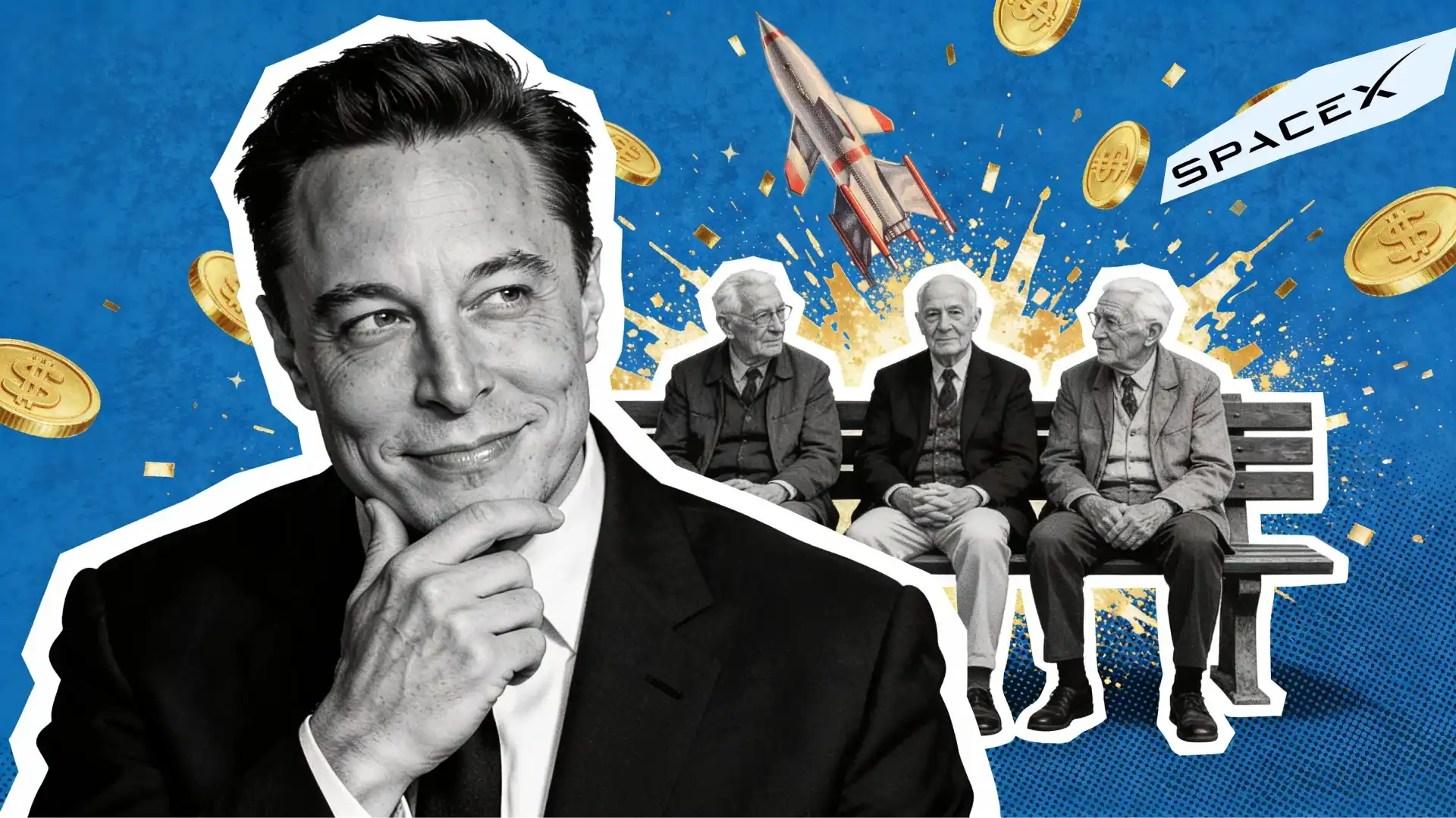
Elon Musk is making American retirees 'pay up.'

Countdown to History's Largest IPO, Early Allies Reap Huge Profits

Wall Street has been waiting for SpaceX's IPO for many years.

Over the past decade, the company has grown from a startup valued at just $27 million into today's super unicorn valued at nearly $1.75 to $2 trillion, becoming one of the world's highest-valued private companies.

Now, this super IPO is finally set to list as early as June 12. This is not only the largest IPO event in human history but also means the wealth feast is entering its cash-out moment. Musk's long-term followers have finally waited for substantial returns.

For example, Google, through early investment, may become the biggest external winner. As of the end of 2025, it holds about 6.11% of SpaceX shares. An investment of just $900 million back then is now worth close to $120 billion; Valor Equity Partners, as a major shareholder second only to Musk, holds over 500 million SpaceX Class A shares, with equity value ranging roughly between $90 billion and $140 billion; Peter Thiel's Founders Fund, through multiple rounds of follow-on investments, holds about 3.5% of the shares, with paper gains exceeding $60 billion; Fidelity, as a major institutional investor in a 2015 co-investment round, holds shares worth about $35 billion; even Sequoia Capital, which entered relatively late, sees considerable returns, expected to be over $20 billion.

As for Musk himself, he is also poised to become the world's first trillion-dollar billionaire.

Bank of America strategist Michael Hartnett warns in a recent report that once super IPOs like SpaceX and OpenAI materialize, the weight of tech stocks in equity benchmark indices could easily surpass about 48%, exceeding the market concentration levels of all major bubble periods in history such as the 'Roaring Twenties' of the 1920s, the 'Nifty Fifty' of the 1970s, the Japanese bubble of the 1980s, and the dot-com bubble of the 1990s.

However, who will ultimately take on such a massive valuation?

To reduce selling pressure after listing and maintain stock price stability, SpaceX has made some adjustments. For instance, insider shares will use a phased unlocking mechanism instead of the traditional unified 6-month lock-up period common in IPOs. Additionally, the company approved a 5-for-1 stock split for common shares to lower the psychological barrier for retail investors and enhance liquidity. Musk has also publicly stated that he will not sell any SpaceX shares.

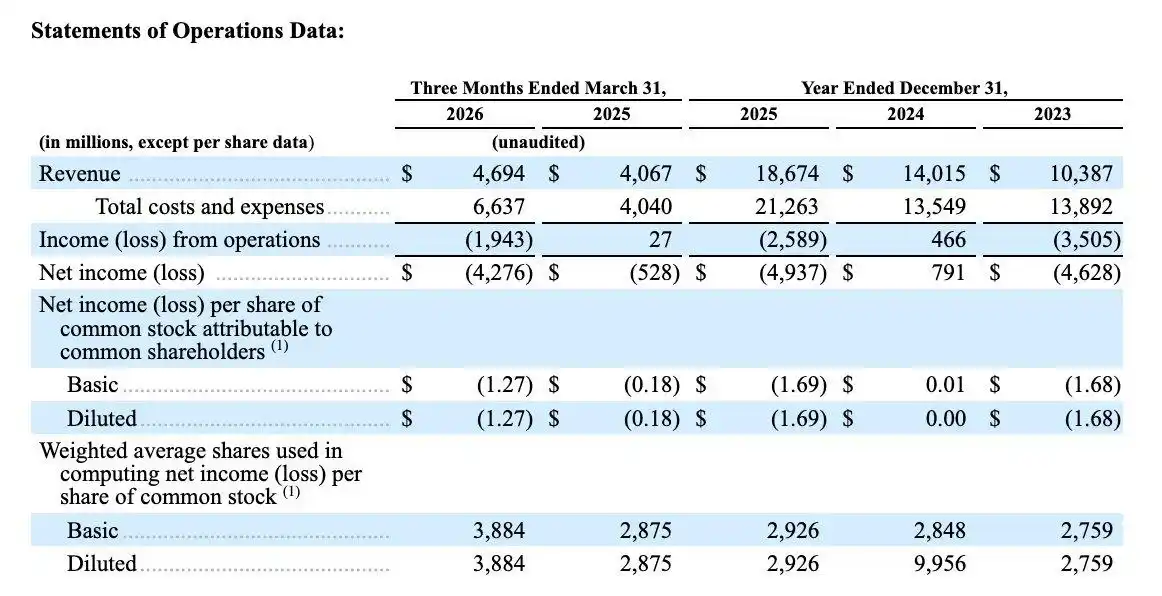
But market concerns haven't disappeared. Putting aside the uncertainty of the grand Mars narrative and looking just at financial data, SpaceX remains a fast-burning company. The prospectus shows that in the first quarter of 2026 alone, SpaceX's net loss was nearly $4.3 billion, almost equivalent to the full-year loss of the previous year. Meanwhile, Musk controls an absolute 85% of the voting rights, meaning the board can hardly fire him, and external shareholders can almost never push through any major business decisions.
To some extent, SpaceX is a highly Musk-ified company. Its valuation, governance, and future expectations are deeply tied to Musk personally.

After all early investors have made a fortune, who is still willing to buy this already outrageously expensive space ticket at a high price?

Wall Street Paves an Index Fast Lane, U.S. Pensions Become the 'Bag Holders'

Americans' retirement savings may become the potential fuel for Musk's space dream.

Wall Street has already started opening express lanes for super IPOs. On May 1 this year, new Nasdaq rules officially took effect. Newly listed companies ranking in the top 40 of the Nasdaq-100 index by market cap can be included in the index after just 15 trading days, compared to the usual wait of about three months previously.

S&P also launched a consultation in May, proposing to shorten the minimum listing time required for inclusion from 12 months to 6 months and considering exempting extremely large companies from profitability requirements. FTSE Russell similarly relaxed restrictions, allowing large IPOs to be assessed for inclusion in the Russell U.S. Equity Indexes (including Russell 1000, Top 200, etc.) as early as the 5th trading day after listing, without waiting for quarterly reviews.

Major U.S. indices quietly relaxing rules is undoubtedly paving a dedicated runway for SpaceX.

According to Business Insider disclosures, after SpaceX goes public, it may quickly enter mainstream indices and ETFs. The speed of passive fund allocation could far exceed that of previous large IPOs. For example, the CRSP indices tracked by Vanguard's VTI and Growth ETF VUG could include SpaceX as early as 5 trading days post-listing; the Nasdaq-100 index tracked by QQQ could include SpaceX after 15 trading days; and the S&P 500 index tracked by SPY might include SpaceX in 2027 after rule changes, among others.

Within the U.S. retirement system, a vast number of 401(k) plans, pension funds, and long-term savings accounts employ passive index investment strategies. Funds typically automatically allocate assets according to index constituents and their market cap weightings.

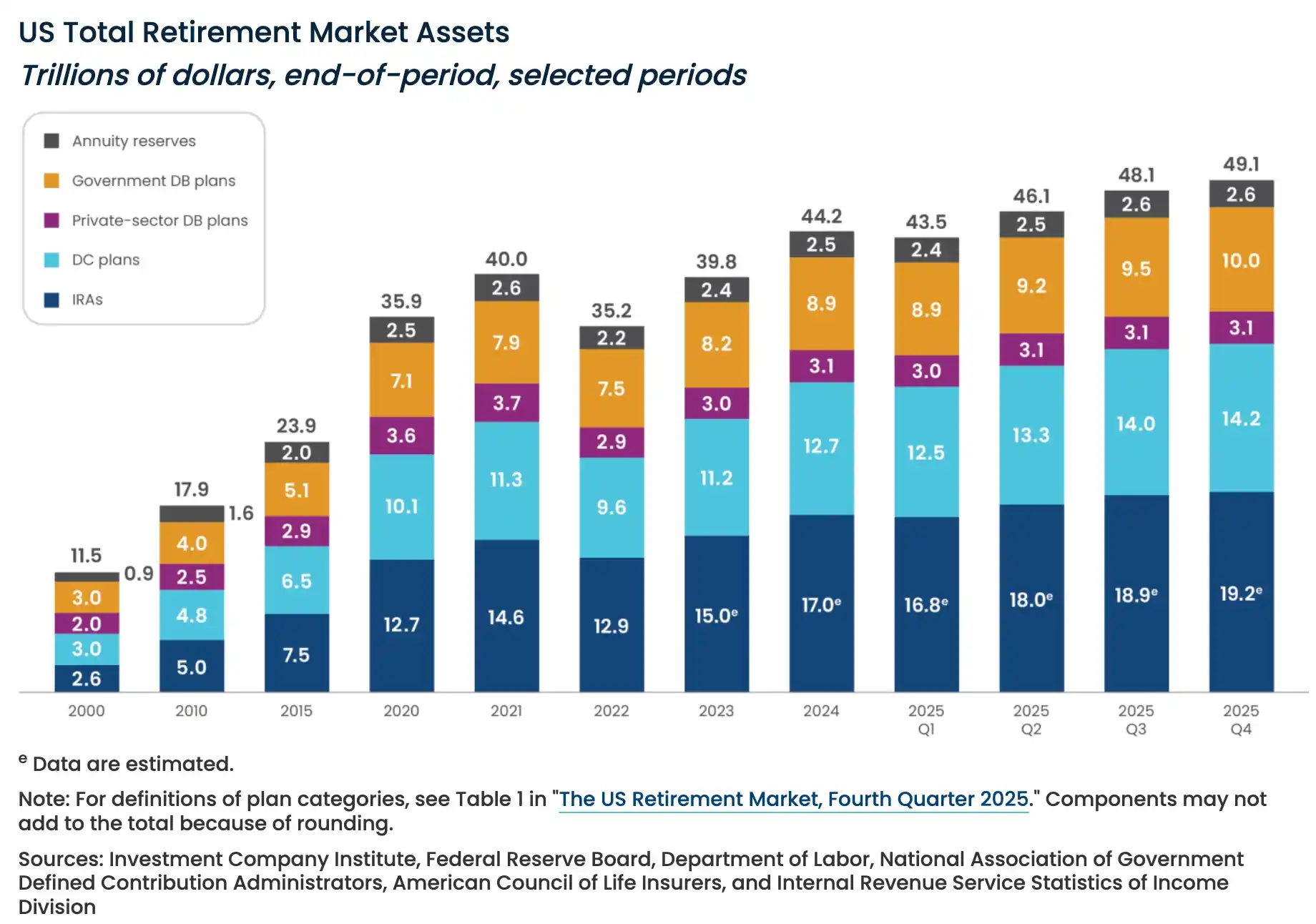
This strategy originated from the first index fund for ordinary investors launched in 1976 by index fund pioneer John Bogle. The core philosophy is to 'replicate the market, not beat it.' With extremely low management fees and high diversification, it became the preferred allocation method for pensions and 401(k) accounts. To date, total U.S. retirement assets exceed $49 trillion.
This means that once SpaceX is included in an index, all funds tracking that benchmark, without analyzing valuation, judging bubbles, or even caring if the company is profitable, are forced to buy according to the weight.

However, this game has sparked strong dissatisfaction within the pension system.

Recently, the American Federation of Teachers sent a letter to the SEC urging strengthened scrutiny of SpaceX's listing, warning that workers' lifetime savings could be controlled by a company that resembles a Musk family business more than a transparent public company.

Simultaneously, three major U.S. public pension funds managing over $1 trillion in assets (CalPERS, New York State, and New York City pension systems) also co-signed a letter to Musk, strongly opposing SpaceX's extreme governance structure. This includes super-voting rights, veto power over his own removal as CEO, and immunity from lawsuits.

They pointed out that Musk simultaneously leads SpaceX, Tesla, xAI, Neuralink, and other companies, posing significant risks due to divided attention. The letter demanded that SpaceX transition to a one-share-one-vote structure within seven years, establish a board with a majority of external shareholders, separate the CEO and Chairman roles, and remove Musk's self-veto rights.

This rule change, tailored by Wall Street for super IPOs, ultimately tightly binds the retirement savings of tens of millions of Americans to Musk's grand space dream. After early investors enjoy hundred-fold returns, the remaining 'bag-holding' cost is shifted onto passive investors incapable of making a choice.

The largest 'Granny Drain' game in history, under the guise of indexing, is officially beginning.

Связанные с этим вопросы

QWhat is the main argument of the article regarding the upcoming SpaceX IPO and its potential impact on certain investors?

AThe article argues that the massive upcoming SpaceX IPO, facilitated by Wall Street rule changes allowing rapid inclusion in major indices, will force passive investment funds (like ETFs and index funds) to automatically buy SpaceX stock. As these funds manage trillions in American retirement savings (e.g., 401(k)s and pensions), ordinary retirees' savings become the primary source of capital to 'fuel' Musk's space ambitions, effectively making them the 'bag holders' after early investors cash out their enormous gains.

QHow does SpaceX's proposed corporate governance structure pose a risk according to the article and certain institutional investors?

AThe article highlights that SpaceX's governance gives Elon Musk 85% of voting control, making the board unable to fire him and external shareholders powerless over major decisions. Major U.S. public pension funds (like CalPERS) have protested this structure, citing risks from Musk's divided attention across multiple companies and the lack of standard shareholder protections. They demand a shift to one-share-one-vote, an independent board majority, and the separation of CEO and chairman roles.

QWhat concerns are raised about SpaceX's financial performance as it prepares for its IPO?

AThe article points out that despite its high valuation, SpaceX is a company burning cash at a significant rate. Its IPO prospectus reportedly shows a net loss of nearly $4.3 billion in just the first quarter of 2026, approaching its total loss for the previous full year. This raises questions about the sustainability of its valuation and who will buy the stock at such a high price after early investors sell.

QWhat specific rule changes by major index providers are mentioned as paving a 'fast track' for SpaceX's inclusion post-IPO?

AThe article details several rule changes: Nasdaq reduced the waiting period for new listings to join the Nasdaq-100 index to just 15 trading days if ranked in the top 40 by market cap. S&P is considering shortening its listing requirement from 12 to 6 months and waiving profitability rules for mega-companies. FTSE Russell now allows large IPOs to be evaluated for inclusion in its U.S. indexes as early as the 5th trading day.

QWho are some of the early investors in SpaceX mentioned in the article, and what are their potential returns?

AThe article lists several early SpaceX investors and their potential gains: Google's initial $900 million investment could be worth about $120 billion; Valor Equity Partners' stake is valued between $90-$140 billion; Peter Thiel's Founders Fund could see over $60 billion; Fidelity's stake is around $35 billion; and Sequoia Capital could gain over $20 billion. These figures illustrate the immense returns for early backers compared to the perceived risk for later passive investors.

Похожее

From 'Old Guys' to 'New Favorites': How AI Is Revaluing Old Infrastructure from Dell to Nokia?

From "Vintage Tech" to "New AI Darlings": How AI Revalues Old Infrastructure One year ago, tech giants like Dell, Nokia, Cisco, and Western Data were seen as slow-growth, low-valuation stories, far from the AI spotlight dominated by players like Nvidia. Now, these legacy tech stocks are gaining market attention, sparking debate on whether this is genuine industry revaluation or a temporary narrative. As AI moves from model parameters to real-world data centers, the market is recognizing companies with proven delivery and infrastructure capabilities. This shift marks a change in the AI investment thesis: from pure model and GPU focus to the complex systems engineering required for deployment. Companies like Dell, HPE, and Corning are being revalued not for being "sexy" AI innovators, but for their decades of accumulated expertise in supply chains, enterprise delivery, and infrastructure—assets that have become critical in the AI buildout phase. The revaluation is unfolding across three key infrastructure lines: 1. **Servers & System Integration:** Dell and HPE are emerging as crucial system integrators or "general contractors" for AI data centers, translating GPU orders into complete, deployable server racks integrated with power, cooling, and networking. 2. **Networking & Connectivity:** AI's scale demands robust high-speed connections. Corning (fiber optics), Nokia (AI-RAN, 6G), and Cisco (data center switches) are gaining importance for enabling efficient data transfer within and between AI clusters. 3. **Storage:** Beyond high-speed memory (HBM/DRAM), the AI data explosion is driving demand for high-capacity hard drives (HDDs) from companies like Western Digital and Seagate to handle training data, logs, and cold storage cost-effectively. For this revaluation to be substantive and not just a narrative, three criteria are key: 1) Concrete AI-related order and revenue growth (e.g., Dell's AI server sales), 2) Upward revisions to company financial guidance, and 3) Sustainable improvements in profit quality, not just top-line revenue spikes. In essence, AI's transition to a real construction phase is re-pricing "old assets" against "new demand." The opportunity, however, is selective. Only those legacy firms that are demonstrably integrated into the capital expenditure chains of data center and enterprise AI deployment are likely to experience a true "logic re-rating" rather than just a temporary valuation bounce.

marsbit5 мин. назад

From 'Old Guys' to 'New Favorites': How AI Is Revaluing Old Infrastructure from Dell to Nokia?

marsbit5 мин. назад

The Merger of Codex and ChatGPT Marks the Beginning of a Major Reshuffle in Programming Tools

OpenAI is shifting its strategic focus from ChatGPT to Codex, merging them along with the browser tool Atlas into a unified desktop super-app. This move signals an internal belief that Codex, originally a programming tool, represents the next evolution of AI more than conversational models like ChatGPT. Over the past year, Codex's weekly active users have surged past 5 million. The key distinction is that while ChatGPT answers questions, Codex executes tasks. Enterprises increasingly value this ability to get work done over simply receiving advice. Consequently, Codex is attracting professionals beyond developers, including analysts, bankers, marketers, and product managers. OpenAI's reorganization and increased investment in Codex stem from recognizing that the future of AI competition lies in execution capabilities, not just conversation. The company is launching role-specific plugins (e.g., for data analysis, sales, design) to transform Codex into a broad knowledge work platform that automates and redefines white-collar workflows. Beyond being a tool, Codex reflects OpenAI's ambition to redefine software. New features like "Sites"—which generates interactive websites from documents—and collaborative "Annotations" aim to create a paradigm where the AI understands the goal and handles the tools and steps, functioning more like a digital colleague than traditional software. The ultimate goal is a unified experience where the user cares only about the completed task.

marsbit14 мин. назад

The Merger of Codex and ChatGPT Marks the Beginning of a Major Reshuffle in Programming Tools

marsbit14 мин. назад

Interpreting Investment Opportunities in the Age of Great Navigation, Invesco Great Wall Fund Releases '2026 Report on Chinese Enterprises Going Global'

Invesco Great Wall Fund has released its "2026 China Corporate Globalization Report," titled "The 'Great Navigation Era' of Chinese Enterprises." The report analyzes the new trends and investment opportunities as Chinese companies expand globally, moving from simple product exports to comprehensive overseas operations involving services, branding, and local production. Driven by factors like trade friction, the pursuit of higher profit margins abroad, and policy support, globalization is becoming essential for Chinese companies. The report outlines an evolution: from early product export ("Globalization 1.0") to the current "Globalization 2.0," characterized by overseas capacity, capital goods investment, consumer brand expansion, and service exports. Chinese firms' competitive advantages are highlighted, including a vast engineer talent pool, low-cost and robust infrastructure, and complete industrial clusters. Specific sectors with significant出海 potential are identified: * **Capital Goods** (e.g., engineering machinery, power equipment): Benefiting from global demand, especially in Belt & Road markets and the AI-driven power grid upgrade cycle. * **Consumer Brands**: Transitioning from cost to brand advantage, leveraging供应链 efficiency. * **Technology & Innovation**: Including AI applications, optical modules within global tech supply chains, and new energy vehicles focusing on local production. * **Pharmaceuticals**: Chinese biotech firms are becoming preferred partners for global pharma, with potential for breakthrough drugs in areas like oncology and weight loss. The report concludes that corporate globalization represents a sustained, core theme for China's capital markets, though companies must navigate challenges like geopolitics and localization.

marsbit26 мин. назад

Interpreting Investment Opportunities in the Age of Great Navigation, Invesco Great Wall Fund Releases '2026 Report on Chinese Enterprises Going Global'

marsbit26 мин. назад

GitHub, Transfixed by AI

On the night of February 9th, GitHub suffered a major outage caused by a simple configuration change—reducing a cache refresh interval from 12 to 2 hours—that triggered a cascade of failures. This was not an isolated event, but part of a broader pattern. In early 2026, GitHub experienced at least 8 major incidents, failing to meet its promised 99.9% availability. These outages stemmed from structural issues: explosive growth in load, tight service coupling, and insufficient protection against abnormal traffic. This unprecedented load is driven by AI Agents. In 2025, GitHub handled ~1 billion commits. By 2026, weekly commits reached 275 million, projecting to ~14 billion for the year—a 14x increase. AI tools like Claude Code now contribute 4.5% of all public repository commits, with weekly submissions surging 25x in just three months. AI-generated pull requests jumped from 4 million to 17 million per month in half a year. Unlike human developers, AI Agents work continuously, generating commits at a scale that overwhelms infrastructure designed for human rhythms. The surge also shattered GitHub's business model. Copilot's flat-rate pricing, based on assisting human developers, became unsustainable as Agentic AI sessions consumed resources worth hundreds of dollars for a few dollars in fees. In response, GitHub imposed usage limits and, by June 1st, shifted to a pay-per-use "AI Credits" system. Facing this new reality, GitHub realized a 10x scaling plan was insufficient. It announced a need to *redesign* its architecture for 30x current scale—decoupling services, adding fault isolation, and improving change management to prevent cascading failures. Other platforms like Stripe and AWS are facing similar challenges with AI Agents. Fundamentally, GitHub is transitioning from a human collaboration platform to an "exhaust pipe" for automated AI workflows. Its detailed post-mortem reports aim to maintain trust during this turbulent rebuild. The February outage was not just a technical glitch, but a signal of the software industry's entry into a new, AI-driven era.

marsbit1 ч. назад

GitHub, Transfixed by AI

marsbit1 ч. назад

Торговля

Спот
Фьючерсы

Популярные статьи

Как купить S

Добро пожаловать на HTX.com! Мы сделали приобретение Sonic (S) простым и удобным. Следуйте нашему пошаговому руководству и отправляйтесь в свое крипто-путешествие.Шаг 1: Создайте аккаунт на HTXИспользуйте свой адрес электронной почты или номер телефона, чтобы зарегистрироваться и бесплатно создать аккаунт на HTX. Пройдите удобную регистрацию и откройте для себя весь функционал.Создать аккаунтШаг 2: Перейдите в Купить криптовалюту и выберите свой способ оплатыКредитная/Дебетовая Карта: Используйте свою карту Visa или Mastercard для мгновенной покупки Sonic (S).Баланс: Используйте средства с баланса вашего аккаунта HTX для простой торговли.Третьи Лица: Мы добавили популярные способы оплаты, такие как Google Pay и Apple Pay, для повышения удобства.P2P: Торгуйте напрямую с другими пользователями на HTX.Внебиржевая Торговля (OTC): Мы предлагаем индивидуальные услуги и конкурентоспособные обменные курсы для трейдеров.Шаг 3: Хранение Sonic (S)После приобретения вами Sonic (S) храните их в своем аккаунте на HTX. В качестве альтернативы вы можете отправить их куда-либо с помощью перевода в блокчейне или использовать для торговли с другими криптовалютами.Шаг 4: Торговля Sonic (S)С легкостью торгуйте Sonic (S) на спотовом рынке HTX. Просто зайдите в свой аккаунт, выберите торговую пару, совершайте сделки и следите за ними в режиме реального времени. Мы предлагаем удобный интерфейс как для начинающих, так и для опытных трейдеров.

1.4k просмотров всегоОпубликовано 2025.01.15Обновлено 2026.06.02

Как купить S

Sonic: Обновления под руководством Андре Кронье – новая звезда Layer-1 на фоне спада рынка

Он решает проблемы масштабируемости, совместимости между блокчейнами и стимулов для разработчиков с помощью технологических инноваций.

2.3k просмотров всегоОпубликовано 2025.04.09Обновлено 2025.04.09

Sonic: Обновления под руководством Андре Кронье – новая звезда Layer-1 на фоне спада рынка

HTX Learn: Пройдите обучение по "Sonic" и разделите 1000 USDT

HTX Learn — ваш проводник в мир перспективных проектов, и мы запускаем специальное мероприятие "Учитесь и Зарабатывайте", посвящённое этим проектам. Наше новое направление .

1.8k просмотров всегоОпубликовано 2025.04.10Обновлено 2025.04.10

HTX Learn: Пройдите обучение по "Sonic" и разделите 1000 USDT

Обсуждения

Добро пожаловать в Сообщество HTX. Здесь вы сможете быть в курсе последних новостей о развитии платформы и получить доступ к профессиональной аналитической информации о рынке. Мнения пользователей о цене на S (S) представлены ниже.

活动图片